
Executive Overview
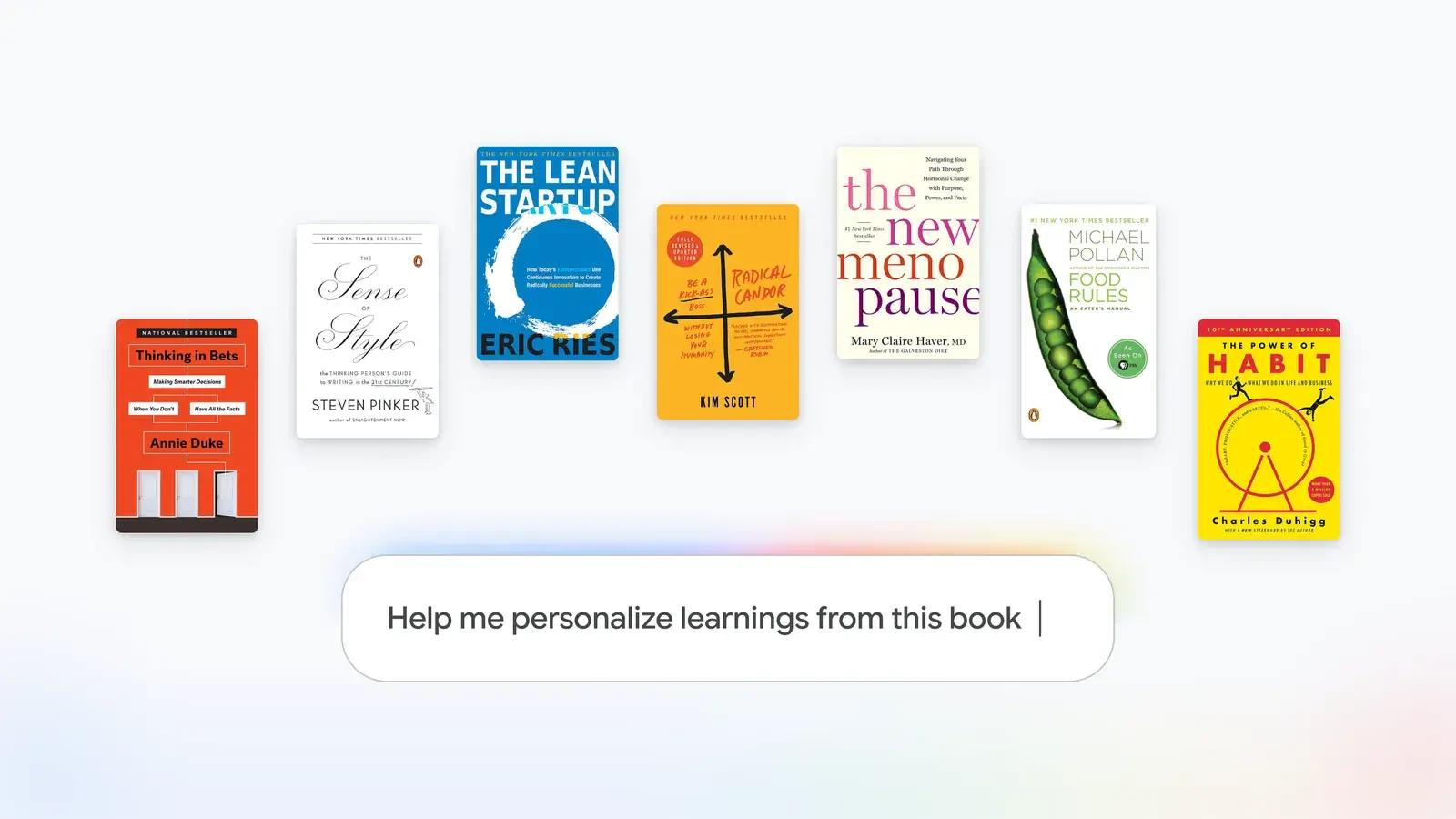
In a transformative move that blurs the lines between digital consumption and active artificial intelligence research, Google has officially launched Expert Intelligence. This cross-product AI initiative seamlessly integrates eligible e-books purchased through Google Play Books directly into Gemini Notebook as grounded, verifiable sources.
Rolled out globally with an initial catalog of over 100,000 titles from major academic and commercial publishers, this feature represents a quantum leap in how readers, students, researchers, and professionals interact with published literature. Rather than acting as passive repositories of text, books transformed through Expert Intelligence become dynamic learning environments. Users can synthesize published works with personal notes, generate interactive quizzes, design informative infographics, and produce immersive Audio Overviews—all underpinned by the robust, contextual understanding of Google’s Gemini AI ecosystem.
This article provides an exhaustive look into the architecture of Expert Intelligence, its publisher partnerships, user accessibility, and the broader implications for the future of digital reading, education, and knowledge management.
Read Also
Detailed Chronology: The Genesis and Rollout of Expert Intelligence
The path to integrating enterprise-grade generative AI with commercial e-book ecosystems has been a gradual, methodical undertaking by Google. While initial rumors of deeper integration between Google Play Books and Workspace productivity tools circulated quietly within developer communities, the formal rollout of Expert Intelligence marks the realization of these ambitions.
The Initial Launch Phase
Officially unveiled to the public, Expert Intelligence debuted with a massive library exceeding 100,000 titles. Google strategically bypassed a slow, staggered beta release for individual genres, opting instead for a comprehensive debut spanning technical manuals, academic literature, non-fiction, and trade books. By partnering with heavyweights in the publishing world—such as Bloomsbury, De Gruyter Brill, Johns Hopkins University Press, Macmillan Publishers, O’Reilly Media, and Penguin Random House—Google ensured that the initial database possessed immediate credibility across diverse fields, ranging from computer science and philosophy to popular science and social commentary.
Author Collaborations and Featured Notebooks
Recognizing that raw text alone does not capture the full intent of creative and academic works, Google went a step further during the launch phase. The company collaborated closely with more than 15 bestselling, highly respected authors—including cognitive scientist and linguist Steven Pinker, environmental journalist Michael Pollan, and author/educator Jennifer Wallace.
These collaborations resulted in the creation of Featured Notebooks. These curated resources not only include the authors’ published texts but also supplement them with additional research sources, outtakes, contextual essays, and engaging multimodal artifacts. This allows readers to dive significantly deeper into an author’s research methodology, thesis development, and underlying motivations than a standard printed or digital book ever allowed.
The Expanding Source Horizon
Following its initial deployment, Google has outlined a steady roadmap for expansion. While current functionality focuses heavily on books purchased through Google Play Books and personal notes, the engineering teams are actively working to scale the platform’s ingestion capabilities. Future iterations will allow users to seamlessly fold third-party digital subscriptions, specialized business research reports, and peer-reviewed academic textbooks into the same unified Gemini Notebook interface.
Supporting Context & Metrics: How the Integration Works
To fully appreciate the impact of Expert Intelligence, one must examine how the underlying mechanics of Gemini Notebooks interact with digital literature.
The Mechanics of Grounded AI
Generative AI tools have historically struggled with "hallucinations"—confabulated facts presented with absolute confidence. Expert Intelligence solves this problem through rigorous grounding. When a user adds an eligible e-book to a Gemini Notebook, the AI restricts its contextual generation parameters to the verified text within that specific book, alongside any supplementary materials or personal annotations provided by the user.
This means that when a researcher asks Gemini to synthesize a chapter on neural networks or behavioral economics, the resulting summary, analysis, or critique is strictly anchored to the primary source material, complete with citations and direct contextual references.
Feature Set and Multimodal Artifacts
Once an e-book is integrated into a Gemini Notebook via the Expert Intelligence framework, users unlock a suite of powerful AI-driven productivity and educational tools:

- Custom Quizzes: Students and educators can instantly generate comprehensive quizzes, flashcards, and testing modules based on specific chapters to test comprehension and retention.
- Infographic Generation: Complex data sets, timelines, and conceptual frameworks described within the text can be translated by the AI into visual infographic layouts.
- Audio Overviews: Leveraging advanced text-to-speech and conversational AI models, the platform can generate dynamic, podcast-style audio discussions that break down and debate the core arguments of the book.
- Blended Note-Taking: Users can juxtaposed published scholarly arguments directly against their own marginalia, lecture notes, or corporate research briefs, creating a hybrid knowledge base.
Identifying Eligible Titles
Navigating the vast digital library of Google Play Books to find compatible titles has been designed to be straightforward. Users can easily verify if a specific publication supports the feature by navigating to its detail page on Google Play Books. If the title is compatible with Expert Intelligence, a distinct Gemini Notebook indicator will appear directly beneath the "Tools" badge.
To lower the barrier to entry and encourage adoption, Google has initiated promotional campaigns—such as providing a complimentary, pre-configured book with built-in Expert Intelligence capabilities for users in the United States while supplies last (accessible via notebook.google/expert-intelligence).
Official Statements and Industry Perspectives
The convergence of massive commercial publishing catalogues with generative AI platforms has naturally elicited widespread discussion across the technology and publishing sectors.
Industry analysts view Expert Intelligence as a masterclass in risk mitigation and value creation. For years, publishers have viewed generative AI with deep apprehension, fearing copyright infringement, unauthorized data scraping, and the erosion of digital sales. By working directly with major publishing houses—such as Penguin Random House, Macmillan, and O’Reilly—Google has established a mutually beneficial paradigm. Publishers secure new avenues for monetization and audience engagement, while users gain legal, ethical, and high-fidelity access to copyrighted knowledge bases.
Authors participating in the launch have similarly praised the initiative’s potential to revolutionize public engagement with complex ideas. In statements released alongside the platform’s debut, several featured writers noted that modern readers increasingly demand interactive, non-linear ways to digest information. Featured Notebooks provide an authorized, expansive digital companion piece that enriches the reading experience rather than replacing it.
Furthermore, tech evangelists have highlighted how Expert Intelligence shifts the paradigm of personal knowledge management (PKM). Software solutions like Notion, Obsidian, and Roam Research have long dominated the note-taking space, but they frequently require users to manually input and organize source material. By automating the ingestion of entire literary catalogs and combining them with AI-powered synthesis, Google is bridging the gap between passive reading and active knowledge creation.
Future Outlook: The Horizon of AI-Assisted Scholarship
As Expert Intelligence transitions from its initial rollout phase into broader public adoption, the long-term implications for education, corporate research, and digital publishing are profound.
Transforming Higher Education and Lifelong Learning
In academic settings, the integration of textbooks into Gemini Notebooks could fundamentally change syllabus design and student research workflows. Rather than hunting through disparate PDF files and physical textbooks, students can curate customized "study hubs" comprising core textbooks, lecture notes, and supplementary journal articles. Professors can curate Featured Notebooks for their classes, guiding students through complex source materials with custom-tailored AI prompts, automated review quizzes, and multi-angle discussions.
Enterprise Knowledge Management and Corporate Research
Beyond the classroom and the casual reader, the roadmap for Expert Intelligence—specifically the upcoming integration of business research reports and third-party subscriptions—signals a major push into the enterprise sector. Corporate analysts, legal researchers, and strategy consultants frequently grapple with mountains of text. The ability to pull verified industry reports, regulatory handbooks, and specialized reference books into a single grounded AI workspace will dramatically accelerate research cycles and minimize the risk of erroneous data synthesis.
Potential Challenges Ahead
Despite the immense promise, challenges remain. As Google expands its ingestion capabilities to third-party subscriptions and broader textbook databases, managing digital rights management (DRM), copyright compliance, and fair compensation models will require constant vigilance. Furthermore, maintaining user trust in AI-generated artifacts—such as Audio Overviews and infographics—will depend heavily on the continued accuracy and transparency of the underlying grounding mechanisms.
Conclusion
Google’s Expert Intelligence initiative marks a watershed moment in the evolution of digital reading. By transforming static e-books into dynamic, interactive, and grounded AI partners, Google has redefined what a book can be in the twenty-first century. As the platform expands its catalog and incorporates new professional and academic data streams, it promises to empower a new generation of thinkers, learners, and creators who demand deeper, more responsive connections with the knowledge they consume.




Comments
Facebook App ID not configured. Please add it in the Customizer.