History remembers Nathan Hale as the tragic, singular icon of American intelligence during the dark autumn of 1776. Captured and hanged by the British just days after landing on Long Island, the 21-year-old Connecticut soldier achieved immortality—anchored, fittingly or not, by his famous, likely apocryphal final words: "I only regret that I have but one life to lose for my country."
Yet, as newly uncovered archival documents reveal, Hale was not alone. Operating almost simultaneously across the treacherous waters of the Long Island Sound was a second, younger Connecticut volunteer: 17-year-old David Maltbie. While Hale’s mission ended in immediate catastrophe, Maltbie successfully embedded himself behind enemy lines, gathered vital strategic intelligence, and survived an ordeal involving arrest, a death sentence, a miraculous prison break, and subsequent service as a Continental whaleboat raider and soldier.
Brought to light through meticulous research at the Center for Brooklyn History by historian Claire Bellerjeau, Maltbie’s long-lost narrative alters our understanding of early Revolutionary War espionage. Far from being an isolated operation carried out by solo martyrs, General George Washington’s nascent intelligence-gathering efforts in 1776 relied on networks of untrained, unsupported civilian volunteers. Maltbie’s survival, capture, and eventual escape illuminate the raw, high-stakes mechanics of America’s fight for independence, offering a profound look at the ordinary youths who risked everything for a fledgling republic 250 years ago.
Detailed Chronology: From Schoolroom Cover to Revolutionary Operative
The Intelligence Vacuum of 1776
The genesis of Maltbie’s wartime journey was rooted in military disaster. Following the Continental Army’s demoralizing defeat at the Battle of Brooklyn in late August 1776, New York City and Long Island fell firmly under British control. For General George Washington, the loss was catastrophic. While American forces retained a foothold in the upper Hudson River Valley, the Port of New York served as the crown jewel of the conflict. Its control meant unhindered access to inland waterways and Atlantic shipping routes, while Long Island’s fertile farms and dense forests offered limitless provisions to sustain the occupying British forces.
Separated only by the treacherous waters of the Long Island Sound, patriot forces in Connecticut gazed longingly at the New York shoreline. To counter the British occupation, Washington commissioned a specialized reconnaissance unit in September 1776 under the command of Colonel Thomas Knowlton. Known as "Knowlton’s Rangers," this elite group—which included Nathan Hale—was tasked with shedding military uniforms, adopting civilian disguises, and smuggling intelligence out of enemy territory.
Infiltrating Oyster Bay
While Nathan Hale crossed the sound to pose as a Dutch schoolteacher searching for work in Huntington, Long Island, 17-year-old David Maltbie landed roughly seven miles to the west in Oyster Bay. Adopting the exact same cover story, Maltbie secured employment as a local educator, seamlessly blending into the rhythm of occupied civilian life.
Operating in secret, Maltbie systematically cataloged British troop numbers, movements, and billeting plans through direct observation and guarded conversations with local residents. He penned his findings in a series of letters disguised as casual correspondence to friends back home across the sound.
The mechanism for delivery relied on an elderly courier named Seely (whose exact relation to later patriot networks remains historically opaque), who regularly rowed across the Long Island Sound between Stamford, Connecticut, and Oyster Bay. For weeks, the pipeline held. Maltbie’s intelligence grew increasingly confident; at one point, according to historical letters, the teenager calculated that a disciplined American force of just 500 men could successfully dislodge the British garrison in Oyster Bay.
Betrayal, Imprisonment, and the Shadow of the Gallows
Maltbie’s undoing came not from British counterintelligence, but from the sheer volume of his one-way correspondence. Growing suspicious of the ceaseless stream of letters passing through his boat, the courier Seely unsealed one of the dispatches. Recognizing the unmistakable military intelligence outlining British defensive positions, and discovering himself to be a staunch loyalist, Seely bypassed patriot contacts entirely and delivered the documents straight to the Redcoat authorities.
British forces moved swiftly, issuing an immediate warrant for Maltbie’s arrest. Though the teenager attempted a desperate escape by boat across the sound, he was intercepted, captured, and subjected to a swift trial that found him guilty of espionage.
Condemned to die by hanging, Maltbie was thrown into a makeshift guardhouse in Oyster Bay—a rudimentary building previously used as a bread-baking oven. In the grim days leading up to his execution, his only regular visitor was 10- or 11-year-old Elizabeth Wooden, whose father had been a pre-war friend of Maltbie. Because the guards dismissed her age, Wooden successfully smuggled food to the condemned teenager under the guise of an errand girl.
Seventy years later, responding to historical inquiries about Nathan Hale, an elderly Wooden recounted her memories of Maltbie. According to her recollections preserved in a letter written by Ebenezer Seeley to historian Henry Onderdonk Jr. in 1846, Maltbie’s story took a dramatic turn:
"He broke out of his prison and escaped… He had been reprieved, though he knew not of it at the time of his escape."
Unaware that his execution order had quietly been stayed, Maltbie executed a daring breakout, slipped past British sentries, and vanished into the Connecticut wilderness.
Beyond 1776: Whaleboats, Privateers, and the Provost Prison
Maltbie’s defiance of the British did not end with his escape. On December 18, 1776, he formally enlisted in the Continental Army’s Ninth Connecticut Regiment, though his initial infantry tour lasted a brief month and five days. By 1781, Maltbie had transitioned to irregular maritime warfare, serving as captain of a whaleboat crew. These daring privateers launched lightning raids across the sound, capturing British vessels and seizing valuable supplies from wealthy Long Island loyalists.
By the winter of 1783, as the Revolutionary War ground toward its official conclusion, Maltbie returned to clandestine intelligence-gathering in New York City. On New Year’s Day, 1783, he was captured in Manhattan alongside an alleged female accomplice, Libbey Stigney. Charged with "robbery and on suspicion of being a spy," Maltbie was accused of using false pretenses and collusion to strip goods from Long Island loyalists.
This time, Maltbie was cast into the infamous Provost Prison in lower Manhattan—a facility notorious for its brutality, overcrowding, rampant disease, and starvation rations. While the specifics of the espionage charge were quietly dropped before his court-martial, Maltbie stood trial for robbery in February 1783. Defending himself before a military tribunal, the 23-year-old veteran successfully persuaded the court of his innocence, earning a full acquittal and release just months before the signing of the Treaty of Paris formally ended the war in September 1783.
Supporting Context & Metrics: The Evolution of Washington’s Spycraft
To properly contextualize David Maltbie’s survival, military historians point to the stark strategic evolution of George Washington’s intelligence apparatus during the Revolutionary War.
The Amateur Era (1776): At the outbreak of the conflict, American intelligence relied almost exclusively on untrained, ad-hoc civilian volunteers like Nathan Hale and David Maltbie. Operating without logistics networks, secure drop points, or cryptographic training, these agents suffered an extraordinarily high attrition rate.
The Institutional Shift: The rapid capture and execution of Hale, combined with the harrowing brushes with death experienced by Maltbie and the combat death of Colonel Thomas Knowlton at the Battle of Harlem Heights, proved to Washington that decentralized, amateur spying was unsustainable.
The Culper Ring Standard (1778–1783): These repeated early failures directly catalyzed the creation of sophisticated, long-term civilian intelligence networks. The most successful of these was the Culper Spy Ring, which operated covertly on Long Island and Manhattan from 1778 to 1783. Notably, the ring’s primary Manhattan agent—code-named "Samuel Culper Jr."—was Robert Townsend, a merchant whose family home in Oyster Bay stood just around the corner from the makeshift bakery prison where Maltbie had awaited execution a few years prior.
Official Statements & Expert Analysis
Historians and researchers who have untangled the archives view the unearthing of Maltbie’s life as a major milestone in Revolutionary War scholarship.
"Maltbie’s story is significant because it helps reveal the extent of Washington’s intelligence efforts in the early stages of the war," notes Alexander Rose, author of Washington’s Spies: The Story of America’s First Spy Ring. Rose emphasizes that untrained volunteers like Maltbie acted "almost without exception… lacking any support or logistics structure when they were behind enemy lines," serving as the trial-and-error foundation that forced Washington to build a sustainable civilian spy network.
Bill Bleyer, author of George Washington’s Long Island Spy Ring, echoes this sentiment:
"New information about the Revolution and the actions of Nathan Hale and the lesser-known but luckier Long Island spy David Maltbie broadens our understanding of the conflict and its implications."
For descendants like Margo Williams, Maltbie’s fifth-great-great-niece who discovered her ancestor’s exploits while applying to the Daughters of the American Revolution, the historical recovery is deeply personal:
"The resurfacing of Maltbie’s story is nothing short of electrifying… Even within my own family, knowledge of his espionage during the Revolution had been lost over time and was unknown. His story can teach us all about the values this nation was founded on and self-sacrifice for a cause greater than us."
Future Outlook: Restoring Forgotten Founders to the Historical Record
As the United States approaches the commemoration of its 250th anniversary, the historical community faces an ongoing imperative: digging beneath the polished veneer of myth to unearth the complex, gritty, and deeply human realities of the nation’s founding.
Just as Paul Revere’s midnight ride is historically contextualized by the parallel journeys of lesser-known riders like William Dawes and Samuel Prescott, Nathan Hale’s iconic martyrdom must now share historical space with operatives like David Maltbie. Maltbie did not achieve posthumous fame through dramatic last words on a scaffold; instead, he lived to return to Connecticut, sell animal skins, serve in the state legislature, and sit as a justice of the peace before his death in 1807 at age 48.
His narrative reminds contemporary generations that the American experiment was built not merely by untouchable legends carved into marble monuments, but by ordinary teenagers, everyday tradesmen, and forgotten volunteers who took monumental risks in the shadows. As archival projects continue to unearth letters, court transcripts, and forgotten testimonies from institutions like the Center for Brooklyn History, David Maltbie stands as proof that the annals of the American Revolution still hold countless untold stories waiting to be brought into the light.

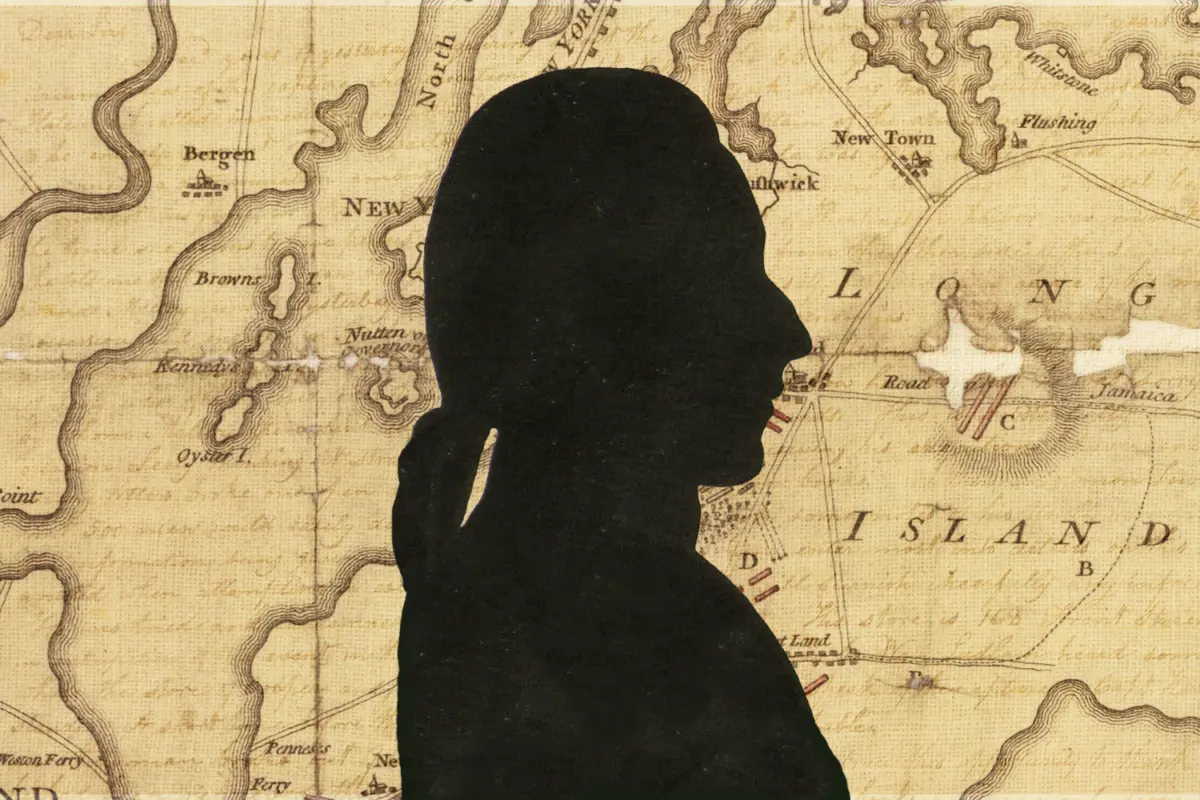
/https://tf-cmsv2-smithsonianmag-media.s3.amazonaws.com/filer_public/9a/30/9a3074ea-bdcc-4d5f-ad2a-a80bc49a6f8a/david-maltbie.png)
/https://tf-cmsv2-smithsonianmag-media.s3.amazonaws.com/filer_public/9a/30/9a3074ea-bdcc-4d5f-ad2a-a80bc49a6f8a/david-maltbie.png)
/https://tf-cmsv2-smithsonianmag-media.s3.amazonaws.com/filer_public/ae/8d/ae8d136d-9c1a-46b6-99d2-08f6959e7f2e/letter-to-onderdonk.png)
/https://tf-cmsv2-smithsonianmag-media.s3.amazonaws.com/filer_public/a8/02/a8025f86-fc49-42fa-9711-1b6256dbd150/nathan_hale.png)
/https://tf-cmsv2-smithsonianmag-media.s3.amazonaws.com/filer_public/49/20/4920d563-3edf-498f-b2c8-b7fa0fd309e9/elizabeth_wooden_gravestone_ob_2.jpeg)
/https://tf-cmsv2-smithsonianmag-media.s3.amazonaws.com/filer_public/e4/8a/e48ab426-f781-4cea-b218-dd03122d93db/map-of-oyster-bay_f811336.jpg)
/https://tf-cmsv2-smithsonianmag-media.s3.amazonaws.com/filer_public/2e/07/2e07a4b9-3f68-422d-b00b-3d3cc4ec660d/default_5.jpg)






Comments
Facebook App ID not configured. Please add it in the Customizer.