
Executive Overview
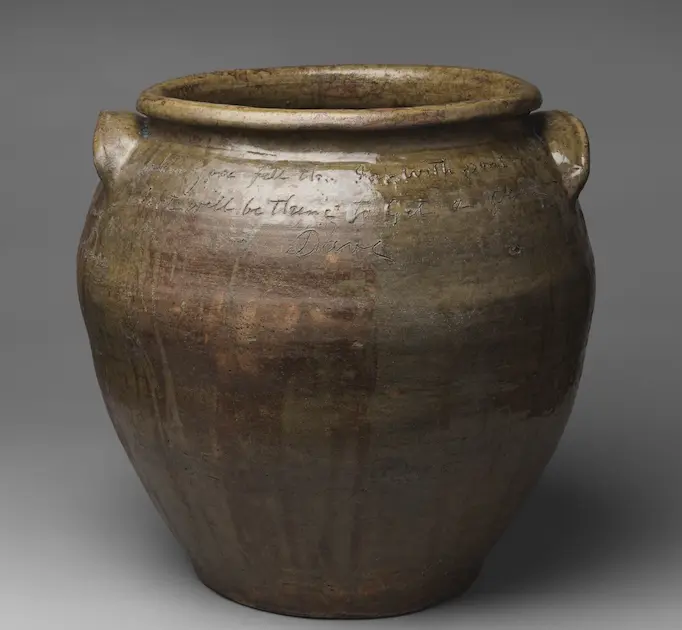
In a landmark agreement that bridges historical accountability with contemporary museum stewardship, two rare stoneware vessels crafted by the legendary 19th-century enslaved artisan David Drake—widely known as "Dave the Potter"—have been formally returned to his living descendants. Facilitated earlier this month by the Milwaukee Art Museum (MAM) through a strategic arrangement with the Dave the Potter Legacy Trust, this repatriation marks a watershed moment in the ongoing national conversation regarding the provenance, ownership, and ethical curation of African American material culture in United States institutions.
The settlement goes beyond mere restitution; it represents a pioneering model of collaborative cultural stewardship. Following the legal return of the vessels to Drake’s family, the Milwaukee Art Museum successfully brokered a dual-path agreement. One of the masterworks has been officially acquired by the museum through purchase from the family trust, ensuring its permanent home in the institutional collection, while the second vessel will remain on view via a long-term loan agreement. This arrangement guarantees that both touchstones of American art history will continue to educate, inspire, and challenge museum visitors in Milwaukee.
This milestone is the culmination of more than a decade of institutional engagement, beginning with a transformative 2010 exhibition organized by the Wisconsin-based Chipstone Foundation. That foundational showcase placed Drake’s alkaline-glazed stoneware in direct conversation with the work of contemporary Chicago-based conceptual and sculptural artist Theaster Gates, sparking a citywide reexamination of historical memory, forced labor, and artistic genius.
Read Also
As museums across the globe grapple with the complex legacies of colonialism, slavery, and disenfranchisement, the Milwaukee Art Museum’s handling of the Drake vessels offers a compelling framework. It demonstrates how cultural institutions can honor the rightful hereditary claims of descendant communities while simultaneously maintaining public access to works of immense historical and aesthetic importance.
Detailed Chronology: From Edgefield Kilns to the Midwest
To understand the profound significance of this repatriation, one must trace the trajectory of David Drake’s life and the modern journey of his works from the antebellum South to contemporary Midwestern galleries.
The Antebellum Genius of Edgefield District
Born into enslavement around 1800 in the Edgefield District of South Carolina—an area renowned for its rich clay deposits and thriving pottery industry—David Drake produced thousands of utilitarian stoneware vessels over his lifetime. Working primarily for various industrial potteries owned by white masters, including Abner Landrum, Lewis Miles, and Harvey Drake, Dave was not merely a laborer; he was a master potter, artisan, and poet.
Operating under the constant threat of violence, family separation, and the systemic dehumanization of chattel slavery, Drake achieved international renown for the sheer scale of his vessels, which often weighed upwards of 40 gallons, and for his signature practice of incising original couplets, signatures, and dates directly into the wet clay. At a time when South Carolina law strictly forbade the teaching of enslaved Black people to read and write, Drake’s literate inscriptions—such as "Lish made this jar / for a sweet little girl / named Marinda / and her mother" (dated 1858)—served as acts of profound resistance, self-assertion, and historical preservation.
2010: The Chipstone Spark in Milwaukee
Fast-forward nearly two centuries. David Drake’s masterworks are recognized as pinnacles of American ceramic art, commanding hundreds of thousands of dollars at major auction houses. However, their physical presence in major museums has historically been disconnected from the living lineage of the artist.
That paradigm began to shift in Milwaukee in 2010. As reported by The Milwaukee Journal Sentinel, Drake’s work first entered the local cultural consciousness when the Chipstone Foundation mounted a groundbreaking exhibition. Dedicated to "American material culture" with a specialized focus on the decorative arts, the Wisconsin-based enterprise curated an installation featuring Drake’s historical vessels alongside cutting-edge sculptural works by Theaster Gates.
The juxtaposition was electric. Museumgoers and scholars alike were utterly fascinated by the dialogue established between Drake’s 19th-century artifacts of forced labor and Gates’s 21st-century meditations on race, space, and African American history. The overwhelming public response compelled the Chipstone Foundation to develop extensive community programming. These initiatives worked to unearth the deeper meanings of Drake’s work, connecting his legacy of resilience to diverse communities across Milwaukee.
2013–2023: The Dave Project and Institutional Integration
Building upon the momentum of the 2010 exhibition, the Chipstone Foundation formally acquired two stoneware pots crafted by Drake in 2013. These acquisitions served as the anchor for the "Dave Project," a long-term collaborative initiative between the foundation and the Milwaukee Art Museum.
Through the Dave Project, Drake’s vessels were integrated into the museum’s permanent galleries, accompanied by contextual educational materials that forced viewers to confront the economic, social, and racial realities of the antebellum South. For a decade, these pots served as pedagogical centerpieces, drawing school groups, scholars, and art enthusiasts. Yet, beneath their educational utility lay a simmering ethical question: Who rightfully owns the cultural patrimony of an enslaved artist when his living descendants are systematically excluded from ownership and stewardship?
2024–Present: Repatriation and the New Accord
Recognizing the shifting ethical imperatives of the museum field, stakeholders at the Milwaukee Art Museum, the Chipstone Foundation, and the newly formed Dave the Potter Legacy Trust initiated high-level discussions regarding the provenance and rightful ownership of the two pots held in Wisconsin.
Earlier this month, these negotiations culminated in a historic agreement. The stoneware pots were formally repatriated to the descendants of David Drake, represented by the Dave the Potter Legacy Trust. Rather than resulting in the immediate physical removal of the artworks from Milwaukee—a scenario that could have diminished public access—the parties forged an innovative compromise. Through a brokered deal, the Milwaukee Art Museum purchased one of the pots back from the trust for its permanent collection, while the second pot was secured via a long-term loan agreement. This ensures that both vessels will remain on public display in Milwaukee, keeping Drake’s material legacy vibrantly alive in the Midwest while honoring the ownership rights of his fourth-generation family members.
Supporting Context & Metrics: The Market and Legacy of "Dave"
To fully contextualize the Milwaukee repatriation, one must examine the soaring art market value of David Drake’s ceramics and the broader movement toward provenance reform in American museums.
The Economic and Artistic Valuation of Dave’s Work
David Drake’s pottery occupies a unique intersection in the art market: it is simultaneously categorized as folk art, historical Americana, and high-end contemporary sculpture. Measuring his output in quantitative terms reveals an extraordinary level of physical and artistic endurance:
- Scale and Capacity: Many of Drake’s surviving signed vessels are massive storage jars ranging from 10 to 40 gallons, requiring immense physical strength, precise wheel-throwing skill, and advanced kiln-firing techniques to prevent structural collapse.
- Literary Output: Scholars have cataloged more than 100 surviving vessels bearing Drake’s distinct poetic inscriptions, making him one of the few documented literate enslaved voices preserved in American clay.
- Auction Records: In recent years, Drake’s pots have achieved monumental milestones on the secondary market. Stoneware storage jars by "Dave" routinely fetch between $50,000 and $400,000 at auction houses such as Skinner, Sotheby’s, and Christie’s, reflecting a dramatic reevaluation of historical African American folk art by collectors and institutions alike.
The Paradigm Shift in Museum Provenance
The Milwaukee Art Museum’s agreement with the Dave the Potter Legacy Trust aligns with a broader, urgent reckoning within the museum sector regarding cultural property. While much of the international repatriation debate has centered on colonial-era acquisitions (such as the Benin Bronzes or Native American ancestral remains under NAGPRA), domestic repatriation involving the descendants of enslaved African Americans represents a burgeoning, highly sensitive frontier.
Unlike traditional acquisitions, where museums hold absolute title purchased from dealers or estates, items created under chattel slavery carry a profound moral encumbrance. Because enslaved people were legally classified as property under American law, they were incapable of legally owning, selling, or transmitting wealth, intellectual property, or physical goods to their descendants. Consequently, every museum holding of antebellum work by an enslaved artisan exists within a complex web of uncompensated labor and historical expropriation. By actively transferring ownership of the two pots back to the Dave the Potter Legacy Trust, MAM and Chipstone have established a pioneering precedent for how institutions can address historical wealth disparities and inheritance rights.
Official Statements and Descendant Perspectives
The human dimension of this repatriation is best understood through the powerful words of Drake’s descendants and museum leadership, who view the settlement not as a closure, but as an opening for generational healing and connection.
Yaba Baker on Resilience and Lineage
Yaba Baker, a fourth-generation great-grandson of David Drake and a key voice within the descendant community, shared profound reflections with The Milwaukee Journal Sentinel following the announcement of the agreement:
"We believe it is important that people continue to be inspired by his unwavering perseverance in life and the brilliance that it took to create these amazing pieces of art. By keeping both works on view in Milwaukee, we know that his legacy and lineage will remain accessible to the public for years to come."
Baker’s statement underscores the dual desire of the descendant family: to honor their ancestor’s intellectual and artistic triumph over insurmountable oppression, while ensuring that the public continues to learn from his extraordinary life. For the family, the pots are not merely decorative objects or financial assets; they are tangible testaments to a patriarch who refused to let his humanity be erased by the institution of slavery.
Kantara Souffrant on Community and Gathering
Kantara Souffrant, the Milwaukee Art Museum’s curator of community dialogue, illuminated the emotional and communal resonance of the Dave the Potter Legacy Trust’s work in an interview with local media:
"[Their work] is so invested in the idea of what it means to be a person who’s descended from enslaved people, who is able to see these objects as a way of really, truly gathering your family, family you didn’t know."
Souffrant’s perspective highlights the role of material culture in genealogical and psychological repair. For families fractured by the domestic slave trade—which routinely tore parents from children and siblings from one another—artifacts created by an ancestral artisan serve as gravitational centers. They draw living descendants together across geographical divides, fostering a renewed sense of shared identity, kinship, and historical reclamation.
Future Outlook: A New Blueprint for Museum-Community Partnerships
As the dust settles on this historic negotiation, the partnership between the Milwaukee Art Museum, the Chipstone Foundation, and the Dave the Potter Legacy Trust offers an invaluable roadmap for cultural institutions across the United States.
Expanding Educational and Curatorial Horizons
With one vessel securely in the museum’s permanent collection and the second secured via long-term loan, the Milwaukee Art Museum is poised to expand its interpretive framework. Future exhibitions will no longer present Drake’s work solely through a detached, art-historical lens. Instead, programming will be co-developed in close consultation with the Dave the Potter Legacy Trust, centering descendant voices, genealogical research, and the unvarnished historical realities of Edgefield County.
Implications for the Broader Museum Field
The success of this dual-path model—combining legal repatriation to descendants with continued public exhibition through collaborative purchase and loan agreements—demonstrates that museums do not have to choose between public access and ethical restitution. By sharing stewardship with descendant trusts, institutions can model a new era of transparency, equity, and shared authority.
In an era where public trust in cultural institutions is frequently tested, the Milwaukee Art Museum’s proactive engagement with the legacy of David Drake proves that museums can be active agents of reconciliation. By returning ownership where it morally belongs while keeping the art accessible to all, Milwaukee has set a gold standard for how American art museums can honor the past while building a more just and inclusive cultural future.





Comments
Facebook App ID not configured. Please add it in the Customizer.