
Executive Overview
In an era defined by hyper-connectivity, digital noise, and an relentless 24-hour news cycle, the literary community has responded with a distinct counter-cultural movement: the deliberate embrace of solitude. This cultural shift is vividly captured in the latest installment of the long-running Writer’s Digest poetry prompt series, curated by resident poetry expert and literary commentator Robert Lee Brewer. Released amid a landscape saturated with algorithmic demands for human attention, the weekly prompt—challenging writers to take the phrase "[Blank] the World" and transform it into a new poetic title—has sparked a widespread digital and creative dialogue regarding modern isolation, creative autonomy, and the psychological necessity of disengagement.
At the center of this movement is Brewer’s accompanying example piece, titled "Avoid the World." Written in free verse with a deceptively conversational cadence, the poem acts as both a satirical critique of modern societal expectations and a genuine manifesto for creative preservation. It urges readers to ignore the digital summons of contemporary life—the endless texts, the social media notifications, and the perpetual cycle of societal grievances—in favor of solitary introspection, nature, and artistic creation.
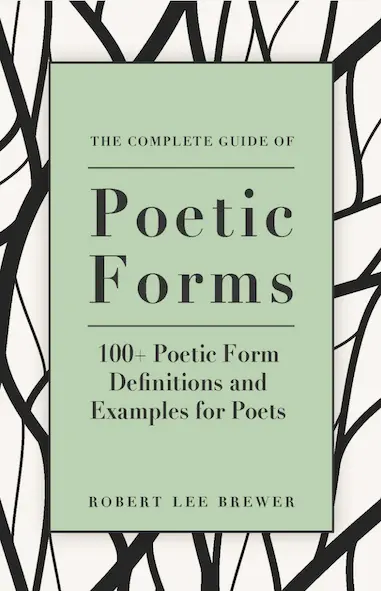
Simultaneously, this poetic exercise serves as a timely reminder of the structural foundations of poetry. Coupled with promotional insights from The Complete Guide to Poetic Forms—a comprehensive taxonomy featuring over 100 traditional and contemporary poetic definitions compiled by Brewer—the initiative bridges the gap between raw, unstructured emotional expression and the disciplined scaffolding of classical verse. This report provides an exhaustive investigation into the mechanics of the prompt, the thematic undertones of Brewer’s featured work, the structural importance of poetic forms in contemporary literature, and the broader cultural implications of choosing creative withdrawal over civic hyper-engagement.
Read Also
Detailed Chronology
To understand the current cultural resonance of Brewer’s "Blank the World" prompt, one must trace the evolutionary timeline of how digital platforms and literary institutions have collaborated to foster interactive, prompt-driven poetry communities over the past two decades.
- Early 2000s: The advent of literary blogging and early online writer forums. Platforms like Writer’s Digest began experimenting with digital engagement strategies, moving away from purely print-based submission models toward weekly interactive challenges designed to keep creative writing communities active between magazine issues.
- The 2010s (Rise of Algorithmic Pressure): As social media platforms (Twitter, Facebook, Instagram) matured, writers faced unprecedented pressure to monetize their attention spans. The poetry community witnessed a simultaneous rise in "Insta-poetry"—short, accessible, highly shareable verse—alongside a growing counter-movement of writers seeking refuge from digital algorithms. Robert Lee Brewer, managing the Writer’s Digest poetry blog, consistently positioned his weekly prompts as an antidote to fast-paced digital consumption.
- Late 2023 to Early 2024: The formalization of the "World" prompt series framework. Brewer experimented with fill-in-the-blank linguistic templates designed to force writers to confront macroscopic themes on a microscopic, domestic scale. Titles submitted by community members evolved from straightforward variations like "Love the World" to more cynical or absurdist takes, including "Fear the World," "What in the World," and "A Brief History of the World."
- Current Iteration (2024 Release): The publication of the "Avoid the World" prompt cycle. This specific iteration marked a sharp pivot toward radical disengagement. Rather than instructing writers to fix, embrace, or analyze global crises, Brewer challenged them to consider the creative benefits of outright refusal. The accompanying poem, "Avoid the World," was published alongside administrative instructions for the Disqus commentating ecosystem, framing the online poetry community as a curated sanctuary existing parallel to the broader, chaotic internet.
Supporting Context & Metrics
The Anatomy of "Avoid the World"
Brewer’s featured poem breaks down into a single, breathless sentence spanning twenty-eight lines. By withholding punctuation until the final period, the poem mimics the unrelenting, cascading nature of modern demands.
When the world calls,
of course,
don't pick up the phone
or respond to its text messages;
don't engage the world
on social media
or waiting in line at the grocery store...
The thematic weight of the piece relies heavily on spatial juxtaposition. The "world" is explicitly defined as an entity obsessed with "its own agenda," characterized by "its various problems" and "its never-ending list of grievances." Conversely, the sanctuary of the self is located in quiet, physical spaces: "dancing alone in the evening," "reading books," or "writing poems on a bench near a stream or meadow or college library."
The poem concludes with a psychological paradox: by ignoring the systemic calls of a fractured society, the individual does not become isolated or apathetic; rather, they disconnect from artificial constructs to become "more and more human."
The Significance of Poetic Forms in the Digital Age
While prompts provide the spark, poetic forms provide the architecture. In The Complete Guide of Poetic Forms, Brewer catalogs over 100 distinct structures—ranging from ancient forms like the villanelle, pantoum, and sestina to modern inventions. In an era where digital content is often measured by word count, SEO optimization, and viral velocity, the adherence to strict poetic forms offers several critical benefits:
- Cognitive Friction: Traditional forms force writers to slow down. Meter, rhyme scheme, and syllable counts act as structural speed bumps, preventing impulsive typing and encouraging deliberate rumination.
- Democratic Accessibility: Despite their complexity, poetic forms act as equalizers. Anyone with a pen and paper can master the constraints of a haiku or a tanka without needing expensive software or specialized training.
- Preservation of Literary Heritage: By cataloging and teaching forms that span centuries, literary guides ensure that contemporary writers remain connected to the historical lineage of global poetry.
Official Statements & Expert Analysis
Literary critics and educational theorists have long debated the utility of creative writing prompts in professional and amateur workshops. While purists occasionally argue that prompts manufacture artificial inspiration, writing educators emphasize their value in breaking through psychological barriers such as writer’s block and perfectionism.
Robert Lee Brewer has frequently articulated his pedagogical philosophy regarding prompts through his editorial work at Writer’s Digest. In introductory notes accompanying weekly exercises, Brewer routinely emphasizes:
“Remember: These prompts are springboards to creativity. Use them to expand your possibilities, not limit them.”
This philosophy underpins the entire mechanics of the "Blank the World" exercise. By offering a structural skeleton—[Blank] the World—Brewer removes the paralyzing intimidation of the blank page. The writer is not asked to invent a poem from absolute nothingness; instead, they are handed a linguistic container and told to fill it with a personalized philosophical stance.
Cultural commentators examining Brewer’s "Avoid the World" have noted its resonance with the broader "Great Resignation" and burnout phenomena observed in post-pandemic labor and creative markets. Dr. Elena Vance, a professor of contemporary literature and digital sociology, notes:
"When a poetry expert of Brewer’s stature publishes a piece advocating for the outright ignoring of social media, grocery store chatter, and global grievances, it signals a fatigue within the literary class. Poetry has historically been used to bear witness to the world. However, Brewer’s poem suggests that the most radical act available to the modern artist is not bearing witness, but tactical withdrawal. It reframes ‘tuning out’ not as apathy, but as a prerequisite for empathy and authentic human existence."
Future Outlook: The Evolution of Digital Poetry Communities
As artificial intelligence begins to flood digital spaces with automated prose, poetry prompts and community-driven literary platforms are entering a new phase of evolution. The reliance on human-centric emotional experiences—such as the specific physical sensation of sitting by a meadow stream, or the mundane frustration of waiting in a grocery store line—cannot be easily replicated by algorithmic text generators.
Key Trends Shaping the Future of Poetry Prompts:
- Hyper-Local and Tactile Themes: Future prompts are expected to lean further away from abstract digital concepts and pivot toward tactile, physical experiences (e.g., tactile descriptions of geography, traditional craft, and analog living).
- Decentralized Literary Hubs: Platforms like Disqus, Substack, and independent poetry forums are becoming increasingly vital as alternative gathering spaces away from ad-driven social media conglomerates. These spaces allow for slower, more deliberate community engagement.
- The Re-Valuation of Constraint: As automated content generation makes the creation of infinite unstructured text trivial, the value of strict poetic forms (sonnets, pantoums, and custom prompt constraints) will likely rise, as audiences seek out evidence of human labor, discipline, and intentional struggle.
In conclusion, the "Blank the World" prompt and Robert Lee Brewer’s "Avoid the World" serve as both a timely cultural commentary and a timeless creative exercise. By reminding writers that they possess the sovereign right to ignore the noise of modern civilization, Brewer has provided more than just a writing prompt—he has offered a blueprint for creative survival in the twenty-first century.

Comments
Facebook App ID not configured. Please add it in the Customizer.