
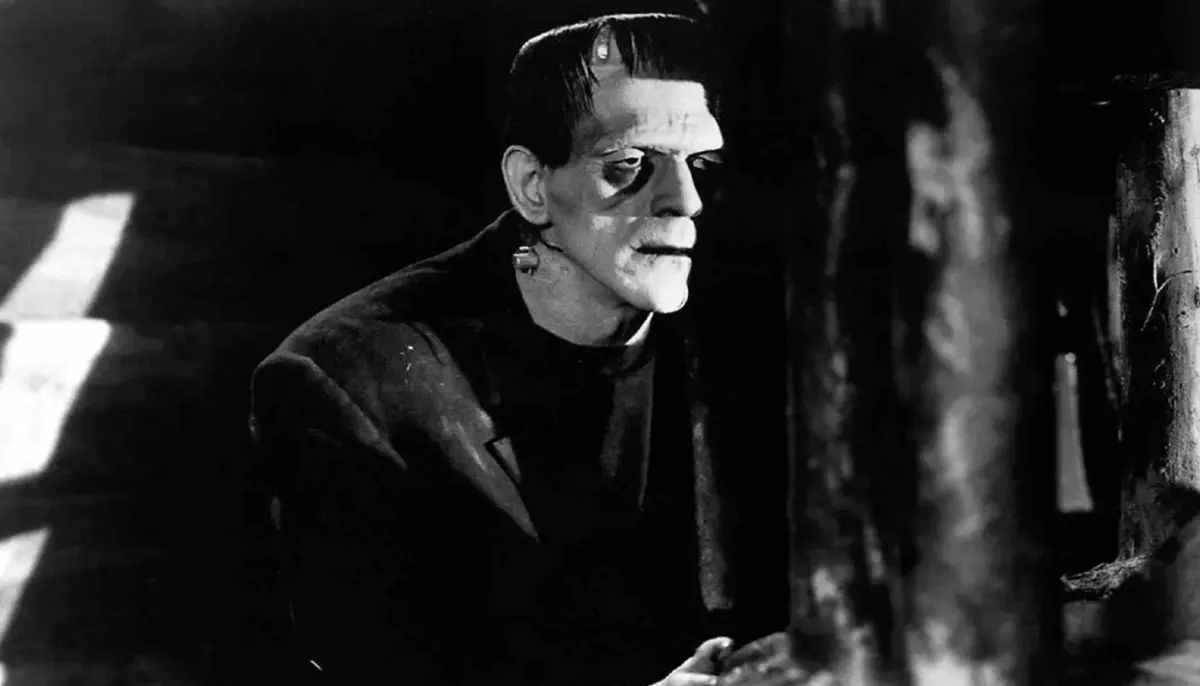
James Whale’s 1931 masterpiece Frankenstein stands not merely as a high-water mark of early sound-era cinema, but as the primary architect of the modern cinematic horror ecosystem. Based loosely on Mary Shelley’s 1818 gothic novel—via theatrical adaptations by Peggy Webling and John L. Balderston—the film solidified Universal Pictures’ dominance in the monster-movie genre following the unprecedented success of Dracula earlier that same year.
Yet, the cultural footprint of Frankenstein extends far beyond its box-office receipts. It represents a critical convergence of German Expressionist visual aesthetics, pioneering special effects, and an indelible lead performance by Boris Karloff that forever transformed the relationship between actors and their monstrous alter-egos. Operating during the volatile transition from silent film to synchronized sound—and against the backdrop of the Great Depression—the production navigated studio skepticism, rigorous pre-Code censorship, and shifting creative visions to deliver a film whose stylistic DNA continues to pulse through the veins of contemporary horror.
Detailed Chronology: The Genesis and Evolution of Cinematic Terror
To understand the monumental impact of Frankenstein (1931), one must contextualize it within the messy, experimental decades that birthed the horror medium itself. The genealogy of the genre is defined by milestones of visual trickery, lost media, and high-stakes legal battles.
Read Also
Pre-History and the Silent Era (1895–1929)
The debate over the world’s first horror film often points to Thomas Edison’s Execution of Mary, Queen of Scots (1895). Lasting under twenty seconds, the film used pioneering editing techniques by director Alfred Clark to simulate a decapitation, successfully marketed as a blood-curdling novelty via the kinetoscope. However, film historians generally look toward George Méliès’s Le Manoir du diable (1896) as the true narrative blueprint of the genre. Running three minutes long, it deployed playful visual trickery to stage a Gothic encounter with ghosts, bats, skeletons, and transforming hags.
As the medium matured into the 20th century, filmmakers eagerly mined popular literature for terrifying source material:
- 1908: William Selig produced a lost single-reel adaptation of Robert Louis Stevenson’s Dr. Jekyll and Mr. Hyde.
- 1910: The Edison Company released the first cinematic adaptation of Mary Shelley’s Frankenstein.
- 1911: Italy delivered L’Inferno, an ambitious feature-length journey through Dante’s underworld complete with nudity and eternal torments.
- 1913: Alice Guy-Blaché directed a multi-reel adaptation of Edgar Allan Poe’s The Pit and the Pendulum.
Simultaneously, the avant-garde movement of German Expressionism revolutionized cinematic dread. Paul Wegener’s The Golem (1915) and Robert Wiene’s The Cabinet of Dr. Caligari (1920) introduced skewed geometries, stark chiaroscuro lighting, and psychological projection. This aesthetic peaked with F.W. Murnau’s Nosferatu (1922), an unauthorized adaptation of Bram Stoker’s Dracula. Despite a protracted legal battle by Florence Stoker that resulted in a court-ordered destruction of all prints, surviving international copies preserved a masterwork that laid the groundwork for the genre’s atmospheric power.
The Rise of Universal and the Sound Revolution (1923–1931)
Before monsters dominated the box office, Lon Chaney revolutionized character acting by anchoring sympathetic monstrosity in Universal’s The Hunchback of Notre Dame (1923) and The Phantom of the Opera (1925). When the industry rapidly shifted to synchronized sound, studio head Carl Laemmle Sr. handed production reins to his son, Carl Laemmle Jr., to usher Universal into the era of "talkies."
Buoyed by the critical success of the anti-war drama All Quiet on the Western Front (1930), Laemmle Jr. gambled on an authorized adaptation of Dracula (1931). Starring Bela Lugosi, the film shocked Hollywood by becoming a runaway financial triumph. Desperate to replicate this unexpected windfall, the studio turned its gaze toward Shelley’s Frankenstein.
[1895-1896: Early Innovations] ➔ [1908-1922: Literary Adaptations & Expressionism] ➔ [1923-1930: Chaney & The Sound Era] ➔ [1931: Universal Monsters Unleashed]Supporting Context & Metrics: Production, Aesthetics, and Censorship
The making of Frankenstein was fraught with creative friction. Initially, Robert Florey was attached to direct, envisioning a heavily German Expressionist film starring Bela Lugosi. However, Lugosi famously balked at the role, declaring he would not "play a grunting, babbling idiot for anybody."
Universal pivoted, replacing Florey with British stage director James Whale. Whale leaned into Expressionist staging, utilizing high-contrast lighting, drafty, towering sets, and theatrical compositions inspired by Caligari.
Technical Metrics and Craftsmanship
- The Laboratory: To visualize Henry Frankenstein’s mad science, Whale enlisted electrical engineer Kenneth Strickfaden. Strickfaden constructed buzzing, sparking apparatuses that established the definitive visual standard for cinematic laboratories for decades to come.
- The Makeup & Costume: Jack Pierce, head of Universal’s makeup department, spent hours daily building the creature’s flat-topped head using cotton fabric, collodion, and putty. Boris Karloff wore heavy asphalt spreader boots and steel leg struts, carrying a costume weighing nearly fifty pounds.
- Financial Impact: Produced on a modest budget, Frankenstein generated massive global returns, cementing Universal’s reputation as the premier house of horror and paving the way for a golden age of sequels and creature features.
The Censorship Battles
Released during the permissive pre-Code era, Frankenstein nevertheless faced immediate censorship. Moral guardians objected to Henry Frankenstein’s blasphemous exclamation, "Now I know what it feels like to be God!" and the tragic drowning of little Maria by the creature.
Crucially, early censors often cut the actual splash into the lake while leaving the scene of Maria’s father carrying her corpse through the village. Paradoxically, this heavy-handed editing heightened the psychological horror of the film. For decades, the missing lake footage was deemed lost until archival discovery restored the complete, nuanced narrative intent.
Official Statements and Industry Reception
Upon its release in late 1931, the critical establishment was forced to reckon with an entirely new cinematic vocabulary. Traditional critics grappled with the visceral, morbid nature of the material, recognizing its magnetic pull over audiences.
- The Hollywood Reporter noted in its 1931 review: "Is there a place in theatre for pictures of the type of Frankenstein, the coming productions of Jekyll and Hyde by Paramount, and Freaks by MGM?"
- The New York Times observed: "It is naturally a morbid, gruesome affair, but it is something to keep the spectator awake, for during its most spine-chilling periods it exacts attention."
- Variety praised the film’s structural rhythm: "After each episode of dealing with the weird elements of the story there is a swift twist to the normal people of the drama engaged in their commonplace activities, a contrast emphasizing the next eerie detail."
These reviews highlight an industry realizing that horror was not a fleeting sideshow, but a legitimate, highly lucrative artistic frontier.
Future Outlook: The Enduring Legacy of the Modern Prometheus
Nearly a century after its premiere, the cultural resonance of James Whale’s Frankenstein remains undiminished. It successfully bridged the gap between avant-garde European art cinema and populist American entertainment, proving that tales of existential alienation, scientific hubris, and profound empathy could captivate mass audiences.
The film’s DNA is traceable across generations of cinema, inspiring everything from direct Universal sequels like Bride of Frankenstein (1935)—widely considered superior to the original—to modern psychological thrillers and science-fiction explorations of artificial intelligence. As contemporary audiences continue to revisit the shadows of Henry Frankenstein’s laboratory and the sorrowful gaze of Boris Karloff’s creation, Frankenstein stands as an immortal reminder that the most terrifying monsters are those forged in the crucible of our own hubris and loneliness.
What are your thoughts on Frankenstein and its monumental place in film history? Do you have a favorite adaptation from the countless remakes, sequels, and cinematic spoofs that followed? Join the conversation below.
Next Week: We examine loathed literary adaptations, the political undercurrents of pre-Code Hollywood, and feline transformations as we explore Island of Lost Souls (1932).

Comments
Facebook App ID not configured. Please add it in the Customizer.