
Executive Overview
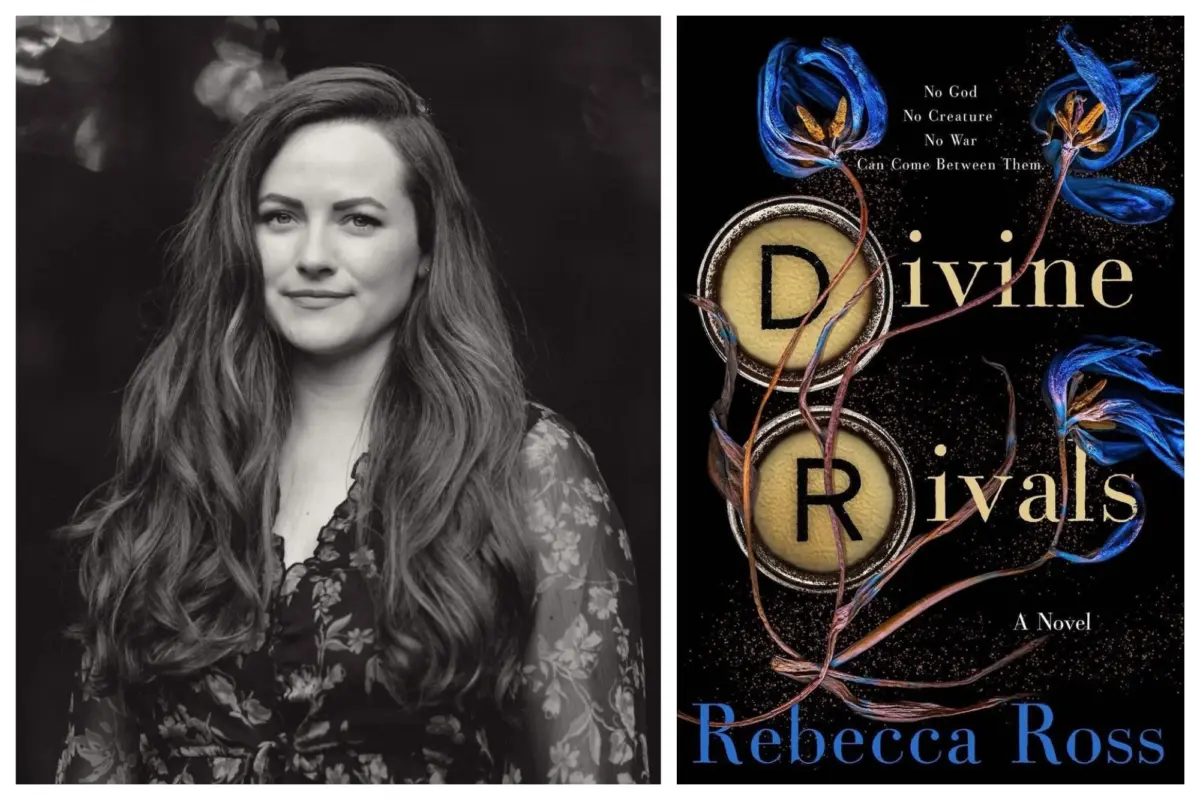
In the fast-paced, high-stakes ecosystem of Hollywood literary adaptations, few journeys are as erratic as the one currently being experienced by Rebecca Ross’s runaway young adult (YA) fantasy sensation, Divine Rivals. Nearly a year and a half after Paramount Pictures initially secured the coveted film rights in a fiercely contested, multi-studio bidding war in June 2025, the project’s future has taken an unexpected detour. Following corporate restructuring tied to Paramount’s high-profile merger with Skydance, the studio’s option on the property quietly lapsed.
Enter The Walt Disney Company. In a move reported by Deadline, the House of Mouse has officially stepped into the breach, acquiring the rights to adapt Ross’s New York Times bestselling novel. However, this rescue mission comes with a notable caveat: the adaptation is essentially starting from scratch. Sofia Alvarez—the acclaimed screenwriter previously attached to pen the script under Paramount—is not making the jump to the new studio. Consequently, Disney must now conduct a fresh search for a screenwriter to translate Ross’s mystical wartime romance into a viable cinematic feature.
For the legions of fans who have propelled Divine Rivals and its sequel, Ruthless Vows, to extraordinary commercial heights, this transition represents a bittersweet moment of limbo. While the assurance that the book is actively being developed by a major studio is cause for celebration, the loss of initial momentum means that production remains a distant horizon. This report offers a comprehensive look at the lifecycle of the Divine Rivals adaptation, examining the business dynamics of the rights transfer, the challenges of adapting Ross’s intricate fantasy universe, and what lies ahead for this burgeoning literary franchise.
Read Also
Detailed Chronology: The Journey of Divine Rivals
Phase I: The Competitive Bidding War (June 2025)
The cinematic life of Divine Rivals began with a flurry of industry activity in early summer 2025. Following its publication in 2023, the novel had spent months quietly building a devoted, fervent community of readers on social media platforms like BookTok and Bookstagram. This grassroots phenomenon eventually translated into massive commercial success, catching the eye of major Hollywood acquisitions executives.
In June 2025, it was revealed that Paramount Pictures had emerged victorious in a competitive bidding situation for the intellectual property (IP). The studio moved quickly to establish creative momentum, attaching screenwriter Sofia Alvarez to the project. Alvarez, widely respected in the YA adaptation space for her successful work on Netflix’s To All the Boys I’ve Loved Before film franchise as well as FX’s Man Seeking Woman, was viewed by industry insiders as an ideal choice to capture the emotional intimacy and high-stakes tension of Ross’s narrative. At the time, the pairing of Paramount, a major studio pedigree, and Alvarez’s proven track record signaled to the publishing and film worlds that Divine Rivals was on a fast track to the silver screen.
Phase II: The Silent Lapse and Corporate Upheaval (October 2026)
In Hollywood, however, ink on a development deal is rarely a permanent guarantee. By October 2026, the promising alignment between Paramount and Divine Rivals had quietly dissolved.
The primary catalyst for this shift was monumental corporate restructuring: Paramount’s overarching merger with Skydance Media. During massive corporate consolidations of this scale, incoming leadership teams routinely audit active development slates, re-evaluating budgets, strategic priorities, and incoming intellectual property. In the wake of the Skydance merger, Paramount’s options on several literary properties, including Divine Rivals, were allowed to lapse.
Rather than languishing in development hell indefinitely, the rights to the novel quickly re-entered the open market, proving that the industry’s appetite for proven YA fantasy IP remained robust despite corporate turbulence.
Phase III: The Disney Acquisition and Square One (Current Status)
Today, the landscape has shifted once more. Deadline confirmed that The Walt Disney Company has successfully acquired the rights to adapt Divine Rivals. Disney, which has historically found immense success with live-action fantasy adaptations and literary franchises (spanning from The Chronicles of Narnia legacy to its deep catalog of contemporary adaptations), views the property as a prime candidate for its slate.
Yet, this new chapter comes with structural regression. Because Sofia Alvarez’s attachment was tied to Paramount’s original option agreement, her script and participation did not transition to the new studio. Disney’s acquisition means that the creative team is effectively returning to square one. Producers must now canvas the industry for a new screenwriter capable of capturing the delicate balance of historical fantasy, epistolary romance, and brutal wartime realism that defines Ross’s universe.
Supporting Context & Metrics: The Phenomenon of Divine Rivals
To understand why major studios continue to fight tooth and nail for the rights to Divine Rivals, one must examine the staggering cultural and commercial footprint Rebecca Ross has established within the fantasy genre.
Published in April 2023 by St. Martin’s Press, Divine Rivals introduced readers to a richly textured world torn apart by a divine conflict. The novel’s official synopsis sets the stage for a sweeping romance entwined with mythic warfare:
All eighteen-year-old Iris Winnow wants to do is hold her family together. With a brother on the frontline forced to fight on behalf of the Gods now missing from the frontline and a mother drowning her sorrows, Iris’s best bet is winning the columnist promotion at the Oath Gazette. But when Iris’s letters to her brother fall into the wrong hands—that of the handsome but cold Roman Kitt, her rival at the paper—an unlikely magical connection forms. Expelled into the middle of a mystical war, magical typewriters in tow, can their bond withstand the fight for the fate of mankind and, most importantly, love?
Commercial Milestones
- Sales Milestone: Within a remarkably short window, Divine Rivals has surged past the milestone of one million copies sold worldwide, a testament to its enduring word-of-mouth momentum.
- The BookTok Effect: The novel became a foundational text in the "romantic fantasy" (romantasy) boom, dominating bestseller lists for months and remaining a permanent fixture on library waiting lists and bookstore tables.
- Expanded Universe: The success of the first book paved the way for its 2024 sequel, Ruthless Vows, which concluded the duology. While the sequel is not currently confirmed to be part of Disney’s initial acquisition package, industry observers note that any successful cinematic adaptation of the first book will almost certainly incorporate or expand into the events of the second volume.
Official Statements & Industry Analysis
While formal statements from Disney executives regarding the specific strategic vision for the film remain tightly under wraps—as is customary for early-stage project re-launches—industry analysts have been quick to weigh in on what this transition means.
Media analysts point out that Disney’s acquisition reflects a broader industry-wide scramble to capture the demographic that reads YA and crossover fantasy fiction. With franchises like Twilight, The Hunger Games, and The Fault in Our Stars proving that emotional, high-concept YA adaptations can yield massive box office returns, studios are eager to find the next generation of tentpole intellectual property.
However, studio transitions are notoriously tricky. A prominent talent agent representing screenwriters in Los Angeles, speaking on condition of anonymity, noted the inherent friction in rights migrations:
"When a studio like Paramount merges and sheds assets, it creates a window of opportunity for competitors like Disney. But resetting the creative clock is always a gamble. Fans who fell in love with a specific writer’s vision—in this case, Sofia Alvarez—will have to exercise patience while a new creative voice recalibrates the adaptation for a different studio’s sensibilities."
Furthermore, questions remain regarding how Disney plans to handle the darker, more visceral elements of Divine Rivals. While the romance between Iris and Roman forms the emotional core of the book, the backdrop is undeniably harrowing—featuring trench warfare, chemical gas, wounded soldiers, and the direct casualties of a war fought by absentee gods. Whether Disney intends to position the adaptation as a PG-13 theatrical tentpole or channel it through one of its mature streaming banners remains one of the most compelling creative questions moving forward.
Future Outlook: What’s Next for the Divine Rivals Movie?
As the dust settles on the Disney acquisition, stakeholders and fans are left looking toward the horizon. What concrete steps must occur before cameras can finally roll on an adaptation of Rebecca Ross’s beloved novel?
- Screenwriter Sourcing: The immediate priority for Disney’s development executives is identifying and hiring a new screenwriter. The writer will be tasked with distilling a dense, emotionally intricate novel into a tightly paced feature-film script while preserving the unique epistolary dynamic of the magic typewriters.
- Producer and Director Attachments: Once a script is commissioned and a draft takes shape, the studio will begin courting producers and directors. Given the visual and atmospheric nature of the world—reminiscent of a 1940s-era wartime Europe infused with divine magic—attracting a visionary director who can balance intimate romance with grand-scale fantasy battles will be paramount.
- Casting Speculation: Unofficial fancasting has dominated social media platforms since the book’s release, with readers eagerly debating which young actors could best embody the ambitious, resilient Iris Winnow and the sharp, enigmatic Roman Kitt. However, official casting announcements are likely years away, as the project must first clear the crucial development hurdles of scriptwriting and budgeting.
- The Fate of Ruthless Vows: Though the current acquisition focuses specifically on Divine Rivals, the existence of its sequel, Ruthless Vows, provides a built-in roadmap for a potential cinematic franchise. If Disney’s eventual film adaptation performs well with audiences, expanding the narrative into a two-part or duology structure remains a logical and highly lucrative possibility.
Conclusion
The path from a bestselling manuscript to a major motion picture is rarely a straight line. For Divine Rivals, the detour through Paramount’s corporate restructuring and its subsequent rescue by Disney demonstrates both the fragility and the resilience of high-value intellectual property in modern Hollywood. While the loss of Sofia Alvarez’s early script means that fans must reset their timelines, the involvement of a powerhouse studio like Disney ensures that Iris and Roman’s magical correspondence will eventually find its way to the screen. Until then, the millions of readers who made the journey a global phenomenon will be watching closely, hoping that Hollywood’s latest gamble finally brings the war of the gods to life.




Comments
Facebook App ID not configured. Please add it in the Customizer.