
Executive Overview
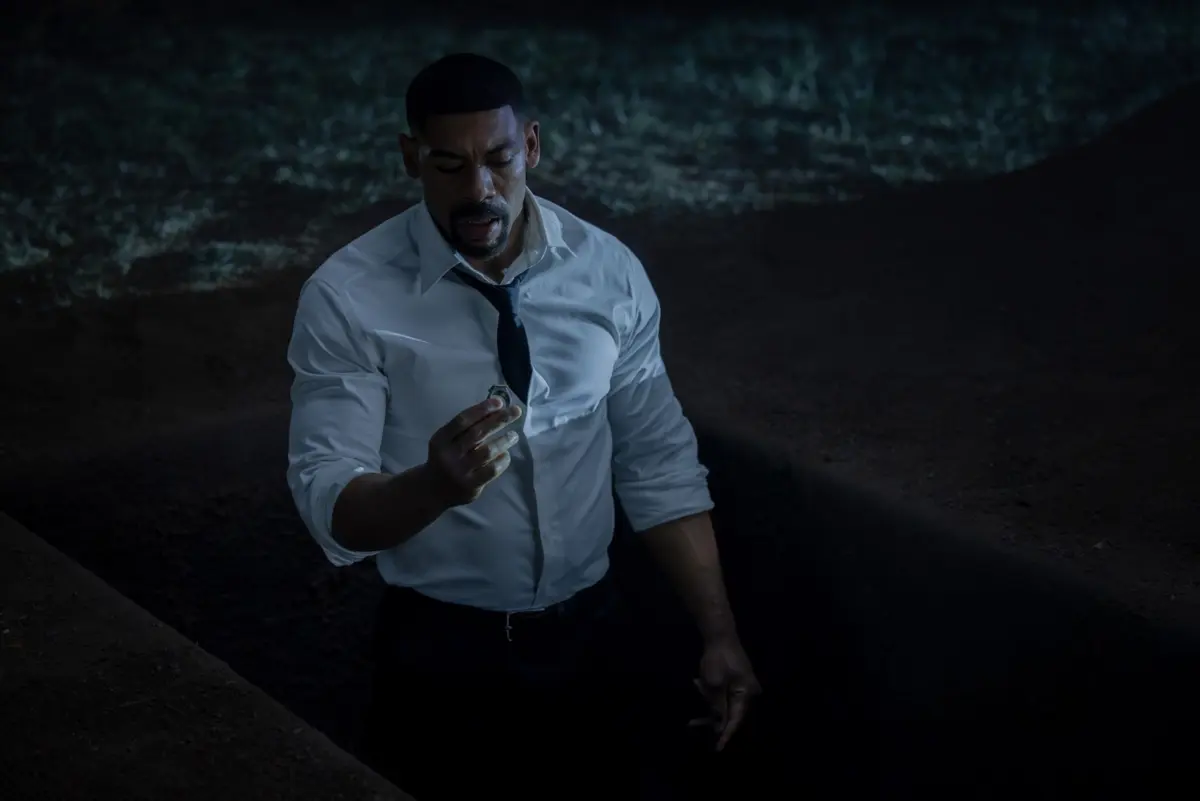
The first-season finale of HBO’s critically acclaimed science-fiction drama Lanterns delivered a seismic shift to the mythology of one of DC Comics’ most enduring icons. In a moment that has polarized and fascinated comic purists and television audiences alike, John Stewart—masterfully portrayed by Aaron Pierre—forsook the traditional tenets of the legendary Green Lantern Corps. Instead of reciting the time-honored oath that demands absolute fearlessness from its wielders, Stewart articulated an altered, deeply personal incantation. This modified creed openly acknowledged human vulnerability, embracing fear not as a corrupting poison, but as the foundational crucible of true courage.
For Pierre, this deviation from decades of comic book tradition is not a betrayal of the character’s core, but an elevation of it. Speaking at an exclusive post-finale press conference attended by Reactor, the actor unpacked the philosophical weight behind Stewart’s transformation. According to Pierre, the traditional depiction of heroism as the complete absence of fear is fundamentally flawed. In the universe of Lanterns, John Stewart’s ultimate superpower is his capacity to look terror dead in the eye, accept its presence, and systematically dismantle it.
This deep dive examines the narrative choices that shaped the season one conclusion of Lanterns, explores Aaron Pierre’s psychological parsing of John Stewart’s journey from a hesitant Marine to an enlightened cosmic guardian, and assesses the broader implications of rewriting the foundational rules of the Green Lantern mythos for modern television audiences.
Read Also
Detailed Chronology: The Road to the Altered Oath
The journey toward the season one finale of Lanterns was meticulously paced across eight episodes of high-stakes terrestrial investigation and cosmic foreshadowing. From the outset, HBO’s adaptation set itself apart from previous iterations by grounding its interstellar police force in a gritty, neo-noir aesthetic that prioritized psychological realism over operatic space fantasy.
The Burden of the Ring
When audiences were first introduced to Aaron Pierre’s rendition of John Stewart, the character was wrestling with the psychological debris of his past as a United States Marine. Unlike classic portrayals where heroes eagerly accept destiny, the narrative revealed that Stewart had initially rejected the power ring a decade prior, in 2016. At that juncture in the timeline, Stewart possessed a profound self-awareness that many heroes lack: he knew, with agonizing precision, that he was simply not ready.
Rather than framing this rejection as a moment of weakness or cowardice, the series positioned Stewart’s decision as an act of supreme responsibility. The power ring demands an unfathomable degree of emotional and psychological fortitude. To wield it without inner harmony is to court disaster. Stewart’s choice to walk away in 2016 initiated a ten-year crucible of maturation, discipline, and self-reflection.
The Ten-Year Interregnum
Between the initial rejection in 2016 and the events of the series’ primary timeline, Stewart did not actively seek out the mantle, nor did he wallow in regret. Instead, he leaned into his own vulnerabilities. In Pierre’s interpretation, Stewart’s character arc represents a masterclass in intellectual and emotional humility.
When the ring inevitably resurfaced in his life a decade later, Stewart was a fundamentally altered man. He had not magically become fearless; rather, he had mastered the art of processing his internal anxieties. The culmination of this multi-year internal evolution arrived in the season one finale, where charging the ring required an outward manifestation of his internal philosophy. By altering the sacred oath, Stewart signaled to the cosmos—and to himself—that the era of the emotionally detached, unfeeling cosmic cop was officially over.
Supporting Context & Metrics: Deconstructing the Psychology of Fear
To truly understand the weight of Stewart’s revised oath, one must analyze the structural changes made to the Green Lantern mythology and how they resonate with modern storytelling paradigms.
The Traditional vs. Modified Oath
For over half a century, the standard Green Lantern oath has served as a touchstone of pop culture iconography:
"In brightest day, in blackest night,
No evil shall escape my sight.
Let those who worship evil’s might,
Beware my power—Green Lantern’s light!"
Implicit within the broader lore of this oath is the psychological mandate of the Corps: willpower stems from fearlessness. Entities driven by fear, such as the yellow light of the Sinestro Corps, are framed as the ultimate antithesis of order.
However, Lanterns subverts this dichotomy by introducing a nuanced gray area. Stewart’s altered oath directly integrates fear into the kinetic activation of the ring. By acknowledging dread, Stewart does not succumb to the yellow spectrum; instead, he transmutes human fragility into a localized engine of resilience.
| Attribute | Traditional Green Lantern Lore | Lanterns (Season 1 Finale) |
|---|---|---|
| View on Fear | Fear must be eradicated or ignored. | Fear must be acknowledged and processed. |
| Heroic Archetype | The unfaltering, stoic cosmic protector. | The reflective, self-aware tactical realist. |
| Nature of Willpower | Derived from absolute emotional immunity. | Forged through the active conquest of anxiety. |
| Stewart’s Approach | Compliance with institutional mandates. | Integration of personal vulnerability into duty. |
Audience Reception and Narrative Metrics
Data from streaming analytics and social media sentiment tracking following the release of the finale indicate a deeply engaged viewership. While a vocal faction of traditionalists initially questioned the narrative liberty taken with the oath, the overwhelming consensus among critics and mainstream audiences has praised the psychological depth brought to the character.
The series successfully bridged the gap between military realism and space-opera myth-making. By treating Stewart’s Marine background not merely as a resume bullet point, but as the psychological lens through which he processes trauma and operational stress, Lanterns achieved a level of character authenticity rarely seen in comic book adaptations.
Official Statements: Aaron Pierre on John Stewart’s Defining Superpower
In the aftermath of the season one finale, Aaron Pierre participated in a press conference attended by Reactor, offering profound insights into the philosophy driving his performance. The British actor articulated a vision of John Stewart that completely recontextualizes what it means to be a hero in the DC Universe.
"John’s superpower, in my opinion, subjectively, is not being fearless; it’s the ability to acknowledge fear and overcome it," Pierre stated emphatically to the assembled journalists.
This subjective reading serves as the beating heart of Pierre’s performance throughout the eight-episode run. The actor elaborated on how Stewart navigates his own limitations without falling into the traps of ego or self-delusion.
"He doesn’t lean away from it with arrogance or with this delusion," Pierre explained, discussing how Stewart handles his moments of inadequacy. "He leans into it and actively searches for ways to become everything he knows he can become if he just makes himself the student that absorbs versus deflecting when he doesn’t know something."
This commitment to being a perpetual student sets Pierre’s Stewart apart from the archetype of the infallible comic book protagonist. When faced with situations beyond his immediate understanding, Stewart does not mask his confusion with bravado. He absorbs the data, confronts his internal dread of failure, and adapts. This intellectual and emotional agility is what ultimately makes him worthy of the ring—not an innate absence of terror, but an extraordinary mastery over it.
Future Outlook: What the Altered Oath Means for Season Two and Beyond
As HBO’s Lanterns looks toward an all-but-certain second season, the ramifications of John Stewart’s altered oath will undoubtedly ripple across the broader DC cinematic and streaming landscape.
Shifting Dynamics within the Green Lantern Corps
The traditional Green Lantern Corps has historically operated as a rigid, bureaucratic interstellar police force with little room for idiosyncratic philosophical interpretations. By fundamentally redefining how one of its premier human members charges his ring, Stewart has inadvertently introduced ideological dissent into the ranks.
How will the Guardians of the Universe react to a Green Lantern who weaponizes self-awareness and acknowledged fear rather than blind, stoic obedience? This tension provides fertile ground for narrative conflict in subsequent seasons. It sets up an inevitable clash between institutional dogma and individual enlightenment. Stewart may find himself viewed not just as a protector of sector 2814, but as a dangerous reformer within an ancient cosmic empire.
The Evolution of the Hero’s Journey
Television audiences today demand psychological complexity. The era of the flawless, unbothered superhero is rapidly giving way to narratives that explore trauma, mental health, and emotional labor. By anchoring John Stewart’s heroism in the gritty reality of psychological endurance, Lanterns has future-proofed its protagonist.
As Stewart steps fully into his role as a cosmic superhero in the wake of the season one finale, his journey will no longer be about proving he is strong enough to avoid breaking. Instead, it will be about the daily, heroic labor of holding oneself together when the universe is tearing at the seams.
With all eight episodes of season one now streaming on HBO, fans have a rich, multi-layered text to revisit while they await news of production timelines for season two. One thing is abundantly clear: Aaron Pierre’s John Stewart has permanently altered the landscape of the Green Lantern mythos, proving that true bravery is never about the absence of fear—it is about the courage to conquer it.





Comments
Facebook App ID not configured. Please add it in the Customizer.