
Executive Overview
Two decades after its chilling debut redefined the monster movie genre, Academy Award-winning filmmaker Bong Joon Ho’s seminal creature feature, The Host (2006), is staging a triumphant return to the cinematic landscape. Newly remastered in pristine 4K, the film is set to terrify audiences anew through a special theatrical re-release this November, followed by a wide digital rollout.
Long before Bong became a household name in the United States and globally through his historic, multi-Oscar-winning masterpiece Parasite (2019), he established his brilliant, idiosyncratic cinematic voice with The Host. Preceding a celebrated slate of genre-bending films—including Snowpiercer (2013), Okja (2017), and his latest futuristic venture Mickey 17 (2025)—The Host remains a towering achievement in modern horror and science fiction.
This 20th-anniversary presentation is more than just a nostalgic trip to the cinema; it is an overdue critical reappraisal of a film whose biting socio-political commentary has only grown more relevant with time. Distributed for select theatrical screenings on November 21 and November 23, the special engagement will treat audiences to not only the jaw-dropping fidelity of the new 4K transfer, but also an exclusive in-depth conversation between Bong Joon Ho and fellow visionary filmmaker Edgar Wright (Baby Driver, Hot Fuzz, Scott Pilgrim vs. The World). For cinephiles and horror enthusiasts alike, this cinematic homecoming offers a rare opportunity to experience a modern classic on the big screen the way it was meant to be seen.
Read Also
Detailed Chronology
The Genesis of a Modern Monster (2000–2005)
The roots of The Host trace back to a real-life environmental scandal that deeply unsettled the South Korean public. In 2000, an American civilian employed at the United States military base Yongsan Garrison in Seoul ordered gallons of toxic formaldehyde to be dumped down a drain, which flowed directly into the Han River—the vital geographical and cultural heartbeat of the capital.
Bong Joon Ho, deeply affected by the blatant disregard for local ecology and sovereignty, conceptualized a film that would literalize the monstrous consequences of institutional negligence and unchecked foreign hegemony. Drawing inspiration from classic creature features, Ray Harryhausen stop-motion spectacles, and Japanese kaiju traditions, Bong set out to craft something entirely distinct: a monster movie deeply rooted in the chaotic, flawed, and profoundly human dynamics of a dysfunctional family.
The Original Theatrical Era and Record-Breaking Success (2006)
When The Host premiered in theaters in 2006, it immediately shattered box office records in South Korea, becoming the highest-grossing film in the country’s cinematic history at the time. Its international festival run—kickstarted by a celebrated debut at the Cannes Film Festival’s Directors’ Fortnight—cemented Bong’s reputation as a daring international auteur.
Unlike traditional Hollywood blockbusters that rely on stoic military heroes or brilliant scientists to vanquish threats, The Host placed its fate in the hands of the Park family: a bumbling, emotionally bruised collective running a modest snack bar by the river. This subversion of genre tropes transformed what could have been a standard creature feature into a scathing satire of governmental incompetence, media hysteria, and bureaucratic apathy.
The Global Expansion and Auteur Milestones (2013–2025)
In the years following The Host, Bong Joon Ho’s international footprint expanded dramatically. He successfully transitioned to English-language and multinational co-productions with the class-warfare train epic Snowpiercer (2013) and the eco-fable Okja (2017).
This trajectory culminated in the historic 2020 Academy Awards ceremony, where Parasite became the first non-English-language film in history to win Best Picture. As Bong prepares for his subsequent ventures, such as the sci-fi dark comedy Mickey 17 (2025), film historians and critics continually circle back to The Host as the crucible where his trademark tonal shifts—seamlessly blending horror, comedy, tragedy, and social critique—were first perfected.
The 20th Anniversary Restoration and Re-Release (2026)
Marking its milestone anniversary, the film has undergone a meticulous 4K digital restoration. This pristine version brings out the moody, rain-slicked atmosphere of the Han River banks and renders the creature—created by renowned visual effects house Wētā Workshop and the local studio The Orphanage—with terrifying, visceral clarity.
The special event screenings on November 21 and 23 will be accompanied by an exclusive dialogue between Bong and Edgar Wright, bridging two distinct cinematic traditions in a celebration of uncompromising directorial vision. Following its theatrical run, the 4K restored version will land on digital platforms on November 30, 2026.
Supporting Context & Metrics
Box Office, Critical Reception, and Cultural Footprint
To understand the monumental impact of The Host, one must look at the hard metrics and critical consensus surrounding its original release and enduring legacy:
- Box Office Domination: Upon its 2006 release in South Korea, The Host drew over 13 million admissions in a country with a population of roughly 48 million at the time, making it a unprecedented cultural phenomenon.
- Critical Acclaim: The film currently boasts a stellar approval rating on aggregate review platforms, frequently cited by top-tier critics as one of the greatest horror and sci-fi films of the 21st century.
- Global Influence: The Host paved the way for international audiences to embrace South Korean genre cinema, setting the stage for the global Hallyu (Korean Wave) boom that would later bring international prominence to works like Train to Busan and Squid Game.
The Plot: A Breakdown of the Narrative
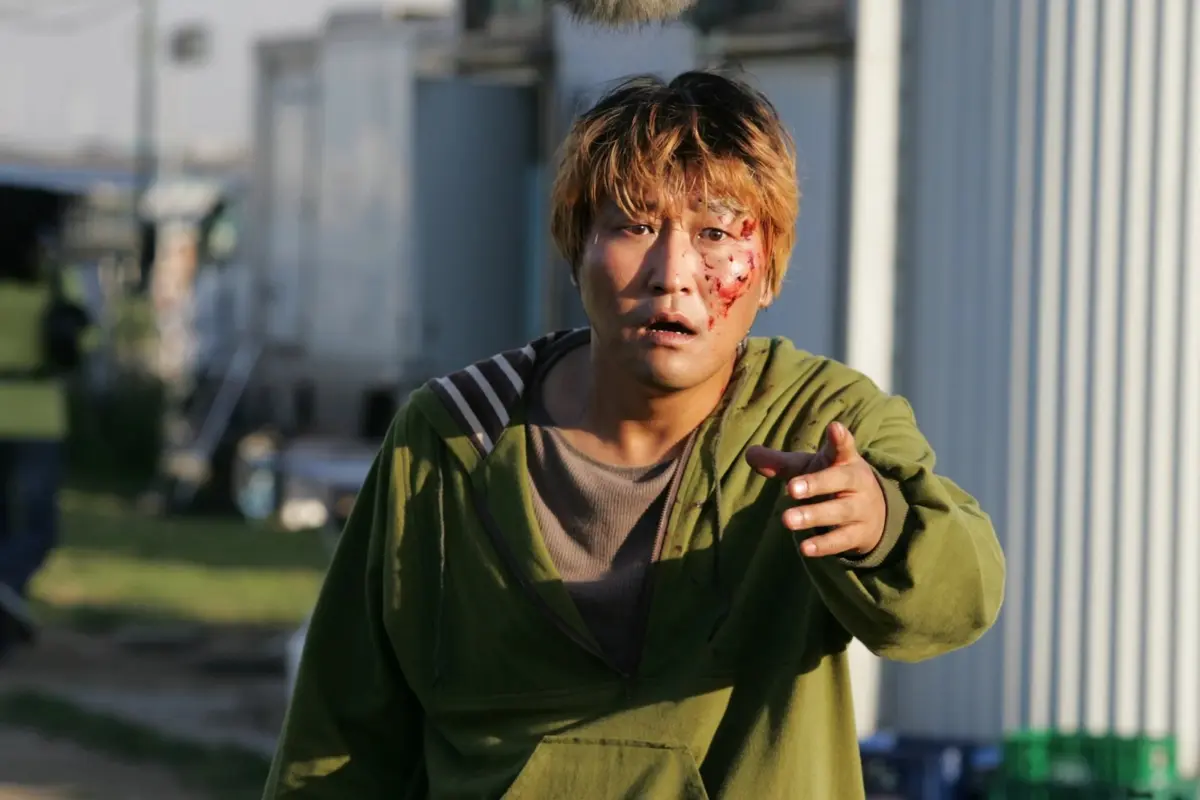
The film’s narrative engine kicks into gear along the idyllic yet deceptively perilous banks of the Han River. Gang-du (played by frequent Bong collaborator Song Kang-ho) is a lackadaisical man working at a modest food stand alongside his aging father, Hie-bong (Byun Hee-bood). Dozing off on the job, Gang-du is snapped back to reality by his sharp-tongued daughter, Hyun-seo (Ko A-sung), who is furious with him for missing a parent-teacher conference.
As Gang-du makes a routine delivery down to the water’s edge, he notices a massive, agitated crowd gathered on the Han River Bridge, taking photographs of a grotesque, amorphous mass clinging to the architectural ironwork. What begins as a surreal spectacle quickly descends into absolute bedlam when the amphibious, mutant creature drops onto the embankment, unleashing a wave of devastation.
In the ensuing panic, Gang-du attempts to flee with Hyun-seo, but in the blinding confusion, the creature snatches the young girl and plunges back into the murky depths of the river.
Bureaucratic Nightmares and Viral Paranoia
In the wake of the attack, the South Korean government—influenced by foreign military pressures—declares that the monster is the natural host of an unidentified, deadly virus. A draconight quarantine and martial law envelop the river zone.
While the authorities treat the populace as infected vectors rather than citizens in need of rescue, Gang-du receives a terrified phone call from a cell phone down in the sewers: Hyun-seo is alive, hiding in the dark lair of the beast. Driven by a desperate paternal instinct, the broken Park family—including Gang-du’s college-educated activist brother Nam-il (Park Hae-il) and champion archer sister Nam-joo (Bae Doona)—conspire to infiltrate the heavily guarded quarantine zone, waging a one-family war against both the municipal state and the monster itself.
Official Statements & Industry Insights
The re-release has sparked reflections from industry heavyweights regarding the film’s staying power and Bong Joon Ho’s unique approach to genre storytelling.
In promotional materials for the 4K re-release, studio representatives emphasized the painstaking effort required to restore the original negative while preserving the gritty, atmospheric lighting that defined the mid-2000s aesthetic. The inclusion of the conversation between Bong Joon Ho and Edgar Wright serves as a masterclass in modern cinema, with both directors known for their kinetic pacing, meticulous framing, and seamless integration of dark humor into high-stakes narratives.
Film scholars have frequently highlighted how The Host anticipated contemporary anxieties regarding environmental collapse, state surveillance, and the manipulation of public health crises. As one retrospective review noted: "The monster in the river is terrifying, but the true horror of The Host lies in the uncaring machinery of bureaucracy that values containment and control far above human life." This thematic resonance ensures that the film’s return to the big screen is not merely a retrospective novelty, but a vital cinematic experience for a modern era grappling with its own existential crises.
Future Outlook
As The Host prepares to captivate a new generation of moviegoers in stunning 4K clarity, its legacy offers a profound lens through which to view the evolution of modern blockbusters. In an era dominated by homogenous franchise filmmaking, Bong Joon Ho’s 2006 masterwork stands as a defiant reminder that blockbuster cinema can—and should—be politically subversive, emotionally raw, and visually audacious.
Fans eager to experience the terror of the Han River once more can secure tickets for the limited theatrical engagement on November 21 and 23 through major ticketing platforms like Fandango. For those unable to make the theatrical run, the digital release on November 30, 2026, ensures that the Park family’s desperate fight for survival will remain accessible in pristine home-viewing quality.
Twenty years on, the waters of the Han River still run deep, and the monster that crawled out of them remains as vital, terrifying, and fiercely human as ever.

Comments
Facebook App ID not configured. Please add it in the Customizer.