
Executive Overview
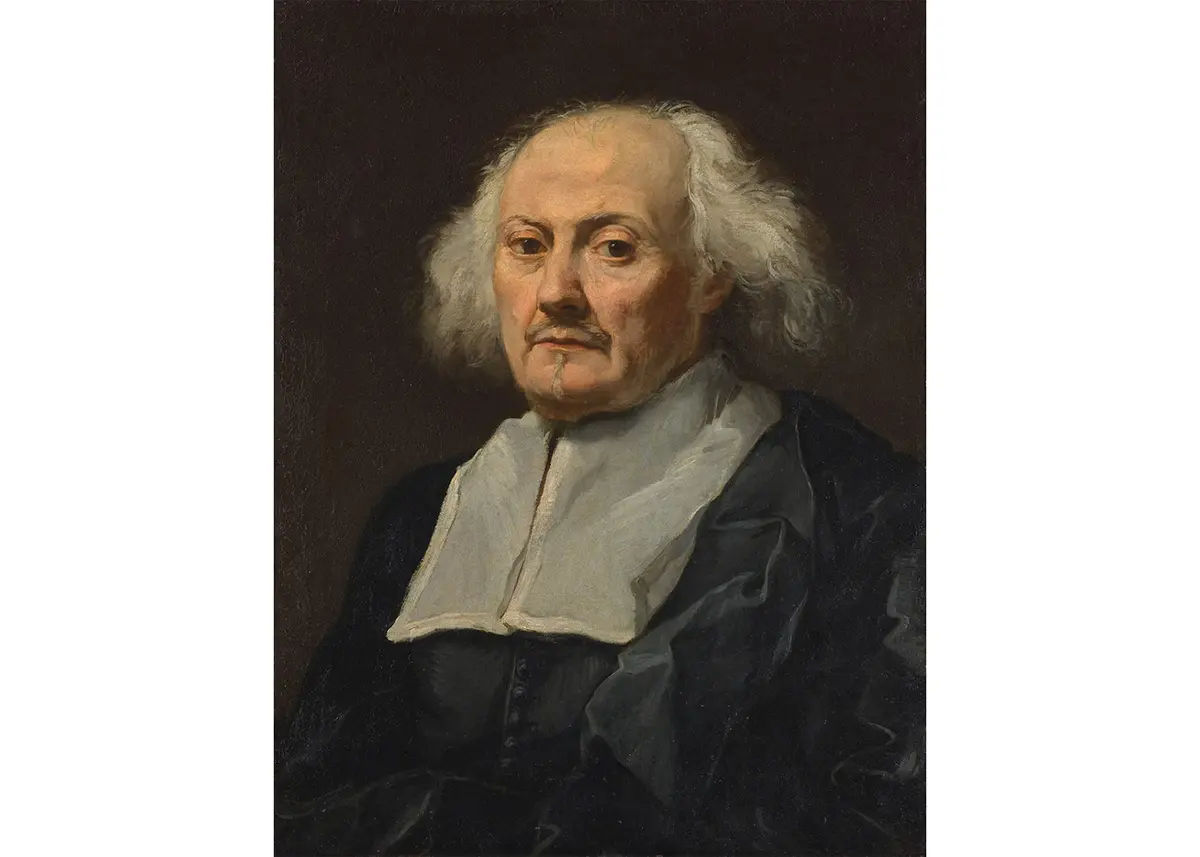
In the hushed storerooms of the world’s great museums, masterpieces sometimes lie dormant for decades, waiting for the right eye to pierce through centuries of dust, misattribution, and administrative neglect. Such is the extraordinary fate of Portrait of an Old Man, a canvas that languished in obscurity at Vienna’s prestigious Kunsthistorisches Museum since 1989. Once filed away under the designation of an anonymous artist—and before that, misattributed entirely—the painting is now recognized as a rare and significant addition to the authenticated corpus of Gian Lorenzo Bernini, the undisputed titan of the Italian Baroque.
When the landmark exhibition “Bernini—Painter and Sculptor” opens its doors at the Kunsthistorisches Museum on December 2, this newly validated canvas will serve as the undisputed centerpiece of the show. The revelation offers the global art community a rare encounter with Bernini’s brushwork, an aspect of his legendary career that has long been overshadowed by his towering achievements in architecture and sculpture.
The journey of Portrait of an Old Man from a forgotten museum basement to the international spotlight is more than just a tale of curatorial serendipity; it is a masterclass in art-historical detective work. Driven by meticulous stylistic analysis, comparative technical scrutiny, and an unwavering commitment to uncovering the truth, museum curator Gudrun Swoboda unlocked the painting’s hidden secrets. This comprehensive report explores the discovery, the technical hallmarks that convinced experts of its true provenance, the storied history of Bernini’s rare paintings, and the broader implications this rediscovery holds for the study of Baroque art.
Read Also
Detailed Chronology: From Private Acquisition to Storeroom Obscurity and Rebirth
The modern history of Portrait of an Old Man is a winding narrative spanning more than a century of changing attributions, quiet acquisitions, and bureaucratic archiving. To understand how a work by one of history’s most celebrated artists could spend decades cataloged as the work of an unknown hand, one must retrace the painting’s movements through time.
The 1900 Acquisition and Early Misattributions
The canvas entered the institutional memory of Vienna in 1920, when a local art collector gifted the piece to the Kunsthistorisches Museum. The collector had originally purchased the painting some twenty years earlier, around 1900, during a period when European art markets were flooded with works of uncertain provenance. Upon its arrival at the museum, institutional experts evaluated the piece and attributed it to Philippe de Champaigne, a prominent French Baroque painter and contemporary of Bernini.
While Champaigne was an accomplished portraitist known for his rigorous realism and association with Jansenism, the attribution never entirely settled comfortably with the painting’s intrinsic stylistic properties. Over the subsequent decades, as art history evolved and connoisseurship methods grew more sophisticated, the attribution shifted repeatedly. Scholars and catalogers bounced the painting between various European schools, ultimately finding no definitive match.
Decades in the Dark
By 1989, institutional fatigue and a lack of clear scholarly consensus led to the painting being reclassified under the catch-all designation of an anonymous artist. Deemed a work of minor historical consequence and lacking an identifiable master to elevate its status, Portrait of an Old Man was quietly transferred to the museum’s climate-controlled storerooms. There, shielded from natural light and public view, it sat untouched for decades.
It remained forgotten through sweeping renovations, shifts in museum leadership, and the digital transformation of museum archives. Had it not been for preparations for the upcoming “Bernini—Painter and Sculptor” exhibition—an ambitious curatorial effort aimed at exploring the breadth of the master’s dual capabilities—the canvas might easily have remained in the dark for another generation.
The Spark of Re-evaluation
As planning for the December exhibition commenced, Gudrun Swoboda, curator of the show, undertook a systematic review of the museum’s holdings and potential international loans that might intersect with Bernini’s lesser-known pictorial output. It was during this exhaustive audit that Swoboda turned her attention to the anonymous storeroom holdings, hoping to find overlooked pieces that could shed light on the periphery of the Baroque era. Upon pulling Portrait of an Old Man from its rack, the visual and physical properties of the paint surface immediately demanded a more rigorous, specialized examination. What followed was a thrilling investigation that systematically dismantled the decades-old assumption of anonymity and built an irrefutable case for Bernini’s authorship.
Supporting Context & Metrics: Bernini’s Rare Pictorial Legacy
To appreciate the gravity of the Kunsthistorisches Museum’s discovery, one must contextualize Gian Lorenzo Bernini’s output as a painter. Today, Bernini is universally canonized as the architectural and sculptural genius who defined the visual vocabulary of 17th-century Rome. Yet, during his lifetime, Bernini was also a prolific and enthusiastic painter.
The Sculptor as Painter
Historical accounts, particularly the early biographies written by his son Domenico Bernini and his contemporary Filippo Baldinucci, attest that Bernini painted hundreds of canvases over the course of his long career. Painting was not merely a casual hobby for the master; it was an active part of his creative process and a medium through which he explored composition, light, and dramatic tension.
Despite this prolific output, time has been exceptionally harsh to Bernini’s paintings. Unlike his marble sculptures, which were carved to withstand the elements and proudly displayed in public piazzas and papal palaces, his paintings were often distributed among friends, patrons, and family members, lacking the institutional preservation afforded to his monumental commissions. Today, scholars estimate that fewer than 20 paintings universally accepted as authentic works by Bernini survive.
This stark numerical reality transforms every newly authenticated painting into a monumental event for art history. The discovery of Portrait of an Old Man increases the known corpus of surviving Bernini paintings by a measurable percentage, offering scholars invaluable material for comparative analysis.
Bernini’s Monumental Counterparts
To fully understand the artistic sensibilities that Swoboda identified in the newly attributed portrait, one must look at the monumental works that cemented Bernini’s fame:
- St. Peter’s Basilica Contributions: Bernini served for a time as the official architect of St. Peter’s, designing some of its most iconic architectural and sculptural features, including the sweeping, welcoming embrace of the exterior piazza and its massive colonnade.
- The Marble David (1623–1624): Housed in the Galleria Borghese in Rome, this dynamic sculpture captures the biblical hero at the precise moment of maximum physical tension, coiled to hurl the stone at Goliath. It was intentionally designed to outdo Michelangelo’s iconic static representation of the same figure.
- The Ecstasy of Saint Theresa (1647–1652): Located in the Cornaro Chapel of the Santa Maria della Vittoria church in Rome, this masterpiece of High Baroque sculpture integrates architecture, painting, and sculpture to depict the mystical transverberation of Teresa of Ávila with breathtaking theatricality.
These works share a common thread: an intense psychological immediacy, a mastery of emotional expression, and a sculptural approach to form that manipulates light and shadow with dramatic flair. It was precisely these qualities that Swoboda recognized etched onto the canvas of the forgotten Vienna portrait.
Official Statements and Curatorial Analysis
The attribution of a major historical painting cannot rest on intuition alone; it requires rigorous comparative analysis, structural evaluation, and peer validation. In her interviews with The Art Newspaper and in her forthcoming editorial work, curator Gudrun Swoboda detailed the fascinating forensic process that linked the anonymous canvas to the hand of the Baroque master.
Sculpting with Paint: The Tactile Method
The primary breakthrough came when Swoboda closely examined the physical application of pigment on the canvas, particularly around the subject’s face and mouth. Rather than employing the smooth, blended brushstrokes typical of many 17th-century portraitists, the artist approached the medium with the instincts of a master carver.
"The paint was applied as if building up and modelling a face in clay," Swoboda explained, highlighting the profoundly tactile nature of the brushwork.
This sculptural treatment of paint is most evident in the subject’s mustache and facial musculature, where thick, deliberate strokes create a three-dimensional sense of volume and mass. This technique mirrors the physical reality of how Bernini approached his raw materials in the studio—whether he was kneading wet clay for a preparatory bozzetto or chiseling away at a block of Carrara marble.
Anatomical and Stylistic Parallels
To cement the attribution, Swoboda cross-referenced the stylistic markers of Portrait of an Old Man with undisputed works by Bernini across various mediums:
- The Mouth and Lips: Swoboda pointed to distinct structural similarities between the corners of the mouth in the newly discovered painting and those found in Bernini’s celebrated marble Bust of Louis XIV (currently preserved at the Palace of Versailles). The specific way the lips are articulated—conveying both softness and underlying skeletal tension—bears the unmistakable signature of Bernini’s hand.
- Lighting and Gaze: Further comparative weight was drawn from a rare self-portrait drawing by Bernini held in the prestigious Royal Collection Trust. Swoboda noted striking alignments in the angle of the lighting hitting the subject’s face and the psychological intensity of the gaze, both of which reflect Bernini’s deep fascination with theatrical chiaroscuro and human emotion.
Academic Publication and Peer Review
Recognizing the magnitude of the discovery, Swoboda has edited a dedicated publication set to coincide with the exhibition. Released via Simon & Schuster, the book dives deep into what she terms "the thrilling investigation behind the attribution." The volume is expected to provide scholars, conservators, and art historians with comprehensive technical reports, X-ray analyses, pigment testing results, and high-resolution imagery documenting the step-by-step process of authentication.
Future Outlook: The Exhibition and Beyond
As the international art world turns its eyes toward Vienna, the debut of Portrait of an Old Man marks a watershed moment for the Kunsthistorisches Museum and the broader study of Baroque art.
The Exhibition Experience
Opening on December 2, “Bernini—Painter and Sculptor” promises to be one of the most intellectually rigorous and visually arresting museum exhibitions of the decade. By bringing together the newly unveiled painting with 10 carefully selected international loans, the exhibition curators will construct a comprehensive dialogue between Bernini’s two-dimensional and three-dimensional works. Visitors will have the rare opportunity to witness how the master’s sculptural mind translated onto flat surfaces, illuminating the cohesive genius that unified his entire artistic output.
The exhibition is scheduled to run through April 2027, providing ample time for scholars, students, and art enthusiasts from around the globe to travel to Vienna and witness the restored painting firsthand.
Broader Implications for Art History
The successful reattribution of Portrait of an Old Man sends a powerful ripple effect through the museum community. It serves as a vital reminder of the treasures still hiding in plain sight within institutional archives and storage facilities worldwide. As museum budgets face constraints and curatorial staffs are stretched thin, deep-dive provenance research and close stylistic re-evaluations remain essential tools for discovering lost chapters of art history.
Furthermore, the addition of this authenticated canvas to Bernini’s surviving pictorial corpus opens new avenues of academic inquiry. Researchers can now utilize Portrait of an Old Man to better understand Bernini’s portraiture style in painting, compare his handling of oils to his contemporaries in Rome and across Europe, and refine the chronological framework of his lesser-known works.
When the lights go up on December 2 inside the galleries of the Kunsthistorisches Museum, a canvas that spent decades gathering dust in the dark will finally claim its rightful place in the pantheon of Baroque masterpieces. For Gian Lorenzo Bernini, the master who shaped Rome in stone and bronze, this long-overdue homecoming is a triumphant reminder that true genius cannot stay hidden forever.

Comments
Facebook App ID not configured. Please add it in the Customizer.