
Executive Overview
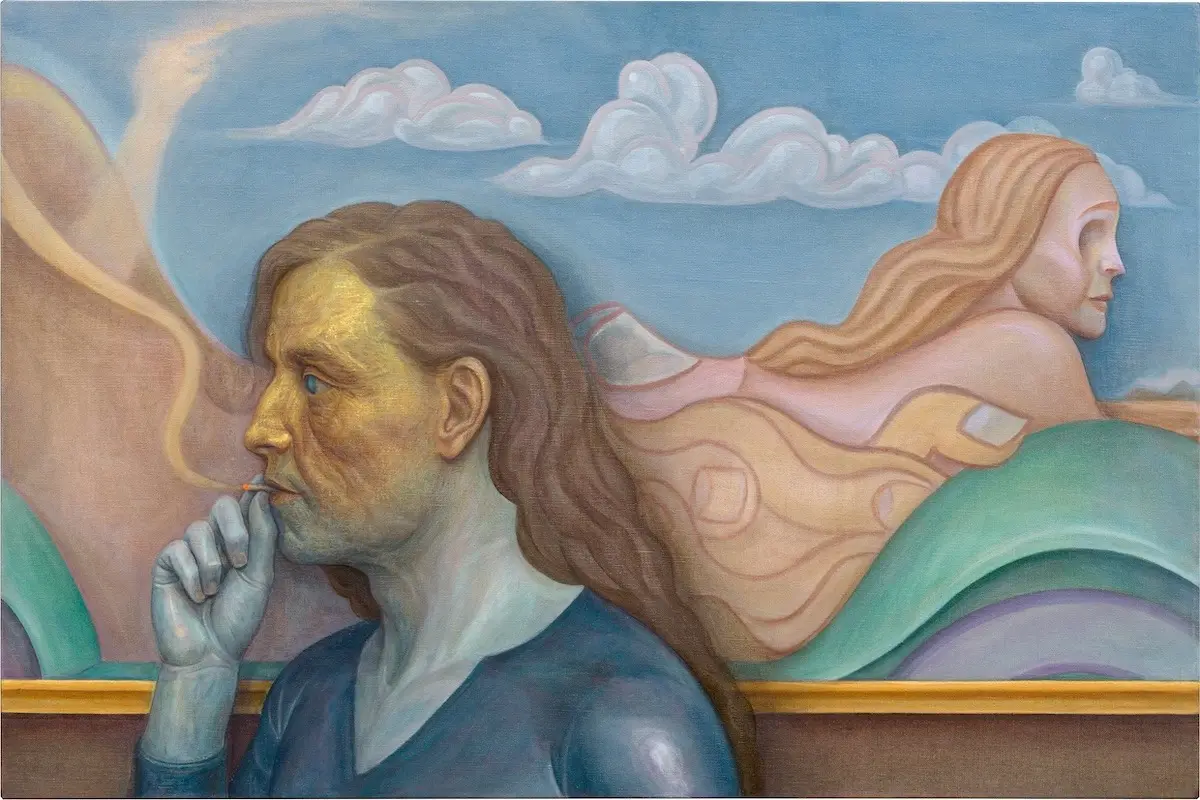
In the upper echelon of contemporary Canadian art, few figures command as much quiet reverence—and maintain as fierce a shield of privacy—as Steven Shearer. Based in Vancouver, Shearer has spent decades forging a distinctive visual vocabulary that bridges historical portraiture with the disquieting, visceral sensitivities of the modern era. His haunting canvases, which frequently interrogate the intersections of youth subculture, vernacular image archives, and art-historical traditions, have earned him international acclaim.
That lifetime of labor and critical inquiry was officially recognized today as Shearer was named the recipient of Canada’s highly coveted Audain Prize. Carrying a generous purse of $100,000 CAD (approximately $71,000 USD), the annual award is more than a financial windfall; it is a profound institutional acknowledgment of a career that has consistently challenged the boundaries of painting, drawing, sculpture, and printmaking.
The Audain Prize is reserved specifically for a senior artist residing in British Columbia who has made an extraordinary, enduring contribution to the fabric of Canadian art. Shearer follows in the footsteps of celebrated multidisciplinary artist Brian Jungen, who claimed the honor last year. This year’s laureate was chosen by a rigorous selection committee comprised of five prominent curators representing leading cultural institutions across the province, including the Audain Art Museum, the Capture Photography Festival, the Marianne and Edward Gibson Art Museum at Simon Fraser University, and the Vancouver Art Gallery.
Read Also
Yet, alongside the celebration of his artistic triumph comes a familiar narrative of self-imposed isolation. Shearer is famously reclusive, a trait that has only deepened the mystique surrounding his output. In a newly released promotional video produced by the Audain Prize committee—a recording that pointedly keeps his face obscured—Shearer remarked on a phenomenon that underscores his entire career: "Until now… no photos of him have been shared online."
This feature-length exploration delves into the career trajectory of Steven Shearer, examining the mechanics of his multidisciplinary practice, the philosophy behind his celebrated antisocial energies, the critical reception of his haunting oeuvres, and what this landmark accolade means for the future of Canadian contemporary art.
Detailed Chronology & Artistic Evolution
To understand the weight of the Audain Prize bestowed upon Steven Shearer, one must retrace a decades-long career defined by an uncompromising commitment to inner vision over external validation. While Shearer’s roots are deeply entrenched in the Pacific Northwest, his artistic footprint extends far beyond Canadian borders, anchored by representation with elite international galleries such as Galerie Eva Presenhuber and David Zwirner.
Early Beginnings and the Vancouver Scene
Emerging from the vibrant yet insular Vancouver art scene—a crucible known globally for conceptual photography and critical theory—Shearer charted a radically different path. Rather than leaning purely into conceptualism or sterile architectural photography, Shearer gravitated toward the tactile, historical, and psychological depths of painting and drawing.
From his earliest days in the studio, Shearer’s practice was characterized by an expansive engagement with visual culture. He began amassing vast archives of ephemera, clipping images from magazines, scouring the nascent internet, and collecting vernacular snapshots. These archives served as the DNA for his multidisciplinary output, which seamlessly integrated painting, sculpture, photography, printmaking, and collage.
The Convergence of High Art and Heavy Metal
Throughout the 1990s and 2000s, Shearer developed a signature aesthetic that shocked and mesmerized critics. He began translating the raw, frantic energy of heavy metal music culture, youth alienation, and suburban subcultures into works that deliberately echoed the compositions of classical European portraiture.
In Shearer’s universe, a long-haired, acne-scarred heavy metal devotee or a melancholy suburban adolescent is rendered with the grave, solemn dignity once reserved for aristocracy or religious icons. This deliberate friction—between the lowbrow ephemera of contemporary youth and the high-art solemnity of art history—became his calling card.
Recent Milestones and International Spotlight
The years leading up to his 2026 Audain Prize win have been marked by a surge in international visibility. Earlier this year, Shearer mounted a major, highly anticipated exhibition at David Zwirner’s London gallery space, prompting extensive coverage from international art publications and mainstream media alike. Critics marveled at his ability to remain entirely relevant and urgent in a contemporary art landscape obsessed with rapid-fire digital trends.
Despite this global acclaim, Shearer’s working method remains stubbornly localized and insular. He continues to toil away in his studio, retreating from the spotlight and letting his monumental canvases speak on his behalf. The Audain Prize thus arrives not as a launchpad for an emerging talent, but as a long-overdue institutional coronation for a master craftsman who has spent a lifetime perfecting his dark, poetic vision.
Supporting Context & Metrics: Decoding the Shearer Aesthetic
The criteria for the Audain Prize demand an artist of exceptional depth, whose work has fundamentally shifted or enriched the cultural discourse of British Columbia and Canada at large. The selection committee’s official citation noted that Shearer’s work is:
"distinguished by an expansive engagement with images and objects drawn from both art history and everyday visual culture, bringing together seemingly disparate references including heavy metal, popular culture, youth subcultures, vernacular imagery and the internet."
Multidisciplinary Mastery
While Shearer is most widely celebrated for his oil paintings, his creative output defies simple categorization. His exhibitions frequently incorporate:
- Drawings and Collages: Intricate, obsessive works on paper that mine his extensive personal archives of found imagery.
- Sculpture: Three-dimensional pieces that often materialize the crude, handmade architectural elements of teenage bedrooms, band practice spaces, and forgotten suburban landscapes.
- Printmaking and Photography: Media utilized to capture the grain, grit, and melancholic texture of vernacular life.
Critical Comparisons and Artistic Lineage
Art critics have long grappled with how to categorize Shearer’s unsettling emotional resonance. Writing for The Guardian in advance of the London Zwirner exhibition, critic Eddy Frankel offered a striking formulation, comparing Shearer’s aesthetic temperament to "Edvard Munch high on potent weed, or the fauvists drinking cheap cider in the woods behind school."
This juxtaposition captures the dual nature of Shearer’s art: it possesses the psychological torment and existential dread of Scandinavian expressionism, yet it is inextricably bound to the mundane, anti-authoritarian rituals of rebellious youth. The figures in his paintings stare out from the canvas with a vacant, glazed intensity—alienated from society yet hyper-present in their youthful angst.
Official Statements & In-Herent Philosophy
Because Steven Shearer is notoriously difficult to pin down for interviews, his rare public statements carry immense weight, offering a rare window into the psychology of a reclusive genius.
The Studio as a Sanctuary and Crucible
In a candid conversation with fashion designer and creative polymath Raf Simons for Interview magazine, published in June, Shearer shed light on the intense psychological friction that fuels his creative process:
"I have ways in the studio of channeling my antisocial energies," Shearer confessed to Simons. "I used to slash the paintings and destroy them. Now I just do other things, and the paintings survive."
This revelation highlights the volatile emotional stakes of Shearer’s practice. The canvas is not merely a surface for aesthetic play; it is a battleground where destructive impulses are metabolized into enduring works of art. The survival of the paintings—having narrowly escaped the artist’s historic fits of studio frustration—adds an aura of hard-won resilience to his bodies of work.
Silence as a Form of Communication
Further illuminating his aversion to public self-promotion, Shearer spoke candidly to The Guardian about why he prefers his art to do the talking:
"I wrote down lots of potential things to say, but it’s not my nature," he admitted. "All the hope or will to be able to communicate kind of goes into the pictures. And I try to stay out of the way once that’s happened."
This philosophy explains his profound reclusiveness. In an era where contemporary artists are increasingly expected to act as their own PR agents, cultivating personal brands on social media and engaging in endless public discourse, Shearer remains an analog holdout. By keeping his physical likeness offline and refusing to hide behind artist statements filled with art-world jargon, he preserves the purity of the encounter between viewer and artwork.
Future Outlook & Institutional Legacy
The awarding of the 2026 Audain Prize marks a pivotal chapter in the ongoing history of Canadian art. As British Columbia continues to nurture distinct regional art histories that resonate on a global scale, recognizing figures like Steven Shearer ensures that the province’s rich legacy of uncompromising, idiosyncratic image-making is properly preserved and celebrated.
Impact of the $100,000 CAD Award
Beyond the undeniable prestige associated with the Audain Prize, the $100,000 CAD (approx. $71,000 USD) financial injection provides a senior artist with the ultimate luxury: time and security. While Shearer is already globally represented by blue-chip galleries like David Zwirner and Galerie Eva Presenhuber, unrestricted funds of this magnitude allow mature artists to take bolder creative risks, expand their studio operations, or simply work at an unhurried, meditative pace.
The Evolution of the Audain Prize Committee
The selection process, overseen by a powerhouse committee representing the Audain Art Museum, the Capture Photography Festival, the Marianne and Edward Gibson Art Museum, and the Vancouver Art Gallery, demonstrates a unified institutional commitment to honoring artistic depth over commercial flashiness. By selecting Shearer—an artist who deliberately obscures his face and channels antisocial energies—the committee has sent a clear message: Canadian art values profound, authentic psychological inquiry and mastery of medium above all else.
Looking Ahead: What’s Next for Shearer?
True to form, Shearer has given no indication that winning the Audain Prize will coax him out of his shell or alter his monastic studio habits. He will likely return immediately to his Vancouver workspace, sorting through his archives of metal magazines, vernacular snapshots, and historical art reproductions, quietly translating the angst of modern life into oil and canvas.
For collectors, curators, and art enthusiasts alike, the hope is simply that Shearer continues to let his paintings survive his studio purges. As long as he keeps channeling his dark, poetic vision into the world—and staying thankfully out of the way once the work is done—contemporary art will remain all the richer for his singular, unyielding presence.


Comments
Facebook App ID not configured. Please add it in the Customizer.