

Executive Overview
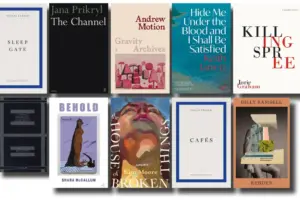
In a joint announcement issued today, English PEN, Irish PEN/PEN na hÉireann, and the Estate of Seamus Heaney have officially revealed the shortlist for the prestigious PEN Heaney Prize 2026. Now entering its third consecutive year, the prize continues to cement its reputation as one of the most vital accolades in contemporary literature. It is specifically designed to recognize a single-author collection of poetry that demonstrates outstanding literary merit while fearlessly engaging with the profound impacts of cultural or political events on the human condition and interpersonal relationships.
As the literary world turns its attention toward the shortlist, anticipation builds for the announcement of the ultimate winner, which is scheduled to take place on Tuesday, 1 December 2026. This year’s selection process has been overseen by a distinguished panel of judges comprising celebrated poets Victoria Adukwei Bulley, Vona Groarke, and Stephen Sexton. They are joined by Mick Heaney who serves as the non-voting Chair, representing the enduring literary legacy of the Estate of Seamus Heaney.
The PEN Heaney Prize moves annually between the operational regions of English PEN and Irish PEN/PEN na hÉireann, fostering a cross-border celebration of poetic excellence that honors the spirit of Nobel laureate Seamus Heaney. While the specific names of this year’s shortlisted poets are currently generating intense speculation and debate across literary circles, the overarching mission of the prize remains clear: to champion verse that acts as a witness to history, politics, and the fragile intricacies of human empathy.
Read Also
This comprehensive report examines the origins of the PEN Heaney Prize, details its rigorous judging process, explores its historical trajectory through past winners, and evaluates the broader cultural significance of politically and culturally engaged poetry in the modern geopolitical landscape.
Detailed Chronology and Evolution of the PEN Heaney Prize
To understand the weight and significance of the PEN Heaney Prize 2026, one must trace its rapid evolution since its inception. Conceived as a collaborative bridge between English PEN, Irish PEN/PEN na hÉireann, and the Heaney Estate, the prize was established to honor the memory and ethos of Seamus Heaney—a poet whose work continually interrogated the intersections of language, land, politics, and human suffering.
The Inaugural Year (2024): A Groundbreaking Debut
The prize was inaugurated in 2024, instantly capturing the attention of the international literary community. In its first year, the spotlight fell upon debut collections, setting a high standard for raw, innovative poetic voices. The inaugural prize was awarded to Susannah Dickey for her startling and conceptually daring debut collection, ISDAL (published by Picador).
ISDAL challenged readers by investigating the chilling, unresolved mystery of the "Isdal Woman," found dead in Norway in 1970, while weaving in broader themes of surveillance, gendered violence, and societal indifference. Dickey’s victory established the PEN Heaney Prize as an award that would not shy away from experimental forms or dark, politically resonant subject matter. It proved that the prize was willing to reward young and emerging voices who pushed the boundaries of traditional lyrical verse to address systemic cultural traumas.
The Second Iteration (2025): Wisdom and Longevity
Building upon the momentum of its successful launch, the prize shifted its focus in 2025 under the administration of Irish PEN/PEN na hÉireann. The 2025 PEN Heaney Prize was awarded to veteran poet Tom Paulin for Namanlagh (published by Faber).
Namanlagh marked Paulin’s first collection in over a decade, representing a triumphant return for a major voice in contemporary letters. Paulin’s collection exemplified the prize’s core criteria by deeply engaging with the historical, political, and cultural fault lines of Northern Ireland and the broader British Isles. The juxtaposition of Dickey’s cutting-edge debut in 2024 with Paulin’s masterclass in poetic maturity in 2025 demonstrated the incredible breadth of the PEN Heaney Prize. It showed that the award honors both the fearless experimentation of newcomers and the sustained, lifelong witness of master poets.
The 2026 Cycle: Current Landscape and Shortlist Announcement
The announcement on 24 September 2026 marks the latest milestone in the prize’s history. Returning to the administrative framework of English PEN, the 2026 cycle has been characterized by intense deliberation among the judging panel.
The mechanism of the prize ensures that it rotates annually not only in its organizational oversight but also in its geographical and cultural resonance, reflecting the shared and often complex histories binding Britain and Ireland. As the literary community digests today’s shortlist announcement, attention now pivots toward the final evaluation phase, culminating in the winner’s announcement on 1 December 2026.
Supporting Context & Metrics: The Mechanics of the Prize
The PEN Heaney Prize is unique within the ecosystem of literary awards due to its specific thematic mandate and collaborative governance structure. To fully appreciate its impact, it is essential to examine the metrics, criteria, and administrative framework that govern the award.
Core Criteria and Thematic Focus
Unlike many mainstream poetry prizes that celebrate lyricism, formal dexterity, or emotional introspection in a vacuum, the PEN Heaney Prize explicitly demands engagement with the external world. To be considered for the shortlist, a single-author poetry collection must:
- Exhibit outstanding literary merit, showcasing exceptional technical skill, voice, and craftsmanship.
- Actively engage with the impact of cultural or political events on the human condition.
- Illuminate how macro-level historical forces—such as conflict, displacement, political upheaval, and shifting cultural paradigms—fracture, shape, or redeem micro-level human relationships.
This dual requirement ensures that winning collections are neither purely polemical nor insularly aesthetic. They must bridge the gap between public history and private emotion, echoing Seamus Heaney’s lifelong poetic inquiry into how public crises reverberate through individual lives.
The Judging Panel and Governance
The credibility of any literary prize rests upon the integrity and discernment of its judges. The 2026 panel brings together some of the most respected and innovative voices in contemporary poetry:
- Victoria Adukwei Bulley: A celebrated poet, writer, and filmmaker whose work often explores identity, diaspora, and historical memory. Her critical eye brings a contemporary, transnational perspective to the panel.
- Vona Groarke: An acclaimed Irish poet whose extensive body of work, including collections like The Look of Things and Double Joan, demonstrates a profound mastery of historical resonance and domestic intimacy.
- Stephen Sexton: Known for his mesmerizing, formally inventive collections such as If All the World and Love Were Young, Sexton brings a deep sensitivity to how poetic form can mirror psychological and cultural landscapes.
- Mick Heaney (Non-Voting Chair): Representing the Estate of Seamus Heaney, Mick Heaney ensures that the foundational ethos and spirit of his late father remain central to the prize’s deliberations without exercising direct voting influence over the artistic selections.
Organizational Synergy
The collaboration between English PEN and Irish PEN/PEN na hÉireann is more than an administrative partnership; it is a profound cultural statement. By bridging two distinct organizational bodies that champion freedom of expression, human rights, and literary culture, the prize reinforces the shared literary heritage of Britain and Ireland. Furthermore, the active participation of the Estate of Seamus Heaney guarantees that the award operates with the blessing and direct involvement of the Heaney family, preserving the integrity of the Nobel laureate’s memory.
Official Statements and Institutional Perspectives
The announcement of the PEN Heaney Prize 2026 shortlist has prompted reflections from organizational leaders, judges, and literary advocates regarding the state of modern poetry and its capacity to address the crises of our time.
Speaking on behalf of English PEN, representatives emphasized the urgent need for literature that confronts political turbulence. In an era marked by rising authoritarianism, global displacement, and cultural fragmentation, poetry serves as both an archive of witness and a catalyst for empathy. The PEN Heaney Prize provides a vital platform for poets who refuse to look away from the pressures of history.
Similarly, Irish PEN/PEN na hÉireann highlighted the significance of the cross-border nature of the prize. In statements accompanying the launch, spokespersons noted that Seamus Heaney’s work continually transcended borders—physical, political, and linguistic. The annual rotation of the prize between the two organizations serves as a living tribute to this boundary-crossing ethos, fostering a unified literary community across the islands.
While individual judges have largely remained tight-lipped regarding the specific deliberations behind the 2026 shortlist to maintain the suspense leading up to the December announcement, past commentary from the panel underscores the rigorous standards required to make the cut. Shortlisted collections must successfully navigate the perilous terrain between political didacticism and lyrical abstraction, offering language that is as politically urgent as it is aesthetically enduring.
Future Outlook: The Role of Poetry in an Unsettled World
As the literary world looks ahead to the winner’s announcement on 1 December 2026, broader questions arise concerning the future of politically and culturally engaged poetry. In a media landscape dominated by rapid-fire digital communication, soundbites, and polarized discourse, what is the specific function of a poetry collection that takes months or years to read, digest, and write?
The success and rapid prestige of the PEN Heaney Prize offer a resounding answer. Poetry possesses a unique cognitive and emotional bandwidth that allows it to hold contradictions, ambivalence, and profound grief in ways that journalism and political commentary often cannot. By rewarding collections that interrogate the human impact of cultural and political events, the prize champions a literature of conscience.
Furthermore, the trajectory of the prize—from Susannah Dickey’s haunting debut ISDAL in 2024, to Tom Paulin’s resonant masterwork Namanlagh in 2025, and now pointing toward the yet-to-be-revealed 2026 victor—demonstrates that poetry remains an indispensable mirror for society. It records our fractures while offering a blueprint for human connection.
What Lies Ahead
Over the coming weeks, anticipation will mount across the literary landscape. Critics, booksellers, and readers will debate the merits of the shortlisted poets, analyzing how each collection engages with the complex realities of the modern world.
When the winner of the PEN Heaney Prize 2026 is announced on Tuesday, 1 December 2026, they will not only receive a prestigious accolade and financial recognition; they will also step into a lineage that honors Seamus Heaney’s lifelong belief that poetry can, in its own quiet yet revolutionary way, help to articulate the unnamable pressures of history. Until then, the shortlist stands as a testament to the resilience, courage, and enduring power of contemporary verse.




Comments
Facebook App ID not configured. Please add it in the Customizer.