
Executive Overview
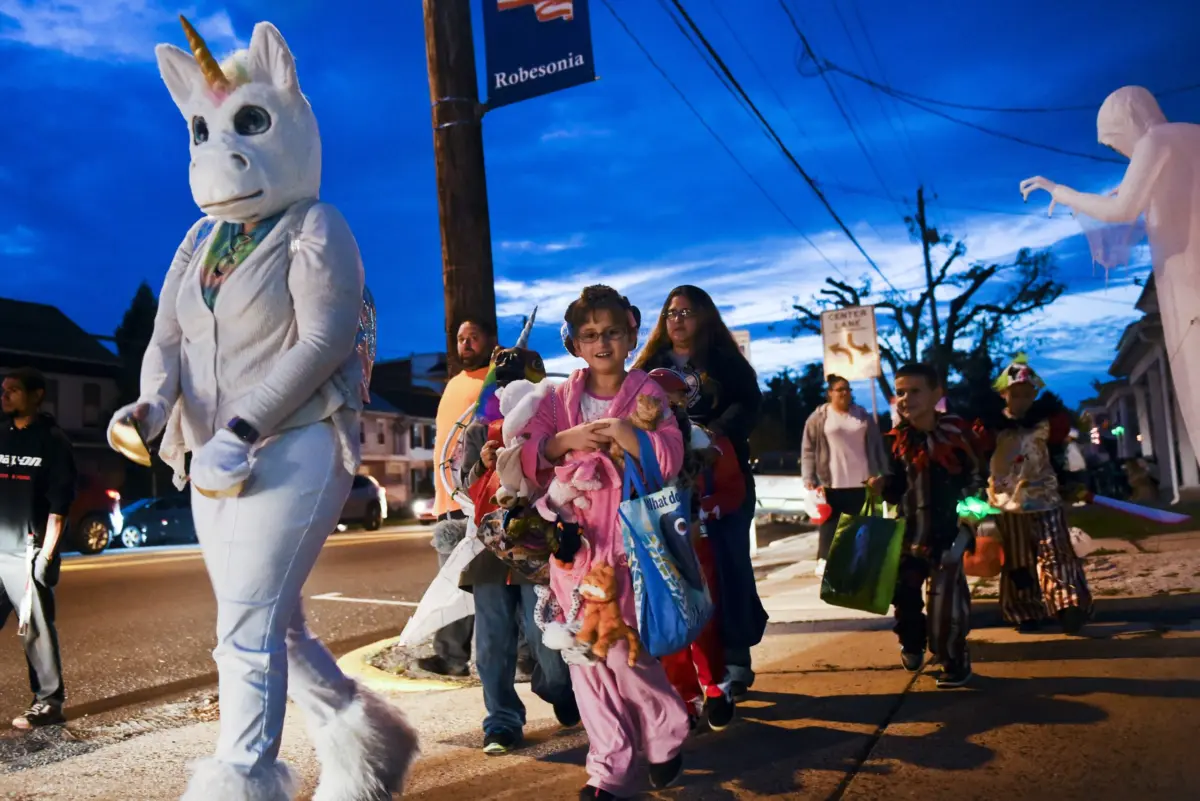
Every October 31, millions of children across the United States take to the streets in elaborate costumes, eager to participate in one of childhood’s most cherished traditions: trick-or-treating. For generations, this autumnal rite of passage has been accompanied by a familiar ritual of adult anxiety. Parents fret over mythical and exaggerated dangers allegedly lurking in the shadows—fears that have historically ranged from razor blades hidden inside fresh fruit to, more recently, narcotic-laced sweets such as rainbow fentanyl distributed disguised as candy.
Yet, public health officials and safety advocates point out a stark irony in these parental worries: while the threat of malicious strangers or contaminated treats remains statistically negligible, children face a profoundly real, documented, and lethal hazard every Halloween—automobiles.
Federal crash data, urban planning research, and public health studies consistently reveal that Halloween is the deadliest day of the entire year for child pedestrians. Minors under the age of 18 are three times more likely to be struck and killed by a motor vehicle on October 31 than on any other day. For younger children—specifically those between the ages of 4 and 8—that risk multiplies drastically, making them up to 10 times more vulnerable.
Read Also
This annual tragedy is not an isolated anomaly born merely of festive excitement; rather, it serves as a glaring symptom of a larger, systemic crisis in American infrastructure, vehicle design, and urban planning. With pedestrian fatalities nationwide hovering at a 40-year high, and motor vehicle crashes ranking as the second leading cause of death for children in the United States overall, the hazards of Halloween force a critical question: Why are American streets so inherently deadly for children, and what systemic changes are required to protect them—not just on October 31, but every single day of the year?
Detailed Chronology: The Anatomy of a Dangerous Evening
To understand why Halloween night presents such an acute hazard, it is necessary to examine the specific sequence of events and environmental factors that converge between dusk and nightfall on October 31.
Late Afternoon: The Pre-Dusk Rush
The danger begins well before nightfall. As dusk settles, millions of children—many brimming with excitement and anticipation—spill out of residential neighborhoods and suburban developments. Simultaneously, millions of adults are commuting home from work. This creates a volatile temporal overlap: exhausted motorists navigating evening traffic share the roads with disorganized groups of excited pedestrians who are inherently less predictable than adult commuters.
The Twilight Blind Spot
As the sun sets, visibility drops sharply. During this critical window, children wearing dark, non-reflective costumes become exceedingly difficult for motorists to detect. Compounding the problem of poor lighting are the physiological limitations of holiday gear. Masks, hoods, and oversized accessories frequently obstruct peripheral vision, hindering a child’s ability to spot approaching vehicles or correctly judge the speed and distance of oncoming traffic.
Nightfall: Celebrations and Impairment
As the evening progresses into peak trick-or-treating hours, human factors further compound the danger. Academic and medical literature highlights a lethal combination of environmental distractions and behavioral impairments. According to a landmark study published in JAMA Pediatrics, the risk to all pedestrians—adults and children alike—surges by 43 percent on Halloween evening compared to a standard night.
Researchers attribute this spike to a confluence of risk factors: celebrations that occur precisely during low-visibility hours, compromised peripheral vision due to costumes, neglected street-crossing safety as children rush from house to house, and an elevated prevalence of motorists and partygoers impaired by alcohol.
Supporting Context & Metrics: The Numbers Behind the Crisis
The statistical evidence regarding pedestrian safety on Halloween—and across American transportation networks generally—paints a sobering picture of systemic failure.
Federal Crash Records and Studies
An analysis of federal highway and traffic crash records indicates a grim baseline: between 2010 and 2024, dozens of children were killed while walking on Halloween, marking a frequency unmatched by any other single calendar date.

The JAMA Pediatrics study underscored these findings by analyzing decades of mortality data, confirming that children aged 4 to 8 face a tenfold increase in pedestrian fatality risk on October 31. When widened to include all minors under 18, the risk is triple that of a typical day.
The Broader Pediatric Safety Crisis
Vehicle-related injuries are not a minor concern in pediatric healthcare. After firearm injuries, motor vehicle crashes represent the second leading cause of death among children in the United States. Furthermore, pedestrian fatalities across all demographics have steadily climbed to a 40-year high, highlighting a nationwide deterioration in road safety.
Doug Gordon, a writer, safety advocate, and host of The War on Cars podcast, rejects the common dismissive argument that higher fatality rates on Halloween are simply an inevitable byproduct of increased foot traffic.
"Sometimes when you talk about this issue, you get pushback from people and people say, ‘Well, of course, you have more children on the streets, of course, more children are going to die,’" Gordon noted. "But that accepts a baseline level of danger that I think we as a society have in fact accepted on the other 364 days of the year."
Official Statements and Expert Perspectives
Public health experts, pediatricians, and urban planning specialists agree that addressing the dangers of Halloween requires looking past seasonal panic and examining the structural underpinnings of American mobility.
The Pediatric and Medical Viewpoint
Dr. Lois Lee, a professor of pediatrics and emergency medicine at Harvard Medical School and an attending physician at Boston Children’s Hospital, emphasizes the compounding vulnerabilities present during the holiday.
"You’re going to have increased numbers of children, including younger children who are out on the streets," Dr. Lee explained. "At the same time, you have adults who are driving, and especially on weekdays, people will be driving home from work. If children are in costume, they may be wearing darker clothing… which makes them harder to detect."
Beyond immediate injury prevention, Dr. Lee points out that building pedestrian-friendly infrastructure yields broad public health dividends. "Having sidewalks and good lighting is a good preventive measure, not just for injury prevention, but also just general health, because that encourages everybody in the neighborhood to walk, exercise, and get outside, which is better for everybody’s health as well."
The Automotive Factor: Size, Mass, and Infotainment
The physical design of modern American automobiles has exacerbated the lethality of pedestrian-vehicle collisions. Over the past two decades, consumer preferences have shifted dramatically toward larger vehicles. Sport Utility Vehicles (SUVs) and pickup trucks now account for roughly half of all new vehicle sales in the United States.
Research from the Insurance Institute for Highway Safety (IIHS) and Consumer Reports indicates that modern SUVs and light trucks are significantly more lethal to pedestrians than traditional sedans. Their high front profiles often create severe blind spots directly in front of the driver, making it nearly impossible to see small children crossing the street. Furthermore, physics dictates the severity of an impact: mass multiplied by acceleration equals force. When the mass of a vehicle increases exponentially, the physical force exerted on a vulnerable pedestrian during a collision rises correspondingly.
Compounding vehicle size is the epidemic of driver distraction. Beyond the pervasive use of handheld smartphones, modern vehicles are increasingly equipped with distracting digital infotainment systems—essentially large, dashboard-mounted tablets that require drivers to divert their visual and cognitive attention away from the road to operate basic climate, navigation, and audio controls.

Urban Design Priorities
At the core of the crisis is the fundamental philosophy of American civil engineering. Charles Marohn, founder and president of the urban planning organization Strong Towns, has argued extensively that traffic and civil engineers prioritize maximizing vehicular throughput—getting cars as quickly as possible from point A to point B—above all other considerations, including human life and community safety.
This design ethos is woven into the fabric of suburban and urban environments alike, characterized by wide multi-lane stroads, minimal crosswalks, a lack of continuous sidewalks, and high speed limits in residential zones. In extreme examples, municipal traffic safety committees confronted with dangerous crossings often opt for the path of least resistance: rather than calming traffic or redesigning the street, municipalities have occasionally responded to school-crossing hazards by simply removing the crosswalks altogether
.
Future Outlook: Reimagining Our Streets
While the statistics surrounding Halloween and pedestrian safety are grim, urban planners, municipal leaders, and advocates emphasize that the situation is far from hopeless. Solutions exist, ranging from immediate tactical interventions to long-term structural overhauls.
Short-Term Interventions: "Trick or Streets"
Building on the momentum of open streets initiatives launched during the COVID-19 pandemic, several forward-thinking municipalities have implemented temporary street closures to prioritize pedestrian safety during major holidays.
New York City introduced its "Trick or Streets" initiative, designating approximately 100 car-free zones across the five boroughs from 4:00 PM to 8:00 PM on Halloween. Similarly, car-dependent and sprawling cities such as St. Petersburg, Florida, and Seattle have begun cordoning off city centers or allowing neighborhood associations to apply for permits to close residential streets to vehicular traffic entirely on Halloween night. These temporary measures demonstrate that reclaiming public space for people is logistically feasible.
Long-Term Vision: The "Popsicle Test"
Looking beyond a single holiday, safety advocates argue that American cities must adopt a new standard for urban design. Doug Gordon champions the concept of the "popsicle test"—a benchmark originating from urban planning principles where a neighborhood is considered genuinely safe and child-friendly if a young child can independently walk to a local store, purchase a popsicle, and return home before it melts.
"If you start thinking along those lines, then I think you start thinking along the lines of what infrastructure is needed to make that possible, where I would feel comfortable letting my kid do that," Gordon said. "Halloween is like a giant version of the popsicle test because it’s not just your kid, it’s every kid in the neighborhood."
Creating environments that pass the popsicle test requires intentional policy shifts: lowering speed limits in residential areas, narrowing travel lanes, building protected bike lanes, expanding sidewalk networks, installing raised crosswalks, and strictly regulating vehicle size and front-end geometry.
Ultimately, reforming American streets does more than just prevent tragic accidents on October 31—it restores community independence, reduces urban isolation, and fosters vibrant, livable neighborhoods. As Doug Gordon aptly summarizes the ultimate vision for safe cities:
"When you build a city that’s safer, so that kids can walk around by themselves and not be worried about getting hit by a car, or the parents being worried about them being hit by a car, it’s just better. It’s awesome. They’re independent. It’s fun. And on Halloween, they get a lot of candy."




Comments
Facebook App ID not configured. Please add it in the Customizer.