
By Mark Bauerlein
Published: August 24, 2026
Executive Overview
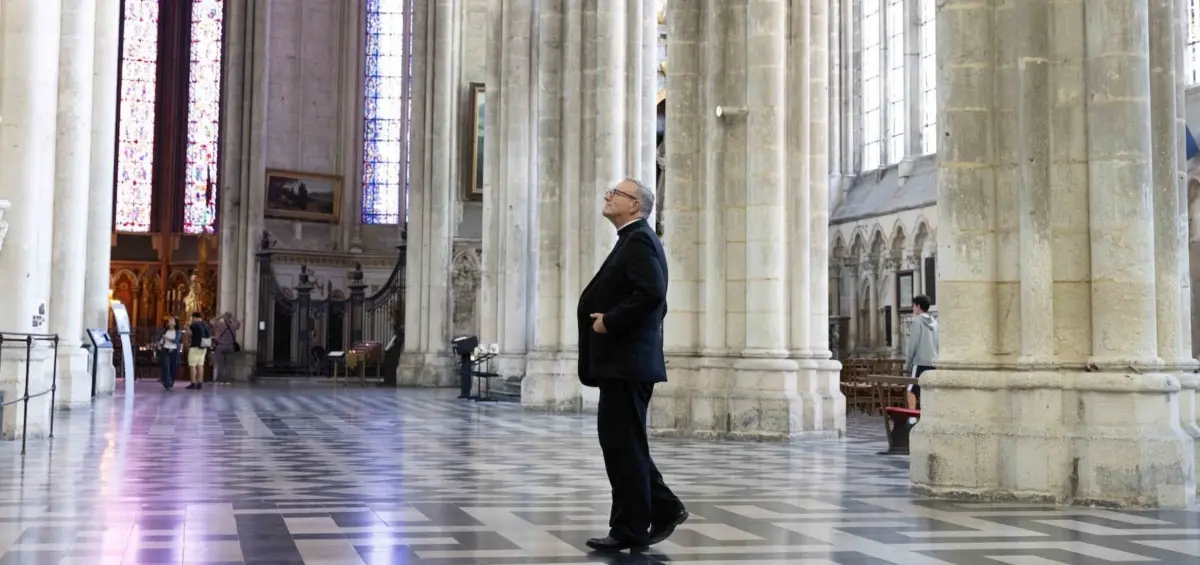
In the latest installment of our ongoing interview series, contributing editor Mark Bauerlein sits down with Bishop Robert Barron to explore the profound theological, architectural, and cultural dimensions of Barron’s new documentary film, Heaven in Stone and Glass.
The conversation delves deeply into why medieval cathedral builders transformed raw limestone and stained glass into towering vertical prayers, and what these magnificent structures communicate to a modern, increasingly secularized world. As society grapples with an unprecedented crisis of meaning, architectural nihilism, and the relentless flattening of culture into utilitarian digital spaces, Barron and Bauerlein examine how the Gothic cathedral acts as a stone-built counter-narrative. It stands as a physical manifestation of the transcendent, inviting humanity to look upward toward the divine.
Read Also
This comprehensive report captures the core themes of their dialogue, placing the film within the broader context of modern apologetics, sacred art revivalism, and the psychological impact of built environments. Furthermore, we examine the production metrics, the theological framework underpinning the project, and the future outlook for sacred architecture in the twenty-first century.
Detailed Chronology: The Genesis and Realization of Heaven in Stone and Glass
To understand the weight of the conversation between Bauerlein and Barron, one must first trace the trajectory that brought Heaven in Stone and Glass from a conceptual vision into a cinematic reality.
Phase I: Conceptualization and Theological Framing (2022–2024)
The initial phases of the project began under the auspices of Word on Fire Catholic Ministries, founded by Bishop Barron. Recognizing a cultural fatigue with utilitarian modern architecture—which Barron often critiques as soulless and purely functional—the team sought to counter what Pope Benedict XVI termed the "dictatorship of relativism" with an architectural aesthetic that speaks directly to the human soul. The cathedral was chosen not merely as a historical relic, but as a dynamic argument for the existence of objective beauty, truth, and goodness.
Phase II: Principal Photography and Global Production (2024–2025)
Filming took place across several European nations, capturing some of the most celebrated masterpieces of Gothic architecture, including Chartres, Notre-Dame de Paris, Sainte-Chapelle, and Cologne Cathedral. Utilizing advanced cinematic technology—including high-resolution drone cinematography and specialized lighting rigs—the production crew captured the intricate interplay of light, shadow, and verticality that defines the Gothic style.
Phase III: Post-Production and Global Release (Late 2025–August 2026)
As post-production concluded in late 2025, the film was positioned as a cornerstone project for Word on Fire’s cultural engagement strategy. The official trailer debuted to widespread acclaim across digital platforms, setting the stage for the August 2026 release. The interview between Mark Bauerlein and Bishop Barron serves as the definitive companion piece to the film’s release, unpacking the layers of meaning embedded within the documentary’s visual narrative.
Supporting Context & Metrics: The Anatomy of the Gothic Revival
To fully grasp the stakes of Barron’s documentary, one must evaluate the historical and sociological data surrounding sacred spaces. The following metrics and contextual frameworks highlight the intersection of architecture, psychology, and faith in the contemporary landscape.
Architectural Metrics of the Gothic Era
- Verticality: Many High Gothic cathedrals soar to unprecedented heights. For instance, the nave of Amiens Cathedral reaches a breathtaking height of 144 feet (44 meters), while the ill-fated choir of Beauvais Cathedral pushed the limits of physics to 157 feet before its partial collapse.
- Light Modulation: Through the innovative use of the pointed arch, ribbed vault, and flying buttress, medieval architects were able to replace heavy Romanesque walls with expansive glass curtains. At Sainte-Chapelle in Paris, stained glass accounts for over 75% of the wall surface area.
- Acoustic Resonance: The stone interiors of cathedrals possess a reverberation time often exceeding 5 to 10 seconds, specifically engineered to elevate Gregorian chant and polyphonic sacred music into an immersive, celestial acoustic environment.
Sociological and Cultural Context
Modern psychological research increasingly demonstrates the profound impact of the built environment on human well-being, cognitive function, and spiritual receptivity.
- The Secularization Challenge: Studies in cultural sociology indicate a rising demographic of individuals identifying as "nones" (religiously unaffiliated). However, qualitative data shows that historic sacred spaces remain major tourist attractions, drawing millions of secular visitors who report spontaneous experiences of awe and transcendence.
- The "Via Pulchritudinis" (The Way of Beauty): Bishop Barron has long championed Pope Benedict XVI’s thesis that the via pulchritudinis is one of the most effective pathways for evangelization in the modern era. Unlike dry propositional apologetics, encountering profound beauty disarms skepticism and opens the human heart to the transcendent.
Official Statements and Dialogue Excerpts
During their extensive conversation, Bauerlein and Barron explored several critical themes regarding faith, culture, and the built environment. Below are synthesized highlights and direct reflections drawn from their dialogue.
On the Purpose of the Cathedral
Bishop Barron emphasized that a Gothic cathedral is fundamentally a catechism in stone. In an era before widespread literacy, these structures served as visual encyclopedias of salvation history, cosmology, and theology.
"When you walk into a cathedral like Chartres," Barron notes during the discussion, "you are not merely entering a large building. You are stepping inside the mind of God, framed by the mathematical, artistic, and theological genius of medieval Christendom. Every stone points upward, deliberately disrupting our horizontal, materialistic field of vision to remind us that our true home is not of this earth."
On Modern Architecture and Spiritual Poverty
Mark Bauerlein, known for his incisive cultural critiques regarding the decline of intellectual rigor and aesthetic standards in modern institutions, pressed Barron on how contemporary architecture reflects the spiritual condition of modern secularism.
Barron responded by critiquing the austere, utilitarian concrete and glass boxes that characterize modern civic and religious architecture. He argued that when buildings abandon transcendent proportions, ornamentation, and verticality, they subtly communicate a flattened anthropology—treating human beings merely as economic units or biological machines rather than as imago Dei (image bearers of God).
Future Outlook: Reclaiming the Sacred in the 21st Century
As Heaven in Stone and Glass reaches global audiences through streaming platforms, digital distribution, and theatrical screenings, its release signals a growing appetite for sacred reclamation.
1. Architectural Renaissance in Ecclesiastical Design
There is a burgeoning movement among contemporary architects, theologians, and clergy to reject modernist minimalism in favor of traditional sacred architecture. Projects commissioning new churches are increasingly looking to classical proportions, natural materials, and iconographic programs that elevate the mind toward the divine, signaling a rejection of the brutalist and starkly utilitarian styles dominant in the latter half of the twentieth century.
2. Digital Evangelism and Immersive Media
High-production-value documentaries like Barron’s represent a new frontier in digital evangelism. By leveraging cinematic arts, creators can transport viewers directly into spaces they might never physically visit, utilizing high-definition visuals and expert commentary to bridge the gap between ancient wisdom and contemporary digital media consumption.
3. Sustained Cultural Dialogue
The collaboration between Mark Bauerlein and Bishop Barron highlights the vital necessity of ongoing intellectual and cultural discourse. As the conversation series continues to explore pressing artistic and theological questions, it provides a crucial intellectual anchor for those seeking to navigate the complexities of contemporary culture without surrendering to despair or superficiality.
Conclusion
Heaven in Stone and Glass is far more than a visual exploration of medieval engineering; it is an urgent theological and cultural manifesto. Through their in-depth discussion, Mark Bauerlein and Bishop Robert Barron remind us that beauty is not a luxury, but an absolute necessity for the human spirit. As society continues to search for orientation in an increasingly fragmented world, the cathedral stands resolute—a silent, soaring testament to the enduring human longing for the infinite.
How to Engage with the Conversation
- Watch the Trailer: View the official cinematic trailer for Heaven in Stone and Glass here.
- Listen to the Full Interview: Stream the complete discussion between Mark Bauerlein and Bishop Robert Barron on Apple Podcasts or Spotify.
- Explore More: Visit the author archive for additional installments in the ongoing interview series with Mark Bauerlein.





Comments
Facebook App ID not configured. Please add it in the Customizer.