
Executive Overview
For millennia, the concept of the haunted house has captured human imagination, raising the tiny hairs on the backs of our necks with an intoxicating blend of terror and fascination. From the earliest recorded ghost stories chiseled into ancient clay tablets to modern psychological thrillers and cinematic blockbusters, the foundational themes and story devices of the haunted house have endured, virtually unchanged, for thousands of years.
Why do these narratives retain such a powerful grip on the human psyche? At its core, our obsession with ghosts and haunted domains is inextricably linked to mortality. We are all destined to die, and we are all destined to grieve the loss of those we love. While the ultimate fate of human consciousness remains one of life’s great unanswered questions, human culture is saturated with rituals, religions, and personal theories dictating that the dead do not vanish completely—at least not right away.
This deep-seated psychological impulse manifests not only in cultural folklore but also in the commercial endurance of the Gothic genre. Whether viewed through the lens of ancient Babylonian rituals, 18th-century literary deception, or contemporary social commentary, the haunted house operates as a rich theatrical stage. Here, generational trauma, systemic sins, and unresolved grief are given physical form. As writers continue to reinvent the genre for modern audiences—infusing old tropes with fresh perspectives on social justice, technological alienation, and historical reckoning—the haunted house remains one of the most vital, adaptable, and enduring frameworks in global storytelling.
Read Also
Detailed Chronology: From Ancient Superstitions to the Birth of the Gothic Novel
To understand why haunted houses evoke such universal dread, one must trace the historical lineage of the ghost story, which spans the entirety of recorded human history.
3500 BCE: The Dawn of the Restless Dead
According to research compiled by Smithsonian Magazine, the earliest written account of a ghost was chiseled onto a small clay tablet in ancient Babylonia around 3500 BCE. This artifact was not merely a campfire tale; it was a practical manual containing detailed instructions on how to exorcise an unwanted, lingering spirit and send it safely back to the underworld. From the very inception of the written word, humanity has grappled with the problem of spirits that refuse to stay put.
1st Century CE: Chains and Creepy Estates in Rome
The familiar trope of a rattling, chain-bound specter haunting a decrepit home dates back further than medieval European folklore. It can be found directly within the surviving letters of Pliny the Younger in first-century Rome. Pliny documented early accounts of haunting phenomena, establishing the blueprint for the classic apparition that startles the living out of their ancestral homes through auditory terror and visual dread.
1764: Horace Walpole and the Birth of The Castle of Otranto
While ancient cultures and classical writers laid the thematic groundwork, the specific marriage of the supernatural to domestic architecture—the haunted house as a distinct literary subgenre—began in the 18th century. Horace Walpole’s The Castle of Otranto, originally published in 1764 under the pseudonym William Marshall, is widely accepted as the world’s first haunted house novel.
Clocking in at roughly 85 pages, Otranto was structured much like a five-act play and was deeply inspired by the spectral drama found in the works of William Shakespeare. Walpole packed his novella with all the foundational elements that would come to define the Gothic genre:
- An ancient curse hanging over a lordly lineage.
- The inescapable sins of the past haunting the living.
- Vengeful spirits demanding justice.
- Prophetic dreams acting as portents of doom.
- The fragile fates of innocent characters hanging in the balance.
However, Walpole faced a significant cultural hurdle. During the hyper-analytical Age of Enlightenment, unwashed superstitions, curses, and ghosts were widely derided by the intellectual elite as juvenile, barbaric, and backward—hence the dismissive label "Gothic." Anticipating that learned critics would immediately reject a fantastical ghost story, Walpole executed a brilliant literary ruse. In the first edition, he presented the book as a newly discovered 15th-century Italian translation of an even older medieval manuscript. This fake provenance lent the book an academic, and therefore legitimate, pedigree. The gambit worked: Otranto became an overnight sensation, cementing a literary tradition that continues to thrive centuries later.
19th and 20th Centuries: The Expansion of American and Global Gothic
Following Walpole’s pioneering gamble, the Gothic genre proliferated globally. As it crossed the Atlantic, the American Gothic tradition adapted the European blueprint to fit a new continent. The crumbling feudal castles of Europe were systematically replaced by stark, unsettling domestic American equivalents:
- Crumbling robber baron estates.
- Brutal, isolated plantation manors.
- Oppressive religious orders and secretive utopian communities.
- Victorian mental institutions.
- Desolate farmlands and Rust Belt industrial ruins.
Supporting Context & Metrics: The Psychology of the Haunting
The psychological resilience of the haunted house story is supported by modern sociological and psychological observations regarding grief, memory, and spatial anxiety.
The House as an Ancestral Archive
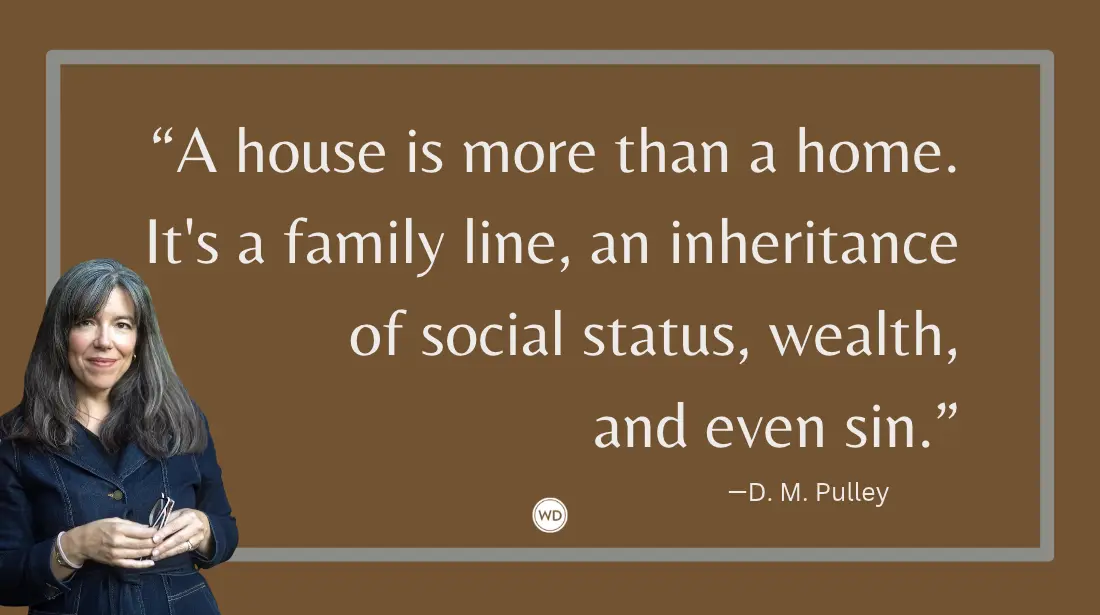
A house is rarely just a physical shelter; it is a repository of generational identity. It functions as a tangible symbol of a family line, an inheritance of social status, accumulated wealth, and, frequently, hidden sins. When a writer introduces a ghost into a domestic space, they are literalizing the psychological concept of the "family skeleton." The architectural layout of a home—its hidden rooms, damp cellars, and locked attics—mirrors the human subconscious, where repressed memories and historical guilt are stored away from polite society.
Cultural Manifestations of Grief
Anthropological data indicates that nearly every culture throughout history has maintained traditions regarding the presence of the dead within the living world. Whether viewed through a strictly supernatural lens or as a coping mechanism for profound loss, the phenomenon of sensing a departed loved one remains remarkably common.
- The Presence Phenomenon: Studies in grief psychology show that a significant percentage of bereaved individuals experience brief, vivid sensations of seeing, hearing, or feeling the presence of a deceased spouse or family member.
- Symbolic Attribution: Culturally, these experiences are often externalized into nature and domestic spaces—such as a specific bird acting as a guardian spirit, or an uncanny feeling of being watched when walking through old, historical buildings.
This universal human experience bridges the gap between rational science and supernatural fiction. Writers do not need to convince readers that literal ghosts exist; they merely need to tap into the real, deeply felt human emotions of guilt, memory, and lingering grief.
Official Perspectives: Authorship, Mechanics, and Modern Reinvention
Contemporary creators approach the haunted house not as a stale collection of cliché jump-scares, but as a flexible structural framework capable of addressing modern social anxieties.
Industry professionals and authors who specialize in the genre emphasize that the key to keeping the haunted house story fresh lies in shifting the point of view and integrating pressing socio-political themes.
Award-winning authors have repeatedly demonstrated how versatile the haunted house container can be when applied to marginalized experiences:
- Toni Morrison’s Beloved: Utilizes the haunted house to explore the generational trauma and broken heart of a mother shaped by the generational horrors of slavery.
- Stephen Graham Jones’s The Only Good Indians: Uses supernatural terror to examine the crushing weight of historical guilt and the contemporary struggles of Indigenous men navigating modern marginalization.
The Forensic Approach to Fiction
Writing within the Gothic tradition often requires a meticulous eye for the physical mechanics of decay. For instance, authors with specialized professional backgrounds bring a unique evidentiary perspective to architectural horror. D. M. Pulley, a novelist and former forensic engineer, utilized her professional background in structural investigations to inform her Gothic thriller Stone Mad. Set inside a decaying Rust Belt manor in present-day Cleveland, the narrative follows Mannie Wallace, a single working mother and forensic engineer hired to investigate a dangerous, structurally compromised building with a dark past.
Speaking on the mechanics of the genre, Pulley notes that whether a haunted house is set in a medieval European stronghold, a futuristic space station, or a rusting Rust Belt mansion, the core demand on the protagonist remains identical:
"True to the form, the protagonist must confront the horrors of the past and the secrets buried inside the architecture, or become its next permanent victim."
Future Outlook: The Evolution of the Haunted House in the 21st Century
As we look toward the future, the haunted house genre is poised for continuous reinvention. The traditional markers of the genre—creaking floorboards, dusty chandeliers, and moaning specters—are being aggressively re-engineered to reflect contemporary technological and societal fears.
Digital Hauntings and Smart-Home Terrors
The modern iteration of the "house" is expanding. As domestic spaces become integrated with smart technology, surveillance systems, and algorithmic automation, the nature of intrusion has evolved. Future iterations of the haunted house narrative are increasingly exploring digital ghosts—data retention, algorithmic haunting, and the surveillance state embedded within the very walls of our homes. The fear of the unknown is no longer confined to what lies behind a locked cellar door; it now includes what lives inside our hard drives and cloud storage.
Environmental Gothic and Eco-Horror
Furthermore, climate anxiety and industrial collapse are breathing new life into the genre. The decaying Rust Belt manors, abandoned corporate headquarters, and toxic industrial wastelands of the 21st century represent a new frontier for ecological Gothic literature. These modern ruins serve as monuments to corporate greed and environmental neglect, proving that the sins of the modern era are just as potent as the feudal curses of Horace Walpole’s day.
Conclusion
Ultimately, the haunted house story endures because it fulfills a fundamental human need: it provides a safe, controlled environment in which to confront our deepest fears—mortality, guilt, trauma, and the unknown. Whether chiseled into ancient Babylonian clay or rendered through the digital landscape of modern fiction, the architecture of agony will continue to stand the test of time, reminding us that the past is never truly dead, and the walls around us always remember.


Comments
Facebook App ID not configured. Please add it in the Customizer.