
Executive Overview
Since returning to the Oval Office, President Donald Trump has embarked on an aggressive, highly visible campaign to physically transform the nation’s capital. Diverging from traditional executive strategies focused heavily on congressional legislation or regulatory overhaul, the administration’s primary footprint is being etched in stone, steel, and gold leaf. From razing the historic East Wing of the White House to clear space for a massive, fortified ballroom to proposing a 250-foot militarized triumphal arch overlooking the Potomac River, President Trump is pursuing a concrete legacy designed to outlast political cycles, legislative rollbacks, and future administrations.
This deep-seated obsession with physical monuments was the focus of a recent deep-dive reporting trip by New York magazine writer Ben Terris, who was given an exclusive, extended tour of the White House construction sites by the president himself. Speaking with Today, Explained co-host Sean Rameswaram, Terris detailed how these sweeping, disparate urban interventions share a singular objective: building an enduring, indestructible monument to a leader who views permanent infrastructure as the ultimate proof of historical significance. As battles loom with the judiciary, Capitol Hill, and future political opponents, the Trump administration’s construction boom raises fundamental questions about the separation of powers, the preservation of federal architecture, and the future identity of Washington, DC.
Detailed Chronology of the Capital Remodeling
The physical transformation of Washington, DC, under the current administration has proceeded at a relentless pace, characterized by sudden demolitions, rapid construction projects, and constant aesthetic interventions.
Read Also
Phase I: The White House Transformations
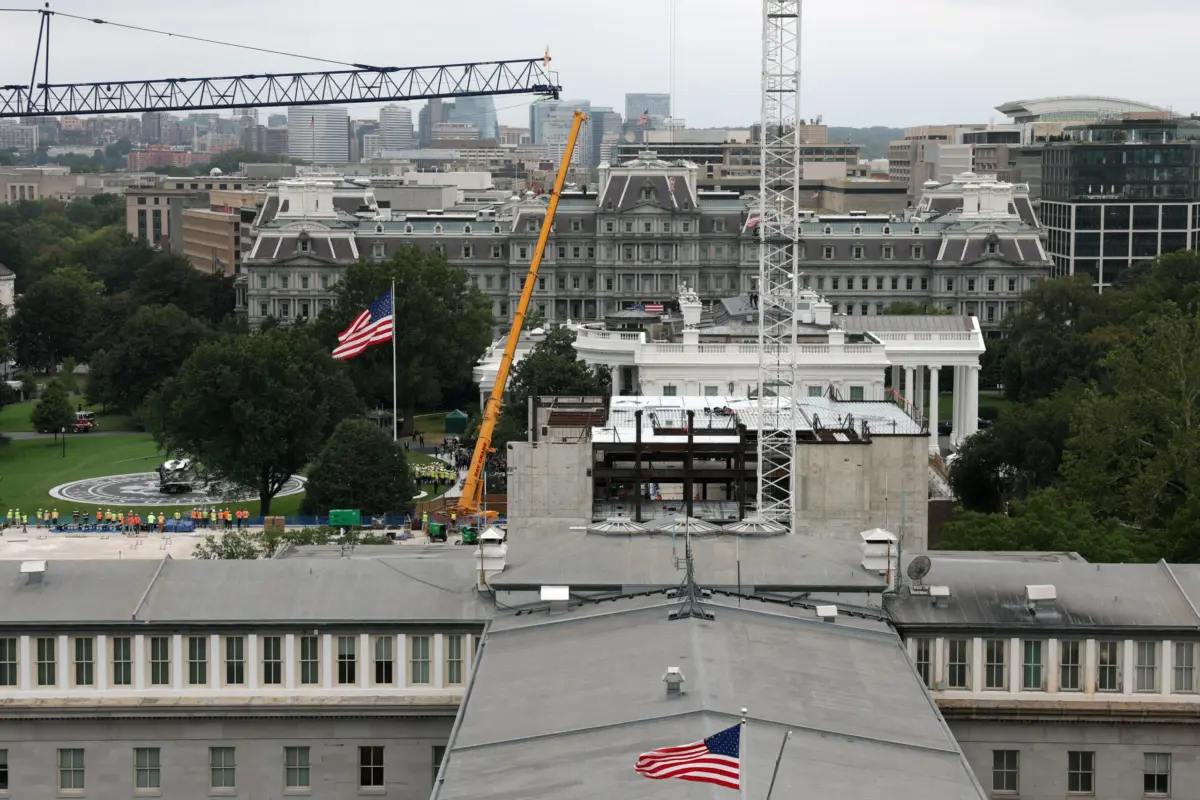
Within the opening months of his return to office, President Trump initiated sweeping changes directly on executive grounds. The historic East Wing of the White House was systematically knocked down to make way for a sprawling new ballroom. Concurrently, the administration paved over the historic White House Rose Garden, transforming the verdant lawn into a paved terrace reminiscent of the aesthetic at Mar-a-Lago.
Inside the executive mansion, the Oval Office was heavily redesigned with golden appliqués and heavy regilding, while a new marble floor was installed in the Palm Room. The administration also oversaw the construction of a heavily debated new helipad, which required round-the-clock work and constant on-site oversight from the president. Furthermore, four large statues near the National Mall were regilded, and attempts were made to renovate the iconic Reflecting Pool—a project that faced immediate technical hurdles and mixed public reviews.
Phase II: The Grand Architectural Proposals
Beyond the immediate executive grounds, the administration turned its attention to the broader federal landscape. Plans were formally introduced for a 250-foot triumphal arch situated in a traffic circle between the Lincoln Memorial and Arlington National Cemetery. Initially pitched as a classical monument, the president later asserted that the structure would double as a secure "military complex," housing anti-drone technology, snipers, and ammunition storage.
Simultaneously, the administration set its sights on the John F. Kennedy Center for the Performing Arts. Citing disputes over naming rights—following a previous court-ordered removal of the Trump name from the facility—the administration floated threats that the cultural landmark could be completely "ripped down" if the president’s demands regarding institutional recognition were not met.
Phase III: The Legal Sprint and Fait Accompli Strategy
As lawsuits piled up from preservationists, historical societies, and congressional watchdogs, the administration engaged in a high-stakes race against the judiciary. While the Supreme Court weighed the legality of the massive ballroom construction without prior congressional authorization, construction crews operated at breakneck speed. By accelerating the pouring of heavy foundations and structural steel framing, the administration sought to establish a fait accompli—creating a physical reality so massive and advanced that dismantling it would become politically and logistically untenable. Ultimately, the Supreme Court cleared the path for the continued construction, granting the administration a monumental legal victory.
Supporting Context & Metrics: Steel, Concrete, and Political Capital
To understand the scale of President Trump’s architectural endeavors, one must examine the raw engineering metrics and the psychological motivations driving them. Terris’s reporting underscores that the president views legislation as temporary and easily undone by subsequent administrations or shifting congressional majorities. Physical structures, by contrast, represent permanent claims on history.
The Ballroom Behemoth
The centerpiece of the president’s capital remodeling is the White House ballroom—a structure so vast that it spans roughly one and a half football fields. Key metrics defining the project include:
- Structural Steel: The ballroom features over 70 feet of rising steel framing, boasting a tonnage that the president proudly noted surpasses the steel used in the construction of the Washington Commanders’ new stadium.
- Visibility: The scale of the construction is so immense that it can be distinctly viewed from the apex of the Washington Monument.
- Fortification ("Nuclear Concrete"): To safeguard the project against future political retribution—such as Democratic proposals to tear down or repurpose the structure should they reclaim the White House in 2028—the administration utilized heavily reinforced concrete. The president has colloquially referred to this material as "nuclear concrete," asserting that the columns are built to withstand a nuclear blast and would render standard demolition tools like jackhammers completely ineffective.
The Psychology of Legacy
During his 45-minute Oval Office interview and subsequent tour, President Trump candidly addressed the motivations behind his building campaign. Confronted with viral observations from political rivals like Senator Jon Ossoff (D-GA)—who argued that the president is forced to build his own monuments because history will not do it for him—the president offered an unvarnished agreement: "Yeah, that’s true. Nobody will do it when I’m gone. When I’m gone, nobody will do it."
While this exchange displayed a rare moment of direct acknowledgment regarding how history may view his tenure, it also underscored an underlying belief in personal exceptionalism: the conviction that he alone possesses the vision, capability, and strength to execute such grand infrastructural feats.
Official Statements and Perspectives
The sweeping transformation of Washington, DC, has generated intense debate among political figures, legal experts, and administration officials.
The Administration’s View
President Trump and his inner circle maintain that these projects fulfill a deep aesthetic and functional need within the federal district, while permanently upgrading outdated executive infrastructure. Emphasizing hands-on oversight, the president monitors the construction progress from the residential windows of the White House multiple times a day. Insiders note that with legislative avenues frequently constrained by divided government and political opposition, investing time and energy into physical architecture provides a tangible, gratifying outlet for executive action.
Congressional Opposition and Subpoena Threats
Democratic lawmakers view the construction boom through an entirely different lens, characterizing the projects as an unconstitutional overreach of executive authority and potential vehicles for cronyism. With potential shifts in congressional control on the horizon, opposition lawmakers are preparing extensive oversight measures.
- Target-Rich Environment: Democratic members of Congress are actively planning investigations into project funding, construction contracts, and potential pay-to-play schemes involving private donors.
- Retribution Proposals: Lawmakers, including Representative Alexandria Ocasio-Cortez, have floated various proposals for what to do with the contentious structures should Democrats retake the White House in 2028, ranging from thorough investigations to radical adaptive reuse projects, such as converting the ballroom into a municipal soup kitchen.
- The Administration’s Defiance: Unfazed by prospective oversight, the administration has adopted a defiant stance. Confident in the durability of its reinforced structures and favorable judicial rulings, the White House has effectively dared future administrations to attempt demolition.
Future Outlook: A Permanent Shift in the Capital’s Skyline
As President Trump enters the latter half of his term, the capital remodeling campaign shows no signs of slowing down. For a leader increasingly operating within the constraints of a traditional second-term presidency—where legislative victories are hard-won and executive actions face continuous legal scrutiny—physical architecture offers a reliable mechanism for leaving an indelible imprint.
Whether these structures will survive the test of time, future political shifts, and potential legislative retaliation remains one of the most compelling questions in modern American politics. While lighter installations, such as the proposed triumphal arch, remain vulnerable to future political demolition, massive engineering feats like the reinforced White House ballroom present an extraordinary logistical and financial hurdle for any future administration seeking to reverse them.
Ultimately, President Trump is betting that future generations will judge his presidency not by the temporary ebbs and flows of statutory law, but by the physical monuments that tower over the nation’s capital. In doing so, he has fundamentally altered the physical landscape of Washington, DC, ensuring that his architectural legacy will be debated, weathered, and lived in for decades to come.





Comments
Facebook App ID not configured. Please add it in the Customizer.