
Executive Overview
In an era defined by the algorithmic streamlining of human connection—from the pop-psychology shorthand of the "Five Love Languages" to endless streams of curated short-form video—society has grown increasingly obsessed with the illusion of instant interiority. We treat human beings as puzzles to be solved, as dossiers to be downloaded, or as data points to be categorized. Yet, a provocative new documentary directed by Nathan Fielder and Lance Oppenheim, titled You Can See Everything, brutally exposes the limits of this digital panopticon.
The film chronicles the final month of freedom for disgraced Theranos founder Elizabeth Holmes before she began serving an eleven-year federal prison sentence for massive wire fraud and conspiracy. Granted unprecedented, almost total access to Holmes, her husband Billy Evans, and their domestic life, Fielder and Oppenheim strip away every traditional barrier separating a controversial public figure from the public eye. The resulting feature is an exhaustive, deeply unsettling exercise in cinematic radical transparency.
Despite the extreme close-ups, the total dissolution of privacy—including scenes of Holmes breastfeeding, cooking, exercising, and swimming in the ocean alongside a completely naked Evans—the film yields no neat psychological epiphany. Instead, You Can See Everything culminates in a profound and disquieting realization: no amount of footage, no volume of intrusive documentation, and no degree of investigative probing can replicate the slow, arduous work of truly knowing another human being. In an age that mistakes media consumption for human connection, the documentary serves as a stark reminder that a camera can capture everything on the surface, yet remain entirely blind to the complex realities of the human heart.
Read Also
Detailed Chronology: The Making of a Transparent Captive
The Premise of Total Access
The genesis of You Can See Everything lies in an extraordinary alignment of desperation and avant-garde documentary ambition. Following her 2022 conviction for orchestrating a multi-million-dollar fraud scheme through her blood-testing startup, Theranos—where she falsely claimed a proprietary device could run comprehensive diagnostic tests from a single drop of blood—Elizabeth Holmes faced a reckoning. With her appeals exhausted and a lengthy prison sentence looming, Holmes and her partner, Billy Evans, made a calculated gamble. Believing that the relentless, hostile media coverage and dramatic adaptations like Hulu’s The Dropout had fundamentally distorted her image, the couple invited Fielder and Oppenheim into their inner sanctum. Their stated goal was simple yet audacious: to allow the public to finally witness "the real Liz."
The Dissolution of Boundaries
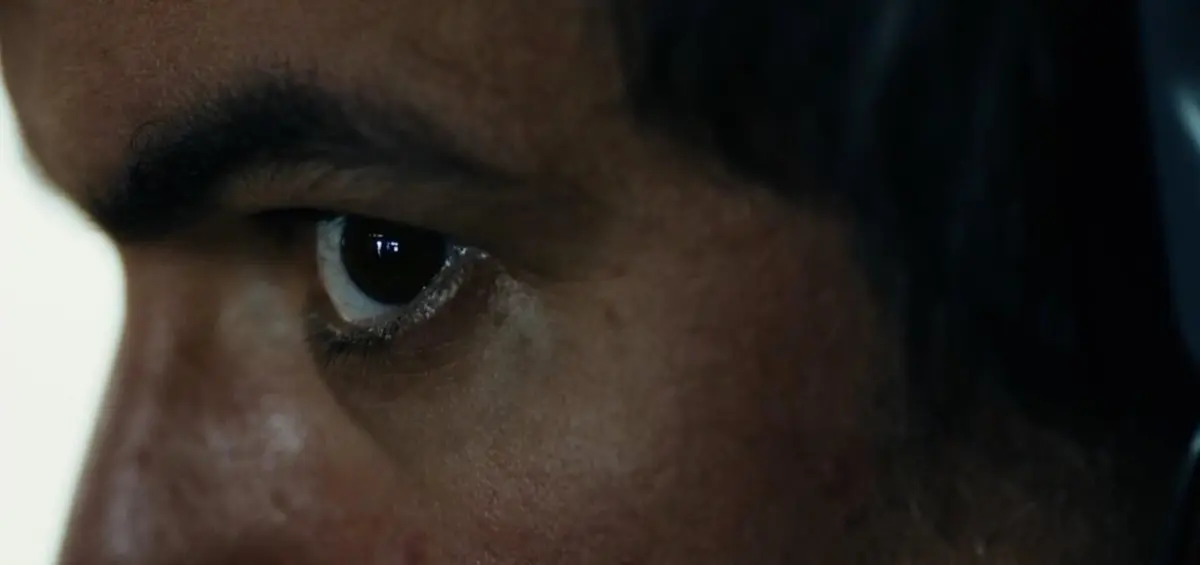
True to its provocative title, the documentary immediately plunges the viewer into an uncomfortably intimate environment. Fielder and Oppenheim dispense with traditional documentary distance. The camera lingers in suffocatingly tight micro-expressions, rendering every twitch, blink, and hesitant smile open to forensic examination.
The boundaries of domestic privacy vanish entirely. Fielder is shown lounging directly on the couple’s bed, while other sequences feature him swimming in the ocean with Holmes. In one particularly jarring moment, Evans appears completely naked on screen. For over a decade, the public had associated Holmes with the meticulously crafted, black-turtleneck-wearing visionary archetype meticulously engineered to evoke Silicon Valley mythology. Here, she is presented stripped of corporate artifice: a mother nursing her child, a wife preparing meals, and a woman navigating the final weeks of domestic stability before institutional confinement.
The Interrogation of Truth
Yet, as the documentary progresses, the initial promise of revelation curdles into a frustrating ideological deadlock. Fielder, seemingly unconvinced that this hyper-exposed version of Holmes is any more authentic than her previous corporate persona, spends a significant portion of the film attempting to psychoanalyze her.
In one central narrative thread, Fielder attempts to guide Holmes through a lesson in radical truth-telling and moral accountability. The exercise collapses under the weight of Holmes’s psychological defense mechanisms. More than once, she insists with chilling serenity that she has never lied in her life. Scenes reveal a woman seemingly incapable of grasping, let alone articulating, that her actions at Theranos—which risked patient health and defrauded sophisticated investors—were morally reprehensible.
The documentary highlights a harrowing philosophical question for the modern age: What is the utility of teaching ethics in a cultural ecosystem that systematically discourages individuals from ever viewing themselves as capable of true evil? Fortunately, the machinery of the legal system operates independently of self-perception, punishing infractions regardless of how cleanly a criminal’s conscience has been scrubbed by rationalization.
The Domestic Dynamic and the "Monuments of Love"
As the film meanders through its runtime, the focus shifts laterally from Holmes’s corporate malfeasance to the psychological dynamics of her marriage. Fielder grows visibly suspicious of Billy Evans, repeatedly probing whether Evans is manipulating Holmes for personal gain or social insulation.
This tension reaches a dramatic crescendo during a scene that reportedly horrified preview audiences. When pressed, Evans casually remarks that Holmes’s entire life purpose is to build "monuments of love" for him. To Fielder—and to a theater audience conditioned to spot red flags in modern relationships—this declaration is framed as smoking-gun evidence of a controlling, exploitative marital dynamic.
Yet, in a brilliant final subversion of audience expectations, Holmes herself shatters this outsider critique. When confronted with the implication, she calmly and unhesitatingly validates Evans’s statement, confirming that constructing these "monuments of love" is indeed the core purpose of her existence. The tidy narrative of the manipulated victim collapses, leaving viewers once again stranded in ambiguity.
Supporting Context & Metrics: The Theranos Legacy and the Attention Economy
To fully understand the cultural weight of You Can See Everything, one must examine the broader historical landscape of the Theranos scandal and the contemporary media ecosystem that feeds upon it.
| Metric / Indicator | Contextual Data |
|---|---|
| Theranos Peak Valuation | Once valued at $9 billion, making Holmes the world’s youngest self-made female billionaire at the time. |
| The Fraud Scale | Raised over $700 million from prominent investors, including media mogul Rupert Murdoch and the Walton family, based on demonstrably false technology. |
| The Verdict & Sentence | Convicted in January 2022 on four counts of wire fraud and conspiracy; sentenced to 11 years and 3 months in federal prison (currently serving time at FPC Bryan in Texas). |
| Media Saturation | Chronicled across hundreds of investigative journalism pieces, John Carreyrou’s bestselling book Bad Blood, an HBO documentary (The Inventor), and the Emmy-winning Hulu miniseries The Dropout. |
| Documentary Runtime | You Can See Everything spans approximately 3 relentless hours, testing the limits of audience patience and voyuristic endurance. |
The public appetite for Holmes’s story has never truly waned, transitioning seamlessly from business journalism to true-crime obsession, and now into avant-garde psychological cinema. Critics and packed theater audiences have driven ticket sales through the roof, all searching for the same holy grail: interiority. Did she know what she was doing? Does she experience genuine repentance? Is she weaponizing the documentary medium to orchestrate a final, masterclass act of public sympathy?
After three grueling hours, the film offers no clean catharsis. The definitive answer remains an unsatisfying, echoing shrug: Who knows?
Official Statements and Critical Reception
The release of You Can See Everything has sparked intense debate across film criticism, legal circles, and media ethics platforms.
Industry insiders and reviewers have praised Fielder and Oppenheim for turning their cameras away from standard true-crime exploitation and toward a meta-critique of documentary ethics itself. In a joint statement released ahead of the film’s wider festival rollout, the co-directors addressed the unprecedented nature of their subject:
"We set out to explore the boundaries of what a documentary camera can capture when the subject willingly surrenders every vestige of privacy. What we discovered was not a hidden monster or a misunderstood saint, but the profound impossibility of capturing a human soul through a lens. Transparency is not intimacy; it is merely another form of performance."
Legal analysts, conversely, have expressed concern over the cultural normalization of post-conviction rehabilitation campaigns through high-gloss media projects. A spokesperson for a prominent investor advocacy group noted:
"No amount of domestic normalization, artistic framing, or intimate home-movie footage can retroactively rewrite the devastating real-world consequences of corporate fraud. The legal system evaluated the evidence, and society must remain focused on accountability rather than aesthetic rehabilitation."
Meanwhile, cultural critics have focused heavily on the film’s underlying thesis regarding modern communication. As noted by media theorists reviewing the project, the documentary acts as a mirror to a society addicted to fast-food intimacy—where text messages, personality tests, and curated social media grids are mistaken for genuine interpersonal knowledge.
Future Outlook: The Limits of the Digital Panopticon
As You Can See Everything rolls out to broader audiences and streams into living rooms, its long-term cultural legacy will likely be measured not by what it reveals about Elizabeth Holmes, but by what it exposes about us.
We live in an impatient age. We demand instant access to the interior lives of public figures, influencers, and even our romantic partners, expecting to decode complex human psychologies with the same frictionless ease with which we consume short-form video or parse a pseudoscientific personality quiz. We treat intimacy as a technical optimization problem.
The documentary provides a sobering corrective to this digital hubris. It demonstrates that reality operates on an entirely different plane. True human understanding cannot be shortcutted by surveillance, nor can it be downloaded via high-definition footage. As the film’s philosophical undercurrent suggests: first comes love, and only then comes understanding, because it is solely through the sustained, sacrificial investment of love that we earn the right to truly know another person.
A camera can illuminate every dark corner of a room, zoom in on every micro-expression, and record every domestic routine. Yet, as Fielder and Oppenheim ultimately prove, a camera can show us everything except what love sees. In the end, the real Elizabeth Holmes—if such a coherent, singular entity can ever be fully grasped—remains known only to those who are willing to look past the panopticon, abandon the illusion of mediated omniscience, and do the difficult, unfilmed work of truly caring.





Comments
Facebook App ID not configured. Please add it in the Customizer.