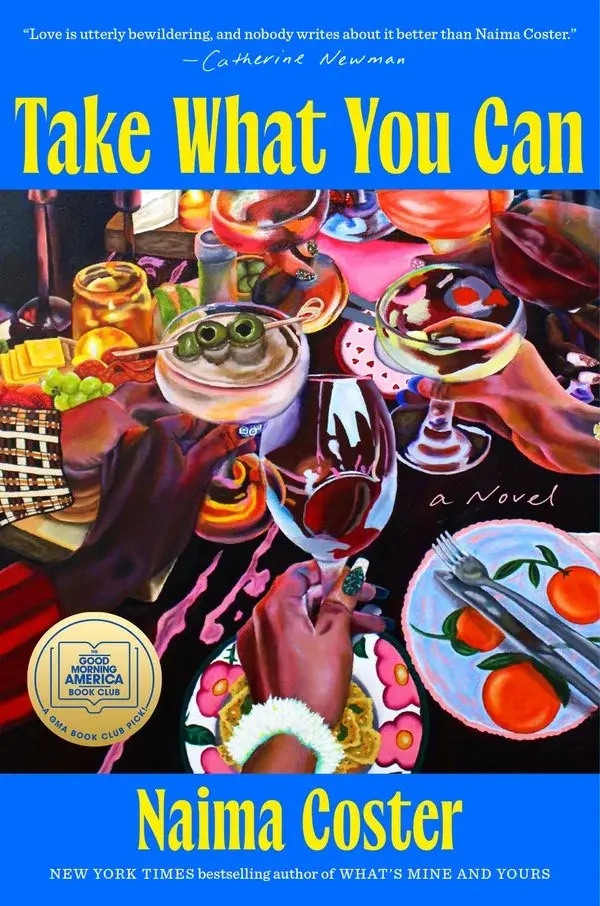
With the release of her third novel, Take What You Can, New York Times bestselling author Naima Coster solidifies her status as one of contemporary American literature’s most astute chroniclers of human intimacy, class division, and race. Following the critical success of her debut novel Halsey Street and her celebrated sophomore effort What’s Mine and Yours, Coster’s latest work confronts the volatile architecture of female friendship, the emotional terrain of postpartum identity, and the heavy burdens of unspoken social mobility.
Set against the contrasting backdrops of the sun-drenched French coast and the gentrified brownstones of Park Slope, Brooklyn, Take What You Can follows two lifelong friends, Milly and Val. As adults, the pair make the radical decision to co-raise their children in New York City, merging their households in a bid to construct a chosen family. However, as class disparities deepen, past traumas resurface, and the unhealed wounds of maternal loss bubble to the surface, the implicit vows binding the two women threaten to unravel completely.
In a comprehensive conversation with author and fellow Columbia University MFA alumna Yasmin Roshanian, Coster offers an illuminating look at the creative, psychological, and sociopolitical frameworks underpinning her new work. Unlike her previous novels, Take What You Can marks a pivotal shift for Coster—a transition from writing about past, processed experiences to wrestling with active, open emotional wounds regarding motherhood, class envy, and grief. This analytical report examines the narrative mechanics, critical contexts, and thematic resonance of Coster’s latest literary milestone.
========================================================================================
TIMELINE: NAIMA COSTER'S LITERARY EVOLUTION & NARRATIVE ARCHITECTURE
========================================================================================

  [ Columbia MFA Era ] ─────────────────────────────────────────────────────────────┐
  • Coster meets writer Yasmin Roshanian in a competitive writing cohort.           │
  • Foundations of Coster's signature style: precision, emotional authenticity,     │
    and keen sociopolitical dialogue.                                              │
                                                                                    ▼
  [ 2017–2018: "Halsey Street" ] ───────────────────────────────────────────────────┐
  • Debut novel published to widespread acclaim.                                   │
  • Examines gentrification, mother-daughter dynamics, and belonging in Brooklyn.  │
  • Characterized by a tight focus on two primary central figures.                 │
                                                                                    ▼
  [ 2021: "What's Mine and Yours" ] ────────────────────────────────────────────────┐
  • Read with Jenna / New York Times bestseller release.                            │
  • Expands narrative scope to a multi-generational, ensemble cast.                │
  • Explores integration, race, and family secrets in North Carolina.              │
                                                                                    ▼
  [ Postpartum Period – Development of "Take What You Can" ] ───────────────────────┐
  • When Coster's daughter turns two, themes of "unmothered motherhood," class     │
    envy, and postpartum identity begin to crystallize.                            │
  • Coster confronts raw, unresolved grief regarding miscarriage and maternal loss.│
                                                                                    ▼
  [ Present Release: "Take What You Can" ] ─────────────────────────────────────────┘
  • Novel begins with Milly and Val launching a boat on the French coastline.
  • Narrative shifts to Park Slope, Brooklyn, as the friends co-raise daughters.
  • Critical interview conducted by Yasmin Roshanian exploring themes, craft,
    and political dialogue in fiction.
========================================================================================
Phase 1: The Genesis of a Literary Voice
The professional lineage of Naima Coster is deeply anchored in rigorous academic and workshop environments. During her tenure in the Master of Fine Arts program at Columbia University, Coster established a reputation among her peers for clarity, empathy, and prose precision. Roshanian, reflecting on their shared time in the MFA program, notes that Coster brought an uncommon authenticity and kindness to a notoriously high-pressure literary environment.
Coster’s debut novel, Halsey Street (2017), established her narrative priorities: the shifting landscapes of urban neighborhoods, the fragile bonds between mothers and daughters, and the quiet indignities of gentrification. The book established Coster as a writer capable of dissecting large-scale social forces through the micro-interactions of deeply human characters.
Phase 2: Expanding Narrative Scale
In 2021, Coster published What’s Mine and Yours, a sweeping family saga that tackled school integration and racial identity in North Carolina. The novel broadened Coster’s reach, earning a spot on the New York Times bestseller list and receiving selection for the Read with Jenna book club. Where Halsey Street was intimate and concentrated, What’s Mine and Yours demonstrated Coster’s ability to orchestrate an expansive, multi-perspective cast across several decades.
Phase 3: The Conception and Realization of Take What You Can
The initial spark for Take What You Can emerged when Coster’s daughter was two years old. Reflecting on her own transition into motherhood, Coster realized she was harboring unresolved feelings regarding class, social mobility, and maternal loss.
Structurally, the novel represents a hybrid of her previous techniques. It returns to the sharp, concentrated dual-character focus of Halsey Street, zeroing in almost exclusively on Milly and Val, while retaining the mature, complex thematic ambition seen in What’s Mine and Yours. Opening with a formative memory on the water in France, the narrative charts the trajectories of both women as they move through adulthood, navigate long-distance friendship, and eventually reunite in Park Slope, Brooklyn, to raise their daughters together—a decision that forces a reckoning with their pasts.
Supporting Context & Metrics
To fully understand the critical framework of Take What You Can, one must examine the socio-cultural dynamics that shape its narrative terrain. Coster’s work operates at the intersection of several contemporary sociopolitical issues.
+-----------------------------------------------------------------------------------+
|                        THEMATIC MATRIX OF 'TAKE WHAT YOU CAN'                    |
+-----------------------------------------------------------------------------------+
|  THEMATIC PILLAR         |  NARRATIVE MANIFESTATION                               |
+--------------------------+--------------------------------------------------------+
|  Female Friendship &     |  • Quasi-marital "vows" and unwritten expectations.   |
|  Chosen Family           |  • Tension between career/marriage vs. friend loyalty. |
+--------------------------+--------------------------------------------------------+
|  Class Mobility &        |  • Park Slope setting as a metric of social capital.   |
|  Privilege Encounters    |  • Fine dining and travel used as class consumption.   |
+--------------------------+--------------------------------------------------------+
|  Postpartum Sexuality &  |  • Re-establishing autonomy after childbirth.          |
|  Non-Monogamy            |  • Milly's open marriage vs. Black womanhood optics.  |
+--------------------------+--------------------------------------------------------+
|  Unmothered Motherhood   |  • Navigating child-rearing amid lingering maternal    |
|  & Grief                 |    grief and past domestic abuse.                     |
+-----------------------------------------------------------------------------------+
Class Disparity and Social Mobility in Urban Spaces
A core tension in the novel stems from the class rift between Milly and Val. While both women have achieved social mobility relative to their origins, their financial reality in New York reveals glaring inequities:
Milly’s Wealth: Milly enjoys substantial financial security, allowing her to act as a benefactor within the friendship. However, her wealth creates an unequal power dynamic where generosity can feel patronizing.
Val’s Position: Val resides in Park Slope—one of New York City’s most expensive, family-centric neighborhoods—not through independent generational wealth, but through social networks and strategic choices.
The Nuance of Privilege: Coster challenges the simplified binaries of class. Both characters possess distinct forms of privilege, yet both harbor a persistent belief that they deserve more, which blinds them to their current advantages and creates mutual resentment.
Culinary Consumption as Class Performance
Throughout the text, food serves as a crucial barometer for status, sensory pleasure, and class mobility. Coster utilizes rich sensory details—from pork belly tamales and spring vegetable paella to braised chicken with chimichurri and fresh ceviche—to demonstrate how consumption functions as a gateway to privilege:
Sensory Indulgence: Fine dining offers the characters a tangible, immediate taste of luxury that is more accessible than real estate or trust funds.
Cultural Coding: Food acts as a code for sophisticated living. By consuming high-end culinary craft, Milly and Val signal their ascension into an elite social tier, using indulgence as a shield against past deprivation.
The Dynamics of Non-Monogamy and Black Female Autonomy
Milly’s open marriage with her husband, Harris, introduces a profound examination of female agency, desire, and racialized societal judgment:
Public vs. Private Identity: As a high-profile, highly visible Black woman, Milly’s non-monogamy carries heightened risk. Coster highlights how Black women’s bodies and sexualities have historically been hyper-sexualized and subjected to harsh moral scrutiny.
Responsibility vs. Desire: While Milly unabashedly pursues her sexual desire postpartum, Coster refuses to frame her actions purely as unexamined empowerment. Instead, the novel explores the friction between personal liberation and emotional responsibility toward others.
Official Statements & Author Insights
During her interview with Yasmin Roshanian, Naima Coster provided detailed insights into her creative process, thematic intentions, and personal vulnerabilities. Below are verbatim excerpts and direct commentary from the author, structured by core thematic categories.
On the Emotional Difficulties of Writing Open Wounds
Coster revealed that Take What You Can presented unique writing challenges because the narrative materials were closely linked to her unhealed emotional experiences:
"It was difficult to write this book because it was the first time I wrote a novel where the emotional material was really close to me… I thought I was emotionally ready to write about a lot of the things that came up for me in becoming a mother. Once I started, of course, I realized that I hadn’t gotten past anything. Everything was so fresh and raw for me, which wasn’t true for Halsey Street and What’s Mine and Yours… This novel is not autobiographical, either, but it was the first time I found myself writing about open wounds and really unresolved feelings."
On the Implicit Vows of Female Friendship
Coster reflected on why female friendships are often as intense, volatile, and demanding as romantic partnerships:
"I knew I wanted to write about how hard it is to love someone when you’re truly close… It’s like many of the ideas that people impose on marriage—somebody who’s there for you no matter what, who has made a kind of vow. Milly and Val have a version of their own vows… But the problem with an implicit understanding is that as life changes, there’s a lot to negotiate."
"Milly and Val live in a world where so much matters more than female friendship and is supposed to take precedence: their careers, their children once they have them, their marriages… Once they live near each other, all of the unspoken expectations cause a lot of friction between them."
========================================================================================
COMPARATIVE ANALYSIS: MARITAL VOWS VS. FEMALE FRIENDSHIP VOWS (AS EXAMINED BY COSTER)
========================================================================================

  MARITAL FRAMEWORK                         FEMALE FRIENDSHIP FRAMEWORK (MILLY & VAL)
  -----------------                         -----------------------------------------
  • Explicitly stated legal contracts.      • Unspoken, implicit expectations.
  • Formal societal recognition.            • Marginalized behind marriage & career.
  • Institutional support systems.          • Heavy pressure to fill family voids.
  • Structured mechanisms for conflict.     • Vulnerable to sudden friction & rift.
========================================================================================
On Class Privilege, Envy, and Self-Deception
Addressing the financial disparities between Milly and Val, Coster urged readers to reflect on their own social mobility and hidden privileges:
"I hope one of the things that the book pushes readers toward is being more honest about themselves and their class position… The story is a story of social mobility, and they’re both aware of how much other people have. It produces a kind of dishonesty in both of them… The book is really about how the desire for more and the belief that one deserves more can obscure a clearer view of inequality and one’s advantages."
On Postpartum Desire and Sexual Agency
Discussing the physical and psychological shifts that occur after childbirth, Coster emphasized that motherhood does not erase sexual appetite or the need for power:
"I knew I wanted to write about their sex lives postpartum, because the experience of giving birth for both of them transforms their bodies in different ways, and their relationship to themselves… Becoming a mother and giving birth doesn’t produce the end of desire—in some ways, it can produce even greater desire for self-actualization and self-determination and power."
On Political Engagement in Literary Fiction
In response to contemporary online debates—particularly on platforms like BookTok—demanding that fiction remain "apolitical," Coster pushed back strongly against the concept:
"I don’t know what it would mean for books to not be political—to not be meaningfully engaged with the world, what’s happening in the world, what’s happening in communities… We’re always speaking from our set of politics, and dreams, and hopes, even if we’re just commenting on brunch, or a painting."
"Dialogue is an interesting way to reveal what characters haven’t looked at, what they won’t look at. It reflects something about their politics, and the ways they’ve been formed by the world, and the ways they form the world around them."
Future Outlook
The publication of Take What You Can marks a defining moment in Naima Coster’s trajectory as a premier American novelist. By moving away from detached retrospective storytelling and stepping directly into the raw, unresolved realities of postpartum identity, maternal grief, and class mobility, Coster expands the boundaries of contemporary literary fiction.
Critical and Cultural Impact
As discussions around female friendship, chosen families, and non-traditional domestic arrangements continue to evolve, Take What You Can serves as a crucial cultural text. It pushes back against sanitized portrayals of motherhood and female solidarity, offering instead an unvarnished investigation into the sacrifices, jealousies, and deep devotion that define long-term intimacy.
+-----------------------------------------------------------------------------------+
|                           FUTURE TRAJECTORY & LITERARY IMPACT                     |
+-----------------------------------------------------------------------------------+
|  AREA OF IMPACT          |  PROJECTED CULTURAL & LITERARY CONTRIBUTION             |
+--------------------------+--------------------------------------------------------+
|  Re-defining Family      |  Normalizes complex chosen family structures and joint  |
|  Structures              |  parenting models outside traditional marriage.        |
+--------------------------+--------------------------------------------------------+
|  Nuancing Class Discourse|  Fosters honest conversations about middle-class envy,  |
|  in Fiction              |  social mobility, and unacknowledged privilege.       |
+--------------------------+--------------------------------------------------------+
|  Postpartum Narrative    |  Expands representations of postpartum sexuality,      |
|  Expansion               |  maternal grief, and non-monogamy among Black women.   |
+-----------------------------------------------------------------------------------+
The Evolving Canon of Political Fiction
Coster’s emphatic defense of political fiction highlights a crucial divide in modern reading culture. While certain consumer-driven spaces advocate for literature as pure escapism, Coster’s body of work proves that the most resonant, enduring stories are precisely those that engage with class, race, geography, and structural politics.
Through Take What You Can, Coster demonstrates that everyday conversations—whether over a plate of ceviche in Brooklyn or on a boat off the coast of France—are inherently charged with the history, politics, and lingering grief of the people engaging in them. As Coster continues to build her literary legacy, her work stands as an enduring testament to the complex, unruly, and beautiful reality of living fully in an imperfect world.







Comments
Facebook App ID not configured. Please add it in the Customizer.