
Executive Overview
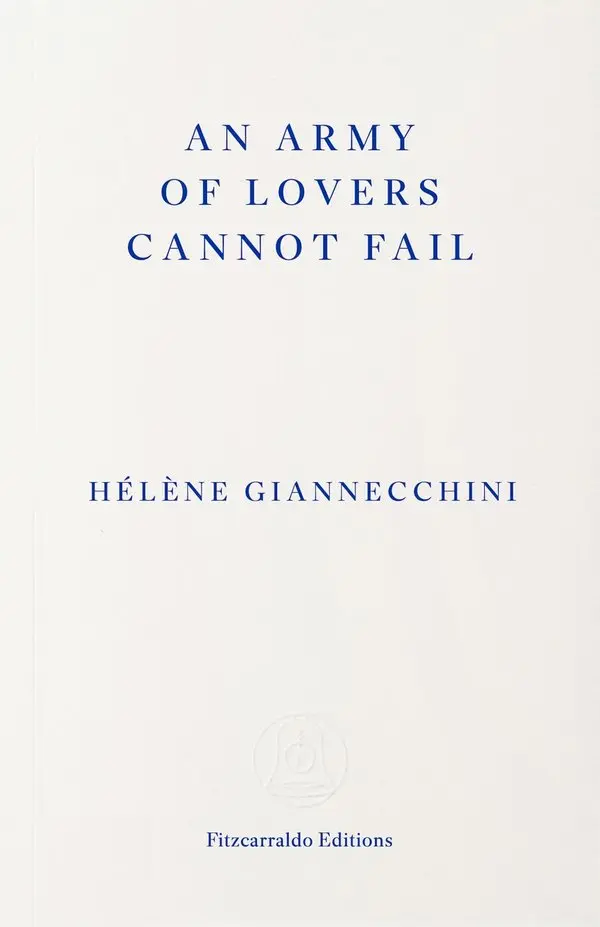
In her forthcoming work An Army of Lovers Cannot Fail—translated from French by Anna Moschovakis and published by Fitzcarraldo Editions—author Hélène Giannecchini presents a formidable examination of intergenerational queer intimacy, collective trauma, and the complex transmission of historical memory. Set against the backdrop of contemporary Paris, the book explores an emotionally fraught romantic relationship between a 24-year-old narrator born in the late 1980s and Myriam, a 40-year-old veteran activist of ACT UP Paris who survived the darkest years of the HIV/AIDS epidemic in France.
Giannecchini’s narrative functions as both a deeply personal memoir of erotic and intellectual awakening and an investigative study into how trauma alters communication across generations. The text exposes a subtle, persistent divide within the LGBTQ+ community: the rift between those who directly witnessed the mass casualties of the 1980s and 1990s and those who inherited the aftermath as an abstract historical backdrop. Through precise prose and literary analysis, the work dissects how silence, political rage, and unspoken grief shape modern queer identity, raising vital questions about how marginalized histories are archived, communicated, or inadvertently betrayed.
Detailed Chronology
[Late 2000s/Early 2010s]
  │
  ├── Initial Digital Encounter & Courtship
  │     └── Narrator (24) and Myriam (40) connect online; early morning messages precede first date in Paris's 10th Arrondissement.
  │
  ├── Intimacy & Ascetic Living
  │     └── Visits to Myriam’s starkly minimalist apartment; raw physical intimacy contrasted with quiet, indirect routines.
  │
  ├── Onset of Illness & Literary Initiation
  │     └── Narrator contracts shingles; Myriam acts as caregiver and reads Bernard-Marie Koltès’s 'In the Solitude of Cotton Fields'.
  │
  ├── Political & Historical Revelations
  │     └── Walks through Paris reveal sites of loss (e.g., friend Nils, d. 1992); Myriam recounts 1990s ACT UP Paris actions and grief.
  │
  ├── Growing Friction & Literary Research
  │     └── Narrator attempts to bridge the gap by reading Guibert, Dustan, Lagarce, and Copi; Myriam responds with volatile anger.
  │
  ├── The Rupture in the Café
  │     └── A peer uses the FN-associated slur "sidaïque"; Myriam explodes, confronting the group. Relationship abruptly terminates.
  │
  └── Post-Rupture Reflection & Theoretical Framework
        └── Years later, narrator reads Sarah Schulman’s 'The Gentrification of the Mind', analyzing intergenerational memory and loss.
1. Digital Connection and First Encounters in Paris
The trajectory begins with an online exchange between the 24-year-old narrator and 40-year-old Myriam. The interaction quickly evolves from regimented morning messages—timed around work schedules—to an immersive digital presence. The dynamic culminates in their first in-person meeting at a Greek restaurant in Paris’s 10th arrondissement. Despite the 16-year age gap, a intense intellectual and physical connection forms instantly. Their night transitions to a local bar over scotch and ends at Myriam’s apartment.
Read Also
2. Physical Intimacy and the Ascetic Space
As the relationship deepens, the narrator becomes familiar with Myriam’s minimalist lifestyle. Myriam’s living space—sparse, characterized by stacked books along bare walls and clothes kept in packing boxes despite ten years of occupancy—mirrors her reserved, direct demeanor. The physical relationship is defined by directness and silence, contrasting sharply with the intellectual conversations that take place over morning coffee in metal cups.
3. Acute Illness and the Introduction of Epidemic Literature
A critical shift occurs when the narrator contracts shingles, experiencing severe debilitating fatigue and vertigo. Myriam steps into the role of caregiver, moving the narrator into her bed and tending to her with a reserved, practical care.
During this period of convalescence, Myriam reads aloud from Bernard-Marie Koltès’s play In the Solitude of Cotton Fields. When asked about her literary choice, Myriam notes that Koltès died of AIDS-related complications in 1989, marking the first explicit reference to the epidemic that profoundly shaped her formative years.
"Memories are the secret weapons a man still has when he is stripped bare, a frankness that obliges frankness in return; the ultimate nakedness."
— Bernard-Marie Koltès, 'In the Solitude of Cotton Fields'
4. Walking Through Ghosts: ACT UP Paris and Public Memory
The relationship gradually opens up to historical geography. During a walk in central Paris, Myriam points out a second-floor window where her friend Nils lived before dying of AIDS in 1992. When the narrator offers a standard expression of sympathy—"I’m sorry"—Myriam rejects the platitude, identifying it as a empty response used when someone has nothing meaningful to say.
This incident opens the door to deeper accounts of Myriam’s youth. Arriving in Paris from the Vienne region at age 18, Myriam abandoned university studies to immerse herself in ACT UP Paris. She describes a life lived inside an ongoing crisis: direct action tactics ("zaps"), shared post-action meals, intense debates with Marais business owners, and the traumatic clearing out of deceased friends’ apartments before their families arrived.
5. Intellectual Pursuit versus Experiential Reality
Determined to understand Myriam’s world, the narrator embarks on an intensive self-education program, studying archival materials from the French National Audiovisual Institute (INA) and reading prominent French authors lost to AIDS, including Hervé Guibert, Guillaume Dustan, Jean-Luc Lagarce, and Copi.
However, this academic approach inadvertently deepens the divide. For Myriam, these works represent lived trauma and fallen comrades; for the narrator, they are literary and historical artifacts. Myriam increasingly displays volatile behavior—alternating between harsh rejection, physical affection, public outbursts, and sudden emotional withdrawal.
6. The Café Incident and Final Rupture
Six months into the relationship, the tension reaches a breaking point at a Parisian café where the narrator is gathered with university peers. When discussing Hervé Guibert’s autobiographical work My Parents and its stark dedication ("To nobody"), an acquaintance casually uses the stigmatizing French term "sidaïque" to describe Guibert.
Myriam immediately intervenes, her demeanor turning icy. She informs the group that "sidaïque" is not an acceptable descriptor, highlighting its origins in the far-right rhetoric of Jean-Marie Le Pen and the Front National during the height of the epidemic. After publicly reprimanding the acquaintance, Myriam knocks over her chair and walks out into the street. When the narrator pursues her, Myriam turns her anger onto the narrator, expressing shame over the younger generation’s perceived ignorance of queer history. The confrontation permanently ends their relationship.
"Do you know why? Because we never, never say 'sidaïque.' Unless you vote for the Front National. That is Jean-Marie Le Pen’s word—do you understand what you’re saying, you asshole?"
— Myriam, excerpt from 'An Army of Lovers Cannot Fail'
Supporting Context & Metrics
The Linguistic and Political Landscape of HIV/AIDS in France
To fully understand the rupture detailed in Giannecchini’s text, one must examine the socio-political climate of France during the peak of the epidemic in the late 1980s and early 1990s.

The term "sidaïque" was popularized in the mid-1980s by Jean-Marie Le Pen, leader of the far-right Front National. Le Pen used the term pejoratively to dehumanize individuals living with HIV/AIDS, famously advocating for their isolation in specialized sanatoriums termed "sidatoriums." Within French queer and AIDS activism—most notably ACT UP Paris, founded in 1989—the term was recognized not merely as an insensitive label, but as a weapon of political hostility.
| Term / Concept | Historical Context & Usage | Political/Social Weight |
|---|---|---|
| Sidaïque | Popularized by Jean-Marie Le Pen (Front National) in the mid-1980s. | Dehumanizing slur; associated with far-right proposals for forced isolation (sidatoriums). |
| Personne vivant avec le VIH | Standard term advocated by self-empowerment movements (e.g., Denver Principles). | Humanizing, politically neutral terminology centered on individual agency. |
| ACT UP Paris (f. 1989) | French branch of the AIDS Coalition to Unleash Power, known for radical direct action. | Pioneered public "zaps," radical media interventions, and direct policy advocacy. |
| HAART Era (Post-1996) | Introduction of Highly Active Antiretroviral Therapy (triple therapy). | Shifted AIDS from an acute terminal crisis to a manageable chronic condition in Western nations. |
The Generational Divide and Therapeutic Breakthroughs
The text highlights a distinct generational gap tied directly to medical timelines. The introduction of Highly Active Antiretroviral Therapy (HAART) in 1996 created a sharp divide in queer history:
Generational Experience Timeline:
-----------------------------------------------------------------------------------------
Pre-1996 Generation (Myriam's Cohort)       │ Post-1996 Generation (Narrator's Cohort)
• Came of age during high mortality rates   │ • Came of age post-triple therapy era
• Direct experience with systemic loss      │ • HIV understood as manageable chronic illness
• Activism driven by immediate survival      │ • Sex associated with anxiety, but not death
• Trauma expressed via rage/vigilance       │ • Historical knowledge mediated by archives/art
-----------------------------------------------------------------------------------------
For those born in the late 1980s, adolescence was marked by fear and sex education shaped by the threat of infection, yet mediated by the knowledge that effective medical treatment existed. For Myriam’s generation, entering adulthood in the late 1980s meant witnessing the widespread loss of partners, friends, and peers without therapeutic options.
Key Literary References in the Text
Giannecchini anchors her narrative in a distinct lineage of French and international queer literature. Understanding these references provides essential context for the characters’ motivations:
- Bernard-Marie Koltès (1948–1989): Renowned French playwright whose works, including In the Solitude of Cotton Fields, explored desire, power dynamics, and marginalized spaces. He died of AIDS-related complications at age 41.
- Hervé Guibert (1955–1991): French writer and photographer whose novel To the Friend Who Did Not Save My Life documented his experience with AIDS, demystifying the disease in French public discourse. His book My Parents (referenced in the café scene) features the dedication "To nobody."
- Guillaume Dustan (1965–2005): Controversial French author who documented post-1996 gay subcultures and debated prevention ethics, body politics, and identity.
- Jean-Luc Lagarce (1957–1995): Prominent French playwright whose works profoundly reflected on illness, family dynamics, and mortality.
- Copi (Raúl Damonte Botana, 1939–1987): Argentine-French playwright, cartoonist, and novelist, a key figure in the French avant-garde who wrote candidly about AIDS.
- Sarah Schulman (b. 1958): American author, historian, and ACT UP New York activist. Her 2012 theoretical work The Gentrification of the Mind: Witness to a Lost Imagination investigates the loss of urban queer culture, the erasure of AIDS memory, and the friction between survivors and younger queer generations.
Official Statements & Theoretical Perspectives
Critical Analysis on Intergenerational Transmission
The core dilemma presented in Giannecchini’s work centers on the difficulties of passing down history without a formal record. Drawing on René Char’s famous aphorism—"Notre héritage n’est précédé d’aucun testament" ("Our inheritance was left to us by no testament")—the narrative addresses the challenges of communicating traumatic memory.
In The Gentrification of the Mind, Sarah Schulman offers a critique that mirrors Myriam’s frustration with younger generations:
"We had been focused on conveying the heroism of ACT UP. But we had not succeeded at conveying the suffering. We had not conveyed how profoundly oppressed we had been… [Younger people] were looking for something to care about. They were looking for a hook."
— Sarah Schulman, The Gentrification of the Mind
Conversely, the narrator’s internal monologue reflects the difficult position occupied by post-epidemic queer youth:
"We are the inheritors of a history of struggle and suffering, of solidarity and of grief, of action and of pain, of engagement. How can all of this be told? Sometimes, something is lost in the transmission… It isn’t only that a part of the story fails to reach us; it is, I believe, that they have trouble sharing it. The trauma of those years can’t be communicated in words."
— Hélène Giannecchini, An Army of Lovers Cannot Fail
Perspective on Language and Political Memory
Literary scholars examining Giannecchini’s work emphasize that language serves as a crucial battleground for AIDS memory. The explosive reaction to the word "sidaïque" demonstrates how linguistic markers carry historical trauma. For survivors of the 1980s and 1990s, the use of historical slurs by younger peers—even out of ignorance—represents a painful erasure of the political struggles fought to secure human dignity and healthcare rights.
Future Outlook
The Evolution of Queer Archival Memory
Hélène Giannecchini’s An Army of Lovers Cannot Fail contributes to a growing body of contemporary literature seeking to bridge the gap between survivors of the HIV/AIDS epidemic and younger generations. As survivors age, the responsibility of preserving this history transitions from lived experience to archival preservation, artistic interpretation, and historical analysis.
Future Trajectory of Epidemic Memory:
  ├── First-Hand Witness Era (1981–Present)
  │     └── Primary memory held by survivors, direct activists, and caregivers.
  │
  ├── Archival & Intergenerational Transition (Current Phase)
  │     └── Translation of oral histories, digital archiving (e.g., INA materials), and literary memoirs.
  │
  └── Institutionalized Historical Memory (Future Landscape)
        └── Integration into broader historical curricula, public memorials, and canonized literature.
Implications for Contemporary Queer Discourse
The publication of this text by Fitzcarraldo Editions highlights an ongoing interest in works that combine personal memoir with political history. By examining how intimacy is shaped by historical grief, Giannecchini’s work provides a framework for addressing other forms of generational trauma within marginalized communities.
Ultimately, the text suggests that while transmission across generations is inherently flawed and prone to misunderstanding, it remains vital. Friendship, mentorship, and honest engagement with past trauma emerge as the primary means through which marginalized histories are preserved. As the narrator reflects years after the relationship’s end, the ultimate inheritance passed down by survivors is not a fixed set of instructions, but a deep, politically active understanding of solidarity, care, and community.





Comments
Facebook App ID not configured. Please add it in the Customizer.