
Executive Overview
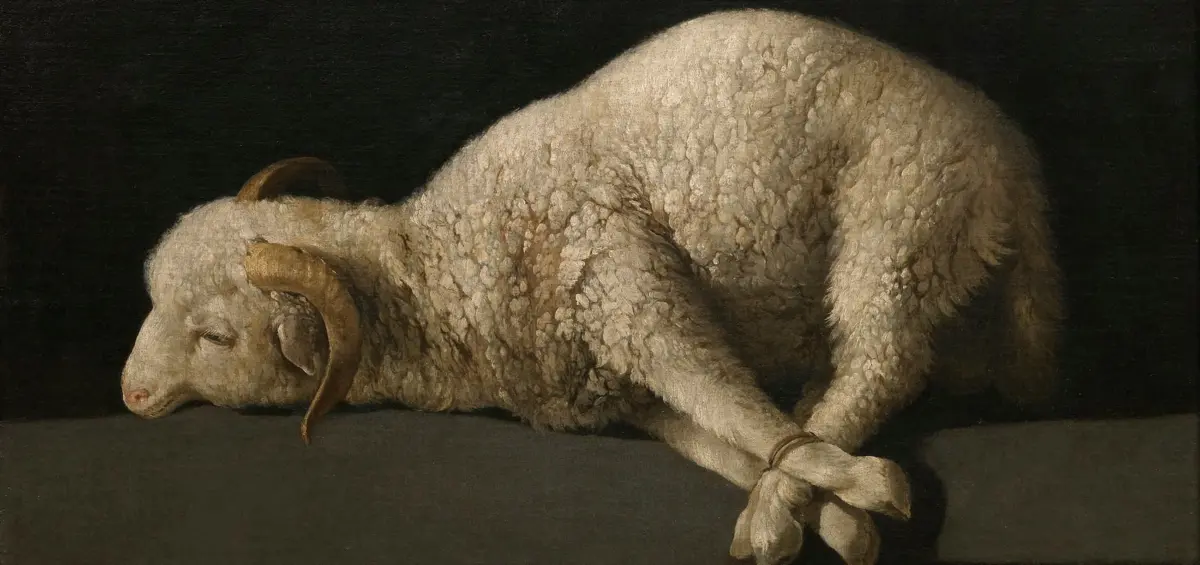
Throughout the summer months, a quiet devotion drew crowds to the National Gallery in London, week after week, to experience the profound retrospective of Francisco de Zurbarán (1598–1664). For many attendees, this was an uncharacteristic obsession; the Spanish master’s works exercised a gravitational pull that demanded repeated viewing before the exhibition closed at the end of August.
Zurbarán stands tall as arguably the preeminent religious painter of the seventeenth century. His life’s work was fundamentally consumed by spiritual conflicts, inner trials, and the dramatic interiority of the soul—realms he considered infinitely more vital than the fleeting events of the physical world. Yet, this intense preoccupation with the divine did not render him a disembodied ascetic. He fathered at least nine children and possessed a profound appreciation for rich color and radiant light. However, his life and art remained utterly free of immoderate self-indulgence.
This retrospective served as a timely reminder of art history’s most compelling paradox: Zurbarán achieved timeless masterpieces despite grappling with persistent technical shortcomings in anatomy, perspective, and architectural composition. This article explores the depth of his spiritual vision, the historical reception of his works by critics like Friedrich Nietzsche and J.-K. Huysmans, the anatomy of his artistic flaws, and his enduring legacy as a painter whose canvas was, in essence, an act of prayer.
Read Also
Detailed Chronology: Life, Loss, and Artistic Evolution
To understand the emotional resonance of Zurbarán’s brushwork, one must examine the trajectory of his life, which was punctuated by extraordinary early success followed by profound personal tragedy.
Early Promise and Domestic Prosperity (1598–1630)
Born in Fuente de Cantos, Spain, in 1598, Zurbarán grew up in a prosperous household and demonstrated an early aptitude for capturing the interplay of light and shadow. His initial career trajectory was remarkably swift. Patrons in Seville and regional monastic orders recognized his ability to translate Counter-Reformation theology into striking, accessible visual narratives.
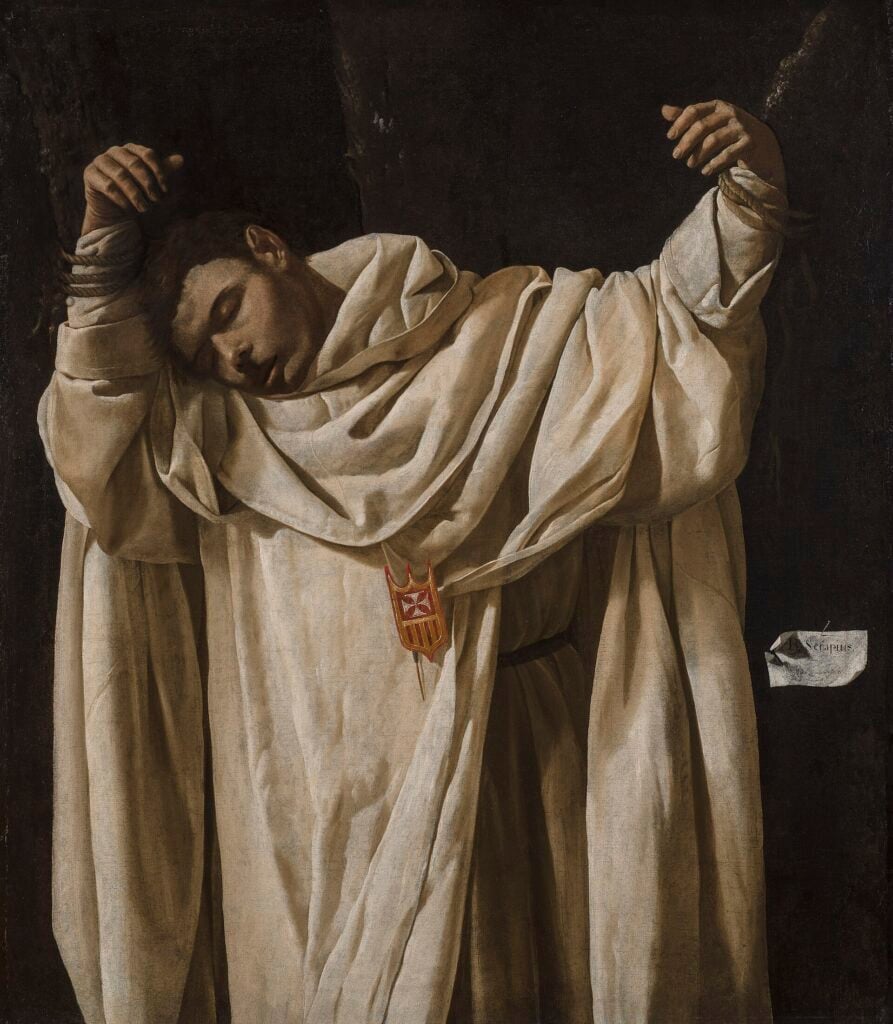
However, his personal life was immediately shadowed by sorrow. His first two wives died young—in 1623 and 1639, respectively. Despite these early losses, his artistic output during the late 1620s yielded some of his most striking historical and religious commissions, including his haunting 1628 depiction of St. Serapion for the Mercedarian order.
The Descent into Hardship and Personal Loss (1630–1650)
From the mid-1630s onward, Zurbarán faced a cumulative wave of professional setbacks, shifting artistic tastes in the Spanish court (as Diego Velázquez ascended in popularity), mounting financial distress, and acute personal humiliation.
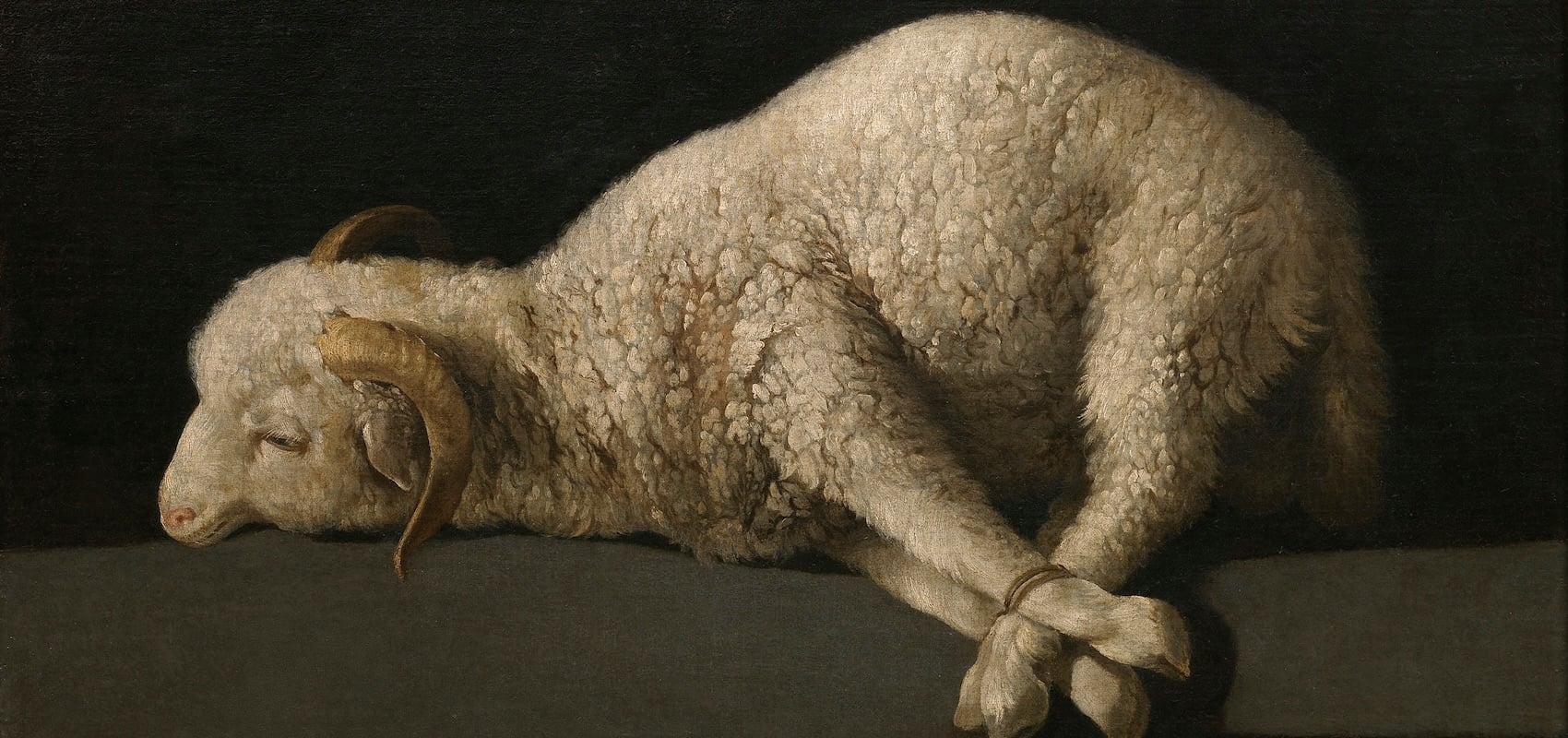
The deepest blow fell in 1649, when his beloved son Juan—a talented still-life painter in his own right—died during a devastating plague outbreak that ravaged Seville. Ultimately, most of Zurbarán’s children did not survive him. It was against this backdrop of compounded grief and financial ruin that Zurbarán painted what is believed to be a self-portrait around 1650, capturing the stoic resilience of a man who appeared to have lost everything except his faith and his craft.
Supporting Context & Metrics: Analyzing the Paradox of Zurbarán’s Technique
Most Old Masters’ depictions of saintly lives and gospel scenes can be comfortably appreciated from a purely secular or nonbeliever’s perspective. Friedrich Nietzsche, for instance, brilliantly appropriated Raphael’s Transfiguration in the fourth section of The Birth of Tragedy to illustrate the mechanics of Apollonian culture. While Raphael likely would have been aghast at this ideological repurposing, nothing within Raphael’s visual composition inherently resists an anti-Christian reading.
Zurbarán’s approach to sacred subjects, however, was radically different. It remains exceptionally difficult to interpret his religious imagery as anything other than an expression of absolute, sincere devotion.
The Misreadings of Critics: Huysmans and Mysticism
Even astute critics occasionally stumbled when attempting to categorize Zurbarán’s unsettling power. J.-K. Huysmans, one of the nineteenth century’s most perceptive art writers—whose aesthetic judgment grew increasingly eccentric after he re-embraced Catholicism in late 1890—wrote extensively about the painter in his novel The Cathedral.
Describing a Zurbarán painting in the gallery at Lyons, Huysmans observed:
"A Saint Francis of Assisi standing upright in a habit of grey sackcloth… It was a wonder how this corpse, of which nothing was left but the bones, could hold itself up, and a terror came over one at the thought of the excessive mortifications and appalling penances that had exhausted this body…"
Huysmans identified the painting with the relentless mysticism of Saint John of the Cross, calling it "the art of the torture chamber." Yet Huysmans missed the precise historical narrative: Pope Nicholas V had visited the tomb of St. Francis in 1449 and reported a miraculous vision of the saint’s uncorrupted body standing upright in the crypt. Zurbarán painted this subject at least three times (found today in Lyon, Boston, and Barcelona), imparting an uncanny, terrifying sensation of a genuine vision.
Anatomy, Perspective, and Technical Imperfections
Art historians cannot ignore the glaring technical flaws that pepper Zurbarán’s portfolio:
- Anatomical Deficiencies: Hands, particularly fingers, are frequently rendered with scant attention to proportion. In kneeling portraits like Saint Francis in Meditation at the National Gallery, shins and feet are often entirely omitted.
- Flawed Perspective and Architecture: Zurbarán struggled with foreshortening forearms and determining consistent light sources or shadow placement, errors clearly visible in ambitious works like The Interment of Saint Bonaventure in the Louvre.
- Repetitive Motifs: His compositions could be stiff, featuring amateurish architecture and repetitive cherub heads stacked like cannonballs.
Yet, as demonstrated in masterpieces like Christ and the Virgin in the House at Nazareth (Cleveland Museum of Art) and Christ and Saint Alonso Rodriguez (Academy of San Fernando, Madrid), these technical imperfections evaporate in the face of his extraordinary emotional and spiritual impact. He was unmatched in his ability to capture the heavy texture of rough, dirty sackcloth and heavy damask, using color harmony to guide the viewer’s eye directly to the divine.
Official Statements and Curatorial Perspectives
Curators and institutional voices have long grappled with how to present Zurbarán’s unique genius to contemporary audiences. Modern exhibition notes from international institutions—ranging from the National Gallery in London to the Louvre and the Cleveland Museum of Art—frequently emphasize his role as a bridge between earthly realism and transcendent mysticism.
- On Spatial and Spiritual Realism: Contemporary museum retrospectives consistently highlight that Zurbarán’s primary objective was never mere naturalistic accuracy. His works were commissioned as visual anchors for monastic contemplation.
- The Verdict of Connoisseurs: Leading art historians argue that evaluating Zurbarán through the lens of Renaissance anatomical perfection misses the point entirely. His power lies in his ability to make viewers recognize that reality extends far beyond the visible spectrum. As one contemporary critic noted of his masterwork Saint Luke as a Painter before Christ on the Cross—where the patron saint of artists gazes up at a crucified Christ who appears to bow back toward him—Zurbarán’s art transcends the category of visual aid. It functions as prayer itself.
Future Outlook
As the art world continues to digest the impact of recent retrospectives, the legacy of Francisco de Zurbarán is undergoing a profound modern reevaluation. In an era dominated by digital acceleration and the constant clamor of the attention economy, Zurbarán’s work offers a stark counter-narrative.
Museums are increasingly curating exhibitions that invite slow, contemplative engagement rather than passive scrolling. Zurbarán’s unapologetic sincerity, his unflinching confrontation with suffering, and his ability to render the invisible world palpable ensure that his canvases will continue to challenge, disquiet, and captivate future generations of scholars, believers, and secular art lovers alike. Far from being a relic of seventeenth-century Counter-Reformation Spain, Zurbarán stands as a timeless reminder that artistic greatness is measured not by flawless technique, but by the depth of truth a creator dares to make visible.


Comments
Facebook App ID not configured. Please add it in the Customizer.