
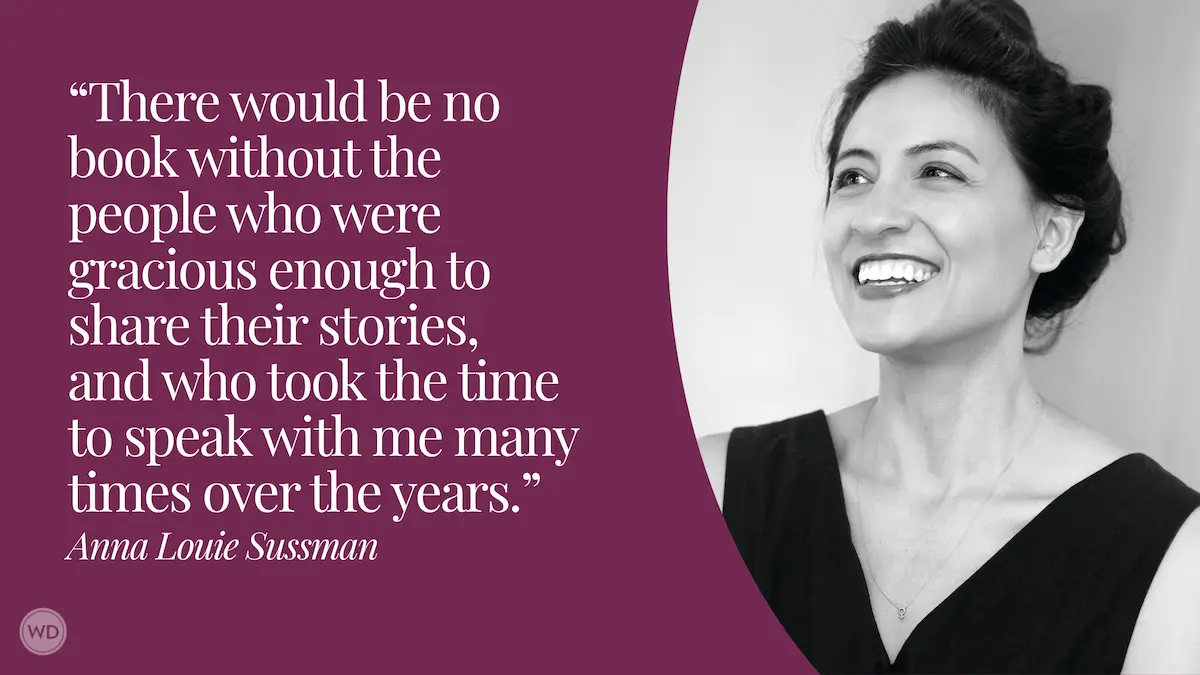
Executive Overview
Across the globe, demographic panic is reaching a fever pitch. From Seoul to Stockholm, and from the industrial heartlands of the United States to the economic hubs of Western Europe, headlines routinely warn of an impending "baby bust." Governments fret over inverted population pyramids, shrinking labor forces, and the long-term viability of social welfare systems. Yet, according to veteran journalist and author Anna Louie Sussman, these panicked macro-level assessments fundamentally misunderstand the human crisis unfolding beneath the surface.
In her eagerly awaited debut nonfiction book, Inconceivable: The Impossibility of Family in an Age of Uncertainty (Dey Street Books, September 2026), Sussman argues that the declining birth rate is not merely a statistical anomaly or a superficial cultural shift. Rather, it is a profound symptom of a structural mismatch: an individualistic, hyper-capitalist economic model that is fundamentally hostile to human reproduction, caregiving, and community interdependence.
Drawing on over six years of rigorous global reporting, deep personal reflection, and dozens of intimate interviews, Sussman explores the myriad ways modern life has priced, stressed, and planned out the traditional family unit. Her work cuts through the sterile jargon of demographic research to reveal a deeply emotional truth: people across the world consistently report wanting more children than they ultimately have. The gap between intention and reality is not a failure of personal desire, but a structural failure of our economic systems.
Read Also
Detailed Chronology: From Personal Egg Freezing to a Six-Year Literary Odyssey
The genesis of Inconceivable dates back to a personal milestone that many modern professionals will recognize. At age 34, following years of diligent financial planning and the timely windfall of a Christmas bonus, Sussman underwent the procedure to freeze her eggs. As she navigated the medical landscape of fertility preservation and contemplated the uncertain future of those biological cells, she experienced a jarring epiphany. She was struck by how extraordinarily difficult it felt to contemplate becoming a parent in the modern world—how meager the systemic support systems are, and how competitive, hyper-stressful, and emotionally isolating contemporary parenting is perceived to be.
Planting the Seeds (2018–2020)
At the time, Sussman was working as a reporter for elite financial and news institutions, including The Wall Street Journal and Reuters. Realizing that her personal anxieties mirrored a vast, unarticulated societal crisis, she began focusing her reporting lens on a new "reproduction beat."
By 2018 and 2019, the concept for a book began to take shape. During a work trip to the Swiss Alps, Sussman spent her mornings hiking in the crisp mountain air and her afternoons crafting a book proposal in a modest local hotel. Upon returning to New York City, she began pitching literary agents. Initial reception was mixed: one agent insisted the project be pivoted into a memoir, while another challenged her to prove her market viability by writing a viral essay first.
Accepting the challenge, Sussman secured an assignment with The New York Times Opinion section. The resulting essay explored a core thesis of her prospective book: that our inhumane, hyper-individualistic version of capitalism is fundamentally incompatible with the interdependent, sustainable, and communal structures required to nurture new human life. The essay resonated widely with readers. Armed with empirical proof of public interest, her literary agent, Melissa Flashman of Janklow & Nesbit, successfully sold the book proposal in early 2020.
The Six-Year Writing and Reporting Process
What followed was an intensive six-year journey from concept to publication. The timeline was punctuated by intermittent bursts of deep productivity—facilitated by coveted writing retreats—balanced against the competing demands of freelance reporting, client writing, and life’s unpredictable disruptions.
During this period, Sussman navigated a cross-town apartment move in New York City and, in a profound meta-narrative twist, became a parent herself. While the central architecture of the book remained stable, the content evolved organically. Sussman devoured volumes of sociological research, tracked emerging demographic trends, and interviewed dozens of individuals across diverse socio-economic strata.
The publishing journey was not without its administrative hurdles. Shortly after signing the book contract, the acquiring editor departed the publishing house—a stark introduction to the high turnover rates plaguing the modern publishing industry, disrupting the romanticized notion of a singular, lifelong writer-editor bond.
The reporting process also demanded immense emotional resilience. In one notable instance, a featured subject whose deeply moving marital journey formed a central narrative anchor in early drafts faced irreconcilable marital strains. Out of respect for their privacy, the subject withdrew from the project, forcing Sussman to scrap an entire chapter and painstakingly rebuild that section of the narrative with a new voice.
Supporting Context & Metrics: The Anatomy of the Global "Baby Bust"
To understand the weight of Sussman’s work, one must examine the broader socioeconomic backdrop against which Inconceivable is set. Total Fertility Rates (TFR) are plummeting across nearly every developed and emerging economy. Replacement-level fertility—the average number of children per woman needed to keep a population stable without immigration—stands at approximately 2.1. Today, the United States hovers around 1.6, while nations like South Korea have plunged to historic lows below 0.75.
The Economic Squeeze on Millennials and Gen Z
Mainstream political discourse often attributes declining birth rates to shifting cultural values, arguing that younger generations are simply more selfish, career-obsessed, or uninterested in domesticity. Sussman’s reporting dismantles this narrative. Surveys consistently demonstrate that young adults desire families; they frequently cite wanting two or three children, yet settle for one or none.
The impediments are structural and quantifiable:
- Housing Affordability: The median home price-to-income ratio has skyrocketed over the past three decades, making multi-bedroom dwellings largely inaccessible to dual-income households in major metropolitan areas.
- Childcare Costs: In the United States, infant care routinely rivals or exceeds the cost of in-state public college tuition, devouring a devastating share of young families’ disposable income.
- Precarity of Labor: The rise of the gig economy, corporate downsizing, stagnant real wages, and the elimination of traditional pension schemes have created an atmosphere of profound economic insecurity. Bringing a child into an environment characterized by sudden layoffs and zero job security feels, to many, like an act of financial recklessness.
- The "Motherhood Penalty": Professional women continue to face severe wage stagnation and career penalties upon having children, while the lack of federally mandated paid family leave forces impossible choices between financial survival and early childhood care.
Challenging the Demographic Panic
Sussman warns against viewing these metrics through a purely technocratic or alarmist lens. When governments respond to falling birth rates solely with cash bonuses, tax credits, or nationalistic rhetoric urging citizens to breed for the state, they miss the root cause. As Inconceivable illustrates, people do not reproduce on command to prop up GDP figures or fund future pension liabilities. They build families when they feel secure, valued, supported, and hopeful about the world they are bringing children into.
Official Statements and Author Insights
In exclusive reflections shared regarding the publication of Inconceivable, Anna Louie Sussman outlines her core aspirations for the book and offers hard-earned wisdom for aspiring nonfiction writers.
On the True Meaning of the Crisis
"There are headlines every day about a ‘baby bust’ (trust me, every day; I get Google alerts for that phrase), but I find those panicked headlines totally miss the point. This is not a story about human numbers. This issue matters because it is a story about love, and the many loving relationships that are not formed because of the messed-up economy and world that exists around us—and that we have the power to change."
On the Craft of Nonfiction Writing
Drawing on her extensive background in investigative journalism and long-form narrative, Sussman emphasizes that there are no shortcuts in rigorous nonfiction construction:
"I don’t think there is any substitute for time and effort. The more research and reporting you do, the better informed you’ll be. The more times you print out and revise your drafts, the better they will read."
Offering practical advice to writers trapped in digital workflows, she adds:
"Don’t try to edit yourself on a screen. Invest in a good printer and a box of red pens. I once saw a tip to change the font of your document when you print out your drafts to give you more distance from the material. Then markup those weird font printed versions. It’s shocking how easy it is to miss things when they’re on a screen."
Future Outlook: Reimagining the Architecture of Care
As Inconceivable: The Impossibility of Family in an Age of Uncertainty hits bookshelves in September 2026, it arrives at a critical cultural crossroads. The conversation surrounding work-life balance, economic inequality, and the sustainability of modern life is intensifying.
Sussman’s book does not offer a simplistic policy checklist, nor does it traffic in dystopian fatalism. Instead, by centering the real voices of women, men, couples, and single prospective parents navigating the modern economic maze, the book provides a powerful diagnostic tool. It forces a reckoning with the reality that our current socio-economic model treats human reproduction as an externality—something to be managed rather than nurtured.
Ultimately, Inconceivable challenges policymakers, economists, and communities to look beyond short-term corporate metrics and confront the deeper civilizational question: How can we build an economic architecture that honors human connection, makes care work visible and valued, and restores the fundamental possibility of family in an era of profound uncertainty? If we fail to answer this call, the empty nurseries of the developed world will serve as an enduring monument to an economy that forgot what it was ultimately meant to serve.





Comments
Facebook App ID not configured. Please add it in the Customizer.