
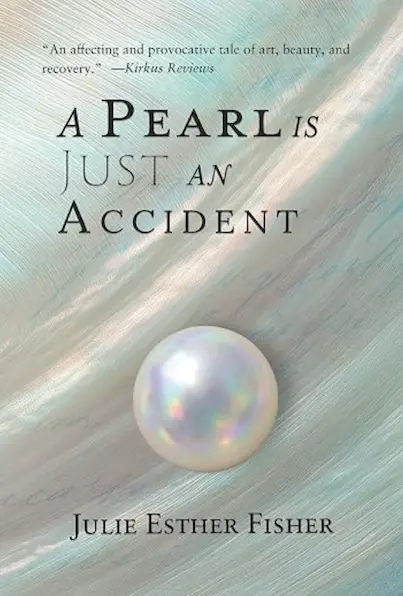
In the contemporary literary landscape, the pressure to conform to standardized narrative structures remains a formidable hurdle for authors attempting to break traditional molds. This systemic friction is at the heart of author Julie Esther Fisher’s creative journey with her acclaimed book, A Pearl is Just an Accident. What began as a conventional novel-writing enterprise evolved, through years of profound artistic struggle and eventual realization, into a masterclass in honoring a manuscript’s organic form: a novel in stories.
For years, Fisher wrestled with a manuscript that refused to bend to conventional architectures. Guided by well-meaning, highly skilled developmental editors, she systematically tried to force her interconnected stories into a singular, linear narrative arc. The result was a debilitating creative paralysis—a three-year silence born not of a lack of ideas, but of a profound crisis of confidence. Fisher’s breakthrough came only when she recognized a parallel between her creative predicament and the profession of her novel’s protagonist, art conservator Eliza James. Just as an art restorer strips away decades of unneeded varnish and overpainting to recover an original canvas, Fisher learned to strip away forced transitions and explanatory padding, allowing the raw, breathing truth of her stories to reemerge.
This feature explores the rigorous chronology of Fisher’s multi-decade writing process, analyzes the tension between traditional editorial mechanics and intuitive storytelling, examines the broader metrics of publishing a novel in stories, and offers a forward-looking perspective on how contemporary authors can better navigate the delicate balance between external critique and internal artistic integrity.
Read Also
Detailed Chronology: A Multi-Decade Evolution
The path to publishing A Pearl is Just an Accident was not a straightforward sprint, but a decades-long expedition marked by missteps, profound self-doubt, structural reinventions, and an eventual return to foundational creative instincts.
Phase One: The Conventional Pursuit
Like many writers conditioned by traditional literary expectations, Fisher initially approached her interconnected pieces with a rigid assumption: that there was one "proper" shape for a novel. She believed her stories were merely chapters-in-waiting for a continuous, overarching narrative.
For years, she labored to weave the pieces together, building bridges between distinct narratives, clarifying relationships, and answering questions that had deliberately been left open in early drafts. She enlisted several gifted developmental editors whose feedback arrived as thoughtful reports and margin-heavy manuscripts. Their advice was consistently intelligent: add connective tissue, smooth out joins, and help the reader transition seamlessly from one section to the next.
Phase Two: Panic, Over-Revision, and Silence
Though Fisher respected her editors and desperately wanted to learn from them, executing their advice triggered an immediate sense of panic and despair. She could not figure out how to implement their suggestions without losing the soul of her own book.
Mistaking emotional overwhelm for personal literary inadequacy, she pressed onward. She revised and revised. She added exposition where there had previously been silence. But with every draft that became more orderly and conventional, the manuscript grew flatter and less alive. The more conscientiously she revised, the further she drifted from the original impulse that compelled her to write.
Eventually, defeated by the structural discord, Fisher stopped writing entirely. For three years, a heavy silence settled over her desk. The stories themselves had not vanished, but her confidence in her instincts had completely collapsed. She had come to believe that her creative resistance was proof of her own incapacity for growth.
Phase Three: The Conservation Epiphany
When Fisher finally returned to the page, she did so without a new outline or a rigid structural plan. Instead, she took an unintentional cue from Eliza James, the art conservator protagonist of A Pearl is Just an Accident.
Eliza’s professional life is dedicated to removing layers of grime, varnish, and overpainting from old works of art. Her task is not to improve the art, but to recover it through extraordinary restraint. Reflecting on this process, Fisher realized she needed to revise her manuscript the way Eliza restores paintings.
Instead of asking what needed to be added, she began asking what no longer belonged. As unnecessary explanations fell away, the prose began to breathe. She broke the manuscript back down, publishing the strongest segments as standalone short stories in literary journals, where they were rapidly accepted—firm validation that her instincts were sound.
Phase Four: Rediscovering the Organic Form
When Fisher returned to write brand new material for the book, she went back to basics: an empty notebook, a pen, and the physical act of free-writing by hand. She learned to embrace a two-tiered creative process: allowing the intuitive storyteller to discover raw rhythm and imagery first, and letting the analytical editor step in only later for precision.
Rather than viewing her stories as incomplete chapters waiting to be stitched together, she recognized them as conversations across time—breaths taken across a lifetime. What she had once mistaken for structural deficiency was actually the natural architecture of a novel in stories.
Supporting Context & Metrics: The Form of the Novel in Stories
To understand the magnitude of Fisher’s creative pivot, it is helpful to examine the mechanics and industry standing of the "novel in stories" (also known as interconnected short stories).
| Metric / Feature | Conventional Novel | Novel in Stories (A Pearl is Just an Accident) |
|---|---|---|
| Narrative Drive | Linear progression, continuous plot, single-protagonist focus. | Episodic movement, thematic resonance, multi-perspective or shifting focal points. |
| Pacing & Silences | Highly connected; answers most narrative questions explicitly. | Employs strategic silences; relies on reader interpretation of gaps between pieces. |
| Revision Strategy | Focuses on continuity, bridge-building, and pacing enhancement. | Focuses on conservation, pruning, and preserving the autonomy of individual units. |
| Publishing Reception | Readily categorized by mainstream commercial algorithms. | Frequently bridges the gap between literary journal publication and cohesive book sales. |
The Mechanics of the Form
A novel in stories occupies a unique space in contemporary fiction, bridging the immediate, punchy emotional impact of short fiction with the cumulative emotional weight of a full-length novel. Authors such as Elizabeth Strout (Olive Kitteridge), Jennifer Egan (A Visit from the Goon Squad), and Sherwood Anderson (Winesburg, Ohio) have demonstrated how discrete narratives can orbit a common thematic center, geographic location, or character network.
When authors attempt to force this form into a conventional linear narrative, they often encounter the precise friction Fisher experienced. Interconnected stories rely on negative space—the silences and leaps between narratives—to create their resonance. Filling those gaps with connective tissue can dilute the thematic power of the individual pieces, transforming a vibrant mosaic into a labored, uniform structure.
The Role of Editorial Guidance
Industry metrics consistently highlight the tension between commercial market expectations and literary innovation. Developmental editing is inherently designed to optimize books for readability, pacing, and clarity—traits heavily prioritized in traditional publishing models. However, as Fisher’s experience demonstrates, hyper-rationalized editorial input can sometimes inadvertently homogenize a manuscript that requires an unconventional structural approach.
Fisher’s journey underscores a vital truth for the modern literary ecosystem: while rigorous critique is essential for sharpening prose, economy, and discipline, it must be filtered through an author’s distinct stylistic compass.
Official Statements and Industry Insights
Reflecting on her journey, Julie Esther Fisher has articulated several core philosophies regarding the synthesis of creative intuition and rigorous editorial discipline. Her insights offer a valuable framework for emerging writers navigating similar creative crises.
"For years I thought those two selves were enemies. Now I understand that they simply have different responsibilities. The storyteller discovers. The editor clarifies. One listens for possibility, the other, for precision. It took me a very long time to stop asking each of them to do the other’s work."
Fisher emphasizes that the breakthrough in her writing did not come from rejecting editorial wisdom entirely, but from learning to categorize advice. Some editorial suggestions—such as cutting redundant passages, favoring precise metaphors over excessive explanation, and reading sentences aloud by ear—strengthened her writing without altering its nature.
Conversely, other suggestions asked the manuscript to inhabit a shape that resisted it at every turn. Recognizing the difference, Fisher notes, required years of unlearning self-doubt:
"There comes a moment when the writer must decide whether a suggestion helps the work become more fully itself, or whether it asks the work to become something else entirely. Knowing the difference is not an act of certainty. It is, essentially, an act of listening."
Literary critics and editors who have engaged with A Pearl is Just an Accident frequently point to its unique structural cadence as its greatest strength. By refusing to over-explain the relationships between its characters, the book demands an active, participatory reading experience, proving that what traditional editorial frameworks might view as "gaps" are often the very oxygen that keeps the narrative alive.
Future Outlook: Implications for Writers and the Publishing Landscape
As the literary world continues to diversify its acceptance of hybrid forms, memoirs-in-essays, and novels-in-stories, Fisher’s experience serves as both a cautionary tale and an inspiring roadmap.
1. Redefining Structural Success in Creative Writing Programs
Traditional MFA workshops and creative writing manuals have historically emphasized the mechanics of the continuous, plot-driven novel. Fisher’s journey suggests a necessary evolution in pedagogical approaches—one that teaches emerging writers how to diagnose whether their manuscript is struggling because it is poorly executed, or because it is simply trying to wear the wrong architectural clothes. Encouraging students to identify the natural organic shape of their work early on can prevent years of demoralizing, counterproductive revisions.
2. Evolving Editorial Partnerships
The relationship between author and developmental editor is foundational to modern publishing. Fisher’s reflective gratitude toward the editors who challenged her—even when their advice pushed her in the wrong direction—highlights the nuanced nature of editorial feedback. Future publishing models stand to benefit from collaborative environments where editors actively help authors discover what a book wants to be, rather than automatically steering it toward a standardized commercial template.
3. The Enduring Power of Active Reading
In an era dominated by rapid content consumption and algorithms that reward predictable plotting, A Pearl is Just an Accident champions the artistic value of restraint. By leaving space for readers to enter the narrative through strategic silences and emotional resonance, Fisher’s work points toward a future where literary fiction continues to honor the intelligence and intuition of its audience.
Ultimately, Fisher’s arduous path to publication offers a timeless reassurance to authors grappling with difficult manuscripts: every book speaks in its own voice from the very beginning, and the ultimate task of the writer is not to reinvent that voice, but to patiently learn how to listen.



Comments
Facebook App ID not configured. Please add it in the Customizer.