
Executive Overview
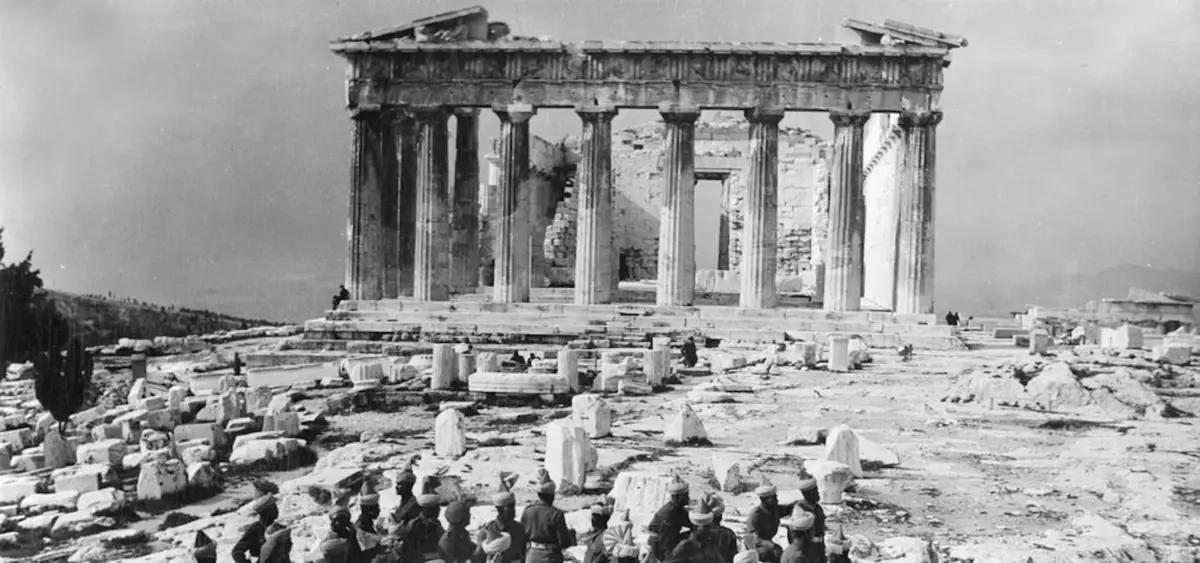
In the crisp air of early October, against the weathered marble backdrop of the Parthenon on the Acropolis in Athens, United States Secretary of State Marco Rubio delivered what many political theorists and international observers are already calling a watershed address. Standing atop the ancient cradle of Western thought, Rubio did not merely offer the standard diplomatic pleasantries typical of transatlantic statecraft. Instead, he issued a stark, ambitious, and deeply philosophical rallying cry aimed at the heart of the Western world: a call for civilizational renewal, a reawakening of national confidence, and a deliberate pivot away from the modern therapeutic consensus that has long dominated Western political culture.
Rubio’s central thesis was as provocative as it was timely. He argued that contemporary Western civilization has lost its way, trading the pursuit of greatness, risk, and excellence for a stifling ethos of risk aversion, radical egalitarianism, and self-doubt. By contrasting the kinetic, striving ambition of ancient Greece with the modern bureaucratic obsession with safety and mediocrity, Rubio touched upon a profound cultural malaise. He diagnosed a debilitating wave of institutional self-hatred—what the late philosopher Roger Scruton termed "oikophobia"—which manifested most visibly in the iconoclasm and historical revisionism of recent years.
To combat this decline, the Secretary of State championed the revival of thumos—the classical Greek concept of spiritedness, passion, and the desire for honor—and openly rejected the post-World War II globalist consensus that views nationalism as an inherent danger. In its place, Rubio championed an unapologetic return to national sovereignty, industrial resilience, and patriotic pride. This comprehensive report examines the philosophical underpinnings, geopolitical implications, and cultural reverberations of a speech that signals a seismic shift in American foreign policy and the broader ideological trajectory of the West.
Read Also
Detailed Chronology of the Address and Its Immediate Aftermath
The staging of Secretary Rubio’s address was meticulously crafted to maximize its symbolic resonance. Choosing Athens—and specifically the Acropolis—as the venue placed the speech within a deep historical lineage.
- Pre-Speech Preparations (Late September): Diplomatic channels in Washington and European capitals whispered of an address that would depart from standard State Department talking points. Unlike technical trade or defense briefs, Rubio’s team drafted a speech deeply embedded in political philosophy, history, and civilizational critique.
- Early October (The Address): Against the majestic silhouettes of the Parthenon ruins, Rubio stepped to the podium. He initiated his remarks by drawing a sharp distinction between extinct civilizations whose monumental relics—such as the pyramids of Egypt, Stonehenge, or the stone heads of Easter Island—now rest safely outside living memory, and the enduring legacy of Athens. Unlike societies lost to the dust of history, ancient Greece remains a living font of Western identity.
- Mid-Speech Pivots: Rubio systematically deconstructed the modern aversion to risk. He argued that the post-Cold War Western consensus has prioritized absolute safety over excellence, holding exceptional achievement hostage to the lowest common denominator. He invoked thumos, challenging European and American leaders to rediscover the fiery passion that underpins historic human achievement.
- The Climax on Nationalism: Toward the conclusion of his remarks, Rubio directly challenged the orthodoxies of the post-war international order. Explicitly stating that the United States has chosen the unapologetic pursuit of national power, he urged European allies to drop their guilt-ridden aversion to national loyalty.
- Post-Address Reception (Weeks Following): The speech immediately ignited fierce debates across academic, journalistic, and diplomatic circles. While traditional Atlanticist think-tanks expressed unease over the explicit rejection of multilateral globalism, conservative intellectuals and populist-leaning policymakers hailed it as a long-overdue intellectual decoupling from the "end of history" mindset that has characterized Western governance for three decades.
Supporting Context & Metrics: The Diagnosis of Western Malaise
To fully appreciate the gravity of Rubio’s Athens address, one must examine the socio-cultural data and philosophical currents that frame his arguments. The modern Western world is experiencing a crisis not merely of economic stagnation or geopolitical competition, but of meaning, morale, and civilizational self-belief.
The Rise of the Therapeutic Mentality
Sociologists and cultural critics have long noted the emergence of a "therapeutic culture" within advanced Western democracies. This mentality seeks to insulate citizens from psychological distress, failure, and moral judgment. While designed to foster inclusivity, its institutional application has often resulted in an intense aversion to risk. Educational institutions, corporate environments, and public policies increasingly utilize standardized metrics designed to ensure parity of outcome rather than cultivation of excellence.
Data from educational assessments across the OECD over the past two decades indicate a growing trend toward flattening grade distributions and reducing competitive academic structures, ostensibly to protect student self-esteem. Rubio’s critique targets this exact phenomenon: when society prioritizes the comfort of the mediocre over the boundless potential of the exceptional, it extinguishes the cultural sparks that drive scientific, artistic, and civic breakthroughs.
Thumos vs. Comfort: The Psychological Dimension
In classical political philosophy, particularly in the works of Plato and Aristotle, thumos (spiritedness) is recognized as one of the three core components of the human soul, alongside appetite and reason. It is the seat of anger, pride, courage, and the innate human desire to be recognized as honorable.
When channelled constructively, thumos drives individuals to build empires, compose masterpieces, explore uncharted oceans, and defend democratic republics against tyranny. Rubio argued that modern Western governance has systematically suppressed thumos. By treating passion, national pride, and fierce competition as volatile and dangerous remnants of a dark past, technocratic elites have produced a spiritually flat society. The psychological toll of this suppression manifests in rising rates of alienation, political radicalization, and an overall sense of civilizational exhaustion.
The Architecture of Self-Hatred (Oikophobia)
Rubio’s speech struck a nerve by addressing the phenomenon of institutional self-flagellation. Drawing on the late British philosopher Roger Scruton’s concept of oikophobia—the fear or hatred of one’s home, culture, and traditions—Rubio highlighted how Western nations have spent decades encouraging their populations, particularly the youth, to view their heritage primarily through the lens of historical sins.
The cultural flashpoints of the summer of 2020—marked by widespread monument removals, intense national self-condemnation, and curricular overhauls that emphasize national shame over civic gratitude—served as the crescendo of this movement. Psychological and sociological studies on national identity consistently demonstrate that while historical accountability is vital for a mature democracy, chronic, systemic humiliation breeds enervation rather than moral elevation. A populace taught to apologize for its existence lacks the requisite willpower to defend its values against external authoritarian challengers.
Official Statements and Intellectual Perspectives
The reverberations of Secretary Rubio’s speech have generated a robust dialogue among diplomats, political philosophers, and cultural commentators.
- The State Department Perspective: While administration officials have framed the speech as a pragmatic call for strategic re-industrialization and secure supply chains, insiders acknowledge that Rubio’s core message was deliberately philosophical. By linking tangible economic policies—such as reshoring manufacturing, boosting defense spending, and achieving technological dominance—to a broader spiritual renewal, the speech sought to bridge the gap between hard-nosed realism and cultural patriotism.
- The Transatlantic Reaction: European diplomatic circles responded with a mixture of polite reserve and private anxiety. For decades, the European Union’s institutional framework has been built upon the transcendence of traditional nation-state nationalism in favor of supranational legalism and multilateralism. Rubio’s explicit repudiation of the idea that global community should supersede national loyalty directly challenges the core operating assumptions of Brussels technocrats.
- Intellectual and Academic Commentary: Prominent political theorists have noted the striking alignment between Rubio’s rhetoric and critiques of the "open society" advanced by traditionalist scholars. Analysts argue that the post-Cold War project of an interconnected, borderless world has severely eroded the thick social ties, mutual obligations, and strong cultural loyalties—the "strong gods" of national myth and civic religion—that historically held free societies together. Rubio’s address is viewed by these intellectuals as a courageous, high-level political acknowledgment that open societies cannot survive without a robust internal anchor of patriotic identity.
Future Outlook: Navigating the Civilizational Crossroads
As the dust settles on the Acropolis, the long-term implications of Marco Rubio’s address are beginning to take shape across the geopolitical landscape. The speech is unlikely to remain a mere rhetorical exercise; rather, it serves as a programmatic blueprint for a new era of Western statecraft.
1. The Resurgence of Economic Nationalism
Rubio’s intellectual framework ties national spirit directly to material sovereignty. In the coming years, expect to see an acceleration of bipartisan efforts in Washington—and potentially growing pressure on European capitals—to decouple critical supply chains from geopolitical adversaries, rebuild domestic manufacturing bases, and enforce strict technological protections. The realization that national security requires industrial self-reliance is rapidly replacing the free-trade dogmas of the late 20th century.
2. A Cultural Counter-Reformation in Education and Civic Life
The debate over how history is taught in Western schools will intensify. As policymakers heed Rubio’s warning against teaching children to despise their heritage, educational battlegrounds will increasingly feature legislative and cultural pushes to restore a balanced, gratitude-infused narrative of national history. The goal will not be uncritical hagiography, but the deliberate cultivation of civic thumos—inspiring the next generation to cherish and defend their democratic institutions.
3. A New Paradigm for Transatlantic Relations
The traditional post-war alliance, built on the premise of converging liberal internationalism, is evolving. Rubio’s challenge to European leaders to shed their guilt over national loyalty signals a transition toward an alliance of sovereign nation-states rather than an integrated global technocracy. If European nations embrace this shift, the West may witness a revitalized coalition of self-confident democracies capable of standing firm against rising authoritarian powers like China and Russia.
Conclusion
Secretary of State Marco Rubio’s speech in Athens was a rare moment in modern diplomacy where high philosophy met immediate geopolitical strategy. By summoning the ghosts of ancient Greece and diagnosing the spiritual malaise of the contemporary West, Rubio forced a long-overdue reckoning. Whether the nations of the West will heed his call to abandon self-denial and recover their civilizational self-confidence remains the defining question of our era. What is certain, however, is that the era of uncritical globalism has drawn to a close, and the "strong gods" of nation, culture, and spirited ambition have officially returned to the negotiating table.



Comments
Facebook App ID not configured. Please add it in the Customizer.