
In the contemporary literary landscape, the intersection of artistic creation and corporate publishing often resembles a high-stakes psychological drama. Few authors navigate this tension with the wry wisdom, institutional memory, and emotional transparency of bestselling novelist Laura Zigman. With a career spanning decades across both sides of the author-publisher divide—including her time as a publishing publicist and her breakthrough adaptation Animal Husbandry (adapted into the 2001 film Someone Like You starring Ashley Judd and Hugh Jackman)—Zigman offers a rare perspective.
Her latest novel, The Author Weekend, serves not merely as a narrative exploration of a writer’s life, but as a sharply observed inquiry into the nature of success, the fragility of creative confidence, and the enduring resilience required to sustain a career in modern letters. Far from a traditional whodunit mystery, The Author Weekend uses the architecture of suspense to investigate a more haunting question: What happens when an artist achieves the milestones they were promised would bring fulfillment, only to discover the existential anxieties remain unchanged?
In this comprehensive interview-based feature, Zigman pulls back the curtain on the hyper-corporatized publishing industry, discusses the paradox of commercial validation, and reflects on why humor remains the ultimate antidote to professional shame. Furthermore, she addresses the universal insecurities that plague multi-time New York Times bestsellers and debut authors alike, offering a masterclass in how to decouple the sacred act of writing from the volatile metrics of the marketplace.
Read Also
Detailed Chronology: From the 1980s Book Trenches to The Author Weekend
To understand Laura Zigman’s diagnostic eye for the publishing ecosystem, one must trace her trajectory from the entry-level trenches of New York publishing in the mid-1980s to her current status as a revered literary voice.
The Formative Years (1985–1990s)
Zigman entered the industry during an era that, while already demanding, operated with a different infrastructure. As a young publishing publicist—an experience mirrored in her character Jade—she worked grueling hours for minimal compensation. Yet, these foundational years birthed enduring professional alliances. In 1985 and 1986, Zigman forged friendships with contemporaries who would go on to shape the industry, such as Ivan Held (longtime executive running Putnam) and Julie Grau (publisher of Spiegel & Grau).
This insider perspective instilled in Zigman a deep, abiding affection for the foot soldiers of literature—the agents, publicists, and editors whose jobs sit perpetually on the line. While corporate consolidation over subsequent decades would fundamentally alter the landscape, Zigman’s foundational empathy for the human element of publishing remained intact.
The Breakthrough and the Hiatus (1998–2018)
Zigman burst onto the national literary scene with her 1998 debut novel, Animal Husbandry, which became a runaway bestseller and was successfully adapted for the silver screen. Subsequent novels—including Dating Big Bird and Her—solidified her reputation as a voice of sharp wit and emotional depth.
However, the literary life is rarely linear. Following her first four novels, Zigman encountered a formidable professional obstacle: a debilitating writer’s block that stretched across more than a decade. For over fifteen years, the author remained largely absent from the publishing circuit, navigating the silent, arduous terrain of creative paralysis before emerging with her 2018 manuscript, Separation Anxiety.
The Triumphant Return and The Author Weekend
The road back to publication proved as psychologically taxing as the writing itself. Upon finishing Separation Anxiety, Zigman faced immediate rejections from peers and agents who knew her name well. One prominent young agent famously implored her not to publish the book, deeming it "cringe" and overly personal. Yet, persistence prevailed when literary agent Stephanie Roston saw the manuscript’s profound resonance, recognizing it as precisely the kind of raw, authentic work female readers craved.
With Separation Anxiety, Small World (a New York Times Editor’s Choice), and now The Author Weekend, Zigman has cemented a vibrant second act. Her upcoming sequel, The Blurb, continues her self-aware exploration of literary ambition, proving that Zigman’s pen is sharpest when she is willing to implicate herself in the comedy of human striving.
Supporting Context & Metrics: The Modern Publishing Economy
The realities of the contemporary literary marketplace present stark economic and psychological challenges for authors at every tier. Zigman’s observations shed light on the structural pressures facing today’s creators.
The Gig Economy of Letters
Contrary to public perception, the vast majority of published authors cannot make a sustainable living solely from book advances and royalties. Unless an artist sits at the absolute apex of commercial success, writing must be balanced across the fringes of the modern gig economy. Zigman herself notes that she juggles numerous professional streams alongside her novel writing.
While this economic reality is undeniably sobering, Zigman frames it with a surprising psychological silver lining: financial instability, once stripped of romantic illusions, can paradoxically liberate a writer. When an author stops expecting their books to provide primary sustenance, the pressure to praise-chase or engineer a commercial phenomenon evaporates, clearing space for uncompromised creative autonomy.
The Corporatization Factor
The evolution of publishing from a relationship-driven cottage industry into a hyper-corporatized enterprise has exacerbated the precariousness of the field. Editorial staffs operate on bare-bones budgets, and acquisition editors face immediate termination if a bought title underperforms. Consequently, risk tolerance has plummeted. This environment fosters a culture where both creators and publishing professionals are haunted by performance metrics, leading to an ecosystem where even high-performing authors feel perpetually vulnerable.
The Subjectivity Paradox
Publishing places writers in a perpetual comparison machine governed by bestseller lists, award longlists, algorithmic reviews, and social media metrics. Yet, as Zigman’s career vividly illustrates, industry gatekeepers exhibit wildly polarized responses to the exact same piece of art. The starkly opposing reactions she received from agents regarding Separation Anxiety—ranging from absolute condemnation to passionate advocacy—underscore a fundamental truth: literary reception is profoundly subjective.
Official Insights & Reflections from Laura Zigman
In an extensive dialogue on the realities of her craft, Zigman addresses the core themes driving her work, the mechanics of humor, and the pursuit of validation.
Defining Success and Its Costs
When asked what she hopes readers take away from The Author Weekend, Zigman emphasizes an examination of ambition:
"I guess I wanted to explore and also think about, and have other people think about, what is success? What does that mean, and how desperate are we to attain it and hold on to it? What are the costs of it? And what does it feel like to be in the middle of your career or toward the end of your career, heading into that dark, dark place?"
Zigman notes that this vulnerability spans creative fields and corporate landscapes alike, united by the universal human desire to matter. Tracing her own drive back to her childhood in a grieving family—where the loss of a sister cast a long, melancholy shadow—Zigman openly acknowledges the roots of her artistic compulsion:
"When you grow up in a family that’s sad or grieving, you often feel like you have no real right to say anything… So, you need a place to express yourself. Writing became my thing, and also just wanting attention. You know, I’ll admit it, I really wanted that, and I was lucky to get some through the writing."
The Role of Humor as a Psychological Reset
Humor serves as a vital structural component in Zigman’s writing, functioning not merely as entertainment, but as a mechanism to lower emotional defenses and process professional trauma.
"It does make people more comfortable, especially if you can laugh at yourself in the process. A lot of what I’m pointing out are things that I am guilty of, too… In my writing therapy, once you get someone to laugh—they come to me sometimes and they’re so full of shame and a sense of failure… suddenly they feel like they can actually laugh at it a little bit. It just takes the pressure out and it resets everything."
Confidence as a Practice, Not a Destination
Addressing the persistent myth that professional milestones inoculate artists against self-doubt, Zigman shatters the illusion of permanent security:
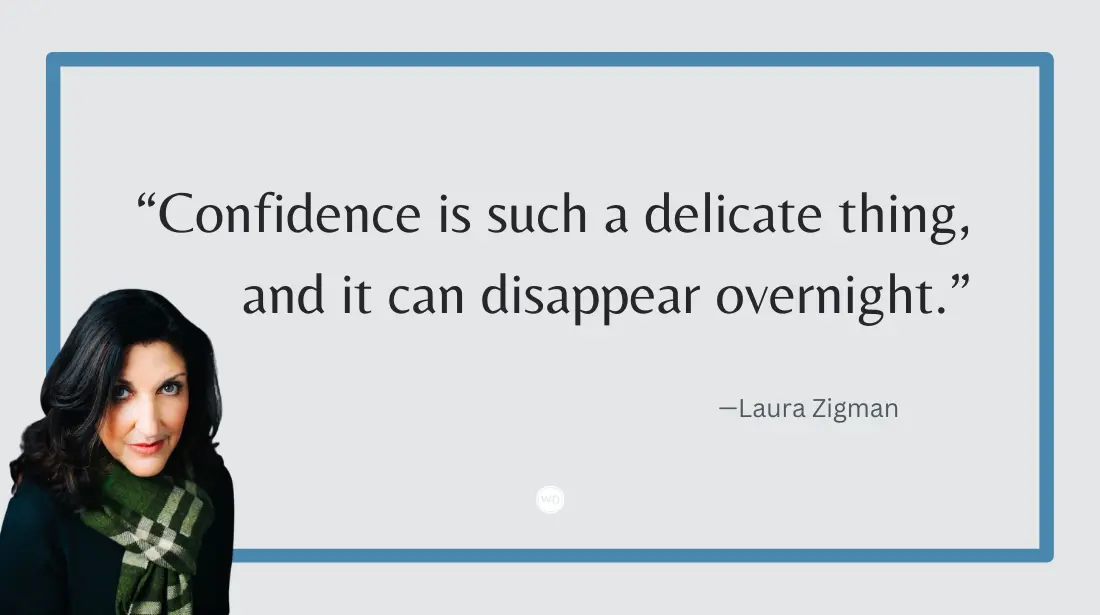
"Confidence is such a delicate thing, and it can disappear overnight. With one email, one bad Goodreads review, one rejection, or 20 rejections, I do think that what’s surprising is that people who are multiple, multiple New York Times bestsellers are as insecure as people with zero bestsellers."
To combat this, Zigman advises an intentional decoupling of art from commerce:
"You can have all the best plans, and you can have everything in place… and sometimes what we think is the next big thing isn’t. And so there’s just no way to guess. You cannot guess. And so I think a lot of it is just trying to disengage or decouple the art of writing from the business of publishing."
Future Outlook: The Evolution of the Authorial Life
As the literary industry continues to grapple with digital disruption, algorithmic curation, and shifting consumer habits, the trajectory of authors like Laura Zigman points toward a necessary re-centering of artistic integrity.
The publishing world will undoubtedly face ongoing economic consolidation and shifting distribution models. Yet, creators who adopt Zigman’s pragmatic philosophy—embracing the absurdity of the business, refusing to pander to volatile market predictions, and recognizing that creative confidence is a daily practice rather than a permanent badge—will remain resilient.
For Zigman, the future lies in continuing to chronicle the quiet, often hilarious indignities of creative life without losing affection for the flawed, passionate human beings who populate the literary world. As she prepares her upcoming sequel The Blurb, her work reminds us that while the public persona of an author may be weighed down by expectations, the private writer at the desk ultimately answers to only one true master: the story itself.
Laura Zigman’s latest novel, The Author Weekend, is available now.


Comments
Facebook App ID not configured. Please add it in the Customizer.