
Executive Overview
In the architecture of commercial and literary fiction, few genres appear more diametrically opposed than horror and comedy. One deals in the primal, visceral mechanics of dread, isolation, and mortality, while the other relies on subversion, timing, surprise, and systemic relief. Yet, an examination of masterclass writing reveals a surprising truth: horror and humor are closer relatives than most authors care to admit. Both genres operate on the exact same structural machinery—the meticulous construction of tension, the sustained maintenance of that pressure, and the subsequent, explosive release.
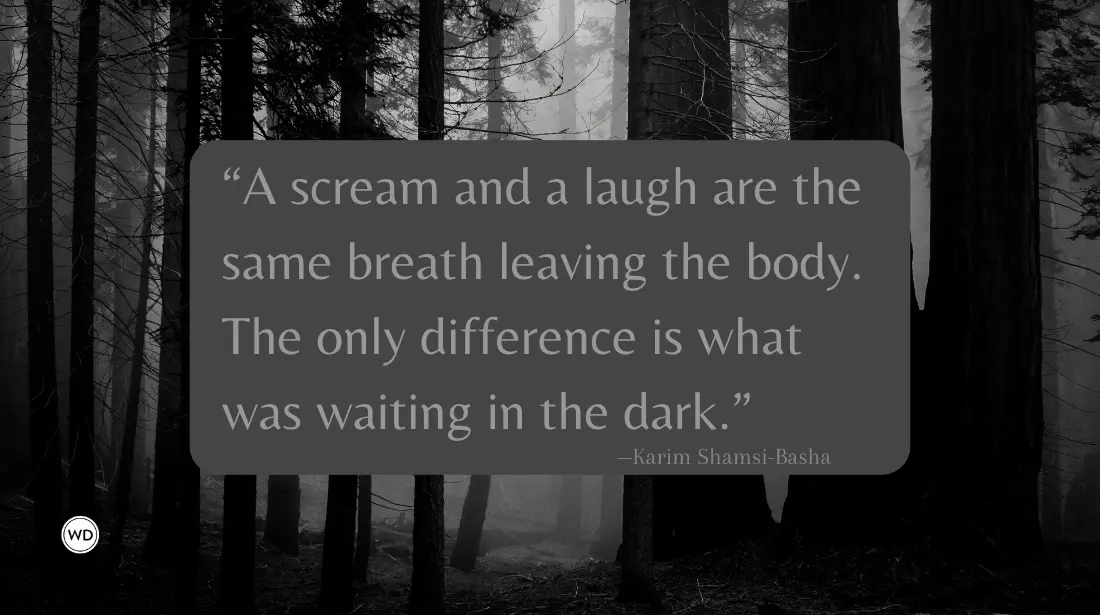
A scream and a laugh are, biologically and psychologically, the same breath leaving the human body. The fundamental difference lies entirely in what is waiting in the dark when the exhale occurs. When managed with precise craftsmanship, humor can fortify horror, making the terror sharper, the monsters more menacing, and the stakes infinitely higher. Conversely, a miscalculated punchline can instantly trivialize a masterpiece of suspense into a farcical sitcom.
This analysis investigates the delicate equilibrium required to blend dread and levity. Drawing from literary mechanics, historical precedents like Shakespearean tragicomedy, and practical writing methodologies, we explore five foundational strategies for keeping humor and horror safely under the same haunted roof. Furthermore, we examine the cultural psychology of fear—highlighting how immigrant narratives and universal childhood fantasies of Halloween intersect with the creative impulse to frighten and amuse.
Read Also
Detailed Chronology: The Evolution of Comic Relief in Suspense
To understand how humor functions within horror today, one must trace its lineage through the history of dramatic storytelling. The integration of levity into high-stakes, terrifying narratives is not a modern commercial invention; it is a time-tested structural tradition designed to manipulate audience endurance.
The Elizabethan Blueprint: Shakespeare and the Porter
The most famous historical precedent for this technique occurs in William Shakespeare’s Macbeth. Immediately following the regicide of King Duncan—a scene steeped in absolute moral horror, psychological terror, and blood-soaked gravity—Shakespeare introduces a deeply intoxicated porter. Stumbling through the dark to answer the castle gate, the porter imagines himself as the doorkeeper of hell itself, lazily fielding imaginary knocks from various sinners.
The Elizabethan audience, gripping their seats in visceral shock over the king’s murder, was suddenly permitted to laugh. Crucially, this laughter was not a thematic betrayal of the tragedy; it was a psychological gift. The laugh functioned as an emotional safety valve, allowing the audience to exhale just enough carbon dioxide so that the playwright could take their breath away all over again in the subsequent acts.
The Gothic Tradition and Victorian Melodrama
As the horror genre formalized during the Gothic revival of the 18th and 19th centuries—through works by Ann Radcliffe, Matthew Lewis, and later Mary Shelley—humor evolved. In early Gothic texts, comedy often appeared as broad, nervous relief delivered by cowardly servants or skeptical outsiders who refused to buy into supernatural superstitions. These characters acted as proxies for the reader, vocalizing the very doubts the audience held, thereby grounding the narrative before plunging them back into the abyss.
The Modern Genre Shift
In contemporary fiction, the barrier between horror and humor has become increasingly porous. Writers recognize that modern readers are sophisticated, media-literate, and immune to cheap jump scares. To genuinely unnerve a reader today, narrative friction is required. By allowing characters to utilize humor as a psychological defense mechanism, modern horror bridges the gap between caricature and realism, ensuring that when the terror strikes, it lands with devastating emotional resonance.
Supporting Context & Metrics: The Psychology of the Shared Exhale
Why do humans laugh when they are terrified? Neurologists and evolutionary psychologists suggest that laughter and fear share overlapping neural pathways in the autonomic nervous system. Both trigger surges of adrenaline, heightened heart rates, and acute physiological arousal.
The Mechanics of Tension and Release
From a narrative standpoint, sustaining peak terror across an entire novel or short story is chemically and emotionally exhausting for the reader. Just as a physical muscle cannot remain flexed at 100% capacity indefinitely without fatiguing, the human brain cannot maintain maximum adrenaline output without a refractory period.
- The Setup: The author introduces a threat, establishing atmospheric dread.
- The Escalation: The stakes rise, narrowing the characters’ options and heightening the reader’s pulse.
- The Release (Humor/Incongruity): A brief, perfectly timed moment of levity breaks the tension, resetting the reader’s baseline without dismantling the overarching threat.
- The Strike: With the reader’s guard momentarily lowered by the smile, the narrative executes the true scare.
Literary metrics and reader feedback consistently show that pacing interspersed with micro-doses of humor results in higher engagement and lower rates of reader fatigue compared to relentlessly grim, monochromatic narratives.
The Cultural Lens: The Immigrant Experience of Halloween
The appreciation for horror, humor, and communal celebration often takes on unique dimensions when viewed through cross-cultural lenses. For many who grow up outside of Western traditions—such as those raised in Damascus, where institutionalized festivities like Halloween do not exist natively—the concept of trick-or-treating carries an almost surreal, theatrical fascination.
The premise—walking up to the threshold of absolute strangers, knocking on their doors, and being rewarded with candy—reads like a benevolent fairy tale or a mild surrealist prank. The juxtaposition of ordinary suburban neighbors handing out sweets while children dress as ghouls, masked bandits, princes, or literary figures like Ali Baba encapsulates the exact intersection of whimsy and the macabre. This cross-cultural perspective underscores a universal truth: humanity has always sought structured ways to play with fear, dressing up our anxieties in costumes so we can safely invite them onto the porch and trade them for sugar.
Official Strategies: Five Rules for Balancing Horror and Humor
For writers attempting the high-wire act of combining dark subject matter with comedic timing, adherence to structural boundaries is paramount. Below are five core methodologies derived from professional writing workshops and masterclass analyses.
1. The Porter at the Gate: Give the Reader a Breath
As established by theatrical history, comic relief must never be treated as an accidental distraction or an indulgent side-joke. It is a precise architectural reset. After executing a major scare or a sequence of intense dread, grant the reader one small, intensely human laugh.
Consider this narrative deployment:
Darlene locked the cellar door, shoved the deep freezer against it, and stacked the Christmas china on top. “If that thing wants out,” she said, “it can explain the broken gravy boat to my mother.”
This joke works because it relies on hyper-specific domestic panic that contrasts sharply with the supernatural threat. The rule of thumb: keep it brief. Deliver one clean laugh, and immediately turn the lights back off.
2. Whistling Past the Graveyard: Character-Driven Coping Mechanisms
Real human beings under extreme psychological duress frequently resort to gallows humor, sarcasm, and nervous chatter. Jokes function as emotional armor. In fiction, the thinner the character’s armor, the more clearly the reader perceives the shivering, naked fear underneath.
When a character cracks a joke in the dark, the dialogue speaks volumes about what they are not saying. Take the following example:
“I’m not scared,” Marcus said, from inside the coat closet.
The humor is derived from the blatant contradiction between his brave assertion and his cowardly hiding place. We laugh at his predicament, and in that exact instant of shared amusement, we realize that hiding in a coat closet is entirely rational given the circumstances.
3. Keep the Monster Unfunny
This is perhaps the most critical rule in horror-comedy hybrid writing: the humans may be funny, but the threat must remain entirely serious.
The moment a supernatural monster, serial killer, or cosmic entity delivers a pun, cracks a sarcastic one-liner, or displays self-aware irony, the horror novel instantly deflates into a Saturday morning cartoon. (An exception is explicitly granted for pure farce or horror-parody, but for earnest frights, the rule stands.)
Direct all humor strictly at human flaws: their blinding panic, their catastrophic decision-making, or their failing equipment (such as flashlights that inevitably flicker out at the apex of peril). Never point the comedic lens at the entity in the basement.
Ray swung the flashlight across the barn. “Whatever it is,” he whispered, “I hope it likes Vienna sausages, because that’s all we brought.” The beam found it in the hayloft. It didn’t laugh. It just tilted its head, the way a dog does when it hears its name.
Ray provides the human humor; the entity in the loft provides the absolute, humorless silence. The monster’s refusal to engage in the joke reinforces its alien, terrifying nature.
4. The Treat Before the Trick: Using Comedy as Misdirection
A laugh acts as an intellectual sedative. It lowers the reader’s guard, convincing them momentarily that they are safe in the hands of a clever narrator. This makes it the ultimate engine for narrative misdirection.
Comedy and horror run on identical mechanical foundations: setup, misdirection, and payoff. A well-crafted joke can double as the windup mechanism for a devastating scare.
Granddaddy swore the scratching in the walls was squirrels. “Big ones,” he said. “Baptist squirrels. They get loud on Sundays.” It was Tuesday. And the scratching was coming from the other side of the bedroom door, at about the height of a grown man’s hand.
The joke functions as a literal trapdoor. The reader steps onto it smiling, only to drop instantly into the cellar of suspense.
5. The Candle in the Dark: The Defiance of Laughter
The finest dark humor in literature does not serve as a cheap distraction from fear; rather, it operates as an act of profound defiance against it. Anyone who has endured a harrowing night waiting for catastrophic news recognizes this phenomenon. Someone inevitably makes an ill-timed, gallows-humor remark, the room erupts into slightly hysterical laughter, and for one fleeting breath, the atmosphere feels lighter.
The danger has not evaporated. The monsters are still at the gate. But the occupants of the room have reminded one another that they are still human, still resilient, and still themselves.
At 3 a.m., with something still clawing at the shutters, Aunt Nadia passed around the last of the bran muffins. “If we die tonight,” she said, “at least we’ll die regular.” Everyone laughed too hard. Then the clawing moved to the front door.
The laughter does not render the night any safer. Instead, it accomplishes something far more valuable to a narrative: it makes the characters genuinely worth saving. Writers must craft this candle flame carefully, keeping it small, flickering, and precious against the encroaching dark.
Future Outlook: The Trajectory of Genre-Blending Literature
As the contemporary publishing landscape continues to reject rigid genre silos in favor of cross-pollination, the integration of humor and horror will likely become increasingly sophisticated. Readers demand emotional authenticity, and human emotional reality is rarely one-note. People crack jokes at funerals, laugh during panic attacks, and find absurdities in moments of profound terror.
Writers who master the rhythmic pendulum swinging between the scream and the laugh will dominate the literary landscape. By controlling the reader’s respiration—scaring them, releasing them, resetting them, and scaring them harder—authors achieve the closest approximation to literary mind control available.
Ultimately, whether one is analyzing Shakespearean tragedy, navigating the psychological landscapes of contemporary horror, or dressing up as Ali Baba and imagining the forty thieves working the opposite side of the street this Halloween, the mandate remains clear. Keep the jokes human, keep the monsters deadpan, and let the laughter cast just enough light into the dark to show the reader the teeth waiting in the shadows.




Comments
Facebook App ID not configured. Please add it in the Customizer.