
Executive Overview
The 31st edition of the Busan International Film Festival (BIFF)—widely heralded as Asia’s premier cinematic showcase—drew to a triumphant close on Thursday, punctuated by a landmark victory for acclaimed Iranian filmmaker Majid Majidi. Majidi’s deeply moving drama, Midday Meal, captured the festival’s most coveted grand prize, besting a fiercely competitive field of 13 international contenders. Beyond the prestige and regional acclaim, this victory carries profound strategic weight: under recently overhauled guidelines established by the Academy of Motion Picture Arts and Sciences, the top prize at Busan now confers automatic eligibility for consideration in the International Feature Film category at the Academy Awards.
Running across multiple venues in the bustling South Korean port city, this year’s festival served as a monumental celebration of global resilience, artistic innovation, and post-pandemic cultural resurgence. Organizers reported a staggering turnout of over 200,000 visitors, cementing BIFF’s status as a vital global nexus for film industry professionals, critics, and cinephiles alike. With 315 films screened—including 246 officially selected titles marking the largest programmatic lineup since 2019—the festival successfully balanced grand commercial spectacles with daring, independent artistic statements.
This comprehensive report examines the intricacies of Majidi’s triumph, the high-profile awards and honorees that defined the 31st edition, the evolving landscape of Oscar eligibility rules, and the broader socioeconomic and geopolitical subtexts that shaped this year’s cinematic gathering.
Read Also
Detailed Chronology and Festival Highlights
Opening Night and the Tone of the 31st Edition
The festival commenced under a banner of quiet intimacy and high artistic ambition, opening with the world premiere of director Kim Jong-kwan’s The Table: Day and Night. A delicate, deeply atmospheric exploration of human connection characteristic of contemporary South Korean art-house cinema, the film set a reflective tone for the ten-day event. From the outset, programmers made it clear that the 31st BIFF would prioritize narratives centered on perseverance, ethical dilemmas, and the quiet dignity of everyday struggles.
The Competition Section and the Jury’s Verdict
Though Busan has historically operated as a massive market and a sprawling incubator for Asian talent, its dedicated competition section—introduced only last year—has rapidly evolved into one of the most closely watched judging arenas on the international film circuit.
The 2026 lineup featured 13 carefully curated titles, including a robust trio of domestic South Korean films representing the nation’s ongoing cinematic vitality. Overseeing this diverse selection was a high-profile international jury led by legendary Chinese filmmaker Zhang Yimou, whose towering contributions to world cinema (Raise the Red Lantern, To Live) brought immense gravity to the proceedings.
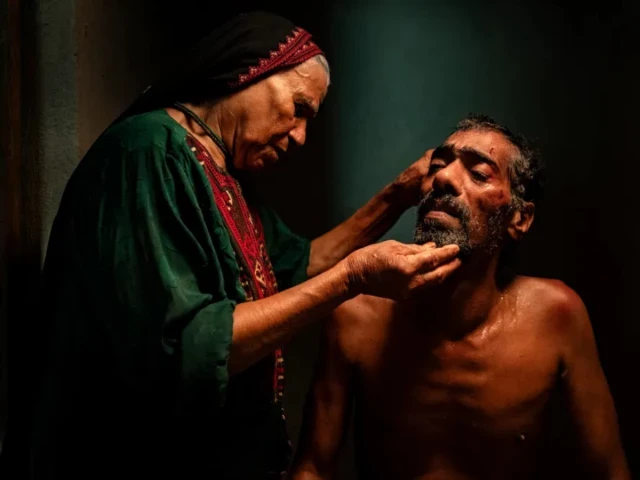
After rigorous deliberation, Zhang and his fellow jurors reached a unanimous decision to award the grand prize to Majid Majidi’s Midday Meal. The film centers on a schoolteacher in an impoverished, isolated Iranian village who is driven to illicit smuggling as a desperate measure to keep his educational institution afloat. The narrative weaves a tight, suspenseful fabric of moral compromise, systemic neglect, and profound empathy.
Accepting the award via an interpreter, Majidi delivered an emotional acceptance speech that linked his artistic triumph to personal legacy and national endurance.
"I think it’s thanks to the love and energy my mother gave me before she passed away a few months before filming began," Majidi told the gathered audience, his voice thick with emotion.
He expanded his remarks beyond personal gratitude, pivoting to a powerful socio-political commentary regarding the resilience of the Iranian populace. In a poignant address, Majidi praised ordinary citizens for having "never given up" despite enduring decades of geopolitical conflict with the United States, crippling economic sanctions, and chronic shortages of vital medical supplies. His words drew a prolonged, standing ovation from the international audience, bridging the gap between localized cinematic storytelling and universal human rights advocacy.
Honoring Titans of World Cinema
Beyond the competitive arena, the 31st BIFF used its grand stages to celebrate towering figures who have shaped the contours of modern filmmaking.
- The Asian Filmmaker of the Year Award: This prestigious honor was bestowed upon Oscar-winning Malaysian-born actress Michelle Yeoh. Yeoh, whose historic Academy Award win for Everything Everywhere All at Once shattered multiple glass ceilings, used her platform to champion diversity, the dismantling of ageism in Hollywood, and the vibrant cross-pollination of Asian and Western storytelling traditions.
- The Camellia Award: Hong Kong visionary director Ann Hui was honored with the Camellia Award in recognition of her tireless contributions to empowering women both on-screen and behind the scenes. Hui, a cornerstone of the Hong Kong New Wave, delivered a masterclass on navigating institutional barriers and maintaining artistic integrity within commercial cinematic structures.
Supporting Context and Metrics: A Record-Breaking Year
The quantitative metrics of the 31st Busan International Film Festival underscore its exponential recovery and enduring dominance within the global festival ecosystem. Following years of fluctuating attendance and logistical adaptations prompted by the global health crisis, the 2026 edition roared back to pre-pandemic vigor.
Statistical Overview of BIFF 2026
- Total Films Screened: 315 productions from across the globe.
- Official Selections: 246 titles, representing the largest official lineup since 2019.
- Total Visitor Footprint: Over 200,000 attendees, encompassing industry executives, journalists, directors, actors, and public ticket-holders.
- Competition Contenders: 13 international features vying for the festival’s top prize.
- Domestic Representation: A strong showcase featuring 3 South Korean films in the main competition, alongside dozens of independent domestic screenings.
These numbers reflect more than just ticket sales; they represent a bustling marketplace where co-production deals are struck, distribution rights are negotiated, and emerging voices find their footing. Busan’s Asian Project Market (APM) and ACFM (Asian Contents & Film Market) once again served as the financial engine room for Asian cinema, facilitating millions of dollars in cross-border funding.
The Oscar Paradigm Shift: Why Majidi’s Win Matters
While winning the top prize at Busan has always guaranteed instant international acclaim and lucrative distribution opportunities, the 2026 victory carries a historic administrative weight.
In May, the United States-based Academy of Motion Picture Arts and Sciences (AMPAS) implemented sweeping revisions to the governance and eligibility pathways for what was historically known as the Best Foreign Language Film category (now officially designated as the Best International Feature Film).
Breaking the Single-Country Monopoly
For decades, the selection process was tightly restricted: each sovereign nation was permitted to submit only one official film, chosen by a localized, Academy-approved selection committee or government-backed board. This rigid structure frequently resulted in political interference, internal bureaucratic disputes, and the exclusion of masterworks that fell out of favor with local gatekeepers.
Under the newly minted AMPAS regulations, winning the top prize at any one of a select group of elite, globally recognized film festivals now grants automatic eligibility for Academy Award consideration. This elite tier includes:
- The Busan International Film Festival (South Korea)
- The Cannes Film Festival (France)
- The Berlin International Film Festival (Germany)
- And a select cohort of other Tier-1 cinematic institutions.
By securing the grand prize at Busan, Majid Majidi’s Midday Meal bypasses the potentially fraught internal selection mechanisms of Iran’s official state cinematic bodies. It is thrust directly into the vast, competitive pool of contenders vying for the Academy’s shortlist.
Industry analysts note that this rule change fundamentally alters the geopolitical dynamics of the international Oscar race. Festivals in Asia, Europe, and Latin America now wield direct nominating power, effectively democratizing the pathway to Hollywood’s most coveted golden statuette and insulating independent auteurs from localized political censorship or bureaucratic oversight.
Future Outlook: The Road to the Academy Awards and Beyond
As the dust settles on the Busan Cinema Center and the thousands of international visitors depart South Korea’s southeastern coast, the global film industry turns its collective gaze toward the upcoming awards season.
For Majid Majidi and the team behind Midday Meal, the hard work of international campaigning is only just beginning. With automatic Oscar eligibility secured through their BIFF triumph, the film’s international sales agents and newly acquired North American distributors will immediately pivot toward securing high-profile screenings at subsequent autumn and winter festivals—such as Toronto, Telluride, and London—to build critical momentum.
More broadly, the 31st Busan International Film Festival has successfully reaffirmed its position as the undisputed anchor of Asian cinema. By spotlighting politically charged, deeply humanist narratives like Midday Meal, BIFF has proven that art can simultaneously transcend and confront geopolitical hardship. Furthermore, the integration of Busan into the Academy’s elite tier of automatic qualifiers ensures that future editions of the festival will carry even higher stakes for international auteurs, further elevating the global prestige of South Korea’s cinematic crown jewel.
As the global cinematic community looks toward 2027, the legacy of this year’s festival will undoubtedly be defined by a renewed commitment to artistic freedom, regional resilience, and the relentless, unifying power of visual storytelling.




Comments
Facebook App ID not configured. Please add it in the Customizer.