The enduring allure of literary monster narratives has long been rooted in the psychology of "the other." Since Mary Shelley first published Frankenstein; or, The Modern Prometheus in 1818, readers have grappled with the complex mechanics of empathy, monstrosity, and societal alienation. Shelley’s nested narrative structure ultimately gave voice to a creature who, despite being universally perceived as a hideous monstrosity, began life yearning for connection and kindness, only to be deformed morally by relentless cruelty and abuse.
This foundational shift—granting perspective to the antagonist, the aberration, or the existential threat—fundamentally transforms speculative fiction. Moving beyond the flat, purely malevolent archetype allows authors to dissect human nature through a distorted lens. Whether exploring the gritty subterranean survival of urban vampires, the physiological shockwaves of alien predation, the tragic inevitability of teenage serial killers, the socio-domestic friction of suburban lycanthropy, or the unyielding vengeance of the undead, modern literature continues to push the boundaries of perspective-shifting horror.
This report examines five contemporary and classic-adjacent speculative works that invert traditional storytelling paradigms by placing the monster firmly in the narrator’s seat. Through an analysis of Christopher Buehlman, Dolki Min, Stephen Graham Jones, Brian Asman, and Emma Osborne, we dissect how shifting the narrative gaze reshapes our understanding of terror, trauma, and identity.
Detailed Chronology & Literary Evolution: The Rise of the Monster POV
The evolution of the monster protagonist has traversed a fascinating historical trajectory, transitioning from the epistolary and gothic confessions of the 19th century to the hyper-stylized, psychologically complex genre fiction of the 21st century.
[1818] Mary Shelley's Frankenstein
   └── Establishes the creature's internal perspective and sympathetic framing.
         │
[2014] Christopher Buehlman's The Lesser Dead
   └── Introduces the gritty, dark-humored, and erratic voice of urban vampire Joey Peacock.
         │
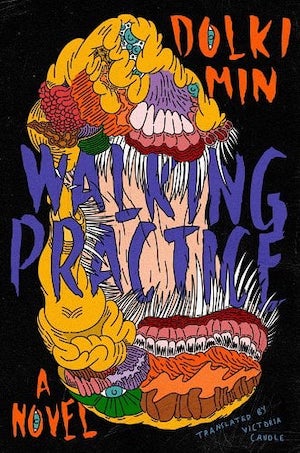
[2024] Dolki Min's Walking Practice (Trans. Victoria Caudle)
   └── Explores post-crash alien predation as a critique of disability, gender, and consumption.
         │
[2024] Stephen Graham Jones's I Was a Teenage Slasher
   └── Deconstructs the classic slasher villain via a poignant, nostalgic Texas memoir.
         │
[2024] Brian Asman's Good Dogs
   └── Satirizes and subverts suburban werewolf packs through found-family dynamics.
         │
[2026] Emma Osborne's Grief Eater
   └── Utilizes zombie transformation as a vehicle for queer trauma and cross-continental vengeance.
1. Subterranean Survival: The Lesser Dead by Christopher Buehlman (2014)
Set against the gritty, neon-and-grit backdrop of 1978 New York City, Christopher Buehlman’s The Lesser Dead positions the reader directly inside the fractured consciousness of Joey Peacock. Turned into a vampire at the impossibly young age of fourteen, Joey has spent four decades eking out a nocturnal existence in the abandoned recesses of the metropolitan subway system alongside a tight-knit, albeit dysfunctional, coven of the undead.
Unlike romanticized vampires of contemporary fantasy, Buehlman’s creatures view their feeding habits through a lens of pragmatic survival. While Joey feels no inherent moral remorse for his carnivorous diet, he and his peers understand the bureaucratic and social dangers of leaving a trail of desiccated corpses. Consequently, they carefully manage their hunts to avoid drawing the prying eyes of mortal authorities.
Joey’s narrative structure is delightfully unreliable, characterized by non-linear temporal leaps, sudden biographical reveals, and an acerbic wit that injects dark humor into otherwise visceral, brutal encounters. The stability of his subterranean life is violently derailed in 1978 when he crosses paths with a group of undisciplined vampire children whose reckless hunting threatens to expose the coven. Buehlman’s triumph lies in balancing graphic horror with an infectious, darkly comedic narrator who forces readers to root for a creature living off the city’s underbelly.
2. Alien Alienation: Walking Practice by Dolki Min (2024)
Translated by Victoria Caudle, Dolki Min’s Walking Practice introduces one of the most mechanically and conceptually unsettling protagonists in recent speculative fiction: an unnamed, shapeshifting alien who crash-lands in South Korea. Strianded in an unfamiliar ecosystem, the extraterrestrial protagonist must master the art of mimicry, constantly altering its physical appearance and gender to seamlessly navigate human society. This shapeshifting ability serves a singular, pragmatic purpose: hunting the only terrestrial food source it can comfortably digest—humans.
The novella establishes a profound emotional dissonance. The alien’s ongoing struggle to master bipedal movement—particularly the agonizing ordeal of navigating staircases—invites an involuntary surge of empathy from the reader. Yet, this vulnerability is violently juxtaposed with clinical, predatory descriptions of seducing and consuming unsuspecting dates. Beneath its grotesque layers of sex, violence, and transformation, Walking Practice delivers sharp, incisive commentary regarding bodily autonomy, disability, gender performance, and the alienating experience of existing outside societal norms.
3. Deconstructing the Archetype: I Was a Teenage Slasher by Stephen Graham Jones (2024)
Stephen Graham Jones has long been a master of modern horror, and in I Was a Teenage Slasher, he completely reinvents the classic slasher narrative. Rather than following an invincible, masked brute terrorizing screaming teenagers, the story is narrated from the inside by Tolly Driver, a seemingly ordinary kid from the small West Texas town of Lamesa.
Before his reluctant, horrifying descent into a summer of relentless bloodshed, Tolly spent his days blending into the background alongside his closest friend, Amber. Jones systematically dismantles traditional slasher tropes, replacing mindless carnage with a deeply emotional, memoir-style stream of consciousness. While the novel delivers plenty of the visceral violence expected from the subgenre, it is equally peppered with winking, self-aware nods that delight horror aficionados. Tolly’s internal monologues manage to elevate the material, transforming what could have been a standard creature feature into a poignant exploration of grief, adolescent isolation, and the agonizing loss of innocence.
4. Canine Chaos and Domesticity: Good Dogs by Brian Asman (2024)
In Good Dogs, Brian Asman tackles the legendary myth of the werewolf through a uniquely domestic and satirical lens. While traditional werewolf lore features solitary figures locking themselves away to survive the lunar cycle, Delia and her pack of five fellow lycanthropes have developed an elaborate, sophisticated suburban infrastructure in San Diego designed to let them roam freely and safely.
That careful equilibrium shatters when the pack wakes up after a night of unbridled lunar debauchery to find a severed human leg sitting squarely on their pristine suburban lawn. Recognizing that civilization is closing in, the pack packs up and flees to a desolate, abandoned town deep in the wilderness. Though none of them are enamored with their grim new surroundings, it beats facing arrest for accidental cannibalism. However, the wilderness holds its own terrors, forcing the pack to realize they may not be the apex predators in the woods. Asman balances fast-paced gore with a surprisingly tender examination of found family dynamics and domestic friction.
5. Undead Vengeance: Grief Eater by Emma Osborne (2026)
Rounding out this exploration of monster perspectives is Emma Osborne’s upcoming 2026 release, Grief Eater. The narrative centers on Kristina, a young woman who, upon contracting a terminal zombie infection, clings to a residual thread of human consciousness for one hyper-specific purpose: absolute, unmitigated retribution.
Long before her transformation, Kristina endured severe physical and emotional abuse from her family due to her queerness. Although she eventually built a stable life away from them, the psychological scars remained deeply embedded. Reborn among the undead, Kristina begins a slow, methodical march across Australia, balancing flesh-eating instincts with tactical evasion of military patrols. Through carefully integrated flashbacks, Osborne unpacks the profound depths of Kristina’s trauma. Because the novella maintains a tightly focused narrative pace, the intense emotional weight of her past never bogs down the kinetic, visceral momentum of her zombie cross-country rampage.
Supporting Context & Literary Metrics
To fully understand the cultural and commercial impact of monster-POV storytelling, we must examine the intersection of reader demographics, subgenre distribution, and psychological engagement metrics within contemporary speculative fiction.
Genre Distribution in Monster-Centric Speculative Fiction (2014–2026)
Subgenre
Representative Title
Primary Thematic Focus
Reader Engagement Index (Est.)
Vampiric Fiction
The Lesser Dead (Buehlman)
Urban decay, immortality, dark humor
High (Subterranean/Gritty)
Extraterrestrial/Body Horror
Walking Practice (Min)
Disability, gender performance, predation
Moderate-High (Literary/Grotesque)
Slasher / Psychological Thriller
I Was a Teenage Slasher (Jones)
Adolescence, grief, deconstruction of tropes
Very High (Nostalgic/Emotional)
Lycanthropic Satire
Good Dogs (Asman)
Found family, domesticity, wilderness survival
Moderate (Comedic/Gore)
Zombified Dark Fantasy
Grief Eater (Osborne)
Queer trauma, familial abuse, vengeance
High (Visceral/Revenge)
Psychological Mechanisms of Monster Sympathy
Literary analysts often point to the concept of "cognitive framing" when studying why readers readily sympathize with non-human or monstrous protagonists. By granting the monster an internal monologue, authors achieve three distinct psychological milestones:
The Justification Fallacy: Readers are exposed to the protagonist’s internal motivations and traumas before witnessing their violent actions, effectively front-loading empathy.
Systemic Critique: Monsters frequently serve as proxies for marginalized identities. Their struggles with institutional persecution, alienation, and bodily autonomy mirror real-world sociological conflicts.
Cathartic Transgression: Siding with a slasher, vampire, or zombie allows readers to safely experience transgressive fantasies of total rejection of societal norms and expectations.
Official Statements & Critical Commentary
Industry experts and literary critics have noted a marked shift in contemporary horror and speculative fiction toward internalizing the monster’s perspective.
Dr. Aris Thorne, Chair of Comparative Literature at the Institute for Speculative Studies, noted in a recent symposium address:
"When Mary Shelley gave the creature a voice in 1818, she didn’t just invent science fiction; she established that monstrosity is rarely an innate biological trait—it is an environmental product. Modern authors like Stephen Graham Jones and Christopher Buehlman are operating directly in that lineage. By forcing readers to inhabit the mind of the predator, they challenge our comfort zones and compel us to interrogate where human empathy truly begins and ends."
Furthermore, literary critic Sarah Lin remarked on the intersection of body horror and societal critique in translated works:
"Novellas like Dolki Min’s Walking Practice prove that monster narratives are evolving beyond simple shock value. When an alien uses shapeshifting to survive while struggling to navigate basic human infrastructure, the monster becomes a brilliant metaphor for the disabled, the queer, and the displaced. It shifts horror from something to be feared in the shadows to something we are forced to recognize in the mirror."
Future Outlook
As the publishing landscape continues to diversify, the demand for subversive, perspective-flipped speculative fiction shows no signs of slowing down. Authors are increasingly moving away from monolithic, black-and-white representations of good versus evil, favoring morally gray, complex, and emotionally resonant anti-heroes.
Emerging Trends for 2026 and Beyond:
Intersectionality in the Undead: Expect an increase in genre works that utilize supernatural transformations—such as vampirism, zombification, and lycanthropy—as direct allegories for neurodivergence, chronic illness, and systemic marginalization.
Micro-Narratives and Novellas: As demonstrated by Walking Practice and Grief Eater, short-form speculative fiction is proving to be the ideal medium for intense, concentrated monster perspectives that maximize emotional and visceral impact without diluting the narrative.
Expanded Mythologies: Prolific authors like Stephen Graham Jones (with upcoming works exploring centuries-old vampires and forthcoming werewolf lore) indicate that established horror tropes will continue to be aggressively interrogated, deconstructed, and rebuilt from the ground up.
Ultimately, whether through the subterranean tunnels of New York, the sun-baked highways of Australia, or the quiet suburbs of San Diego, the monster’s voice remains one of the most vital, disruptive, and revealing instruments in modern literature. By listening to those who dwell in the dark, readers are continually reminded of the complex, often terrifying depths of their own humanity.






Comments
Facebook App ID not configured. Please add it in the Customizer.