
Executive Overview
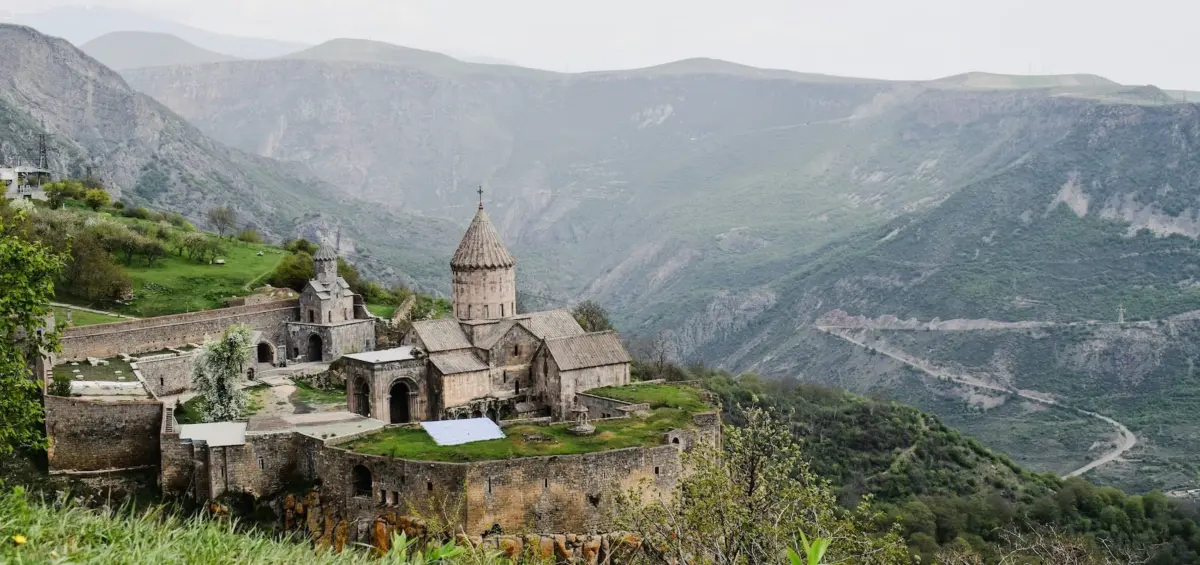
In the rugged highlands of the South Caucasus, a quiet yet existential drama is unfolding—one rooted in antiquity and defined by an unyielding devotion to faith. In mid-September, amidst the shadow of escalating geopolitical threats, a delegation visited the leaders of Svarants, a small village tucked into the mountainous Syunik province of southern Armenia. For years, the president of neighboring Azerbaijan has openly laid claim to this sovereign Armenian territory, labeling it as part of Azerbaijan’s "ancient" homeland—a historical absurdity given that the modern state of Azerbaijan was founded only in 1918.
In practical geopolitical terms, these expansionist threats are not merely rhetorical. They signal a continuation of a devastating playbook already executed in other parts of historic Armenian lands: the forced expulsion of indigenous Christian populations, the systemic bulldozing of ancient churches and hallowed cemeteries, and the systematic erasure of Christian heritage. When a wiry, sixty-year-old village leader in Svarants was asked how he and his neighbors would respond should Azerbaijani forces launch an offensive, he did not hesitate. Smiling faintly, he delivered a sobering, resolute response: "We will fight."
This defiance is not an isolated sentiment; it is the heartbeat of a nation. For 96 percent of contemporary Armenians, Christianity is not a mere cultural footnote, but the bedrock of both personal and national identity. As the world largely watches in silence, Armenia remains on the frontlines of a centuries-old clash of civilizations, where sovereignty, ethnic survival, and Christian faith are inextricably bound together.
Read Also
Detailed Chronology: From Ancient Empire to Modern Persecution
To understand the gravity of the current crisis in Syunik and the recent tragedy in Artsakh (Nagorno-Karabakh), one must trace the deep historical roots of the Armenian people, whose presence in the region spans millennia.
Antiquity and the Birth of a Christian Nation
Long before the modern borders of the Middle East were drawn, Armenia was a sprawling regional powerhouse. Five centuries before the birth of Christ, Persian emperors Darius and Xerxes documented the existence of "Armina" in their royal inscriptions. At its zenith under King Tigranes II—during the eras of Pompey and Caesar—the Armenian Empire commanded territories stretching all the way from the Caspian Sea to the Mediterranean, operating as a dominant geopolitical force in the ancient world.
The spiritual trajectory of the nation was forged concurrently with its political history. According to the fourth-century Church History by Eusebius, the apostle Jude Thaddeus originally brought the gospel message to Edessa, near the historic borders of Armenia. More than two centuries later, a pivotal spiritual transformation occurred: St. Gregory the Illuminator, having miraculously survived years of torment in a dark underground pit, healed King Tiridates of Armenia of a severe affliction. This profound event inspired the sovereign to declare Christianity the official state religion in A.D. 301, making Armenia the very first Christian nation in world history.
For the next 1,700 years, this nascent Christian identity was baptized in blood. Armenians repeatedly found themselves defending their faith and borders against a succession of formidable empires:
- The Sasanian Persians
- Byzantine Romans
- Abbasid Arabs
- Seljuk and Ottoman Turks
The Late Ottoman Empire and the Roots of Genocide
The twilight of the 19th century signaled catastrophic devastation for the Christian communities of the Ottoman Empire, which was rapidly acquiring the moniker of the "sick man of Europe." Prior to the massacres of the 1890s, Turkey was among the most heavily Christianized regions in the Middle East, boasting an Armenian population of approximately 2.4 million. Thousands of majestic churches dotted the landscape, and Christians constituted half the population in several vital provinces.
Sensing a threat to his weakening autocratic rule, Sultan Abdul Hamid II unleashed Kurdish irregulars and state forces to orchestrate the slaughter of up to 200,000 Christians, predominantly Armenians. Contemporary accounts reveal a society deeply radicalized by religious animus: Muslim Turkish citizens openly cheered as churches packed with terrified parishioners were torched, mocking the victims with the taunt, "Where is your Jesus now? Why does he not save you?" Armenians and other native Christians were routinely dehumanized, targeted with derogatory epithets such as "dogs," "pigs," and "gâvurlar" (infidels).
The 1915 Genocide and the Systematic Eradication of a Population
This horrifying pattern reached its methodical zenith with the Armenian Genocide, launched in 1915 under the cover of the First World War. As British historian Christopher J. Walker documents in Armenia: A Very Brief History, imperial Germany struck a clandestine agreement with Turkish leadership. Berlin pledged to facilitate the eastward expansion of Ottoman forces into Russian Transcaucasia under the guise of ethnic solidarity, effectively empowering the Turks to impose pan-Turkism and annihilate or suppress the Armenian populace.
The coordinated genocide proved overwhelmingly successful. By the 1920s, Turkey’s once-flourishing Christian population had been reduced to a microscopic two percent. In his seminal reference work Operation World, researcher Patrick Johnstone designated Turkey as the single largest unevangelized nation globally prior to the 1980s—a direct demographic consequence of state-sponsored mass murder and forced assimilation.
The Modern Phase: Artsakh and the Threat to Syunik
The erasure of Armenian heritage has not remained confined to history books; it is an ongoing, contemporary reality. In 2023, a rapid military offensive by Azerbaijan resulted in the ethnic cleansing of Artsakh (Nagorno-Karabakh). The assault claimed hundreds of lives and drove 120,000 indigenous Armenians from the ancestral homes their families had inhabited for generations.
In the wake of this tragedy, Azerbaijani leadership—bolstered by the unwavering diplomatic and military backing of Turkey—has increasingly laid claim to internationally recognized Armenian sovereign territory. Retroactively rebranding ancient Armenian lands as "historical Azerbaijani territories," Baku’s armed forces have repeatedly violated ceasefire accords, seizing strategic pockets of land inside Armenia proper and leaving a trail of bloodshed in their wake.
Supporting Context & Metrics
| Historical Era / Event | Key Data Points & Metrics | Implications |
|---|---|---|
| Ancient Roots (Pre-Christian to 301 A.D.) | Empire stretched from Caspian to Mediterranean under Tigranes II; A.D. 301 official Christianization. | Established deep indigenous ties to the land and a foundational civilizational identity. |
| Ottoman Persecution (1890s) | 2.4 million Armenian Christians initially; up to 200,000 massacred under Sultan Abdul Hamid II. | Marked the beginning of the systematic dismantling of Middle Eastern Christianity. |
| The Armenian Genocide (1915–1923) | 1.5 million Armenians systematically killed; Christian population in Turkey plummeted to ~2%. | Effectively cleansed ancestral Armenian heartlands of their indigenous Christian majority. |
| The Artsakh Crisis (2023) | 120,000 Armenians forcibly displaced; ~400 killed in the offensive and subsequent blockade. | Demonstrates the persistence of ethnic cleansing policies into the 21st century. |
| Contemporary Armenia | 96% of modern Armenians view Christianity as central to personal and national identity. | Fuels an unyielding societal resolve to defend national sovereignty despite severe military imbalances. |
Official Statements and Geopolitical Posture
The international community’s response to the ongoing pressures faced by Armenia has been marked by cautious diplomacy, contrasting sharply with the aggressive rhetoric emanating from Baku and Ankara.
Official statements from the Azerbaijani government frequently frame their military actions and territorial claims around the concept of "restoring historical justice," alleging that regions like Syunik—historically known as Zangezur—belong to the Azerbaijani cultural sphere. Baku’s state apparatus routinely dismisses Armenian sovereignty claims as regional posturing, demanding the establishment of an unmonitored transport corridor through southern Armenia to connect mainland Azerbaijan to its exclave of Nakhchivan.
Conversely, the government of Armenia has consistently appealed to international law, the UN Charter, and the inviolability of internationally recognized borders established following the dissolution of the Soviet Union. Armenian diplomatic representatives have repeatedly warned the United Nations Security Council and the European Union that Azerbaijan’s aggressive rhetoric acts as a smokescreen for premediated territorial aggression against Syunik.
Human rights organizations and international watchdogs have echoed these concerns. Freedom House and Amnesty International have documented severe democratic backsliding and rampant Armenophobia within Azerbaijan, noting that state media and educational curricula systematically dehumanize Armenians. Meanwhile, human rights monitors point to the systematic destruction of Armenian cultural heritage sites in regions captured by Azerbaijani forces—actions that violate direct orders from the International Court of Justice (ICJ) mandating the preservation of Armenian religious monuments.
Future Outlook: Resilience, Reconciliation, and Geopolitical Risks
As Armenia navigates this perilous geopolitical landscape, the trajectory of the nation hangs in a delicate balance between existential vulnerability and spiritual resilience.
The Will to Survive
On the ground in villages like Svarants, the mood is not one of despair, but of grim determination. Modern Armenians remain profoundly aware of their history; they carry the generational memory of 1915 alongside the fresh grief of the 2023 exodus from Artsakh. For the vast majority of the population, surrendering their ancestral homeland is viewed not merely as a political defeat, but as an existential erasure. The willingness of ordinary citizens to take up arms in defense of their rugged mountains underscores a deeply ingrained cultural ethos: to yield is to cease to exist.
Miracles of Reconciliation
Yet, even amidst systemic hostility and the trauma of ongoing conflict, unexpected currents of hope are flowing beneath the surface. As researcher Jacob Pursley documents in recent academic analyses on reconciliation, Christian leaders from Turkey and Armenia have begun holding discreet, high-stakes meetings aimed at confronting the generational trauma of the Armenian Genocide.
In one striking encounter, a Turkish pastor approached a gathering of Armenian church leaders with profound trepidation. Burdened by a deep sense of inherited guilt, he rehearsed a prepared confession acknowledging the "savagery and genocide" perpetrated by his forebears, privately bracing himself for a hostile reaction. Instead, before he could finish his memorized plea, a prominent Armenian leader stepped forward and embraced him. The Turkish pastor broke down in tears, overwhelmed by the realization that his Armenian brother was not only free of malice, but was "already prepared to forgive."
These grassroots encounters of repentance and reconciliation point to a counter-narrative running parallel to state-sponsored aggression. While political regimes rattle sabers and border skirmishes threaten to ignite a broader regional war, faith communities are occasionally forging pathways toward healing that transcend centuries of bloodshed.
Conclusion: The Test of Modern Courage
Armenia today stands at a fateful crossroads. Surrounded by powerful adversaries who possess superior military hardware and vast energy resources, the small nation relies primarily on its historical endurance, international solidarity, and an unshakeable faith.
In an era defined largely by pragmatism and realpolitik, Armenia’s steadfast refusal to compromise its identity embodies what both Aleksandr Solzhenitsyn and Søren Kierkegaard identified as the rarest and most formidable virtue in modernity: courage. Whether the international community will rouse itself to protect this ancient bastion of Christianity before further tragedy unfolds remains the defining geopolitical question of the contemporary South Caucasus.



Comments
Facebook App ID not configured. Please add it in the Customizer.