
Executive Overview
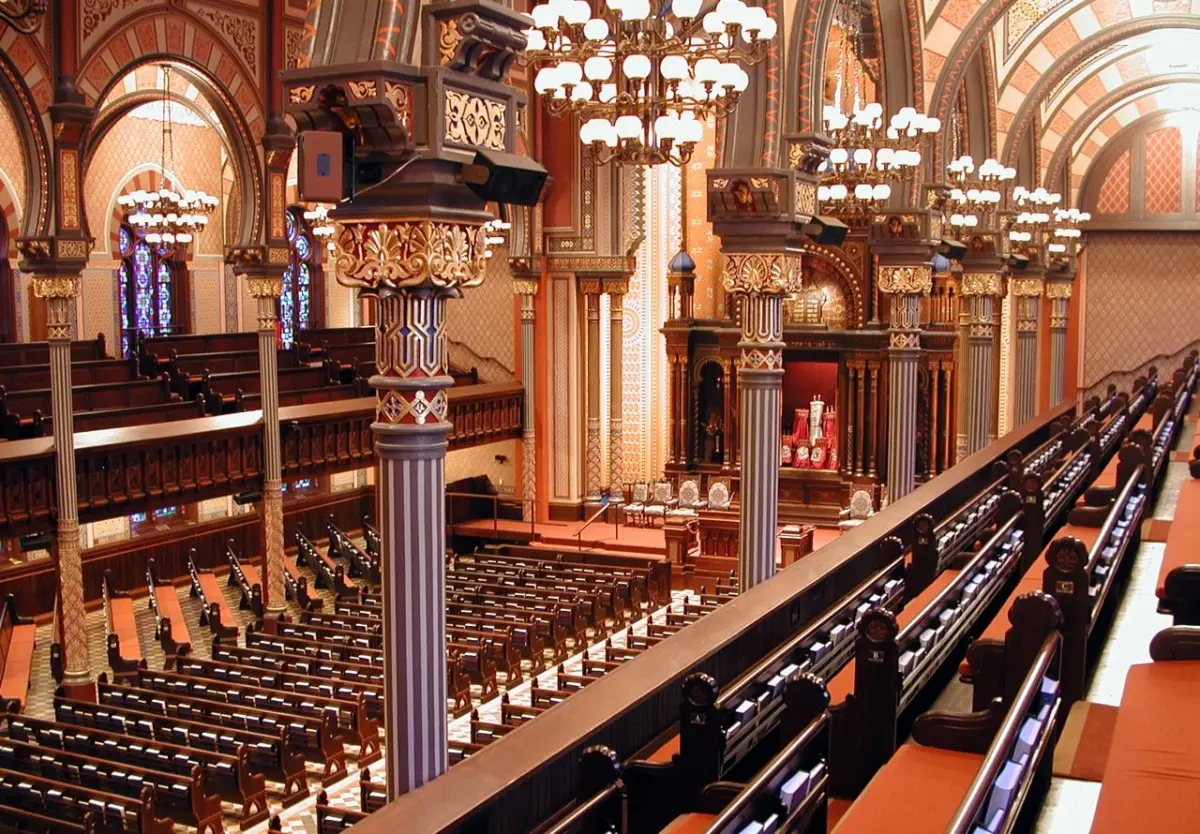
In the upper echelons of contemporary American religious life, few figures command the cultural cachet, institutional power, and public visibility of Rabbi Angela Buchdahl. As the senior rabbi of Manhattan’s historic Central Synagogue, Buchdahl occupies a position at the absolute pinnacle of Reform Judaism. Yet her significance stretches far beyond the ornate, Moorish Revival sanctuary on Lexington Avenue. As the first female head rabbi of Central Synagogue and the first Korean American rabbi in history, Buchdahl has shattered structural ceilings that stood for generations, transforming herself into a global icon of pluralistic, inclusive faith.
The publication of her bestselling autobiography, Heart of a Stranger: An Unlikely Rabbi’s Story of Faith, Identity, and Belonging (Pamela Dorman Books, October 2025), has catalyzed a nationwide conversation regarding what it means to be a "quintessentially American" Jew in the twenty-first century. Released with a high-profile launch emceed by late-night television host Stephen Colbert, the memoir details a meteoric rise that mirrors the broader diversification and modernization of American religious institutions.
However, Buchdahl’s journey—from a multicultural childhood in Tacoma, Washington, defined by her Korean Buddhist mother and Jewish American father, to the global stage of televised sermons and White House holiday celebrations—is more than an individual triumph. It is a lens through which to examine the evolution of Central Synagogue itself. Once an intimate, if exclusive, Manhattan congregation catering to the financial and corporate elite, Central Synagogue has experienced a massive surge in stature, size, and cultural influence under Buchdahl’s two-decade tenure.
Read Also
This comprehensive report examines the trajectory of Rabbi Angela Buchdahl, the transformation of Central Synagogue, the complex mechanics of interfaith identity in America, and the future outlook for a liberal religious movement navigating an increasingly polarized world.
Detailed Chronology: From Seoul to the Bimah
Roots Across Oceans (1972–1983)
Angela Buchdahl’s story begins far from the epicenters of American Judaism. Born in Seoul, South Korea, in 1972, she entered a lineage marked by resilience and cross-cultural synthesis. Her mother, Yi Sulja, was the daughter of a Korean resistance fighter who operated as a clandestine communications courier for the Korean independence movement during World War II. Her father, Fred Warnick, belonged to a third-generation Jewish American family that had built a prosperous mill-working business in Tacoma, Washington.
The two met in Asia while Warnick was fulfilling his ROTC service requirement. Following their marriage, the family eventually relocated to the Pacific Northwest, settling in Tacoma when Buchdahl was five years old. It was in this quiet, damp corner of Washington state that Buchdahl first encountered the dual pillars of her identity: the rich, communal warmth of the local Jewish community, and the persistent, quiet differences that marked her family as distinct.
Growing up, Buchdahl’s home was a study in cultural juxtaposition. Her mother, deeply anchored in her Buddhist heritage, nevertheless immersed herself in her husband’s traditions. Yi Sulja studied Hebrew, sang faithfully in the synagogue choir, and famously contributed "wontons for the oneg" following Friday night services. Yet, despite her integration into congregational life, she never formally converted. In her memoir, Buchdahl reflects on the subtle emotional fallout of this omission: she realized early on "that Mom was different from all the Jews. And that meant that I was different from all the Jews, too."
Awakening and the Call to Music (1983–1990)
Buchdahl’s path toward the rabbinate was forged through song. Long before she envisioned delivering sermons from a pulpit, she found her spiritual voice through Jewish music. As a teenager, she served as a song leader—first at regional Jewish summer camps and later within her home congregation in Tacoma.
"When I sang Jewish music and prayer," Buchdahl recalls, "I came alive and felt like God heard me."
This vocal and spiritual resonance offered her a profound sense of belonging at a time when her multiracial and interfaith background occasionally invited skepticism from peers and elders alike. By the age of 16, her trajectory crystallized: she resolved that her life’s work would be dedicated to becoming a rabbi.
This ambition coincided with a monumental shift in the American Reform movement. In 1983, when Buchdahl was 11 years old, the Central Conference of American Rabbis formally resolved to recognize children with Jewish fathers and non-Jewish mothers as Jewish, provided they were raised with Jewish identities—a historic break with the ancient halachic (legal) tradition of strict matrilineal descent. Yet, despite this progressive institutional pivot, the lived reality on the ground remained complicated. Buchdahl frequently endured probing interrogations regarding her status as a "real" Jew. Determined to put such skepticism to rest permanently, she made the definitive choice during her senior year of college to undergo a formal, traditional conversion.
Supporting Context & Metrics: The Evolution of Central Synagogue
To understand the magnitude of Buchdahl’s leadership, one must examine the institution she anchors. Aaron Jakes, writing in n+1, recalls attending services at Central Synagogue—a landmark Reform congregation in Midtown Manhattan—throughout the 1980s and 1990s.
During that era, Central Synagogue was an intimate, tightly knit community rather than a global religious powerhouse. Friday evening turnouts rarely crested one hundred people. However, this modest weekly attendance belied the immense socioeconomic clout of its membership. Comprising some of the nation’s leading financial managers, real estate developers, and corporate executives, the congregation operated with an unmistakable, if polite, class hierarchy—most visibly during the High Holidays.
When the community emerged in full force for Rosh Hashanah and Yom Kippur, the synagogue’s seating capacity limitations necessitated a rigid stratification:
- The "Community Service": The most affordable, baseline option, relegated to an overflow auditorium located across the street.
- The "Family Service": Offered at a higher ticket price, this service deliberately bypassed ritual norms by beginning around sundown, forcing attendees to adjust their traditional Yom Kippur fasts.
- The "Assigned Seating Service": Occupying the magnificent Moorish Revival main sanctuary at traditional hours, this service granted coveted proximity to the bimah (altar) strictly on the basis of historical donation levels.
While the congregation was already wealthy, its profile shifted exponentially with the arrival of Angela Buchdahl two decades ago. Initially hired as the synagogue’s senior cantor, Buchdahl’s subsequent elevation to senior rabbi—and eventually head rabbi—unleashed a new era of expansion. Today, Central Synagogue stands as one of the most prominent, digitally innovative, and culturally influential religious institutions in the United States.
Key Metrics of Modern Influence:
- Global Digital Reach: Under Buchdahl, Central Synagogue pioneered high-definition live-streaming of its weekly services, drawing tens of thousands of digital congregants from across the globe every week.
- National Media Presence: Buchdahl has become a fixture of American public life, making regular appearances on network morning shows (including CBS Mornings, Today, and Good Morning America) to offer moral clarity on contemporary issues.
- Diplomatic and State Recognition: She has repeatedly been invited to officiate at high-profile Jewish holiday celebrations in Washington, D.C., under both the Obama and Biden administrations.
- Literary Prominence: The October 2025 launch of Heart of a Stranger debuted as a New York Times bestseller, propelled by mainstream media tours and high-profile cultural endorsements.
Official Statements and Critical Reception
The cultural resonance of Buchdahl’s memoir and her broader career has generated widespread commentary from literary critics, religious scholars, and cultural commentators.
In a review for n+1, historian and author Aaron Jakes contextualized Buchdahl’s meteoric rise against the backdrop of Central Synagogue’s transformation from an exclusive enclave of the corporate elite into an expansive, media-savvy spiritual enterprise. Jakes notes that Buchdahl’s narrative speaks directly to the anxieties and aspirations of modern American multiculturalism:
"Buchdahl’s meteoric rise and shattering of a rabbinical glass ceiling [make] the case for a multicultural, liberal, ‘quintessentially American’ form of Judaism… [Her story] confronts the historical boundaries of belonging, proving that the modern rabbinate can transcend ancestral orthodoxies to embrace a wider, pluralistic world."
Publishers and literary critics have likewise lauded Heart of a Stranger for its vulnerability and intellectual rigor. In promotional materials released by Pamela Dorman Books, editors highlighted the memoir’s unique ability to bridge personal biography with institutional history:
"Angela Buchdahl does not merely tell the story of her own path to the bimah; she provides an indispensable roadmap for how American religious institutions must adapt, listen, and open their doors to the diverse tapestries of modern families."
Public intellectuals have frequently pointed to Buchdahl’s unique heritage as a triumph over historical insularity. By embodying both the ancient lineage of Ashkenazi tradition and the lived reality of Asian American multiculturalism, she challenges monolithic definitions of Jewish identity. As she frequently emphasizes in public lectures and media appearances, her rabbinate is proof that the Jewish community is strongest when it actively widens its tent to welcome those who once felt like strangers.
Future Outlook: The Next Chapter for Liberal Judaism
As Rabbi Angela Buchdahl enters her third decade of leadership at Central Synagogue, the challenges facing American Reform Judaism are profound. In an era marked by rising antisemitism, sociopolitical polarization, and shifting generational attitudes toward organized religion, institutions like Central Synagogue face the delicate task of balancing ancient ritual with progressive adaptation.
Buchdahl’s blueprint—grounded in radical inclusivity, musical emotional resonance, digital adaptability, and uncompromising intellectual engagement—offers a compelling model for religious survival and growth in the twenty-first century. By demonstrating that a Korean American woman can rise to lead one of the most historic congregations in the Western Hemisphere, she has permanently altered the demographics and self-image of the American rabbinate.
Yet, the questions raised in Heart of a Stranger remain acutely relevant. How can major religious institutions maintain sacred depth while accommodating the fluid, hybrid identities of modern interfaith families? How do historically elite congregations balance the demands of massive, global digital flocks with the intimate needs of local communities?
For Central Synagogue and the broader Reform movement, the answers to these questions will shape the next hundred years of American religious life. Under the enduring guidance of Rabbi Angela Buchdahl, the congregation that once divided its members by class during the High Holidays now projects a message of radical belonging to millions worldwide—proving that the heart of a stranger, once welcomed, can ultimately learn to lead.





Comments
Facebook App ID not configured. Please add it in the Customizer.