
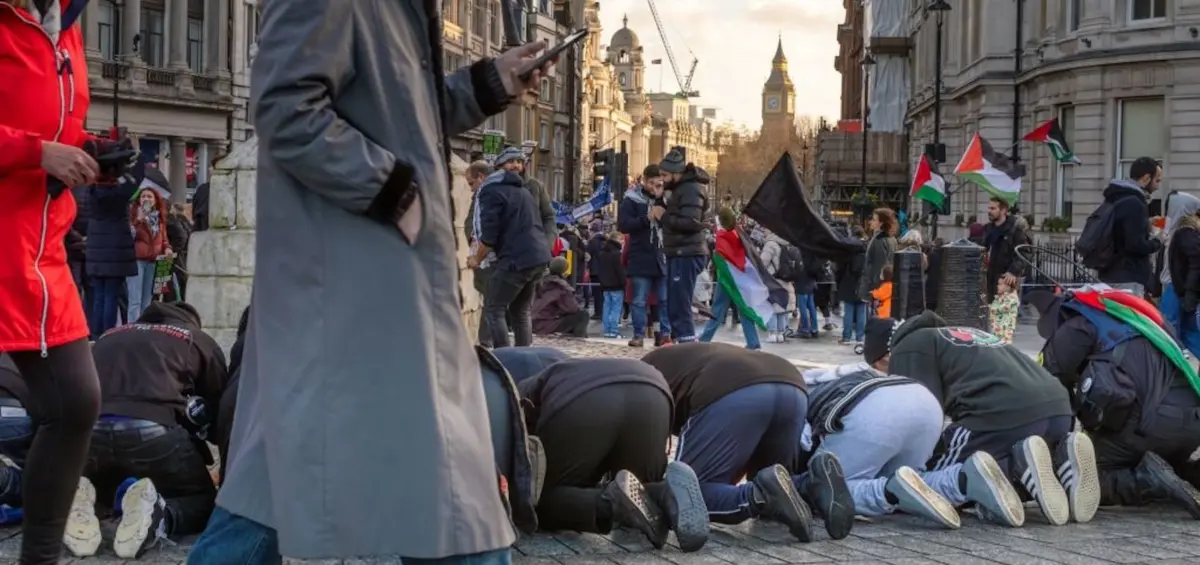
In an era increasingly dominated by presentism and a cultural worship of youth, contemporary Western societies frequently discard the deep reservoir of historical memory that once guided statecraft. Modern America, hyper-focused on market research and the immediate pulse of public opinion, stands in stark contrast to traditional societies that prized the accrued wisdom of the elderly. This historical amnesia leaves policymakers ill-equipped to handle profound civilizational challenges, particularly the pressures of mass migration and the complex integration of confessional belief systems into pluralistic frameworks.
At the heart of the contemporary debate is the challenge of maintaining social cohesion in the face of mass migration from regions with robust, missionary religious traditions—specifically Islam. Unlike decentralized or culturally assimilated belief systems, Islam presents a comprehensive framework for civic and public life, governed by a detailed legal structure. As demographic shifts alter the landscape of Western nations, the rising public profile of Islamic institutions risks eroding the Judeo-Christian bedrock upon which Western civilization was built.
While mainstream secular and progressive commentators often dismiss such concerns as alarmist or exclusionary, cultural analysts and legal scholars increasingly argue that ignoring these structural shifts invites severe social polarization. To navigate this impasse without succumbing to defeatism or reactionary authoritarianism, observers suggest looking beyond traditional Western models. By examining surprising comparative frameworks—such as the multicultural yet majority-Islamic constitutional model of Malaysia—policymakers might find viable, legally defensible mechanisms to protect a nation’s foundational religious and cultural identity while preserving democratic stability.
Read Also
Detailed Chronology: From Colonial Foundations to Modern Pluralism
Understanding the current debate over immigration, religion, and national identity requires tracing the historical evolution of constitutional and demographic policies in both the West and the developing world.
- 1790 (The Naturalization Act): Following the founding of the United States, the First Congress passed the Naturalization Act of 1790, restricting citizenship to "free white persons" of good character. This established an early precedent that American entry and naturalization were subject to specific cultural and demographic filters, rather than an unbridled open-door policy.
- 19th Century (The Rise of Nativism): As Catholic immigration surged—particularly from Ireland and Germany—intense social friction culminated in the formation of the "Know-Nothing" (American) Party. This period marked the first major ideological clash over the integration of a distinct religious demographic into Protestant-majority America.
- 1948–1960 (The Malayan Emergency): Following World War II and the collapse of direct British administrative control, Malaya faced a violent communist insurgency led by the Malayan National Liberation Army. British counter-insurgency strategies under General Sir Gerald Templer successfully combined military tactical precision with political promises of self-determination.
- 1957 (The Merdeka Constitution): To counteract communist appeals and unify a fractured multicultural society (comprising Malay Muslims, ethnic Chinese Buddhists, and Indian Hindus), British diplomats and local leaders brokered the Merdeka Constitution. This foundational document declared Islam the official religion of the federation while guaranteeing freedom of worship for religious minorities, establishing a unique model of a democratic yet non-liberal state.
- 2015–Present (European Migration Crisis): A massive influx of migrants from Syria and other conflict-ridden regions entered Europe, precipitating a series of integration challenges. Subsequent incidents of religiously inspired unrest, parallel legal enclaves, and public friction across the United Kingdom, France, and Germany intensified anxieties regarding the long-term stability of Western social cohesion.
- 2022 (Malaysian Political Shift): The political victory of Anwar Ibrahim as Prime Minister underscored the ongoing tension within Malaysia between modernizing, non-aligned pragmatism and conservative Islamic pressures, demonstrating that democratic structures can successfully counterbalance religious extremism.
Supporting Context & Metrics: Demographic Shifts and Social Pressures
The urgency surrounding immigration and cultural integration is informed by measurable demographic trends and observed institutional strains across both Europe and North America.
- Public Infrastructure Pressures: In specific municipal enclaves within the United States—such as Hamtramck and Dearborn in Michigan, Minneapolis in Minnesota, and Paterson in New Jersey—local ordinances have increasingly accommodated the public broadcasting of the Islamic call to prayer (adhan) and large outdoor religious assemblies. While framed as expressions of religious liberty, these developments signal a visible transformation of the American public square.
- European Integration Fractures: Data from European security and sociological studies indicate that high rates of unassimilated migration have correlated with heightened public safety challenges. High-profile scandals involving organized exploitation networks in British industrial towns—such as Rotherham and Manchester—highlighted instances where local authorities allegedly hesitated to enforce standard criminal statutes due to misplaced sensitivities regarding minority communities.
- Comparative Demographics:
- Malaysia: Approximately 60% to 65% of the population identifies as ethnic Malay and Muslim, forming the cultural and political core of the federation.
- United States: Roughly 60% to 65% of the American population self-identifies as Christian, maintaining a clear cultural majority despite increasing secularization and ideological fragmentation.
+-------------------------------------------------------------------+
|               Comparative Majority Identification                 |
+-----------------------------------+-------------------------------+
| Malaysia (Malay Muslim Population)| ~60% - 65%                    |
+-----------------------------------+-------------------------------+
| United States (Christian Heritage)| ~60% - 65%                    |
+-----------------------------------+-------------------------------+- The Malaysian Compromise Mechanics: Under the 1957 constitutional framework, Islam serves as the federated public religion, and proselytizing the Muslim majority is strictly prohibited. Conversely, minority religions (Buddhism, Hinduism, Christianity) are legally protected to practice their faiths "in peace and harmony" within designated cultural and private spheres, provided they do not challenge the Islamic character of the body politic.
Official Statements & Theoretical Perspectives
The debate over how Western nations should address the intersection of mass migration, religious pluralism, and national identity has divided legal scholars, politicians, and cultural critics.
- The Classical Liberal Perspective: Proponents of strict classical liberalism argue that any state-level restriction on the public exercise of religion violates the First Amendment’s guarantees. Critics from this camp warn that adopting measures akin to foreign models—such as Malaysia’s restrictions on minority proselytization—risks sliding into authoritarianism and undermining the core American commitment to procedural neutrality and individual liberty.
- The Post-Liberal Critique: Intellectuals advocating for a renewal of the public square point out that the American republic’s early history included state-established churches and robust legal frameworks designed to protect public morality. From this viewpoint, distinguishing between private "free exercise" and dominant "public exercise" is a necessary exercise of the state’s legitimate police powers to preserve social cohesion.
- The Pragmatic Adaptation Argument: Analysts suggesting the adaptation of international models emphasize that stable pluralism does not require radical egalitarianism in immigration policy. As noted by legal historians examining the Malaysian precedent:
"A society has emerged whose political structures and democratic aspirations accord more with pluralistic societies such as our own than did those of the confessional states of premodern Western history… It values its traditional Islamic beliefs and does not allow them to be undermined by incompatible faith traditions. In that sense, it is democratic but not liberal."
Future Outlook: Navigating the 21st-Century Civic Landscape
As Western democracies confront the compounding pressures of geopolitical instability, shifting demographics, and cultural polarization, the trajectory of immigration policy and religious integration remains uncertain.
Over the coming decade, legal scholars and policymakers face a stark choice between uncritical adherence to an open-door egalitarianism that risks eroding indigenous civic traditions, and the deliberate, historically informed restructuring of immigration and public-exercise laws. If European experiences serve as a predictive indicator, continued avoidance of these structural challenges will likely result in heightened political volatility, localized legal fragmentation, and a reactive, far more disruptive populist backlash.
Conversely, by engaging in what the Founding Fathers practiced—"applied history"—modern societies can draw upon inventive, cross-cultural precedents. Whether through refining municipal permitting for public religious broadcasts, enacting more rigorous vetting procedures for prospective immigrants from high-risk regions, or explicitly affirming the Judeo-Christian framework of Western civilization in federal declarations, the tools for self-preservation exist. The primary obstacle is not a lack of legal or historical models, but the political courage required to implement them before current demographic and cultural transformations pass the point of return.




Comments
Facebook App ID not configured. Please add it in the Customizer.