
Executive Overview
Twenty-five years after the catastrophic events of September 11, 2001, reshaped the geopolitical and domestic fabric of the United States, the American political landscape is witnessing a profoundly disturbing regression. What was once recognized, at least ostensibly, as a dangerous and fringe brand of post-9/11 xenophobia has been steadily mainstreamed, normalized, and institutionalized within the apparatus of the modern Republican Party.
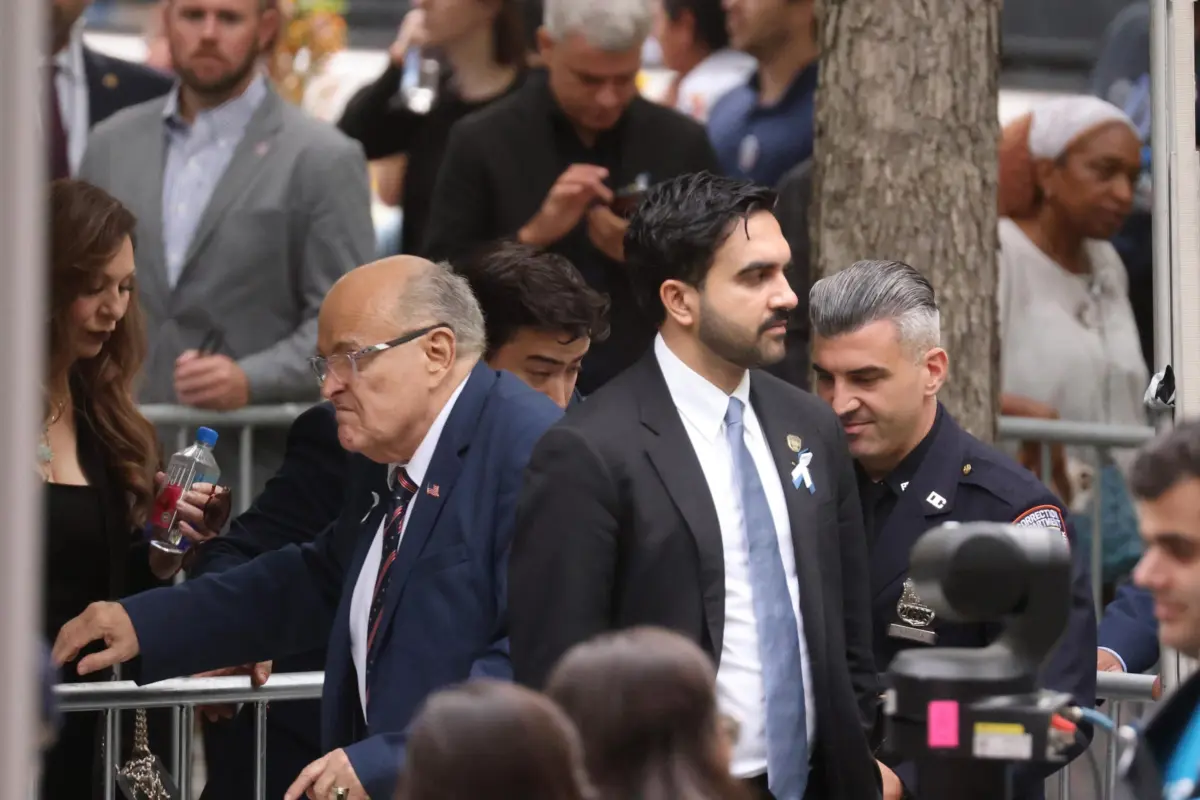
As survivors, families, and civic leaders gathered across New York City, Washington, D.C., and Shanksville, Pennsylvania, to mark a somber quarter-century milestone of national grief, the contemporary political discourse offered little solace. Instead, the solemnity of the anniversary was punctured by renewed anti-Muslim rhetoric from prominent conservative figures. Most notably, former New York City Mayor Rudy Giuliani launched an unprovoked, Islamophobic tirade targeting current NYC Mayor Zohran Mamdani over his participation in the official memorial ceremonies.
While Giuliani’s once-lauded reputation as “America’s mayor” has long since been eclipsed by his double disbarment and legal subjugation tied to efforts to overturn the 2020 presidential election, his outburst was far from an isolated anomaly. Rather, it serves as a glaring symptom of a much broader, systemic shift within the GOP. Heading into the 2026 midterm elections, open and aggressive Islamophobia has graduated from the dark corners of fringe political messaging to an officially sanctioned, operational strategy for the right.
Read Also
This deep dive examines how Islamophobia has passed what scholars term the "dinner table test," tracing its trajectory from the reactive xenophobia of the early 2000s to its current status as a core ideological pillar of Republican midterm campaigning. Through an analysis of convention speeches, state-level policies, and the calculated weaponization of identity politics, this report explores a dangerous new chapter in American political extremism.
Detailed Chronology: From Post-9/11 Reaction to the 2026 Midterm Strategy
To understand how Islamophobia became a staple of modern conservative politics, one must trace the timeline of its evolution over the past twenty-five years—a trajectory marked by a chilling transition from guarded restraint to uninhibited promotion.
The Immediate Post-9/11 Era (2001–2010s)
In the immediate aftermath of the 2001 terrorist attacks, the American Muslim population faced an immediate surge of suspicion, hate crimes, and civil rights abuses. However, a defining characteristic of that turbulent era was a concerted, albeit imperfect, effort by mainstream political leaders from both parties to erect guardrails against broad-brush bigotry. Then-President George W. Bush famously visited the Islamic Center of Washington, D.C., just days after the attacks, explicitly declaring that "Islam is peace" and urging Americans not to direct their grief and anger at millions of peaceful Muslim citizens.
While sub-surface prejudice and policy overreach—such as the implementation of the Patriot Act and the creation of the National Security Entry-Exit Registration System (NSEERS)—undeniably targeted Muslim communities, open, unvarnished Islamophobia was still widely recognized as politically toxic and socially unacceptable in polite public discourse.
The Tea Party and the Rise of Manufactured Conspiracies (2010–2016)
The gradual erosion of these rhetorical guardrails began in earnest during the Tea Party movement and the subsequent rise of hyper-partisan media ecosystems. During this period, manufactured controversies—such as the coordinated backlash against the proposed construction of the Park51 Islamic community center near Ground Zero in lower Manhattan—demonstrated the potent electoral utility of anti-Muslim sentiment. Figures on the populist right discovered that stoking fear about "Sharia law" taking over American jurisprudence was an effective fundraising and mobilization tool.
The Trump Era and the Institutionalization of Prejudice (2016–2024)
The election of Donald Trump in 2016 accelerated this trajectory dramatically. The implementation of the travel ban targeting several Muslim-majority nations signaled that anti-Muslim rhetoric was no longer confined to campaign trails but could be operationalized as federal policy. Over the next eight years, the normalization of xenophobic talking points accelerated across social media platforms, conservative talk radio, and local organizing committees.
The 2026 Midterm Landscape: The GOP Convention and Beyond
By September 2026, the normalization process was complete. This was put on vivid display during the second and final night of the Republican Party’s unorthodox midterm convention in Dallas, Texas. Addressing a fervent crowd of delegates, Senator Ted Cruz (R-TX) explicitly framed the political opposition through a conspiratorial lens, asserting that "communism" and "Islamism" were actively forging an alliance against the GOP.
"They share the same enemies," Cruz declared to roaring applause. "They hate Christians. They hate Jews. They hate capitalism. They hate the Constitution, and they hate America."
Moments later, the darker undercurrents of this rhetoric erupted into open hostility. As Cruz rattled off the names of prominent Democratic candidates—including New York City Mayor Zohran Mamdani, Michigan Democratic Senate candidate Abdul El-Sayed (who is Muslim), and Texas Democratic Senate candidate James Talarico—members of the convention audience broke into terrifying chants, screaming that "he should be shot."
The casual deployment of such eliminationist rhetoric against Muslim and progressive candidates underscores a grim reality: Islamophobia in 2026 is no longer a dog whistle; it is a megaphone.
Supporting Context & Metrics: The Mechanics of the "Islamophobia Industry"
What factors allowed anti-Muslim prejudice to bypass the social taboos that still largely restrict racism targeting other marginalized groups? According to academics and civil rights researchers, the answer lies in the institutionalization of Islamophobia as a multi-layered political, economic, and ideological industry.
In his seminal work, The Islamophobia Industry, scholar Nathan Lean explores how an interconnected network of think tanks, media outlets, and political operatives has successfully mainstreamed anti-Muslim bigotry. Speaking on the mechanisms of this prejudice, Lean noted:
"Islamophobia has passed the dinner table test. You can say things about Muslims with basic impunity today. And it’s institutionalized in the way that prejudice that targets other marginalized communities is not."
The Michigan and Texas Battlegrounds
This institutionalization is particularly visible in states like Michigan and Texas, which have found themselves on the absolute front lines of rising Islamophobia during the 2026 cycle.
Michigan, home to vibrant, historic Muslim-American communities in cities like Dearborn and Hamtramck, has become a primary target for right-wing political operatives. Abdul El-Sayed, running for the U.S. Senate in Michigan, has faced relentless, dehumanizing attacks regarding his faith. The rhetoric has reached alarming levels of extremism; notably, Representative Nancy Mace (R-SC) published a public statement asserting that "Every single Muslim holding public office in America is a Trojan horse, and a threat to both national security and our republic."
Meanwhile, in Texas, Islamophobia has ceased to be merely a rhetorical weapon and has increasingly codified itself into matters of state policy. Investigative reports by outlets like The New York Times have detailed how Governor Greg Abbott and other senior Texas Republicans have advanced administrative and legislative measures explicitly designed to marginalize Muslim civic participation and restrict religious freedoms under the guise of "national security" and "sovereignty protection."
Official Statements and Responses
The barrage of targeted attacks has elicited strong pushback from the individuals targeted, as well as mounting concern from civil rights watchdogs who warn that the rhetoric is endangering public safety.
Abdul El-Sayed’s Counter-Narrative
Facing an onslaught of xenophobic messaging designed to delegitimize his candidacy, Michigan Senate candidate Abdul El-Sayed has pushed back by attempting to refocus the electorate on tangible, everyday economic issues. In a speech addressing the political attacks, El-Sayed dismantled the GOP’s diversionary tactics:
"They’re going to point at me, they’re going to point at my name, like, ‘Wow, he’s different.’ My name is not raising your gas prices. My name is not taking us to war. My name is not the reason you can’t afford your groceries."
El-Sayed’s strategy highlights a central vulnerability for the Republican campaign apparatus in 2026: lacking cohesive policy solutions for inflation, infrastructure, and cost-of-living crises, campaigns are leaning heavily into cultural grievance, fear-mongering, and identity-based scapegoating.
Civil Rights Organizations Issue Warnings
National civil rights groups, including the Council on American-Islamic Relations (CAIR) and Muslim Advocates, have issued urgent warnings regarding the safety of candidates and elected officials. Following the Dallas convention—where audience members openly called for violence against political opponents—advocacy groups called on federal law enforcement to increase security protocols for Muslim candidates and public servants.
"When mainstream political figures normalize the narrative that Muslim Americans in public office are inherently subversive ‘Trojan horses,’ they are writing a blank check for stochastic terrorism," said a coalition representative in a joint press release. "The rhetoric we saw at the Dallas convention is a direct threat to the safety of our democratic institutions."
Future Outlook: The Stakes for American Democracy Beyond 2026
As the United States pushes deeper into the 2026 midterm election cycle, the mainstreaming of Islamophobia presents a severe, long-term threat to the integrity of American pluralism.
When political parties build their electoral strategies on the foundation of religious bigotry, several corrosive outcomes follow:
- The Erosion of Civic Participation: Qualified candidates from minority backgrounds may increasingly choose to opt out of public service, unwilling to subject their families and communities to state-sanctioned harassment, surveillance, and threats of physical violence.
- Policy Distortion: Vital legislative debates concerning healthcare, the economy, and foreign policy are frequently sidelined in favor of manufactured cultural panics and xenophobic dog-whistling.
- Internal Security Risks: By continually painting millions of American citizens as fifth-column threats, political leaders actively fracture the social cohesion necessary for a functioning, multi-ethnic democracy.
Twenty-five years after the nation came together in the shadow of tragedy to reaffirm its commitment to unity and constitutional values, the current political trajectory of the right suggests a troubling amnesia. If Islamophobia remains an officially sanctioned currency in American politics, the damage inflicted upon the nation’s democratic norms may far outlast any single election cycle.



Comments
Facebook App ID not configured. Please add it in the Customizer.