
Executive Overview
With just eight days remaining until the 2026 midterm elections, the political landscape has intensified into a high-stakes battleground characterized by sharp rhetoric, defensive campaigning, and strategic shifts. At the center of this storm is President Donald Trump, whose final-weeks barnstorming tour across the United States reflects a party grappling with unexpectedly competitive races in historically safe regions.
Rather than projecting an aura of comfortable dominance, the administration’s closing strategy has leaned heavily into polarizing identity politics, cultural grievance, and overt Islamophobic attacks against Democratic candidates.
The crescendo of this strategy arrived over the weekend during a campaign rally in Port Huron, Michigan, where President Trump leveled severe, Islamophobic accusations against Michigan Democratic Senate nominee Abdul El-Sayed. This incident is not isolated; it forms part of a broader, coordinated Republican messaging effort spanning multiple state contests—from Texas to Ohio—designed to mobilize the conservative base through fear. Yet, beneath the fiery speeches lies a stark electoral reality: the president’s aggressive travel itinerary to deep-red states like Mississippi, Texas, Ohio, South Carolina, and Florida suggests deep-seated anxieties within the Republican apparatus over vulnerable Senate seats.
Read Also
At the same time, the global democratic landscape is shifting. As the United States braces for its domestic reckoning at the ballot box, weekend elections in Serbia and Brazil yielded significant defeats for right-wing nationalist incumbents, signaling a potential international cooling toward populist movements. This comprehensive report examines the domestic turbulence defining the final week of the 2026 midterms, breaking down the regional battles, the escalating rhetoric, and the broader geopolitical context shaping the global democratic order.
Detailed Chronology: The Weekend That Heated Up the Midterms
The final stretch of the 2026 midterm cycle has been marked by a rapid escalation in confrontational campaign tactics, culminating in a weekend defined by provocative rally speeches, media appearances, and urgent strategic recalibrations.
The Port Huron Rally and the Attack on Abdul El-Sayed
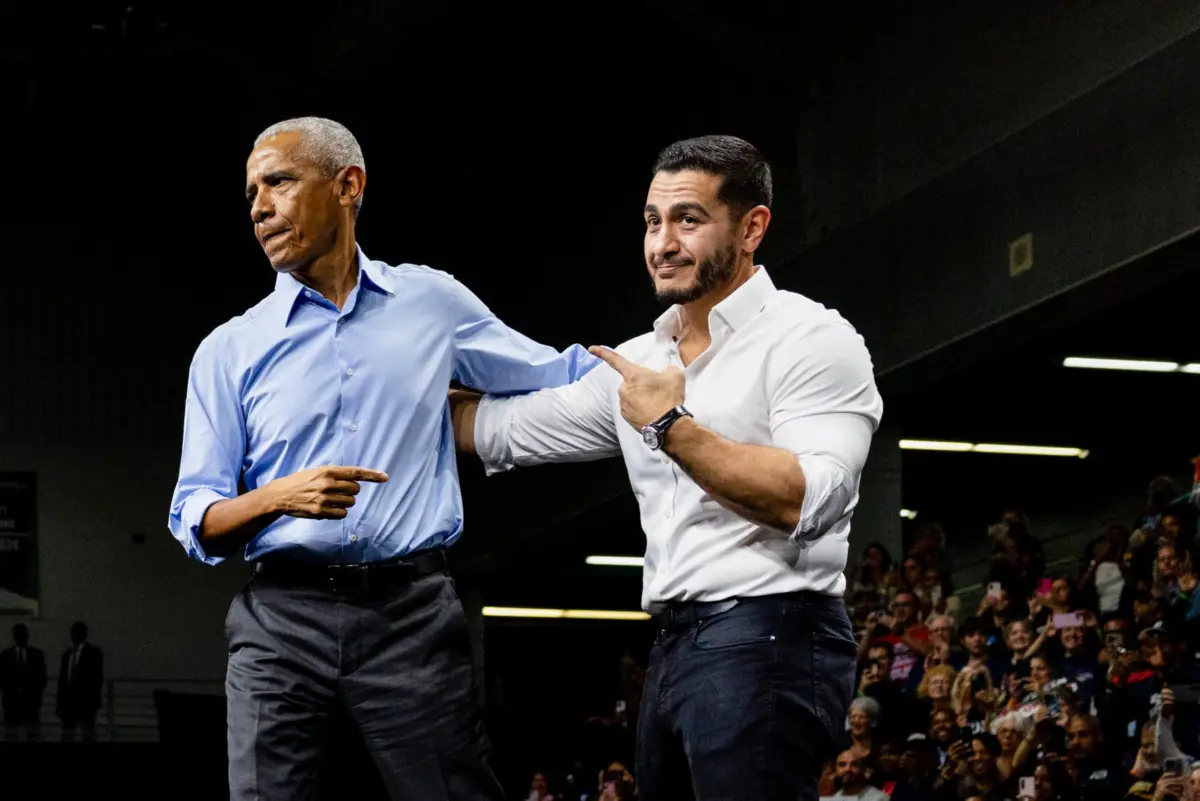
The most volatile flashpoint of the weekend occurred on Sunday in Port Huron, Michigan. Taking the stage before a cheering crowd of supporters, President Trump turned his sights squarely on Abdul El-Sayed, the Democratic nominee for the U.S. Senate in Michigan.
In remarks that immediately drew widespread condemnation from civil rights groups and Democratic leaders, Trump cast El-Sayed—a prominent progressive and former health official—not merely as a political opponent, but as an existential threat to American culture and security.
"If Abdul and the Democrats win," Trump told the rally attendees, "they will open the floodgates and invite hordes of jihadists to our shores, creating a nightmare of violence and terror until you cannot even have a Christmas."
Going a step further, Trump explicitly declared that El-Sayed "should never be allowed inside the halls of our great beautiful Capitol."
This language marks a significant escalation in a campaign that has increasingly relied on xenophobic tropes. El-Sayed, who has led in several recent polling aggregates for the Michigan Senate seat, has faced an onslaught of targeted attacks designed to weaponize his Muslim faith against him. Political analysts note that the rhetoric deployed in Port Huron was deliberately crafted to evoke post-9/11 fears, aiming to energize an aggrieved voting bloc by framing a routine democratic election as a civilizational clash.
Coordinated Islamophobic Messaging Across the Map
The rhetoric in Michigan was mirrored across the country over the weekend, revealing what campaign watchdogs describe as a coordinated Republican strategy to inject Islamophobia into key state-level races.
On Sunday morning, during an appearance on Fox News, Texas Governor Greg Abbott leveled a similarly explosive accusation against his Democratic gubernatorial opponent, Gina Hinojosa. Abbott claimed without evidence that Hinojosa "supports Sharia law"—a baseless allegation intended to alienate moderate and conservative voters by painting mainstream Democrats as adherents of an extremist legal code.
This followed remarks made just weeks earlier at the Texas Republican midterm convention in September, where Senator Ted Cruz warned delegates that a sinister alliance was forming between "communism" and "Islamism" to dismantle American values from within.
By tying regional Democratic candidates to international extremist movements and foreign religious systems, the national Republican apparatus has sought to unify a fractured base. However, critics argue that these tactics reflect desperation rather than strength, pointing to the narrowing margins in states that were previously considered safely out of reach for Democrats.
Supporting Context & Metrics: A Defensive Travel Itinerary
To understand the true state of the 2026 midterms, one must look beyond the rhetoric and examine the logistics of the campaign trail. President Trump’s itinerary over the final eight days of the election cycle offers a revealing diagnostic of Republican electoral health.
The Geography of Anxiety
In a normal political climate, a sitting president or the leading figure of the dominant party spends the final week of a midterm cycle visiting swing states to expand their legislative majority or shoring up marginal districts. Trump’s current schedule, however, tells a different story.
With just over a week until Election Day, the president’s travel manifest features stops in:
- Mississippi
- Texas
- Ohio
- South Carolina
- Florida
Every single one of these locations is a reliably red state where Republican candidates are unexpectedly fighting for their political survival. The necessity of deploying the party’s most prominent surrogate to states that should require minimal national attention underscores the severity of the headwinds facing the GOP.
In Michigan, for instance, where Republican nominee and former Representative Mike Rogers has repeatedly attempted to link El-Sayed to the Muslim Brotherhood, recent polling shows the Democratic nominee holding a narrow but consistent lead. Rogers’ campaign strategy—revolving heavily around guilt-by-association attacks—has failed to decisively put away the race, prompting the heavy-handed intervention from the White House.
Bizarre Undertones and Distractions
The strange tone of the final weeks has not been limited to foreign policy or religious identity. Political observers have noted an increasingly erratic quality to Trump’s stump speeches. In addition to his overt Islamophobic tirades, recent campaign appearances have featured prolonged, unsolicited physical descriptions of Republican candidates, such as Ohio Senate hopeful Jon Husted.
Commentators note that these unusual digressions—focusing on physical appearance rather than economic policy or legislative records—highlight a campaign struggling to maintain a disciplined message. When combined with the heavy reliance on cultural grievances, the erratic nature of the closing pitch suggests a party defensive on multiple fronts: economic, legislative, and narrative.
Official Statements and Institutional Reactions
The inflammatory remarks made over the weekend elicited swift responses from civil rights organizations, political campaigns, and watchdog groups, setting off a fresh wave of debate over the boundaries of acceptable political discourse.
Condemnations of Bigotry
Civil rights organizations, including the Council on American-Islamic Relations (CAIR) and various interfaith coalitions, issued immediate rebukes of the president’s comments in Port Huron. Spokespersons characterized the rhetoric as dangerous hate speech that endangers American Muslims by painting an entire religious community as violent subversives.
"Using the pulpit of the presidency to spread vile, Islamophobic conspiracy theories about a duly qualified American citizen running for public office is a direct assault on the pluralistic values of our democracy," said a representative from a national civil rights watchdog. "These attacks are designed to intimidate candidates and voters alike based entirely on their faith."
Democratic and Independent Pushback
Abdul El-Sayed’s campaign responded with a call for voters to reject politics rooted in division and fear. In a statement released following the Port Huron rally, El-Sayed emphasized his platform of economic opportunity, healthcare access, and public service, framing the attacks as a desperate distraction from the failures of his opponents.
"Michiganders are looking for leaders who will fight for their jobs, their healthcare, and their families—not politicians who rely on ancient prejudices and manufactured hatred because they have nothing positive to offer," the campaign stated.
Meanwhile, strategists across the political spectrum have debated the efficacy of the closing strategy. While some conservative analysts argue that base-mobilization through cultural threat remains the most reliable path to turning out low-propensity voters, moderate Republicans have expressed private concern that extreme rhetoric alienates suburban swing voters—a demographic that proved decisive in previous election cycles.
Future Outlook: Domestic Fallout and International Parallels
As the clock ticks down to Election Day, the immediate future of American politics hinges on whether these polarizing tactics will successfully rescue vulnerable Republican incumbents or backfire by driving high turnout among motivated opposition voters.
The Domestic Horizon: Eight Days to Go
In the final week, both parties are throwing unprecedented resources into the battleground states. For the GOP, the imperative is clear: turn out the base in Mississippi, Texas, Ohio, South Carolina, and Florida to prevent historic upsets that could alter the balance of power in the Senate. For Democrats, the objective is to maintain voter enthusiasm, counter disinformation campaigns, and protect leads in states like Michigan where progressive candidates have energized new coalitions.
Regardless of the outcome at the ballot box, the 2026 midterms have permanently scarred the political lexicon, normalizing explicit religious bigotry as a standard campaign tool for a major political party. The long-term consequences for social cohesion, political participation, and institutional trust will likely resonate long after the final ballots are counted.
International Parallels: A Shifting Global Tide
While the United States stares down a deeply polarized domestic election, international developments over the weekend suggest that the global momentum favoring right-wing populism may be facing renewed resistance.
In both Serbia and Brazil, weekend elections produced surprise victories for opposition forces over entrenched right-wing nationalist regimes. In Serbia, voters successfully ousted long-serving strongman Aleksandar Vučić, marking a major turning point for the Balkan nation’s democratic trajectory.
Simultaneously, in Brazil, President Luiz Inácio Lula da Silva secured a decisive victory over Flávio Bolsonaro, halting the nationalist momentum in South America’s largest economy. For international observers—and environmentalists in particular—Lula’s victory offers profound relief. As recent analyses by The New York Times have underscored, the literal fate of the Amazon rainforest—and its capacity to act as a carbon sink against global climate change—hung in the balance. The Brazilian electorate’s choice to reject nationalist isolationism in favor of international climate cooperation demonstrates that political pendulums can swing back against populism when the stakes are laid bare.
Conclusion
As the American voter prepares to cast their ballot next week, the contrast between domestic polarization and international democratic recalibration could not be starker. Whether the final week’s barrage of fear-mongering and Islamophobic attacks will secure victory for an anxious Republican party remains to be seen. What is certain, however, is that the 2026 midterms will be remembered as a pivotal referendum on the health of American democratic norms, tolerance, and the enduring power of political grievance.





Comments
Facebook App ID not configured. Please add it in the Customizer.