
STOCKHOLM — For decades, Sweden stood as the quintessential beacon of progressive cosmopolitanism in the West, operating with perhaps the most open immigration policy and the firmest institutional commitment to multiculturalism globally. That ideological era abruptly fractured in 2015.
In the wake of the European migration crisis, the Sweden Democrats (SD)—a political party historically marginalized and treated as pariahs by the nation’s political establishment—fundamentally reoriented the national discourse. They dragged major traditional powers, including the ruling Social Democrats and the center-right Moderates, toward an increasingly restrictive immigration platform. Measures that were once considered radical fringe opinions quickly became the mainstream political orthodoxy.
Yet, a seismic shift in the September 13th general election suggests that this rightward political correction may have arrived too late. Driven by decades of historic migration, Sweden’s demographic landscape has been permanently altered. In a historic electoral reversal, the surging immigrant electorate mobilized in unprecedented numbers, handing the right-wing bloc a devastating defeat and signaling a profound, structural transformation in Western democratic politics.
Read Also
Executive Overview
The September 13 election brought an abrupt halt to the Sweden Democrats’ nearly decade-long march toward absolute political dominance. SD dropped 3 percentage points to finish at 17.48 percent, marking its first major electoral setback after years of continuous growth. More critically, the broader right-wing coalition lost its parliamentary majority. The center-left bloc claimed 173 seats, while the left-wing opposition surged to 176 seats, capturing control of the Riksdag.
The decisive factor in this upset was not a sudden renaissance of traditional Swedish secularism, but rather the explosive political mobilization of Sweden’s foreign-born population. In 786 electoral districts where at least half of the residents were foreign-born or born to two foreign-born parents, the center-left gained roughly 73,000 votes compared to the 2022 election. This demographic swing single-handedly exceeded the roughly 50,000-vote national margin that separated the two major political blocs.
In immigrant-dense suburbs like Rinkeby in Stockholm, turnout spiked by approximately 10 percentage points, with roughly 94 percent of ballots cast for the center-left. Sweden’s immigrant communities have decisively transitioned from peripheral demographic groups into a potent, organized democratic force capable of dictating national outcomes.
Detailed Chronology: From Open Doors to the 2025 Turning Point
To understand the tectonic plates shifting beneath Swedish politics, one must examine the rapid evolution of the country’s social compact over the past twenty years.
The Era of Unchecked Openness
Through the late 1990s and 2000s, Sweden maintained a self-image as a "humanitarian superpower." Successive governments welcomed hundreds of thousands of refugees from conflict zones across the Middle East, the Horn of Africa, and the Balkans. This policy was underpinned by a state-sponsored multicultural framework that encouraged preservation of heritage culture rather than rapid, coercive assimilation.
The 2015 Watershed
The breaking point arrived in the autumn of 2015, when over 160,000 asylum seekers crossed Sweden’s borders in a matter of months, straining municipal infrastructure, housing markets, and social services. The Sweden Democrats capitalized on public anxiety. Founded in the late 1980s with roots in the nationalist fringe, SD steadily softened its public image while sharpening its message: uncontrolled immigration was importing crime, straining the welfare state, and eroding Swedish cultural cohesion.
A Decade of SD Ascendancy
Between 2015 and 2022, nearly every major policy debate bent to the will of the Sweden Democrats. The party demanded uncompromising assimilation policies, calling for an official end to multiculturalism, a nationwide ban on public hijab-wearing, and the implementation of aggressive "remigration" initiatives to incentivize voluntary returns.
At the ballot box, these hardline demands yielded immense dividends. In the 2022 general election, SD secured 20.5 percent of the vote and 73 seats in the Riksdag, becoming the undisputed anchor of the right-wing governing coalition. Under their influence, the government abolished permanent residency permits for asylum-related stays, tightened citizenship requirements, and introduced direct financial subsidies to encourage voluntary repatriation.
The Demographic Reality Check
While policymakers in Stockholm tightened borders and recalibrated laws, the population pipeline had already delivered irreversible demographic changes. By the close of 2025, out of Sweden’s total population of nearly 11 million inhabitants, approximately 2.94 million individuals were either foreign-born or born in Sweden to two foreign-born parents. Crucially, roughly 65 percent of these foreign-born residents had acquired Swedish citizenship, vesting them with full voting rights. The stage was set for a historic collision between nationalist legal reforms and democratic demography.
Supporting Context and Metrics
The mathematics of the September 13 election reveal a clear blueprint of how the immigrant vote dismantled the right-wing majority.
- The Demographic Footprint: Nearly 27 percent of Sweden’s total population now possesses a direct foreign background. In major urban centers like Stockholm, Gothenburg, and Malmö, that proportion is significantly higher, creating distinct geographic concentrations of non-native voters.
- The Margin of Victory: The national election was decided by an ultra-slim margin of approximately 50,000 votes between the two major political blocs.
- The Suburban Surge: In 786 targeted electoral districts characterized by a foreign-born majority or near-majority, the center-left coalition harvested an additional 73,000 votes compared to the 2022 cycle—directly eclipsing the entire national margin of victory.
- Turnout Anomalies: In iconic immigrant enclaves such as Rinkeby, voter participation jumped by nearly 10 percentage points, with local tallies showing roughly 94 percent support for the center-left.
These statistics underscore a hard political reality: as immigrant communities have integrated into the formal economic and political structures of Sweden, they have learned to weaponize the ballot box against parties perceived as hostile to their cultural and religious survival.
Official Statements and Institutional Responses
The electoral shockwave forced an immediate introspection across the political spectrum, with even the architects of the nationalist strategy admitting they had miscalculated the consequences of their rhetoric.
Mattias Bäckström Johansson, party secretary for the Sweden Democrats, offered a candid assessment in the wake of the defeat. He acknowledged that the party’s aggressive policy proposals—specifically the proposed public ban on the hijab and the vocal push for remigration—acted as an unprecedented catalyst, successfully mobilizing a segment of the electorate that had previously sat on the sidelines.
"We saw a level of mobilization in suburban areas that fundamentally altered the electoral arithmetic," Bäckström Johansson conceded. "Our platform intended to draw firm cultural boundaries, but it also served as an unmistakable klaxon for voters who felt their identity and future in Sweden were under existential threat."
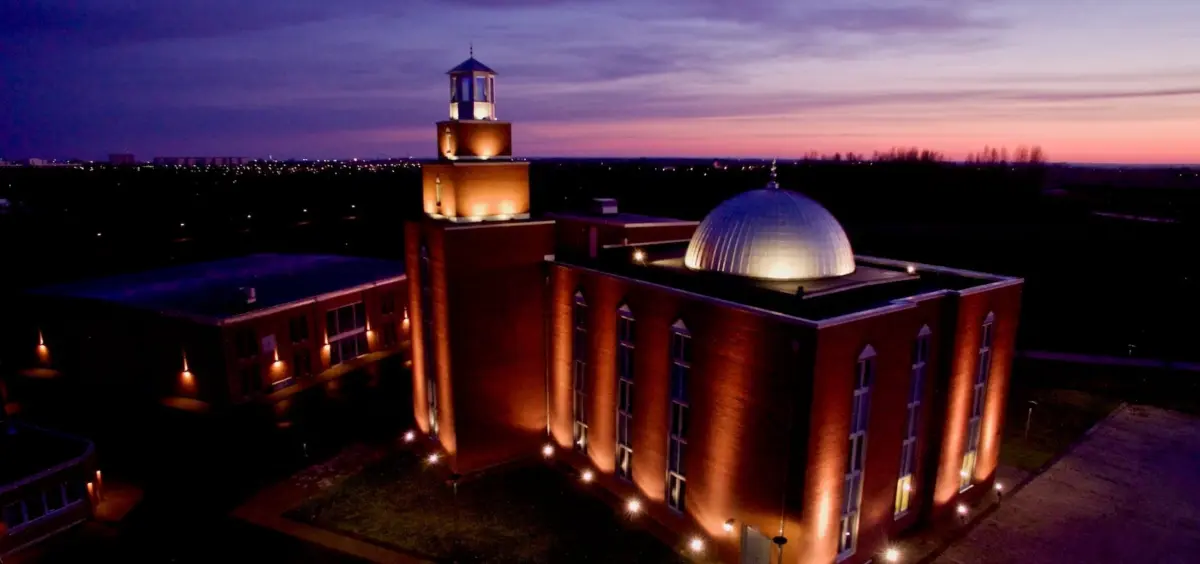
Rather than isolating immigrant communities, the right-wing’s aggressive policy push triggered a coordinated counter-mobilization led by civil society organizations, religious institutions, and community leaders. In the months leading up to September 13, mosques and cultural centers across Sweden transformed into civic mobilization hubs.
- In Uppsala, the local mosque established a dedicated "voting school" to educate congregants on the mechanics of the Swedish electoral system and the importance of civic participation.
- In Gothenburg, community organizers deployed specialized "election ambassadors" and published tailored voting guides focusing directly on contentious issues like religious schooling and dress codes.
- In Malmö, the Islamic Association in Rosengård ran intensive, targeted campaigns designed to drive up voter turnout in housing estates with high concentrations of Muslim residents.
While integration experts initially praised this civic awakening as the ultimate fulfillment of multicultural assimilation—demonstrating that newcomers were embracing democratic norms—analysts quickly noted a critical nuance: these voters were not participating merely as secular liberals who happened to practice Islam. They were voting collectively as Muslims, motivated by a shared desire to safeguard their religious traditions, family structures, and communal autonomy.
Future Outlook: The European Horizon
Sweden’s historic election marks the opening of a volatile new chapter in European politics. The fundamental question facing the Scandinavian nation is no longer simply how to stem the flow of immigration, but rather how to navigate the long-term political ambitions of a newly empowered, self-aware religious minority.
Precedent from neighboring European democracies offers an unsettling preview of this trajectory. A landmark 2015 Danish survey revealed that roughly 40 percent of polled Muslims believed national law should be based, at least in part, on the Qur’an. Similarly, comprehensive polling in the United Kingdom indicated that nearly 23 percent of Muslim respondents favored the implementation of Sharia law within specific jurisdictions of Britain.
Historically, Swedish political parties competed almost exclusively for the native-born electorate by attempting to outdo one another on border control and law enforcement. Sensing the structural sea change ahead of the September election, however, left-leaning parties rapidly adapted their strategies. The Left Party produced campaign materials in Arabic warning that tightened citizenship regulations posed a direct threat to immigrant families. In Sörmland, the Social Democrats ran targeted Arabic-language campaigns highlighting their commitment to fighting systemic Islamophobia and expanding humanitarian family reunification.
As traditional parties realize the sheer electoral weight of the demographic shift, political incentives will inevitably shift. Parties seeking power may soon discover that victories can be secured by accommodating religious demands regarding public education, dress codes, and family law—areas where traditional Islamic jurisprudence fundamentally collides with secular Swedish legal norms.
Political scientists note that the rise of religious political power does not require the creation of explicit Islamist political parties. Instead, existing secular parties, driven by the ruthless calculus of electoral survival, may simply adopt accommodations to win over concentrated voting blocs.
The Specter of Submission
This dynamic recalls the central premise of Michel Houellebecq’s dark satirical novel Submission, in which Islam does not conquer France by force of arms, but rather ascends through the machinery of Western democracy itself. In the novel, the traditional political establishment capitulates to an ascendant Muslim movement simply because it needs the votes to maintain power and keep its nationalist rivals at bay. Democracy, in Houellebecq’s grim formulation, quietly bends to demography.
Sweden’s 2025 election may well serve as the proverbial canary in the coal mine for the entire West. What has transpired in the quiet suburbs of Stockholm can—and likely will—replicate itself across any advanced liberal democracy that has welcomed large, culturally distinct immigrant populations without demanding deep structural assimilation.
For half a century, modern Sweden defined itself almost entirely by its capacity for radical tolerance, rarely pausing to define or defend the core values underpinning its own society. When traditional Christianity retreated into the private sphere over the latter half of the twentieth century, it left a profound cultural and spiritual vacuum—and as the classical philosophers observed, nature abhors a vacuum.
Just as Houellebecq’s fictional France ultimately submitted because its cultural core had hollowed out, modern Sweden now faces a stark reckoning. The nation has until its next democratic cycle to decide not what it tolerates, but what it fundamentally believes.




Comments
Facebook App ID not configured. Please add it in the Customizer.