
Executive Overview
In the rapidly evolving niche of portable e-readers, hardware manufacturers constantly walk a tightrope between absolute minimalism and everyday usability. For boutique hardware startups, standing out in a market dominated by multi-billion-dollar giants like Amazon (Kindle) and Rakuten (Kobo) requires bold design choices. Enter Xteink, a nimble player that captured the attention of the reading community with the original X4—a pocket-sized e-reader praised for its physical agility and the universal convenience of a standard USB-C port.
However, in its pursuit of hyper-minimalism across its subsequent lineup—including the X4 Classic, X4 Pro, and X3—Xteink made a decisive bet that has sparked significant backlash from its core consumer base. By ditching the ubiquitous USB-C port in favor of proprietary pogo pins, the company aimed to shave off fractions of a millimeter and grams of weight. The gamble backfired.
Faced with a vocal community of power users and tech enthusiasts who prioritize universal connectivity and charging convenience over a marginally thinner chassis, Xteink has been forced to respond. This report examines the anatomy of the "pogo pin controversy," analyzes the engineering tradeoffs behind ultra-thin e-reader design, deconstructs the official corporate communications issued via platforms like Reddit, and looks ahead to how Xteink plans to balance its minimalist design philosophy with the practical demands of the modern consumer market.
Read Also
Detailed Chronology: From USB-C Success to the Pogo Pin Backlash
To understand the current friction between Xteink and its consumer base, one must trace the timeline of the brand’s product iterations and the design decisions that shaped them.
Phase 1: The Breakthrough of the Original X4
When Xteink introduced the original X4 to the pocket e-reader community, it was met with immediate enthusiasm. At a time when many pocket readers were either clunky or lacked modern connectivity, the original X4 struck a chord. Crucially, it featured a standard USB-C port. For everyday consumers, USB-C is more than just a plug; it is an ecosystem. It means sharing cables with smartphones, laptops, portable batteries, and wireless headphones. The inclusion of a universal port was a primary driver in putting Xteink on the map, signaling to buyers that the company understood modern consumer habits.
Phase 2: The Push for Hyper-Minimalism (The X3, X4 Pro, and X4 Classic)
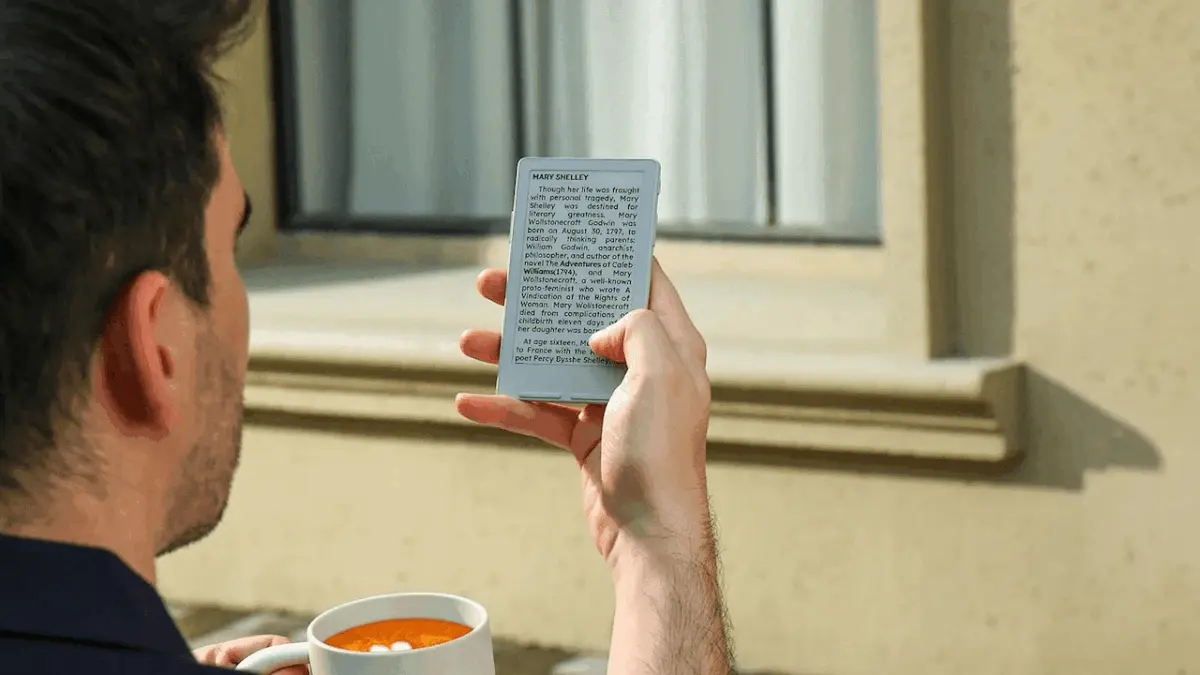
Emboldened by its initial success, Xteink’s engineering and design teams sought to push the envelope of physical form factor. Their objective was to create a device that could "simply disappear" into a user’s everyday carry (EDC)—sliding effortlessly into a shirt pocket, a small clutch, or a tight travel bag without creating a noticeable bulge.
To achieve this unprecedented level of thinness and weight reduction, the engineering team made a radical hardware pivot: they eliminated the internal space required for a standard USB-C port receptacle and replaced it with external magnetic pogo pins.
Pogo pins—spring-loaded pins that make contact with magnetic charging docks or specialized cables—allow for a thinner structural profile because they bypass the depth and internal clearance demands of a female USB-C port. While this successfully dropped fractions of a millimeter from the chassis, it fundamentally altered the user experience. Charging the device now required carrying a proprietary cable or adapter, transforming a ubiquitous utility into a specialized inconvenience.
Phase 3: The Consumer Backlash and Digital Uproar
As the X3, X4 Pro, and X4 Classic hit the market, the honeymoon phase quickly ended. Reviewers, early adopters, and community forums erupted in criticism.
The primary grievance was clear: users did not want to manage yet another proprietary charging cable just to save a negligible amount of thickness. For a device meant to be carried everywhere, the inability to plug it into a standard phone charger, laptop port, or power bank while on the go was viewed as a major regression.
Because Xteink currently offers no alternative models equipped with USB-C ports, the anti-pogo complaints escalated from mild forum gripes to an unignorable wave of discontent. The brand was facing an existential challenge: alienating the very community that built its initial success.
Supporting Context & Metrics: The Engineering Dilemma of Micro-Form-Factor E-Readers
To fairly assess Xteink’s design choices, it is necessary to examine the physical constraints and architectural challenges of designing pocket-sized E Ink devices.
The Anatomy of an Ultra-Thin E-Reader
Designing an e-reader with a screen size under six inches involves packing a motherboard, battery, controller chips, and screen assembly into an extraordinarily tight space.
- The Z-Height Battle: In hardware engineering, the "Z-height" refers to the thickness of a device. Every single component—from the display glass to the back shell—is measured in fractions of a millimeter.
- The USB-C Footprint: A standard USB-C receptacle requires internal vertical clearance and PCB (Printed Circuit Board) real estate. Beyond the port itself, soldering pads, internal shielding, and structural reinforcement add to the required internal volume.
- The Pogo Pin Alternative: Pogo pins, by contrast, can be surface-mounted directly onto the board with minimal vertical intrusion, allowing designers to taper the edges of the device and achieve a sleek, paper-thin hand feel.
Market Realities: Boutique Brands vs. Industry Giants
The stakes for a small startup like Xteink are vastly different from those of industry titans like Amazon or Kobo.
| Metric / Attribute | Major Industry Giants (e.g., Amazon Kindle) | Boutique Innovators (e.g., Xteink) |
|---|---|---|
| Market Share & Capital | Dominant market penetration; massive R&D budgets. | Niche market appeal; limited operational capital. |
| Brand Loyalty | High inertia; consumers often buy out of ecosystem lock-in. | Highly dependent on enthusiast goodwill and word-of-mouth. |
| Design Tolerance | Can afford controversial design changes with minimal risk. | Must pivot quickly to address consumer outcry or face irrelevance. |
| Feature Customization | Slower to adopt fringe form factors; conservative designs. | Agile; willing to experiment with ultra-thin pocket readers. |
As highlighted in industry analysis, while Amazon can make polarizing hardware decisions—such as removing headphone jacks or altering charging methods—and still see steady sales due to its vast ecosystem, a boutique brand cannot afford to ignore its core audience. For Xteink, listening to consumer feedback is not just good customer service; it is a matter of survival.

Official Statements: Crusoe and the Xteink Transparency Initiative
Recognizing that the backlash had reached a critical threshold, Xteink’s founder, known in the community as Crusoe, took the unusual step of addressing the user base directly via Reddit (r/xteinkereader).
Rather than doubling down on defensive corporate messaging, the founder’s letter offered a candid look into the design philosophy, the intentional compromises made during development, and the future roadmap of the company.
The Philosophy of Form Over Convenience
In the open letter, Crusoe explained the rationale behind the X4 Classic:
"X4 Classic is a product where we wanted to keep pushing the physical form of the original X4: lighter, thinner, and closer to something that simply disappears into the things you already carry. For X4 Classic, we prioritized the device’s physical form over the convenience of a universal port."
This statement illuminates the core ideological divide in modern tech design: the tension between absolute aesthetic/ergonomic minimalism and utilitarian convenience. For Xteink’s design team, the vision of an e-reader that felt weightless and unnoticeable in a pocket justified the removal of the standard port.
Acknowledging the Divide
Crucially, the leadership team demonstrated self-awareness by categorizing their user base into two distinct camps:
- The Minimalist Purists: Users who demand the absolute smallest, lightest reading device possible and are willing to adapt their charging routines to achieve it.
- The Utilitarian Realists: Users who prefer broader functionality—such as universal USB-C connectivity, front lighting, and touchscreens—and are more than willing to accept a slightly thicker, heavier device in exchange for those conveniences.
By acknowledging that these two desires are fundamentally opposed within a single chassis, Xteink laid the groundwork for a more diversified product strategy.
Future Outlook: What’s Next for Xteink?
Xteink’s transparent communication has successfully de-escalated tensions within its online communities, but the true test will lie in its execution over the coming product cycles. The company has outlined a multi-pronged roadmap designed to capture a wider array of users while repairing relationships with its early adopters.
1. Reintroducing USB-C as an Option
In the official community address, Crusoe confirmed that the pushback did not fall on deaf ears:
"We’ll keep exploring thinner and lighter e-Readers, while also working toward bringing USB-C back as an option in future products. That work has already started."
This commitment signals a pragmatic pivot. Rather than forcing a one-size-fits-all minimalist philosophy across all upcoming releases, Xteink intends to segment its portfolio, ensuring that consumers who demand universal ports are no longer left out in the cold.
2. Diversifying the Product Ecosystem
Moving forward, Xteink’s product development is expected to branch into several distinct categories:
- Feature-Rich Devices: Models equipped with integrated front lighting for nighttime reading and responsive touchscreens for easier navigation.
- Cost-Optimized Hardware: More accessible, budget-friendly models aimed at lowering the barrier to entry for casual readers.
- Hybrid Form Factors: Devices that balance the ultra-thin profile pioneered by the X4 Classic with the practical inclusion of a USB-C port, satisfying the utilitarian camp without entirely abandoning the brand’s design roots.
Conclusion
The Xteink pogo pin controversy serves as a fascinating case study in modern consumer electronics. It highlights the delicate balance boutique manufacturers must strike between pushing artistic and engineering boundaries and respecting the pragmatic needs of their users.
By listening to the outcry, engaging transparently on platforms like Reddit, and actively working to bring USB-C back to its product lineup, Xteink has shown the agility and responsiveness that major tech conglomerates often lack. If the company successfully delivers on its promise of a diversified, user-informed product lineup, this controversy may well be remembered not as a fatal misstep, but as the growing pains of a brand maturing alongside its most passionate supporters.




Comments
Facebook App ID not configured. Please add it in the Customizer.