As the high temperatures of summer give way to the crisp atmosphere of autumn, cultural consumption patterns undergo a well-documented shift toward horror, suspense, and the uncanny. While visual mediums—such as film and television—rely heavily on immediate jump scares, auditory hits, and graphic special effects, literary horror operates through a fundamentally different psychological mechanism. By leveraging syntax, silence, and structural pacing, written horror forces the reader’s imagination to co-create the terror, producing an insidious form of dread that lingers long after the final page is turned.
This journalistic analysis examines a curated archive of short fiction and poetry drawn from Recommended Reading and The Commuter, two premier digital literary imprints published by Electric Literature. The selection highlights how contemporary authors utilize dark woods, unraveling family histories, bodily decay, and ghostly manifestations to probe complex human experiences. Rather than functioning merely as seasonal entertainment, these works serve as a critical lens through which modern anxieties regarding memory, trauma, social inequality, and bodily autonomy are interrogated.
Detailed Chronology and Literary Breakdown
The evolution of modern short-form horror reflects a move away from traditional gothic tropes toward psychological, ecological, and socio-political terror. The nine foundational works archived across Recommended Reading and The Commuter illustrate this thematic progression.
+-----------------------------------------------------------------------------------+
|                        THEMATIC MATRIX OF FEATURED WORKS                          |
+----------------------+--------------------------+---------------------------------+
| Author               | Title                    | Core Subgenre / Theme           |
+----------------------+--------------------------+---------------------------------+
| Brian Evenson        | "Good Night, Sleep Tight"| Domestic Horror / Traumatic Memory |
| Mariana Enriquez     | "The Dirty Kid"          | Urban Gothic / Socioeconomic Rot|
| Laird Barron         | "Tiptoe"                 | Weird Fiction / Paternal Dread  |
| JG Lynas             | "King of All Hogs"       | Rural Noir / Uncanny Isolation  |
| Jennifer McMahon     | "Hannah-Beast"           | Folklore / Small-Town Trauma    |
| Zebbie Watson        | "The Bone Friend"        | Surrealist Flash / Grief        |
| Hannah Gregory       | "Fucking Ghosts!"        | Erotic Satire / Spectral Loss   |
| Lyndsey Croal        | "The Bone Hermit"        | Eco-Gothic / Bodily Decay       |
| Domenica Martinello  | "I Pray in..."           | Poetic Verse / Addiction & Hope |
+----------------------+--------------------------+---------------------------------+
Psychological and Domestic Uncanny
1. "Good Night, Sleep Tight" by Brian Evenson
Brian Evenson’s work operates in the liminal space between parental affection and psychological violation. The narrative follows a protagonist returning with his wife and child to his childhood home. Through a series of subtle revelations, the narrator confronts the terrifying realization that the cozy bedtime stories his mother told him were vectors for systemic psychological harm. Evenson masterfully highlights the anxiety of intergenerational trauma—specifically, the fear that the monsters of one’s childhood cannot be contained in the past and will inevitably infect the next generation.
2. "Tiptoe" by Laird Barron
Laird Barron, a prominent figure in contemporary weird fiction, deconstructs the illusion of the wholesome nuclear family. "Tiptoe" centers on an adult protagonist re-examining a multi-family childhood camping trip. As the narrator seeks to understand a mysterious contemporary ailment, the prose subtly peels back layers of repressed memory. Barron moves the location of terror away from standard campfire tropes, positioning it within the primeval woods where human desires revert to animalistic instincts, creeping steadily into the protagonist’s adult reality.
Urban Gothic and Social Isolation
3. "The Dirty Kid" by Mariana Enriquez
Mariana Enriquez, widely recognized for expanding Latin American Gothic literature, uses "The Dirty Kid" to merge real-world socio-economic collapse with lingering supernatural horror. Set in a decaying neighborhood in Buenos Aires—once inhabited by 19th-century aristocrats who fled a yellow fever epidemic—the narrative presents a landscape of rotting mansions, gargoyles, and systemic poverty. When a pregnant homeless woman and her child vanish from the protagonist’s doorstep, the story shifts from a gritty crime narrative into a disturbing exploration of urban mythologies, ritualistic violence, and societal neglect.
[Historical Aristocratic Wealth]
       │ (Yellow Fever Outbreak)
       ▼
[Abandoned Grand Mansions]
       │ (Decades of Decay & Poverty)
       ▼
[Modern Urban Gothic Setting] ──► [Disappearance of Marginalized Figures]
4. "King of All Hogs" by JG Lynas
JG Lynas constructs a tension-filled narrative utilizing classical isolation elements: a remote farm, an aging couple, a ruined barn, and an endlessly ringing telephone. The protagonist and her boyfriend travel to an isolated pig farm discovered through an obscure internet forum. Lynas leverages the fragile, infatuated dynamics of the central couple to heighten the sense of unease. The farm becomes a trap where communication fails, trust dissolves, and the line between human and livestock blurs into unsettling grotesque realism.
Generational Folklore and Subversive Flash Fiction
5. "Hannah-Beast" by Jennifer McMahon
Set against the traditional backdrop of Halloween night, Jennifer McMahon’s "Hannah-Beast" examines how local folklore shapes small-town dynamics and familial relationships. Thirteen-year-old Erin chooses to wear the costume of the "Hannah-Beast"—a notorious figure tied to a tragic local legend—despite her mother’s intense protestations. McMahon uses non-linear storytelling to alternate between past trauma and present rebellion, showing that parental overprotection often stems from unhealed horrors that local communities try to bury beneath holiday festivities.
       [Past Local Legend / Trauma]
                   │
                   ▼
       [Mother's Repressed Memory]
                   │ (Imposition of Rules)
                   ▼
[Daughter wears "Hannah-Beast" Costume] ──► [Unraveling of Generational Trauma]
6. "The Bone Friend" by Zebbie Watson
In this piece of flash fiction, Zebbie Watson subverts traditional necromancy tropes through whimsical prose. Told from the perspective of an unearthed skeleton dating a teenage girl, the narrative offers an existential meditation on identity and memory after death. The skeleton’s quiet longing to remember his original identity creates a poetic atmosphere that mixes eerie physical imagery with emotional vulnerability.
7. "Fucking Ghosts!" by Hannah Gregory
Hannah Gregory presents a sharp, subversive take on the haunted house narrative by combining dark humor with grief. The story follows a protagonist who is haunted by the spectral presence of a former lover every October. Rather than evoking pure horror, the ghost’s recurring visits spark moments of bizarre sexual urgency and awkward public encounters. Gregory uses this absurdist premise to portray how unresolved grief can feel like a physical, inconvenient disturbance that refuses to leave.
8. "The Bone Hermit" by Lyndsey Croal
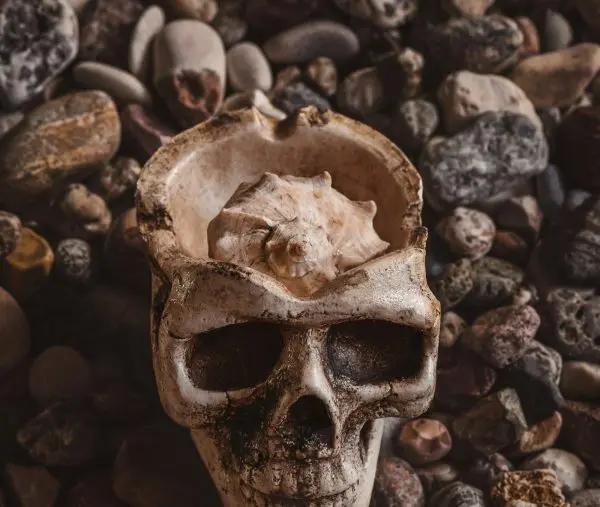
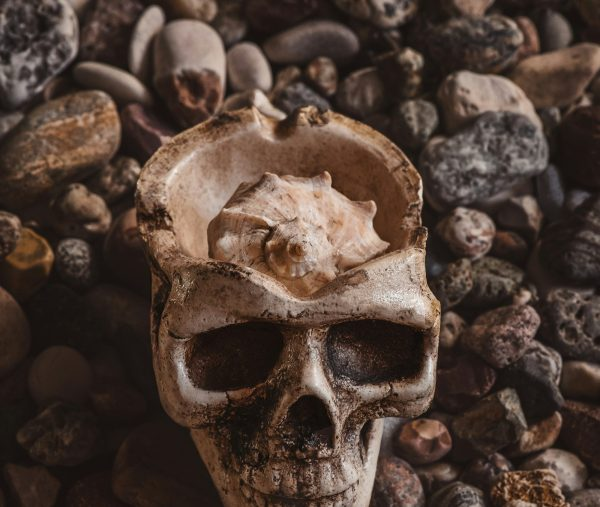
Lyndsey Croal’s flash fiction work merges ecological horror with the grief of widowhood. The narrative revolves around a hermit crab that takes up residence within the skeletal remains of the protagonist’s deceased husband, whom she had deposited in a secluded coastal cove. The work achieves its uncanny effect through graphic imagery: pieces of the husband’s remains are slowly carried back to her shoreline window, with the marine creature peering out from behind the skull’s empty eye sockets.
9. "I Pray in Screamers House of Horrors" by Domenica Martinello
Domenica Martinello’s featured poem uses the chaotic environment of a commercial haunted house as a metaphor for addiction, recovery, and psychological entrapment. Through visceral sensory details, Martinello captures the desperate search for control within disorienting spaces. The poem leaves readers questioning whether the path toward recovery offers genuine warmth or simply leads to further psychological distress.
Supporting Context & Metrics
The persistent popularity of horror fiction—particularly during the autumn publishing quarter (Q3/Q4)—is documented across both commercial publishing indices and independent digital media platforms. Data from literary non-profit institutions indicates a measurable seasonal spike in reader engagement with dark speculative prose and flash fiction.
Threat Simulation Theory: Cognitive research suggests that readers turn to horror as a controlled framework to experience stress and anxiety. By encountering disturbing scenarios on the page, audiences process real-world existential fears within a safe environment.
The Micro-Fiction Trend: Data from digital platforms like The Commuter shows growing readership for works under 1,000 words (such as those by Watson, Croal, and Gregory). Modern readers increasingly favor dense, highly focused prose that delivers quick narrative impact.
Institutional Support for Short Fiction: Non-profit digital publishers fulfill a vital role in the literary landscape by hosting unconventional, genre-blending works that commercial houses may view as financially risky. Archives like Recommended Reading offer a dedicated home for experimental gothic narratives, flash fiction, and dark poetry.
Official Statements and Critical Commentary
Literary critics and editorial figures emphasize that contemporary horror has expanded beyond standard monsters and superficial scares, focusing instead on internal emotional landscapes and structural critiques.
In an editorial statement regarding the curated selection, representatives from Electric Literature observed:
"Language gives way to imagination. Some prose is uncanny, some sinister, others eerie pleasures. These stories carry readers into the dark nights of winter’s approach, exploring dark woods, complicated family histories, and lovers long gone."
Literary theorists specializing in the contemporary gothic note that works by authors like Mariana Enriquez and Laird Barron redefine the genre by rooting terror in real-world environments:
"The modern uncanny does not require haunted castles or supernatural monsters. As demonstrated in Enriquez’s depictions of urban decay or Evenson’s domestic interiors, the deepest horror emerges when familiar spaces—our childhood homes, our cities, our family relationships—are revealed to be alien and dangerous."
Future Outlook
The market for short horror fiction and dark poetry is positioned for continued growth, driven by digital literary publications, specialized anthologies, and community audio platforms. Several key trends are shaping the future of this literary space:
Expansion of Eco-Gothic Themes: As seen in Lyndsey Croal’s "The Bone Hermit," writers are increasingly combining environmental collapse with body horror to highlight human vulnerability within natural ecosystems.
Global Perspectives on the Uncanny: The critical success of authors like Mariana Enriquez signals a growing audience for international gothic traditions that critique regional socio-political realities.
Hybrid and Experimental Formats: The boundary between poetry, flash fiction, and prose continues to blur. Works like Domenica Martinello’s poems and Hannah Gregory’s dark comedies show how genre blends can deliver powerful emotional resonance in brief formats.
As autumn transitions into winter, curated collections from archives like Recommended Reading and The Commuter demonstrate the enduring relevance of short horror fiction. By using language to evoke the unseen, these authors prove that the written word remains one of the most effective tools for exploring human fear, memory, and loss.





Comments
Facebook App ID not configured. Please add it in the Customizer.