
Executive Overview
In the decade following the July 2013 military coup in Egypt, the regime of President Abdel Fattah el-Sisi engineered one of the most comprehensive carceral expansions in modern Middle Eastern history. Beneath state-sanctioned narratives of national stability lies a brutal reality: an estimated 60,000 political prisoners languish inside a vast network of maximum-security facilities, systematically erased from public consciousness.
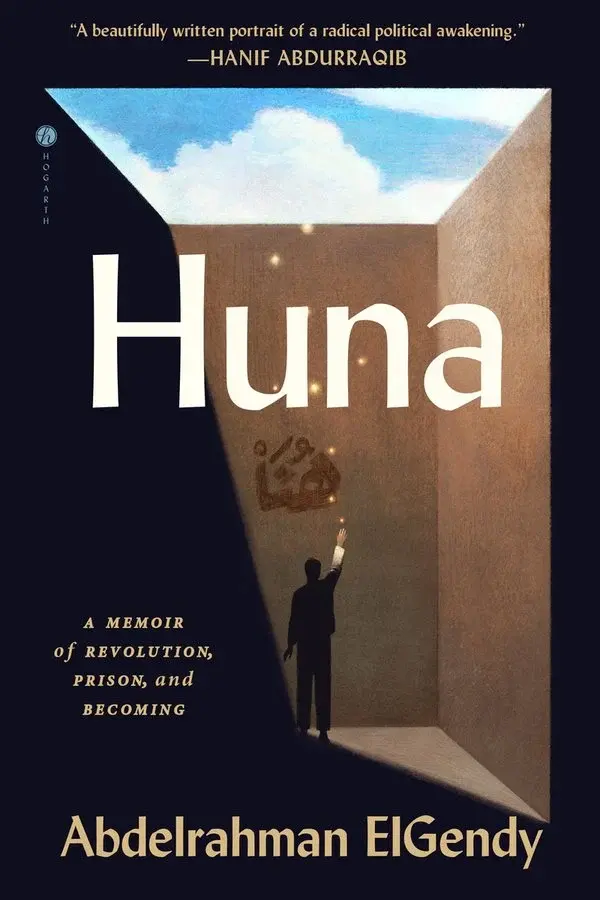
Among those swept up in the post-revolutionary Dragnet was Abdelrahman ElGendy, a 17-year-old student activist arrested in Cairo alongside his father in 2013. Sentenced to 15 years in prison following a series of arbitrary pre-trial renewals, ElGendy spent six years incarcerated before his eventual release and exile.
His debut memoir, Huna ("Here"), represents a profound literary counter-archive that directly challenges the Egyptian state’s project of historical erasure. Far from a conventional memoir of victimhood, Huna operates as a rigorous investigation into how incarcerated individuals navigate state violence, preserve human tenderness, and resist systemic oblivion. In conversation regarding his memoir, ElGendy articulates a philosophy of writing as a "militant act"—a tool designed to disrupt the "archival silences" enforced by authoritarian regimes and global imperial power structures alike.
Read Also
Detailed Chronology: From Tahrir Square to Carceral Isolation
 +-------------------------------------------------------------------------------+
 | CHRONOLOGY OF INCARCERATION & LITERARY EMERGENCE                             |
 +-------------------------------------------------------------------------------+
 | 2011          | January 25 Revolution sparks widespread democratic hope across |
 |               | Egypt; youth mobilize against decades of autocratic rule.     |
 +---------------+---------------------------------------------------------------+
 | July 2013     | Military coup overthrows elected government; intense state    |
 |               | crackdowns target dissidents, activists, and bystanders.      |
 +---------------+---------------------------------------------------------------+
 | October 2013  | 17-year-old Abdelrahman ElGendy and his father ("Baba") are   |
 |               | violently arrested during a mass protest in Cairo.            |
 +---------------+---------------------------------------------------------------+
 | 2013 – 2014   | Endless pre-trial detention extensions (15-day to 45-day      |
 |               | renewals); transfer between multiple police stations and prisons.|
 +---------------+---------------------------------------------------------------+
 | 2014          | Military tribunal hands ElGendy a 15-year prison sentence.    |
 +---------------+---------------------------------------------------------------+
 | 2014 – 2019   | Period of captivity: Completes engineering degree from cell;  |
 |               | teaches languages; navigates trauma and relational solidarity. |
 +---------------+---------------------------------------------------------------+
 | 2019 – Present| Released, forced into exile, and authors debut memoir *Huna*;  |
 |               | emerges as a prominent voice on memory, captivity, and empire.|
 +-------------------------------------------------------------------------------+
The Rupture of 2011 and the 2013 Crackdown
The trajectory of Abdelrahman ElGendy’s youth mirrors the broader trajectory of Egypt’s contemporary political history. In 2011, at age 15, ElGendy was among millions of youth caught up in the democratic optimism of the January 25 Revolution, which ousted long-time dictator Hosni Mubarak. However, the democratic opening was brief. By July 2013, a military coup led by General Abdel Fattah el-Sisi re-established autocratic rule, initiating an unprecedented wave of state violence against street protests.
Arrest and the Mechanics of Arbitrary Detention
In late 2013, during a mass demonstration in Cairo, 17-year-old ElGendy was sitting in a car alongside his father ("Baba"), filming the protest’s fervor. As security forces moved in to brutally disperse the crowd, police dragged both father and son from their vehicle.
What followed was a harrowing entry into Egypt’s legal labyrinth. ElGendy was subjected to pre-trial detention—a mechanism systematically weaponized by the Egyptian judiciary to bypass due process. His detention was initially ordered for 15 days, renewed three times, and then expanded into recurring 45-day extensions. Ultimately, a trial yielded a 15-year prison sentence, transforming a high school student into a long-term political prisoner.
Survival, Pedagogy, and Resistance Behind Bars
Despite the oppressive conditions of his confinement, ElGendy transformed his cell into a space of intellectual and community endurance. Over six years of incarceration across multiple institutions, he:
- Completed Higher Education: Earned a bachelor’s degree in engineering while inside his cell.
- Fostered Community Pedagogy: Taught English, Arabic, and literature to fellow inmates, ranging from young youth to elderly prisoners.
- Navigated Intergenerational Trauma: Reconfigured his relationship with his father, managing the dual burdens of filial love and shared guilt within shared carceral spaces.
Following sustained international advocacy and legal maneuvering, ElGendy was released prior to serving his full 15-year sentence and was forced into exile, where he set out to document the carceral realities he had left behind.
Supporting Context & Metrics: Carceral Realities and Archival Erasure
The Scale of Egyptian Political Incarceration
Human rights organizations, including Amnesty International and Human Rights Watch, estimate that Egypt holds more than 60,000 political prisoners. To accommodate this surge, the Sisi regime constructed over two dozen new maximum-security prison complexes between 2013 and 2023, including the notorious Badr and Wadi al-Natrun complex centers.
ESTIMATED EGYPTIAN CARCERAL METRICS (POST-2013)
------------------------------------------------------------------
Political Prisoners Currently Detained:   ~60,000+
New Prison Complexes Built Since 2013:    28+
Massacre Victims (Rabaa, August 2013):    800 - 1,000+ in single day
Pre-Trial Detention Renewals:            Endless (up to 2+ years without trial)
------------------------------------------------------------------
The Theory of "Archival Silences" and State Gaslighting
A central pillar of ElGendy’s critique centers on what Haitian historian Michel-Rolph Trouillot termed "archival silences"—the process by which state power deliberately excludes inconvenient histories from the official record.
In post-2013 Egypt, state-run television networks, official press outlets, and entertainment programming actively propagate a myth of political consensus, erasing state massacres—such as the 2013 Rabaa Massacre—and rendering tens of thousands of political prisoners invisible.
"In prison, it was both fascinating and disturbing to watch the history that led to our incarceration, and our very incarceration, being erased in real time," ElGendy observes. "At one point, I realized that we were inhabiting an archival silence in the making… I was seeing it being carved out of the archive, and my body and all our bodies."
                       STATE POWER & THE ARCHIVAL CYCLE

     +-----------------------------------------------------------------+
     |                     State-Sanctioned Event                      |
     |         (e.g., Revolutionary Uprising / Mass Protest)          |
     +-----------------------------------------------------------------+
                                      |
                                      v
     +-----------------------------------------------------------------+
     |                     Violent Suppression                         |
     |          (Mass Incarceration / Massacres / Exile)               |
     +-----------------------------------------------------------------+
                                      |
                                      v
     +-----------------------------------------------------------------+
     |                     Archival Erasure                            |
     |       (State media gaslighting / Destruction of records)        |
     +-----------------------------------------------------------------+
                                      |
                                      v
     +-----------------------------------------------------------------+
     |                     "Ghostification"                            |
     |    (Prisoners & victims rendered invisible to public memory)    |
     +-----------------------------------------------------------------+
                                      |
                                      v
     +-----------------------------------------------------------------+
     |                   Counter-Archival Act                          |
     |          (*Huna* Memoir / Testimonial Resistance)                |
     +-----------------------------------------------------------------+
Geopolitical Backing and the "Soft Occupation"
ElGendy’s memoir also interrogates the global structures that sustain authoritarianism in the Middle East. Despite severe human rights abuses, Egypt remains one of the largest recipients of United States foreign military financing (FMF), receiving approximately $1.3 billion annually.
In conversations within the prison block, ElGendy and his fellow inmates characterized American imperial influence as a "soft occupation"—an invisible yet decisive architecture that maintains regional dictatorships while maintaining a clean aesthetic break from direct military administration.

Official Statements & Literary Dialogue: The Architecture of Resistance
Throughout Huna, ElGendy refuses to frame his experience through the lens of political tragedy or Western-oriented "torture porn." Instead, he utilizes a rich literary apparatus to analyze how human connection and language operate under extreme coercion.
On the Purpose of Writing: "This is How I Survived"
Rejecting the notion that Huna is merely a retrospective narrative of endurance, ElGendy stresses that the act of writing itself served as a primary survival mechanism:
"This is not a book about how I survived. This is how I survived… [Writing is] a militant act, a way to imagine other futures and help others imagine them as well."
On the Tension Between Arabic and English
A critical structural element of ElGendy’s intellectual framework is his bilingualism and the post-colonial dynamics governing language choice:
| Language | Primary Function in Author’s Framework | Political & Class Context |
|---|---|---|
| Literary Arabic (Fusha) | Language of radical love, poetry, and foundational identity. | Historical marker of local education; often marginalized in post-colonial elite spheres. |
| English | Language of global currency, legibility, and international reach. | Class symbol of prestige; associated with Western hegemony and imperial power. |
ElGendy candidly addresses the discomfort of writing in the language of Western empire:
"When I reach for Arabic, I reach for radical love, and when I reach for English, I reach for currency… In the wake of genocide [and imperial violence], writing in English started to feel more complicit than usual. It was etched on the missiles that were bombing Palestinians in Gaza… I’ve been very concerned with the ways in which I can trouble that, and make my invocation of Arabic within an English text… be an act of agitation."
Subverting the Grammar of Violence
Drawing on critical theorist Saidiya Hartman’s seminal essay Venus in Two Acts, ElGendy addresses the ethical challenge of depicting torture without gratifying the voyeuristic expectations of Western readers:
"How does one revisit the scene of subjection without replicating the grammar of violence?… Every time I found myself getting too close to a spectacular display of violence, I tried to slow down and think about what the most interesting and ethical way would be to approach that violence."
In depicting severe beatings by prison guards, ElGendy shifts focus from graphic physical trauma to micro-gestures of human solidarity:
"While writing every part of that scene, I kept thinking, What does it mean to tell a torture scene through the touching hands of prisoners? Me and Baba’s hands are touching throughout the running and escaping. Somehow, the hand touch becomes the main event and the violence is secondary to it."
The Ghosts of Post-Revolutionary Egypt
Drawing upon Avery Gordon’s Ghostly Matters and Christina Sharpe’s In the Wake, ElGendy argues that the political prisoners of Egypt are intentionally "ghostified" by state apparatuses that seek to present a myth of stability:
"Our military dictatorship blasts us with this mass gaslighting. That what we experienced in the revolution never really happened, and the very present, brutalized population of political prisoners… are not there. They’re ghosts… I feel like it’s a curse that will follow me. I will always see these ghosts lurking in every corner of the country as long as I live."
Future Outlook: Weaponizing Memory Against the "Clean Break" Myth
As the Egyptian military regime continues to consolidate power through infrastructural expansion and systematic silence, Huna stands as an enduring document of counter-hegemonic memory. ElGendy’s work signals a crucial evolution in Middle Eastern prison literature—moving away from passive testimony toward active intellectual counter-offensive.
Key Implications for Literary Activism and Human Rights:
- Disrupting State Narratives: Memoirs like Huna make it impossible for autocratic regimes to maintain a monopoly on historical truth, providing future generations with primary sources that challenge state archives.
- Reclaiming Agency in Diaspora: For exiled activists, creative writing serves as an ongoing site of political struggle, bridging the gap between forced physical absence and continued ideological confrontation.
- Challenging Imperial Complicity: By forcing Western readers to confront how foreign aid and diplomatic cover sustain carceral regimes, ElGendy links domestic state violence directly to global imperial networks.
"I think it’s our role, as writers and makers of language, to insist on agitation," ElGendy concludes. "To ensure that our defeat is never complete, that our struggle remains unfinished… We have to insist on the ghosts haunting us, because they allow us to also imagine the otherwise futures that once could have been, and maybe still could be."


Comments
Facebook App ID not configured. Please add it in the Customizer.