
Executive Overview
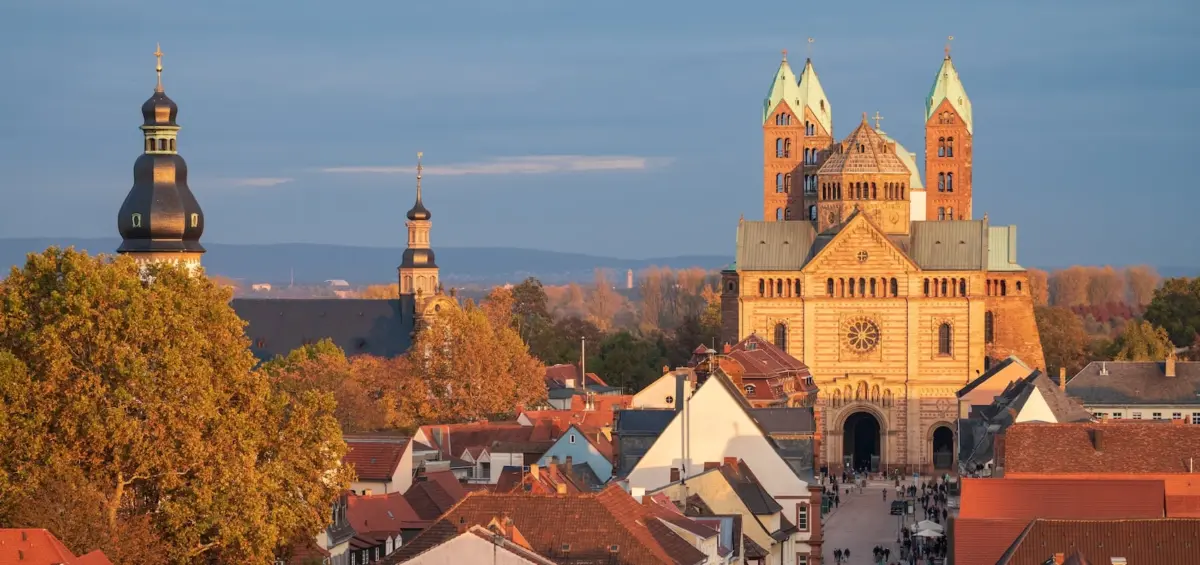
Nestled along the picturesque west bank of the Rhine River, the historic German city of Speyer stands as a monument to centuries of European history and ecclesiastical heritage. Its skyline is dominated by the magnificent, eleventh-century Speyer Cathedral—a masterpiece of Romanesque architecture and the solemn resting place of German emperors for three hundred years. This ancient seat of faith, whose diocesan roots stretch back into antiquity with written records dating to 346 AD, has long been a pillar of European Catholicism. Yet, beneath the shadow of its soaring imperial spires, the Diocese of Speyer is experiencing a profound institutional and spiritual contraction.
In June, diocesan authorities announced a sweeping and radical structural restructuring plan that will consolidate its seventy historic parishes down to a mere nine. Replacing traditional deaneries with centralized corporate frameworks, these mega-parishes will be governed by "synodal councils" and "full-time executive boards." While church officials frame this dramatic 87 percent reduction as a necessary administrative adaptation to modern realities, critics and observers argue that it is merely a symptom of a deeper, self-inflicted spiritual malaise.
This transformation does not occur in a vacuum. It is unfolding against the turbulent backdrop of the broader German Catholic Church, which is currently navigating deep theological controversies, open defiance of Vatican authority regarding same-sex blessings, and plummeting Mass attendance. Far from being driven purely by financial constraints or demographic shifts, the crisis in Speyer—and across the German Church at large—reflects a profound crisis of faith, apostasy, and a systemic retreat from foundational Catholic teachings. This investigative report examines the statistical realities, structural overhauls, theological fractures, and underlying spiritual causes shaping the twilight of one of Europe’s most storied dioceses.
Read Also
Detailed Chronology: From Ancient Roots to Modern Consolidation
To understand the magnitude of Speyer’s current restructuring, one must first trace the historical trajectory of a diocese that predates the pontificate of Pope Saint Leo the Great.
Ancient Foundations and Imperial Splendor
Established as a formal diocese during the fourth century—with its first recorded Catholic bishop appearing in historical documents in 346 AD—Speyer evolved into a vital religious and political hub of the Holy Roman Empire. The construction of the Dom zu Speyer (Speyer Cathedral) in the eleventh century cemented the city’s prestige. Over the centuries, the cathedral bore witness to epochal events of European history, serving not only as an imperial sepulcher but also as a stage for international diplomacy and royal history. Notably, in 1861, the cathedral played host to a pivotal match-making moment for British royalty: the future King Edward VII ("Bertie") was introduced to his future bride, Alexandra, under the direction of his sister, Crown Princess Victoria of Prussia ("Vicky").
The Path to "You Shall Be a Blessing"
For centuries, the administrative map of the diocese remained relatively stable, anchored by a network of seventy vibrant parishes. However, the pressures of the modern era culminated last fall when the diocesan synodal process published a comprehensive proposal for structural reform. Titled You Shall Be a Blessing, the document laid out the blueprint for the wholesale dismantling of the traditional parish structure.
Despite the optimistic theological framing of the title, the consultative process was fraught with tension. Even the diocesan vicar general openly conceded that during the drafting and discussion phases, "a great deal of uncertainty and sometimes even resignation were palpable" among the faithful and clergy alike.
The June Announcement
In June, the theoretical proposals of the synodal process became reality. The diocese officially announced that its seventy distinct parishes would be amalgamated into just nine massive administrative units. These new entities are designed to operate more like corporate conglomerates or social service agencies than traditional ecclesial communities. Run by "synodal councils" and "full-time executive boards," with finances tightly regulated by dedicated "administrative councils," the reforms promise "community teams" intended to serve as "places of pastoral closeness and lived faith." Yet, for many local Catholics, the sweeping consolidation feels less like a pastoral renewal and more like a bureaucratic downsizing of an ancient faith.
Supporting Context & Metrics: The Anatomy of a Declining Diocese
Statistics can often appear dry and bloodless, but in the case of the Diocese of Speyer, raw data reveals a stark narrative of demographic and institutional decline. According to the current edition of the Vatican’s official yearbook, the Annuario Pontificio, the statistical portrait of Speyer tells a story of an immense institutional footprint running parallel to near-empty pews.
Demographic and Clerical Metrics
- Registered Catholics: 504,210. In the German context, this figure primarily represents individuals who officially identify as Catholic on their state tax returns to facilitate the collection of the Kirchensteuer (church tax).
- Diocesan Priests: 239 active within the territory.
- Religious Order Priests: 26 resident priests belonging to various religious communities.
- Permanent Deacons: 65 active deacons.
- Men’s Religious Orders: 304 members.
- Women’s Religious Communities: 312 members.
- Vocations: Speyer recorded zero priestly ordinations in 2024, maintaining a meager total of just four seminarians preparing for the priesthood.
- Active Participation: Average Sunday Mass attendance languishes at a dismal 5.1 percent of registered Catholics.
Challenging the "Staffing and Financial" Narrative
Diocesan officials frequently point to financial and staffing pressures as the primary catalyst for the structural consolidation. However, a rigorous examination of these claims exposes significant contradictions.
First, the German Catholic Church is remarkably well-funded. Thanks to the state-collected Kirchensteuer, German dioceses are among the wealthiest ecclesial institutions in the global Catholic Church. Financial destitution is simply not the root cause of Speyer’s contraction.
Second, consider the personnel figures: a roster of 239 diocesan priests, supplemented by 26 religious order priests and 65 permanent deacons, totals 330 ordained ministers. Distributing this workforce across seventy parishes would yield an average of nearly 4.7 clerics per parish—a ratio that, while reflecting an aging presbyterate, should theoretically be more than adequate to maintain vibrant sacramental life if distributed and supported effectively. The crisis is not a simple mathematical shortage of personnel; it is a crisis of sustainability driven by plummeting participation and institutional fatigue.
Official Statements and Ideological Fault Lines
The restructuring of Speyer does not occur in a cultural vacuum; it is deeply intertwined with the broader trajectory of the "Synodal Way" (Synodaler Weg) sweeping through the Catholic Church in Germany. The local administrative overhaul mirrors a national push toward structural re-engineering that often stands at loggerheads with Rome.
The Same-Sex Blessing Controversy
Shortly before the announcement of Speyer’s radical restructuring—a move critics argue amounts to the deconstruction of a historic diocese—tensions between the German hierarchy and the universal Church reached a boiling point regarding pastoral practice and sexual ethics.
Bishop Georg Bätzing of Limburg, then-chairman of the German Bishops’ Conference, publicly defied traditional Vatican directives by championing the formal blessing of same-sex couples. Bätzing asserted that such blessings would take place "within a responsible framework," arguing that "it serves the people and, in my view, does not endanger the unity of the Church."
This public stance came immediately on the heels of statements from Pope Leo (referencing papal admonishments delivered during return flights and official curial documents), who explicitly criticized such practices, reiterating that the universal Church "does not approve of the formal blessings of same-sex couples."
Simultaneously, Irme Stetter-Karp, president of the Central Committee of German Catholics (ZdK), doubled down on the defiance, publicly expressing her hope that "blessing ceremonies will continue to be used in as many places as possible for blessings of same-sex couples and couples in so-called irregular situations."
The False Premise of Clerical Reform
A particularly disingenuous narrative often pushed by progressive reform advocates within the German Church is the claim that clerical sexual abuse requires a fundamental rethinking of Christian sexual ethics and an abandonment of the ancient tradition of clerical celibacy.
Empirical and sociological evidence flatly refutes the notion that mandatory clerical celibacy is the root cause of sexual predation within the priesthood. There is zero evidence suggesting that predators were manufactured by the Sixth Commandment or the Church’s traditional theology of human flourishing. Furthermore, the idea that a married clergy would eliminate sexual misconduct is both a profound insult to the sacrament of holy matrimony and a claim thoroughly contradicted by the documented prevalence of abuse within Christian denominations that permit a married ministry. Utilizing the trauma of abuse as a battering ram to dismantle traditional doctrine represents an act of institutional dishonesty that further alienates the faithful.
Future Outlook: The Core Crisis of German Catholicism
As the Diocese of Speyer moves forward with its 87 percent parish reduction, condensing seventy historical communities into nine corporate-style administrative zones, the long-term outlook for the region remains deeply uncertain.
The Diagnosis: Apostasy, Not Logistics
To diagnose Speyer’s decline as merely a logistical problem of buildings and budgets is to misdiagnose the patient entirely. The root of the German ecclesial crisis is apostasy—an unabashed, systemic denial of what the Catholic Church has historically believed, taught, and confessed to be true.
When a local church systematically downplays traditional dogma, relativizes moral theology, and signals to its flock that divine revelation can be renegotiated to fit contemporary secular sensitivities, it severs its own life support. A church that ceases to challenge the culture and instead baptizes its zeitgeist inevitably finds itself empty.
A Failure to Proclaim the Full Gospel
The death rattle of the Diocese of Speyer—exemplified by a microscopic 5.1 percent Sunday Mass attendance rate—is the direct result of a catastrophic failure to preach, teach, and live the Gospel in its full, uncompromised integrity. As the Epistle of Jude reminds believers, Christians are called to contend earnestly for "the faith which was once for all delivered to the saints" (Jude 1:3).
When bishops and synodal councils replace the kerygma with bureaucratic restructuring, corporate governance, and moral accommodation, they offer stones instead of bread. Until the German hierarchy confronts the spiritual rot at the heart of its institutional decay, no amount of structural consolidation, synodal committees, or administrative boards will reverse the tragic death spiral of Speyer. The ancient cathedral on the Rhine will remain a breathtaking architectural marvel, but unless the living stones of its local Church return to the authentic, joyful, and uncompromising proclamation of the Gospel, it risks becoming nothing more than a magnificent museum to a faith that once was.





Comments
Facebook App ID not configured. Please add it in the Customizer.