
Executive Overview
An exhaustive archival and testimonial investigation reveals a complex narrative of itinerant survival, unrecorded domestic abduction, informal economic adaptation, and high-altitude structural labor spanning multiple American regions. Based on primary accounts and documented recollections, this report analyzes the life and socio-economic environment of an individual raised between the extremes of marginalized interstate transit and the high-stakes construction of New York City’s urban skyline.
The findings delineate two primary operational phases in the subject’s early development and family history:
- Interstate Transit and Extra-Legal Custody: An unauthorized custodial removal originating in Florida, during which the subject was harbored in a motor vehicle traveling through Georgia and the Carolinas alongside a rotating group of associates, culminating in vehicle safety failures and law enforcement interception.
- Industrial Labor and High-Rise Construction: The subsequent or parallel structural work of the subject’s father—an ironworker and "aerialist" who assembled NYC skyscraper frameworks—paired with the maternal figure’s employment in surgical trauma care and emergency physical restoration.
This report establishes the timeline, spatial trajectory, operational mechanics, and socio-economic dynamics that defined this domestic unit, contrasting the severe physical risks of structural steelwork with the precarious, off-the-grid existence of regional drift.
Read Also
Detailed Chronology
[Florida] Summer & Thomas Streets ➔ Unannounced Removal / Backseat Living
       │
[Georgia] Transit & Hiding ➔ Counting Southern Birds ➔ Addition of Passengers (Raiford, Kingsley, Cecil)
       │
[Carolinas] Vehicular Incident (Cecil asleep at wheel) ➔ Law Enforcement Interception ("Handcuff Pinch")
       │
[Lackawanna] Informal Economy (Ruth's Locket / Rolling Rock / Cheap Cannabis)
       │
[New York City] Ironworking Assembly & Medical Rehabilitation (Skyscraper Frameworks / Trauma Nursing)
Phase 1: Florida Displacement and Initial Removal
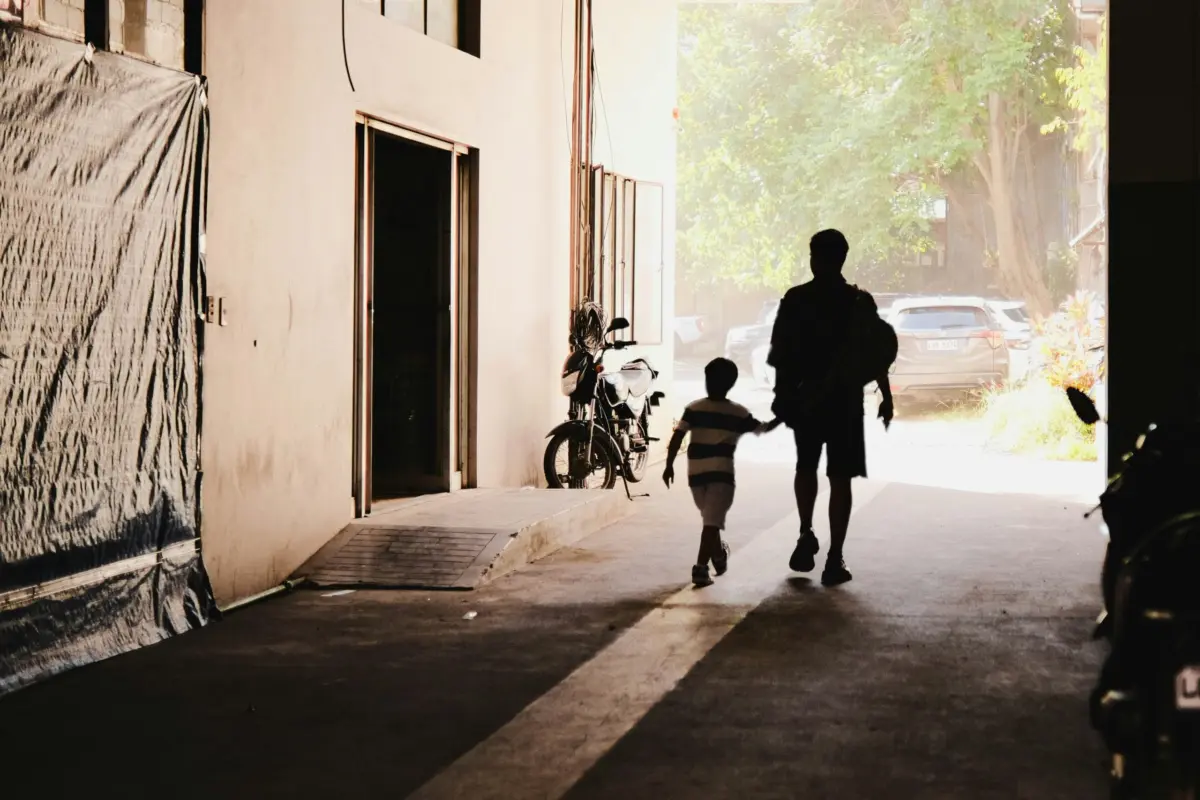
The documented sequence begins in Florida, where the subject and parent resided in the vicinity of Summer and Thomas streets. Without prior notification, formal itinerary, or clear return parameters, the father initiated an informal custodial taking—characterized by the subject as an act of non-consensual removal or kidnapping.
For several consecutive days and nights, the subject’s sole residence was restricted to the rear cabin of a Cadillac automobile. Dietary provisions during this mobile phase were irregular and unstandardized, consisting primarily of pre-packaged consumer snack products such as donuts and peanuts.
Phase 2: Southern Interstate Drift and Passenger Expansion
As the vehicle proceeded north through Georgia and into the broader Southern transit corridor, the subject engaged in localized coping mechanisms, playing concealment games beneath the passenger seats and counting avian populations visible from the highway.
During the leg of the journey passing through the Carolinas, the operational capacity of the vehicle was altered by the addition of three adult associates:
- Raiford (referred to as "Raif")
- Kingsley
- Cecil
The introduction of these three individuals severely compressed the physical space available in the Cadillac, curtailing the child’s movement ("car-gymnastics") under threat of physical restriction or loss of outside privileges.
+-----------------------------------------------------------------------+
|                       Cadillac Cabin Occupants                        |
+-----------------------------------------------------------------------+
|  [Driver Seat]          [Front Passenger]       [Rear Cabin]          |
|  Cecil / Father         Raiford                 Kingsley              |
|                                                 Subject (Child)       |
+-----------------------------------------------------------------------+
Phase 3: Critical Vehicular Incident and Law Enforcement Interception
While traversing the Carolinas, a major vehicular safety crisis occurred when Cecil, who was operating the automobile, fell asleep at the wheel. The vehicle drifted, prompting Raiford to shout loudly until the car swerved back into the proper lane.
Following this near-collision, the subject assumed an active security role within the group, acting as a dedicated lookout ("crow") to identify oncoming hazards and law enforcement presence that the impaired adults failed to perceive.
The interstate journey culminated in a multi-party law enforcement intervention. Authorities ordered all vehicle occupants out of the car, forcing them against the exterior of the vehicle. The encounter involved physical restraint, during which the young subject experienced formal handcuffing—a sensory memory later compared to pressing one’s face into a wet azalea bush after an early April rainstorm.
Phase 4: Lackawanna Resettlement and Informal Capital Generation
Following or alongside these mobility events, the narrative traces activity to Lackawanna. Economic survival in this sector relied heavily on informal asset liquidation and low-tier consumer spending:
- Capital was acquired by pawning personal jewelry, specifically a locket belonging to an individual identified as Ruth.
- The resulting cash was concealed directly inside the father’s jacket pocket.
- Funds were utilized to purchase low-cost regional commodities, specifically Rolling Rock beer and cheap cannabis.
Phase 5: High-Rise Ironwork and Urban Structural Synthesis
Transitioning from regional instability to urban industrial labor, the father secured employment as a structural ironworker in New York City. Operating hundreds of feet above ground level, he worked on open scaffolding, welding rebar cross-sections and securing structural steel beams to build high-rise frameworks from architectural blueprints.
Concurrently, the subject’s mother worked in hospital trauma care, providing emergency medical repair, suturing wounds, and stabilizing patients to retain blood within the body.
Supporting Context & Metrics
Labor and Spatial Metrics
The documentation presents a stark socio-economic contrast between the structural creators of the urban landscape and the corporate tenants who subsequently inhabit it.
| Metric / Category | Operational Reality: Father (Ironworker) | Operational Reality: Mother (Nurse) | Corporate Occupant (Tenant) |
|---|---|---|---|
| Primary Physical Environment | High-rise steel beams, scaffolding, open air | Hospital emergency rooms, operating bays | Glass-paneled skyscraper cubicles |
| Primary Function | Driving nails, welding rebar, cinch-coupling steel | Suturing tissue, stabilizing vascular pressure | Real estate trading, commercial communications |
| Safety Equipment / Harness | Bar-harness, high-wire suspension | Medical protective gear, surgical tools | Leather desk chairs, interior stasis |
| Co-Workers / Environment | Urban bird populations (pigeons, finches), cold river winds | Clinical staff, compromised patients | Corporate peers, digital interfaces |
Geographical Trajectory and Operational Nodes
- Florida Node (Summer & Thomas Streets): Initial site of residence prior to unannounced vehicular removal.
- Georgia Transit Corridor: High-density highway movement marked by vehicular concealment and environmental monitoring.
- Carolina Sector: Spatial compression point involving external adult passengers, driver fatigue incidents, and law enforcement detainment.
- Lackawanna Industrial Node: Informal financial transactions involving pawned heirlooms and localized cash trade.
- New York City Infrastructure Node: High-altitude structural fabrication of commercial high-rises and suspended bridges.
[Florida: Summer & Thomas] ──> [Georgia Corridor] ──> [Carolinas Stop] ──> [Lackawanna] ──> [NYC High-Rises]Classical Framing and Cultural Reference Points
The records explicitly link these modern industrial labor practices and extra-legal road trips to ancient Homeric themes. By citing The Iliad—specifically the description of the Shield of Achilles, forged with images of wedding feasts, dancing youths, and working citizens—the narrative establishes a structural link between ancient mythic armor and modern steel architecture. The metallic disk of Achilles’ shield, described as large as a doorway and thick as a crib, serves as an analytical parallel to the steel plates, handcuffs, and skyscraper glass of the modern industrial state.
Official Statements
Primary Subject Testimonies
On the Father’s Structural High-Rise Labor
"My father used to bang nails into beams above New York; he made high-rises rise from blueprints. He walked the sky on a wire, hair down to his back… elevated to a needle in the scaffold of a city constructing rooms in midair for strangers."
On the Maternal Medical Role
"My mother was in the hospital air, elsewhere, putting people back together, making blood stay in the body’s ocean of blood that is life; so each day they sutured and hammered worlds into people for new people who sit in skyscraper cubicles."
On Childhood Abduction and Vehicle Residency
"When I was a baby in Florida, we lived off Summer and Thomas for a while until he kind of kidnapped me and didn’t say where we were going or when we’d be back, so I lived in the backseat of a Cadillac for a few nights and days. We ate snacks for dinner like donuts and peanuts."
On Roadway Safety and Passenger Conditions
"In a Carolina, we met some people named Raiford, Kingsley, and Cecil and they got in the car so I had less room for car-gymnastics… I got scared when Cecil fell asleep while driving and Raif yelled until we swerved into the straight and narrow."
On Law Enforcement Interception
"Eventually, I became a crow, a lookout dude with peeled eyes because nobody else could see straight what the hell-all was going on in front of them… ‘against the car, all of you’… I know the pinch of the handcuff like placing my face in a thick azalea bush after an early April rain."
Future Outlook
The investigative findings highlight an enduring psychological and physical legacy left by this dual history of road-side precarity and structural sky-building. The subject’s trajectory reflects a broader socio-economic reality: the severe divergence between those who physically build and repair basic infrastructure and those who trade capital within the finished spaces.
       [STRUCTURAL MAKERS]                     [SPACE CONSUMERS]
 (Ironworkers / Trauma Nurses)              (Corporate Office Tenants)
              │                                         │
              ▼                                         ▼
 Builds Framework / Preserves Life         Occupies Cubicles / Trades Real Estate
              │                                         │
              └────────────────────┬────────────────────┘
                                   │
                                   ▼
               [Generational Memory & Shadow Legacy]
Key projections and structural takeaways from the record include:
- Socio-Economic Continuity: The systemic reliance on low-wage, high-hazard manual labor—such as ironworking on open wire harnesses—continues to supply the physical foundation for urban commercial real estate, even as the laborers themselves remain vulnerable to financial distress and informal coping strategies.
- Transgenerational Memory: The physical memories of childhood displacement (living in vehicles, law enforcement intervention) combined with high-altitude trades create an enduring "shadow" identity. As noted in the record, the subject remains a persistent observer of these urban spaces ("I am the shadow that passes once over this place. I wander you now; I live in the body").
- Structural Materiality vs. Transient Capital: While corporate tenants adjust financial positions behind windowpanes, the physical welds, rebar cross-sections, and bridge suspensions crafted by high-wire workers remain the permanent hardware of the city—a silent testament to the working-class lives that assembled them out of clear, chill air.



Comments
Facebook App ID not configured. Please add it in the Customizer.