

Executive Overview
In her razor-sharp debut novel, A Very Special Episode, author Camille Acker constructs a narrative that operates simultaneously as a dark satirical thriller and a structural homage to 1990s television. Set in Washington, D.C., the novel examines the psychological and sociological burdens placed on Black Americans—particularly Black women—who navigate the tightrope between institutional success, generational expectations, and systemic displacement.
At the center of the story is Nina Johnson, the newly elected leader of "The Tenth," a prestigious Black social organization founded by her ancestors following Emancipation. Named in subverted reverence to W.E.B. Du Bois’s concept of the "Talented Tenth," the organization sits at a crossroads: Nina seeks to modernize its legacy ("Black, but better"), while wrestling leadership away from her mother, Delores, a staunch defender of traditional respectability politics.
The plot escalates when a wealthy white philanthropist offers a multi-million-dollar donation to The Tenth. The condition? Nina must participate in a shadowy public health initiative located at "The Orchard"—a former public housing complex once inhabited by working-class Black families that has been transformed into a living recreation set for Coolin’ Out with the Johnsons, a fictional 1990s sitcom Nina idolized in her youth.
Read Also
Through this high-concept premise, Acker interrogates how media narratives from the late 20th century packaged middle-class Black contentment as an achievable ideal while obscuring the structural violence of gentrification, displacement, and institutional control. By blending biting wit with suspense, A Very Special Episode forces a confrontation with the true cost of seeking security within systems designed to exploit.
Detailed Chronology
[NARRATIVE TIMELINE & CREATIVE EVOLUTION]

NARRATIVE CHRONOLOGY:
├── Phase 1: The Opening Performance
│   └── Nina participates in a painful minstrel performance for D.C.'s Black elite, exposing her conformity to generational expectations.
├── Phase 2: Succession & Proposition
│   └── Nina assumes leadership of "The Tenth" from her mother, Delores; accepts a Faustian offer from a wealthy white philanthropist.
├── Phase 3: The Orchard & The Set
│   └── Infiltration of The Orchard, where a '90s sitcom set serves as a front for a sinister public health scheme targeting displaced residents.
├── Phase 4: Disruption & Intermezzos
│   └── Commercial breaks (intermezzos) interrupt the central narrative, allowing silenced residents and patients to reclaim voice and agency.
└── Phase 5: The Satirical Climax
    └── A chaotic finale featuring deceit, unexpected antagonists, group choreography, and a refusal to offer tidy resolutions.

AUTHORIAL DEVELOPMENT CHRONOLOGY:
├── Draft Stage 1: Conceptual Complexity
│   └── Balancing a high-concept satire, 20+ major/minor characters, and complex thematic arcs.
├── Draft Stage 2: Structural Breakthrough
│   └── Recognizing the need for "commercial breaks" to humanize background characters and interrupt linear pacing.
└── Final Polish: Dialogue & Tonal Balance
    └── Fine-tuning comedic timing to reflect authentic Black linguistic play while maintaining narrative suspense.
The Narrative Arc of A Very Special Episode
The narrative unfolds through a carefully calibrated sequence of events designed to mirror the structure of a classic television season:
- The Opening Performance: The novel begins with Nina participating in a degrading, minstrel-style theatrical performance before Washington, D.C.’s wealthiest Black citizens. This scene establishes the central conflict: Nina’s total subjection to the respectability requirements of her community and family.
- The Strategic Compromise: Having succeeded her mother as head of The Tenth, Nina attempts to secure the organization’s financial future. She enters into an agreement with a benevolent-seeming white philanthropic foundation, accepting funds in exchange for endorsing a "public health project."
- The Orchard Set: Nina arrives at The Orchard, only to discover that the former residential complex has been converted into a live-action replica of Coolin’ Out with the Johnsons. Here, Black women—including Nina, her sister, and her close friends—are systematically cast in interchangeable roles as "Tanya," a sanitized sitcom trope.
- The Commercial Interruption: As Nina unravels the unethical experiments occurring behind the soundstage, the narrative is periodically suspended by "intermezzos"—commercial breaks that shift focus away from Nina and onto the elderly and displaced residents of The Orchard.
- The Climax and Finale: The novel culminates in a chaotic, high-stakes finale featuring double-crosses, reveal moments, and a surreal line-dance sequence that turns the conventions of the cheerful sitcom resolution on its head.
Creative Evolution: From Drafts to Structural Commercials
The development of A Very Special Episode required Acker to manage a sprawling cast of more than twenty characters while constructing a multi-layered world-within-a-world. Initial drafts focused primarily on Nina’s internal journey and the propulsion of the satirical plot. However, during revisions with her agent and editor, Acker realized that the displaced residents at The Orchard risked becoming passive background figures—a irony for a novel aimed at critiquing erasure.
To resolve this, Acker introduced the concept of the "commercial break." By utilizing intermezzos between narrative chapters, she created a structural device that granted those silenced figures full interiority, transforming them from plot devices into autonomous narrators who disrupt the protagonist’s worldview.
Supporting Context & Metrics: Cultural Critique and Media Analysis
’90s Media, Neoliberalism, and Respectability Politics
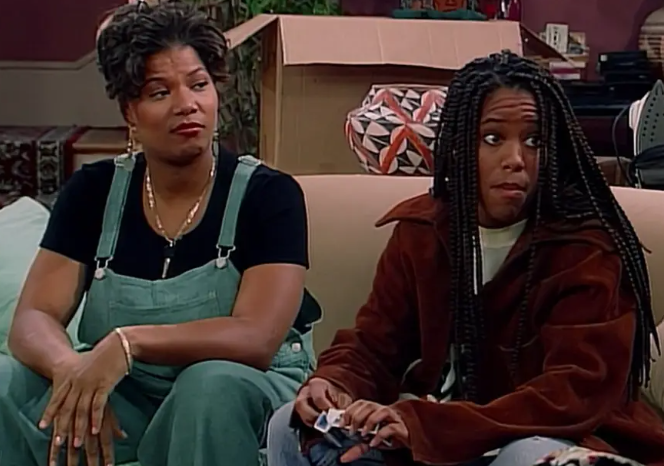
The 1990s occupied a specific historical pocket in the American consciousness: situated after the Civil Rights movement of the 1960s and 1970s, but prior to the modern visibility of the Black Lives Matter movement. During this era, mainstream television relied heavily on Black sitcoms—such as The Cosby Show, A Different World, and Living Single—to project images of upward mobility, professional achievement, and middle-class stability.
+-----------------------------------------------------------------------+
|                    MEDIA DUALITY IN THE 1990S                         |
+-----------------------------------------------------------------------+
|  THE EVENING NEWS NARRATIVE           |  THE SITCOM NARRATIVE         |
|  --------------------------           |  --------------------         |
|  • Exploitative, anti-Black coverage  |  • Sanitized middle-class life|
|  • Criminalization of Black youth     |  • Respectability as safety   |
|  • Focus on urban decay & crisis      |  • Systemic racism ignored    |
+-----------------------------------------------------------------------+
                                   │
                                   ▼
+-----------------------------------------------------------------------+
|                       ACKER'S CRITIQUE IN NOVEL                       |
|  * The illusion that financial success grants immunity to racism      |
|  * The flattening of Black identity into interchangeable tropes       |
|  * The weaponization of "philanthropy" to displace vulnerable populations|
+-----------------------------------------------------------------------+
While these shows offered representation, they frequently reinforced neoliberal premises: that individual discipline, high-educational attainment, and adherence to respectability politics could shield Black Americans from systemic racism. A Very Special Episode exposes the fragility of this premise, demonstrating how television constructed an idealized version of Black life that obscured ongoing state violence, housing discrimination, and economic disenfranchisement.
The Cost of Proximity to Whiteness
A central theme in the novel is the distinction between access to power and possession of power. Through Nina’s mother, Delores, Acker delineates a multi-generational strategy of survival built upon gaining proximity to white institutional wealth. However, the novel calculates the severe costs associated with this strategy:
- Resource Disparity: Middle-class Black families are driven to seek "special permission" or move to specific planned communities to secure basic educational and municipal services, reinforcing the notion that quality resources are inherently bound to whiteness.
- Loss of Identity: The pursuit of institutional acceptance requires constant self-policing and performance, flattening complex human experiences into palatable roles.
- Moral Complicity: To maintain standing within elite circles, middle-class Black institutions are often pressured to endorse development schemes that displace lower-income Black communities, effectively trading racial solidarity for class security.
Official Statements and Author Insights
In conversation with fellow author Annie Liontas in Philadelphia, Camille Acker provided commentary regarding her novel’s structural choices, thematic concerns, and literary philosophy.
"The process the reader goes through in that first chapter of laughter, shame, and empathy is also often the process we can go through to lead us to change."
— Camille Acker, Author of 'A Very Special Episode'
On Performance, Shame, and Humor as a Tool for Empathy
Acker emphasized that the opening chapter’s uncomfortable performance was designed to evoke a complex emotional response from the reader, establishing humor not as triviality, but as an entry point for critical self-reflection.
Camille Acker: "The opening chapter of the novel is a literal performance by the main character, Nina. I envisioned that scene early on as this moment when I hope readers will laugh, cringe, and also begin to empathize with Nina. She has let the expectations of her family and her elite community craft so much of who she is in the world that she has very little that’s her own… If you’re only ashamed of something, you may only bury it, but if you can laugh at it, see yourself tenderly, then you can begin to empathize, to understand, and then maybe you can actually address that thing and try to make it better."
On the Illusion of Respectability and Parental Protection
Addressing the generational divide between Nina and her mother, Delores, Acker outlined the socio-economic pressures that drive older generations of Black parents to demand strict adherence to respectability politics.
"Proximity to whiteness, access to whiteness, can mean more money and more resources, but it does not come for free. There are real consequences to that proximity."
— Camille Acker
Camille Acker: "Because of resource inequality, whiteness often correlates with ‘better.’ As in, which school will have the newer facilities and the better teacher-to-student ratio? Which neighborhood will get police who respond with empathy instead of violence?… Delores has sought out those experiences for Nina and indoctrinated Nina to seek out those experiences, in part because Delores herself didn’t have those economic privileges. The novel meets Nina at a moment when she is realizing all of that has been at a cost… Proximity to whiteness, access to whiteness, can mean more money and more resources, but it does not come for free."
On Structural Interruption and Giving Voice to the Silenced
Explaining her decision to incorporate "commercial breaks" between narrative chapters, Acker detailed how formal experimentation allowed her to resist the flattening of vulnerable characters.
Camille Acker: "I knew by necessity in some ways, the dementia patients in the novel were silent and yes, silenced… Nina also doesn’t individuate them early on, doesn’t humanize them, and certainly that’s the goal of white supremacy, to other, to flatten, making it easier to do violence to people who have been disembodied. But, the novel would not do that. Then, it hit me, the chapters are ‘episodes’ and for 1990s television that means there’s also commercial breaks. I could let those characters take over the narration from Nina. They could be given full life histories and still move the plot forward… Formally, I also liked this idea of interruption, of ‘breaking’ the story."
On Power, Institutions, and Existential Reassessment
When asked how literature functions as a tool for empowerment within disenfranchising systems, Acker expressed skepticism toward conventional definitions of power, pointing instead to the necessity of systemic reassessment.
"All of the best things are both sacred and profane."
— Camille Acker
Camille Acker: "I don’t think this book can give us power and I suppose that’s part of what the novel is asking. The corporate job, the home, the car, the respectable ways of being in the world cannot empower anyone. How do we even think about power? How have we constructed our lives around ideas of wielding power? I do hope though that the book can provide an opening for conversations, perhaps for thinking and ultimately rethinking. So many institutions and routinized ways of operating in this country are falling down around us… What haven’t we thought of, dreamed of, wondered about because we were too caught up in ‘before’? Or as June Jordan asked in her poem: ‘What’s anyone of us to do about what’s done.’"
Future Outlook: Literature as a Catalyst for Transformation
A Very Special Episode arrives at a moment when institutions across public, private, and cultural sectors face scrutiny over their handling of race, equity, and representation. Rather than offering easy answers or moralistic comfort, Acker’s work establishes a framework for literary satire that challenges readers to question their own complicity within capitalist and institutional frameworks.
+-----------------------------------------------------------------------+
|                    THE NOVEL'S CORE QUESTIONS                         |
+-----------------------------------------------------------------------+
|  1. REDEFINING POWER                                                  |
|     Can true empowerment exist within corporate and respectable       |
|     structures built on historical exclusion?                         |
|                                                                       |
|  2. COMPLICITY & ASSIMILATION                                         |
|     At what point does the pursuit of security become an act of       |
|     erasure against one's own community?                              |
|                                                                       |
|  3. COLLECTIVE REIMAGININGS                                           |
|     What forms of solidarity become possible when we abandon the      |
|     outdated scripts handed down by media and legacy institutions?    |
+-----------------------------------------------------------------------+
Looking ahead, the novel’s reception marks a shift in contemporary fiction, where the boundaries between pop culture homage, dark thriller, and social critique are increasingly fluid. By utilizing the sitcom form to expose structural inequities, Acker provides a model for how humor and narrative experimentation can open space for uncomfortable, necessary dialogue.
As readers exit the surreal, laugh-track-infused world of A Very Special Episode, they are left not with a tidy resolution, but with an urgent mandate: to look beyond constructed narratives, to re-evaluate what we mean by "value," and to begin the work of building genuine alternatives in the wake of failing systems.




Comments
Facebook App ID not configured. Please add it in the Customizer.