
Executive Overview
In the literary landscape of the 21st century, few authors occupy a space as distinct, rigorous, and uncompromising as Lauren Groff. Renowned for her linguistic dexterity, historical scope, and structural daring, Groff has cemented her status as a titan of contemporary American letters. From her National Book Award-nominated historical masterwork Matrix to the breathtaking, survivalist epic The Vaster Wilds, her bibliography is a testament to the transformative power of fiction.
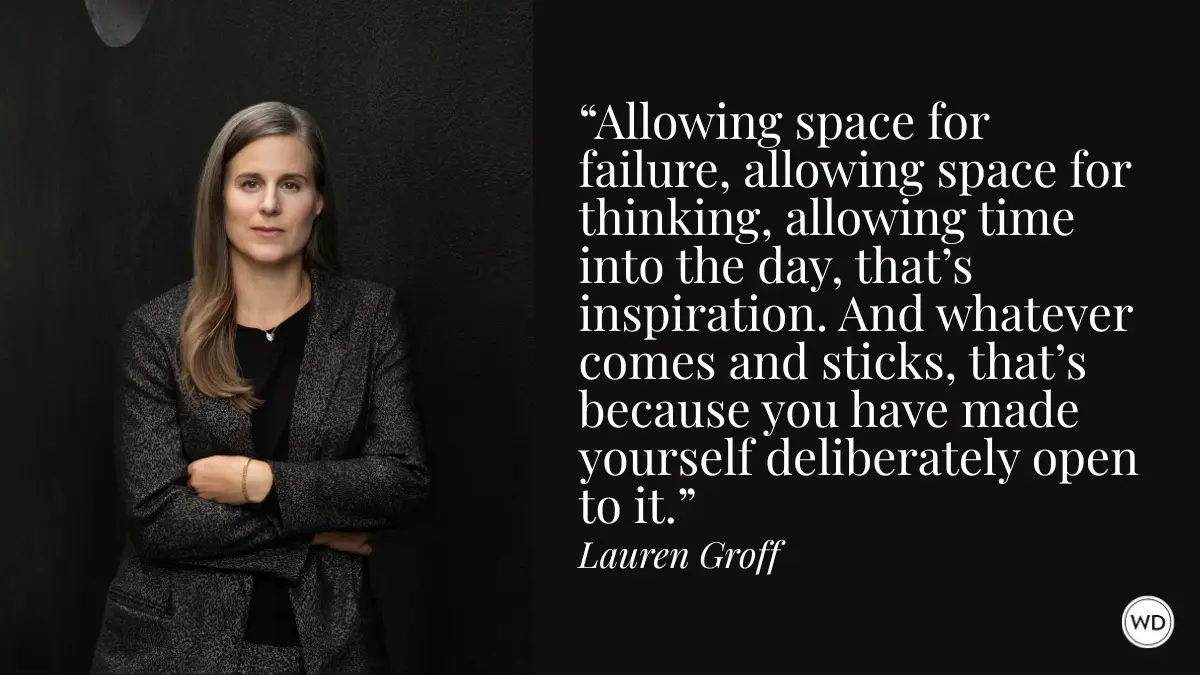
Yet, beneath the polished prose and acclaimed accolades lies a fiercely counter-cultural methodology. Groff does not view writing as a frictionless stream of divine inspiration; rather, she approaches her craft as a disciplined, physical, and often agonizing endurance test. Her longhand drafts, written without reference to previous iterations, deliberately court chaos. She is an author who invites revelatory failure into her study, viewing it not as a professional hazard, but as the fundamental bedrock of true artistic creation.
This investigative profile explores Groff’s creative philosophy, her steadfast defense of the short story form, her views on the existential threat of generative artificial intelligence, and the deeply human core of her latest collection, Brawler. Through an expansive lens, we examine how Groff’s athletic work ethic, combined with an uncompromising devotion to the struggles of the human spirit, continues to reshape our understanding of what literature can and should achieve in an era of unprecedented cultural and technological turbulence.
Read Also
Detailed Chronology: From Cincinnati to the Page
The genesis of this profile spans a week of intense intellectual engagement, beginning in a private, two-century-old library nestled high above the bustling streets of downtown Cincinnati, Ohio, and culminating in a profound examination of the author’s lifelong literary evolution.
The Innovation Lecture: Art in the Shadow of Authoritarianism
One week prior to our formal interview, Groff took the stage at The Mercantile Library to deliver its 2025 Innovation Lecture. Speaking to a sold-out audience inside the historic Mercantile Building—a stone’s throw from Fountain Square—Groff addressed the harrowing intersection of art and modern authoritarianism.
In her address, she championed fiction not merely as a form of entertainment, but as an act of radical empathy—a transcendent mechanism capable of inserting one human consciousness directly into the interiority of another. She spoke candidly about the logistical and psychological battlegrounds of safeguarding writing time in a fragmented world, and she reiterated a central tenet of her career: the absolute necessity of the freedom to fail radically.
The Longhand Crucible
This philosophy of failure is most visible in Groff’s arduous writing process. Eschewing digital convenience, she composes her drafts entirely in longhand. Crucially, as she progresses from one draft to the next, she refuses to look backward, repeating the cycle anew until the narrative finally steps out from behind the veil.
For Groff, this method serves an excavation purpose. By severing ties with what she has already written, she strips away the extraneous material, allowing only the core narrative pulse to survive. The resulting prose carries a three-dimensional weight; every discarded sentence forms a subterranean foundation that supports the buoyancy of the final text.
The Evolution of Brawler
Groff’s career has been defined by a restless shifting of forms, moving fluidly between sweeping historical novels and tightly coiled short fiction. With the release of her third story collection, Brawler—comprising nine sprawling narratives traversing decades and geographies—this evolutionary timeline reaches a new milestone.
As Groff revealed, the collection did not assemble itself overnight. Culled from twenty to twenty-five stories written in the wake of her acclaimed collection Florida, Brawler took shape only within the past year. Guided by her agent, Bill Clegg, who championed the evocative and combative title, Groff arranged the collection’s emotional architecture, anchoring it firmly between its opening piece, "The Wind," and its closing narrative, "Annunciation."
Supporting Context & Metrics: The State of the Short Story
To understand Groff’s place in modern publishing is to understand her reverence for the short story. While commercial pressures frequently push authors toward the sprawling, market-friendly novel, Groff remains a staunch defender of short-form fiction.
The Metrics of Form
- The "Loose, Baggy Monster": Groff contrasts the expansive leeway of the novel—quoting Henry James’s famous descriptor—with the architectural precision of the short story, which she likens to a drum.
- The Fractal Art Form: According to Groff, short stories demand an absolute economy of selection. The underlying thematic matter must replicate itself within the structural architecture of the storytelling, creating a seamless, resonant unity.
- American Literary Preeminence: Groff contends that the United States boasts the strongest short-story culture in the world, heavily bolstered by MFA programs that utilize the form as a rigorous training ground—akin to runners undertaking sprints to prepare for a marathon.
The Anatomy of Isolation
A defining throughline of Brawler is the exploration of aloneness. Whether examining physical isolation or self-preserving emotional detachment, Groff deliberately maps the spectrum between loneliness and fierce independence.
[Isolation / Loneliness] <--- Spectrum of Aloneness ---> [Independence / Ferocity]
                                       |
                       (The Courageous Fight for Self)
In Brawler, this thematic architecture is reinforced by recurring motifs:
- Familial Violence: The projection of societal aggression into the intimate micro-climate of the family unit.
- Narrative Sabotage: The damaging stories we tell about ourselves and others.
- Deep Immersion: A literal and metaphorical swimming through water present in nearly every narrative, reinforcing the visceral depth of the collection.
Official Statements & Transcribed Insights
Below are core excerpts from our comprehensive interview with Lauren Groff, shedding light on her philosophy of writing, draft-making, and the moral imperatives of art.
On Point of View and the 20-Year Story
Interviewer: "That story took 20 years to write… What do you see as the job of the short story? Is it different than the job of the novel?"
Lauren Groff: "All the books that I love, that I would consider good literature, are always in conversation with other incredible works… The beautiful thing about the short story collection is that you don’t have to speak back to the same literature. From story to story, you can float among other literature. In one story, you can push hard against a predecessor, and then the next, you can embrace it fully. It’s this more porous way of engaging with literature as opposed to the novel, which, to be cohesive, must remain in some ways facing the same direction the whole way through."
On Messy First Drafts and Overcoming OCD
Interviewer: "Can you talk a little bit about the importance of having those messy first drafts?"
Lauren Groff: "I have OCD. No matter what, it’s a struggle… Because I have OCD, I find if I need to be perfect too early in the process, I just take away all the oxygen to the work, and it just dies. I intentionally seek failure. In our society, failure is seen as a purely negative thing. But failure is the way that we learn… What I’m seeking is not success in the first many drafts. What I’m seeking is that thrill that I used to get when I was outside running after the dog with all of the power of my legs. Sheer joy. That’s what I’m chasing."
On the Threat of Generative AI
Interviewer: "Do you think the publishing industry is doing enough to protect writers from generative AI?"
Lauren Groff: "Absolutely not. No. And universities are actually feeding students and professors into the mob of big tech. The moral failures on behalf of both publishing and education are so vast, it’s going take a generation to get past it. But to be perfectly honest, I’m not worried about AI. You and I both know that writing is the struggle, it is not necessarily the product… Anything else—and I’m sort of an absolutist—that’s just not writing and you’re cheating yourself and you’re cheating the reader, and it probably shouldn’t be in the world."
On Reluctant Hopefulness and Utopianism
Interviewer: "There are a lot of times in Brawler where I get this sense of reluctant hopefulness from the characters. What does inserting that hope look like for you?"
Lauren Groff: "That’s just who I am. [Laughs] I’m just reluctantly hopeful. Deep down, I’m a utopian. I actually think that people really want to be good… I think writing is a utopian act. You can never 100 percent reach your reader, as much as you’re yearning toward connecting with the person. But it’s still going out there as an expression of hope and desire to do better and to make things better."
Future Outlook: The Antidote to Capitalist Productivity
As the literary world navigates an increasingly hyper-monetized, algorithm-driven marketplace, Lauren Groff stands as a formidable guardian of analog creation and unhurried thought. Her trajectory suggests a widening chasm between mechanical output and true artistic endeavor.
In her view, art is the antithesis of capitalism. While industrial systems prioritize mass-produced product, Groff’s philosophy champions the quiet sanctity of reflection, the deliberate courting of failure, and the radical act of making oneself open to the world. By stepping away from the constant noise of modern connectivity—choosing silent walks over curated podcasts, and longhand scribbles over frictionless digital typing—she models a sustainable, deeply human pathway for the next generation of writers.
As Brawler makes its way into the hands of readers, Groff continues her relentless morning routine: waking at five o’clock, sitting down at her desk, and confronting the page, regardless of whether inspiration has deigned to visit. For Groff, the future of literature does not lie in the automated efficiency of machines, but in the enduring, beautifully flawed, and triumphant resilience of the human soul.


Comments
Facebook App ID not configured. Please add it in the Customizer.