
Executive Overview
In recent years, modern witchcraft has undergone a profound cultural transformation, shifting from an underground subculture into a prominent literary and socio-political movement. Once relegated to historical folklore or dismissed as fringe occultism, contemporary witchcraft—and specifically kitchen witchcraft, practice-based esotericism, and feminist occult literature—is being re-evaluated through the dual lenses of historical critical analysis and creative self-actualization.
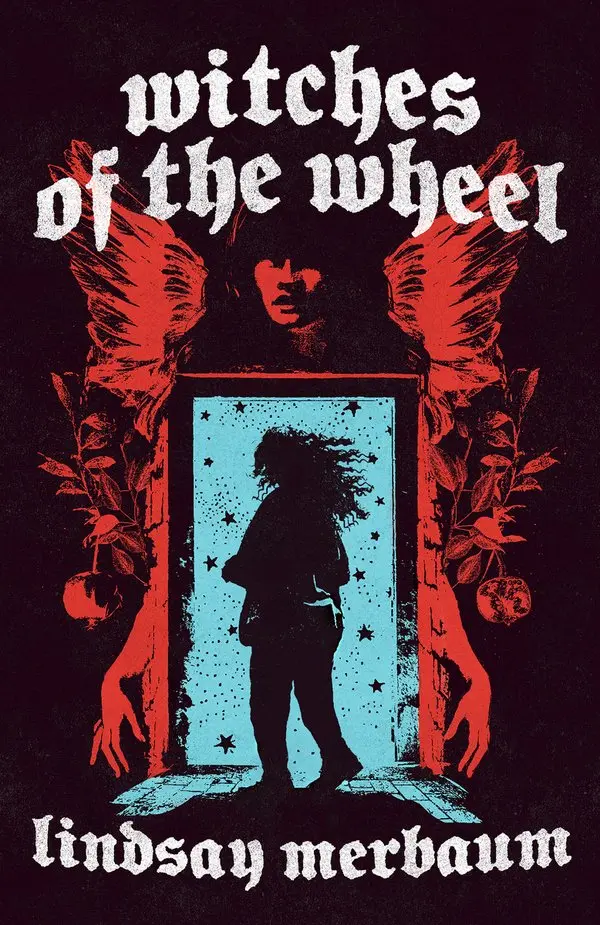
This movement is driven by a growing body of writers, scholars, and practitioners who seek to disentangle authentic esoteric history from 20th-century myth-making. Author and self-described kitchen witch Lindsay Merbaum, founder of the independent writing collective The Study Coven and author of the novel Witches of the Wheel, stands at the forefront of this movement. Her work highlights a broader cultural impulse: utilizing craft, ritual, and literature to process personal and systemic trauma, reclaim bodily autonomy, and interrogate the complex origins of modern pagan practices.
This investigative report provides an authoritative analysis of modern witchcraft’s historical evolution, examines the literary canon shaping contemporary practice, details the historiographical misconceptions surrounding occult history, and explores the future trajectory of esoteric literature in an increasingly uncertain socio-political climate.
Read Also
Detailed Chronology: The Evolution of Modern Occultism and Its Myths
Understanding modern witchcraft requires unravelling a complex timeline of historical persecution, early 20th-century academic errors, syncretic religion-building, and feminist reclamation.
[1500s–1700s] Early Modern European Witch Trials (Dominant execution method: Hanging)
       │
       ▼
  [1921] Publication of Margaret Murray's "The Witch-Cult in Western Europe"
         (Establishes the discredited "Burning Times" myth)
       │
       ▼
  [1904–1940s] Aleister Crowley formulates Thelema & coins "Magick"
       │
       ▼
  [1954] Gerald Gardner publishes "Witchcraft Today" (Founding of Wicca)
       │
       ▼
  [1973] Ehrenreich & English publish "Witches, Midwives, and Nurses"
         (Second-Wave Feminist Reclamation)
       │
       ▼
  [2010s–Present] Rise of Hybrid Occult Memoirs, Intersectional Conjure Studies,
                  and Modern "Witch Lit" (e.g., The Study Coven, "Witches of the Wheel")
1. The Early Modern Era and the Myth of the "Burning Times" (15th–18th Centuries)
Popular imagination often conceives the historical witch trials as a sweeping, continental genocide of women burned at the stake. However, modern historical consensus reveals a more nuanced and bureaucratic reality of judicial violence.
In early modern Western Europe and British North America, the vast majority of individuals convicted of witchcraft were executed by hanging rather than burning—the latter being reserved primarily for specific jurisdictions in Continental Europe under Roman civil law or for charges of heresy and petty treason.
2. The 20th-Century Revisionists: Murray, Crowley, and Gardner (1900–1950s)
The framework of modern Wicca and mainstream witchcraft rests heavily on early 20th-century intellectual movements that blended genuine historical research with speculative myth-making:
- 1904: Occultist Aleister Crowley published The Book of the Law, introducing the tenets of Thelema—a religion built around spiritual self-actualization and the maxim, "Do what thou wilt shall be the whole of the Law." Crowley notably introduced the terminal "k" to "magick" to differentiate intentional esoteric practices from stage illusionism. While foundational, Crowley’s work has faced contemporary criticism for patriarchal attitudes and the uncredited borrowing of Eastern and Indigenous spiritual traditions.
- 1921: Egyptologist Margaret Murray published The Witch-Cult in Western Europe. Murray posited that the witch trials were not a moral panic targeting isolated individuals, but an organized suppression of an ancient, underground pagan goddess cult that had survived Christianization. Though Murray accepted forced testimonies extracted under torture as literal truth—a methodology later soundly debunked by mainstream historians—her thesis captured the public imagination.
- 1954: Building directly upon Murray’s work, Gerald Gardner published Witchcraft Today, establishing the modern religion of Wicca. Gardner claimed to have been initiated into a surviving historical coven in New Forest, England, blending Murray’s pagan-survival theory with Crowleyan ritual structures and ceremonial magic.
3. Second-Wave Feminist Reclamation (1970s–1980s)
By the 1970s, activist scholars began re-examining the witch through a political and economic lens. In 1973, Barbara Ehrenreich and Deirdre English published Witches, Midwives, and Nurses: A History of Women Healers, connecting the historical suppression of accused witches to the rise of male-dominated institutional medicine and the systematic disenfranchisement of female healthcare providers.
4. The Contemporary Literary Renaissance (2010s–Present)
Today, modern practitioners have shifted away from strict dogma toward an intersectional, hybrid model of witchcraft. Authors combine personal memoir, critical theory, trauma-informed ritual, and fiction to explore identity, sex work, racial justice, and reproductive rights.
Supporting Context & Metrics: Analyzing the "Witches 101" Canon
A rigorous examination of contemporary esoteric literature demonstrates how modern writers use craft to address structural inequality, mental health, and personal agency. Below is a thematic analysis of the foundational texts currently defining the field.
                         THE MODERN WITCH LITERARY CANON
                                        │
    ┌─────────────────────────┬─────────┴───────────────┬────────────────────────┐
    ▼                         ▼                         ▼                        ▼
HISTORICAL CRITIQUE     MEMOIR & HYBRID             SUBVERSIVE FICTION      FOLKLORE & CONJURE
• Ehrenreich & English  • Amanda Yates Garcia       • Mona Awad             • Lindsey Stewart
• Kristen J. Sollee     • Pam Grossman              • A.K. Blakemore        • Tracy Cross
                        • Ariel Gore                • Sylvia T. Warner      • Wayétu Moore
                        • Alex Mar                  • Lindsay Merbaum
1. Historical & Political Critiques
- The Conjuring of America: Mojos, Mermaids, Medicine, and 400 Years of Black Women’s Magic by Lindsey Stewart: Stewart documents how enslaved African and African-American conjure women utilized local flora, herbalism, and ancestral traditions to treat illness, assist in childbirth, and resist systemic oppression, establishing foundational medical and spiritual practices that persist today.
- Witches, Midwives, and Nurses by Barbara Ehrenreich and Deirdre English: A structural critique of how the medical establishment consolidated power by criminalizing lay healers and wise women, rendering female bodily autonomy subject to institutional state control.
- Witches, Sluts, Feminists: Conjuring the Sex-Positive by Kristen J. Sollee: Sollee traces the intersection of misogyny, sex-negativity, and political suppression, demonstrating how the label of "witch" has historically been weaponized against women who defy patriarchal norms regarding sexuality, labor, and bodily autonomy.
2. Memoirs, Hybrid Texts, and Esoteric Self-Actualization
- Initiated: Memoir of a Witch by Amanda Yates Garcia: Garcia presents an autobiographical account of navigating poverty, sex work, and systemic violence, detailing how occult practice served as a mechanism for reclaiming agency and personal sovereignty.
- Waking the Witch: Reflections on Women, Magic, and Power by Pam Grossman: Part memoir, part cultural history, Grossman analyzes iconic witch archetypes across art, media, and politics, tracing their lineage from historical figures like spiritualist abolitionists to pop-culture iconography.
- We Were Witches by Ariel Gore: A genre-bending work that subverts traditional narrative structures to examine single motherhood, higher education, institutional barriers, and the reclamation of narrative power through ritual practice.
- Witches of America by Alex Mar: An investigative narrative documenting the author’s immersion within diverse American pagan communities. The text highlights the tension between modern rationalist skepticism and the psychological urge toward spiritual belonging.
3. Subversive Fiction and Folk-Horror
- Bunny by Mona Awad: A dark, satirical exploration of elite academic creative writing programs, performative feminism, and class dynamics, utilizing body horror and ritual magic to depict female friendship and artistic creation.
- The Manningtree Witches by A.K. Blakemore: Set during the English Civil War, Blakemore’s novel fictionalizes the campaign of Witchfinder General Matthew Hopkins, examining how economic hardship, war, and neighborly suspicion create fertile ground for state-sanctioned violence against vulnerable women.
- Rootwork by Tracy Cross: Set in 1889 Louisiana, this work of historical horror explores Hoodoo practices, family lineage, and retaliatory magic as tools of survival against racial trauma.
- She Would Be King by Wayétu Moore: A novel blending magical realism and historical fiction, tracing the founding of Liberia through three extraordinary figures—including Gbessa, an exiled woman who embodies immortal life—to interrogate power and colonialism.
- Lolly Willowes by Sylvia Townsend Warner: Published in 1926, this foundational feminist satire follows a middle-aged woman who rejects family obligations in London to embrace solitude, country life, and a pact with the devil in a quiet revolt against patriarchal domesticity.
- Witches of the Wheel by Lindsay Merbaum: Merbaum’s contemporary novel centers on Gold, a spirit-seeing protagonist navigating a subterranean, magical queer bar and an ancient, destructive deity. The narrative serves as a metaphor for creative revision, divine weight, and personal empowerment.
Official Statements and Authorial Insights
The commentary gathered from leading contemporary practitioner-authors underscores a unifying narrative: modern witchcraft is less about dogma and more about narrative authority, emotional processing, and political resistance.
On Trauma, Craft, and Creative Process
Reflecting on the eight-year iterative process of writing Witches of the Wheel, Lindsay Merbaum highlighted the relationship between intuitive writing and structured spellwork:
"The first drafts were written intuitively, like spellwork, and they were a mess. I was trying to convey something about the experience of magic, and the weight of the divine presence… It was only through repeated revision, accompanied by intense interrogation of the manuscript, that the book managed to become what it is today."
On Composting Suffering into Magic
In her memoir Initiated, Amanda Yates Garcia articulates the functional alchemy at the core of contemporary esoteric practice:
"Witches use magic to compost suffering into something nourishing, something that brings the world around us to life."
On Stripping Away Institutional Shame
Addressing the psychological mechanisms that sustain societal oppression, Ariel Gore writes in We Were Witches:
"Maybe what shame needs to stay alive is the consent of the shamed."
On Historical Antecedents and Philosophical Principles
The philosophical underpinning of early 20th-century esotericism remains dominated by the fundamental mandate set forth by Aleister Crowley in The Book of the Law:
"Do what thou wilt shall be the whole of the law."
This phrase, often misunderstood as an endorsement of chaos, was originally intended to mandate alignment with one’s ultimate true will and personal purpose—a concept heavily adopted by modern secular and religious witches alike.
Future Outlook: Esoteric Literature in a Changing Socio-Political Landscape
As socio-political tensions rise globally—particularly surrounding reproductive rights, gender identity, and economic inequality—the cultural appetite for esoteric literature and localized spiritual practices is projected to expand significantly.
                     EMERGING TRAJECTORIES OF MODERN ESOTERICISM
                                          │
    ┌─────────────────────────────────────┼────────────────────────────────────┐
    ▼                                     ▼                                    ▼
INTERSECTIONAL DECOLONIZATION       REPROD-RIGHTS ADVOCACY              CREATIVE COVENS & HYBRID MEDIA
Expansion beyond Eurocentric        Witchcraft as an ideological        Integration of writing workshops,
Wicca toward localized, traditional response to bodily autonomy         spellwork, and self-publishing
folk practices (Hoodoo, Curanderismo). rollbacks (Post-Roe landscape).  ecosystems (e.g., The Study Coven).
Key Trends Shaping the Future of the Craft:
- Shift Toward Intersectional and Ancestral Traditions: The literary market is increasingly prioritizing works that move beyond Eurocentric Wiccan frameworks. The success of texts focusing on Hoodoo, African Diaspora Religions (ADRs), and indigenous folk medicine signals a permanent broadening of the occult canon.
- Witchcraft as Political and Bodily Resistance: In a post-Roe v. Wade legal environment, historical texts like Ehrenreich and English’s Witches, Midwives, and Nurses are seeing renewed interest. The archetype of the witch as an unauthorized healer operating outside state control continues to serve as a powerful symbol for reproductive justice movements.
- Institutionalization of Creative Covens: Initiatives such as Merbaum’s The Study Coven point to a growing hybrid model where creative writing, literary analysis, and ritual practice converge. These spaces function as alternative educational institutions for marginalized writers, blending craft technique with esoteric pedagogy.
Ultimately, modern witchcraft has transcended its historical mischaracterizations. Through rigorous historiography, critical memoir, and imaginative fiction, contemporary practitioners are reframing the craft not as an archaic superstition, but as a vital, adaptive system of literature, liberation, and personal sovereignty.


Comments
Facebook App ID not configured. Please add it in the Customizer.