
Executive Overview
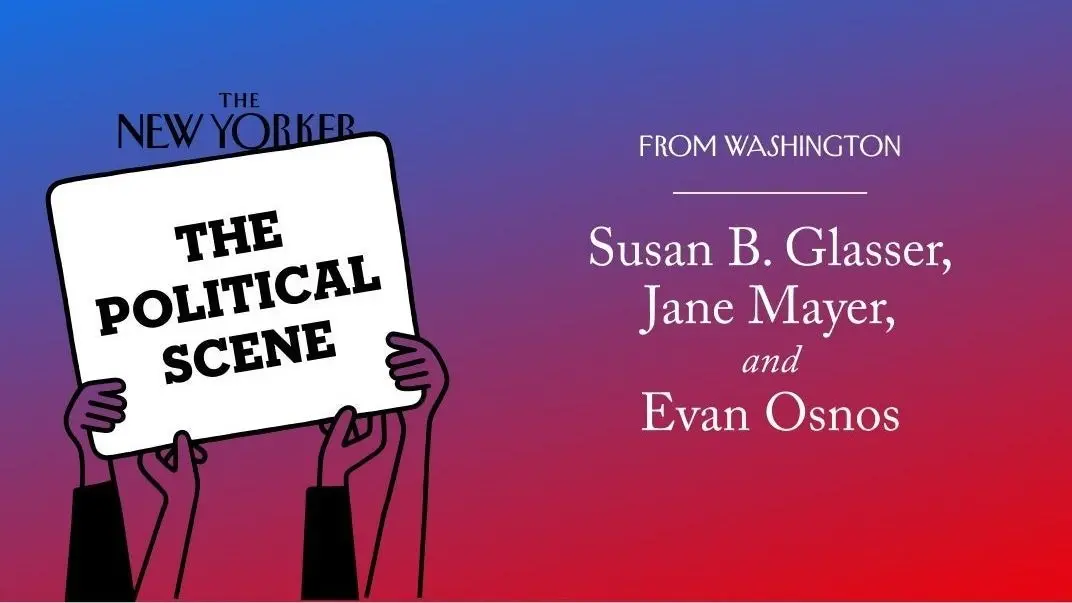
Speaking before a live audience at The New Yorker Festival, veteran political strategist David Plouffe—the architect of Barack Obama’s landmark 2008 presidential campaign—offered a stark re-examination of the American electoral map during a special live taping of The Washington Roundtable. Plouffe posited that the contemporary political environment bears the unmistakable hallmarks of a historic "wave election," driven by persistent cost-of-living anxieties, volatile fuel prices, and lingering voter dissatisfaction with conservative leadership.
According to Plouffe, these compounding pressures have expanded the competitive battleground deep into traditionally red territory. Unlikely Senate contests in states such as Iowa, Nebraska, Texas, and even Kansas—a state that has not elected a Democratic U.S. Senator since the Great Depression era of the 1930s—are unexpectedly coming into play. Plouffe argued that despite unprecedented infusions of capital from high-profile conservative donors, including tech billionaire Elon Musk, financial firepower alone cannot fully insulate Republican candidates from widespread economic frustration.
Looking beyond the immediate horizon, Plouffe framed the current midterms as a pivotal tactical springboard for the 2028 presidential race. Asserting that Democrats possess a unique institutional flexibility to adapt their platform while Republicans remain locked in rigid ideological alignment, Plouffe characterized the moment as "a political gift of epic proportions"—provided the party possesses the strategic discipline to capitalize on it.
Read Also
Detailed Chronology: Historical Waves and the Expanding Battleground
Historical Antecedents: The Dynamics of 1994 and 2006
To understand the mechanics of the current political environment, Plouffe drew explicit parallels to two watershed midterm cycles in modern American history: the 1994 "Republican Revolution" led by Newt Gingrich and the 2006 Democratic wave spurred by public discontent over the Iraq War and economic uncertainty.
       HISTORICAL WAVE ELECTION COMPARISON
 ─────────────────────────────────────────────────────────
  Year   Catalyst / Core Driver     Key Electoral Shift
 ─────────────────────────────────────────────────────────
  1994   Clinton Overreach &        GOP gains 54 House,
         Discontent                 8 Senate seats
  2006   Iraq War & Economic        Dems gain 31 House,
         Unease                     6 Senate seats
  Current Cost-of-Living Strain     Unprecedented Red-State
         & Trump Headwinds          Competitiveness (KS, NE, IA)
 ─────────────────────────────────────────────────────────
In both 1994 and 2006, the national political environment fundamentally shifted the baseline expectations of individual races. Nationalized issues superseded local candidate advantages, collapsing traditional red-state or blue-state firewalls. Plouffe noted that when systemic public frustration reaches a critical threshold, races previously considered safe for the dominant party suddenly become vulnerable to volatile shifts in turnout and swing-voter behavior.
Demolishing Traditional Boundaries: From Kansas to Texas
The most surprising development in the current cycle is the structural expansion of the Senate landscape. Democratic candidates are putting pressure on Republican strongholds that national strategists normally write off early in the planning process:
- Kansas: The state has maintained the longest single-party Senate winning streak in modern political history, having not elected a Democrat to the U.S. Senate since 1932. The competitive nature of the current race signals profound shifts in suburban voting patterns around the Kansas City area, paired with frustration among rural voters feeling the squeeze of input costs on agricultural operations.
- Nebraska & Iowa: Long considered foundational elements of the Republican farm-belt coalition, both states are demonstrating renewed electoral volatility. Rising fuel costs and shifting demographics in mid-sized agricultural hubs have weakened baseline Republican margins.
- Texas: The ongoing movement of suburban voters away from national Republican messaging has kept the state in a perpetual state of political transition. High-volume voter registration and rapid population growth in urban and suburban corridors have narrowed statewide margins, forcing national GOP groups to divert funds to defend territory previously assumed secure.
Supporting Context & Metrics: Economics, Super PACs, and the Rural Divide
Macroeconomic Pressures and the Rural Squeeze
At the core of the current electoral volatility is a deeply felt macroeconomic tension. While high-level indicators may suggest resilience, micro-level expenditures—specifically at the gas pump and the grocery checkout—continue to shape voter sentiment.
In rural and agricultural communities, energy prices exert a disproportionate influence on household budgets and small business operations. Diesel fuel, fertilizer, and transport costs directly impact farm yields and regional supply chains. As rural households feel squeezed, the conventional cultural messaging of the national Republican brand faces unprecedented friction against the stark reality of kitchen-table economics.
                 KEY ELECTORAL HEADWINDS

      Macroeconomic Factors           Political Dynamics
   ┌─────────────────────────┐   ┌─────────────────────────┐
   │ • High Fuel/Diesel Costs│   │ • Lower Trump Approval  │
   │ • Grocery Inflation     │   │ • Uncompetitive Red    │
   │ • Agricultural Squeeze  │   │   State Baselines       │
   └────────────┬────────────┘   └────────────┬────────────┘
                │                             │
                └──────────────┬──────────────┘
                               │
                               ▼
                Voter Volatility & Expanding
                     Midterm Map
The Limits of Campaign Capital: The Musk Factor
The current election cycle has seen unprecedented sums of money flowing through political action committees (PACs) and independent expenditure vehicles. High-profile billionaires, including Tesla and SpaceX CEO Elon Musk, have poured substantial resources into conservative turnout operations, digital advertising blitzes, and ground-game infrastructure.
However, Plouffe challenged the long-held assumption that superior campaign spending can completely overpower adverse economic conditions or deeply unpopular top-of-ticket figures.
"Republican spending, no matter how vast or high-profile, cannot fundamentally override the direct, personal experience of a voter facing relentless inflation at the pump and the store," Plouffe asserted during the panel.
While mega-donor spending can optimize voter contact, it frequently reaches a point of diminishing returns when attempting to alter the basic national narrative during a mid-cycle wave.
Official Statements and Strategic Analysis
Plouffe’s Diagnosis of Party Positioning
During his featured appearance on The Washington Roundtable, Plouffe laid out a detailed blueprint for how Democrats must navigate both the immediate electoral challenge and the upcoming 2028 presidential nominating contest.
Drawing upon his experience managing President Obama’s 2008 campaign—which famously expanded the political map into places like Indiana, North Carolina, and Virginia—Plouffe stressed that national political movements succeed not by playing defense in safe territories, but by actively testing the boundaries of the opposition’s base.
PLOUFFE'S STRATEGIC ROADMAP FOR DEMOCRATS
├── 1. Exploit Electoral Volatility
│   └── Expand map into non-traditional Senate battlegrounds (KS, NE, IA, TX)
├── 2. Outpace Capital with Messaging
│   └── Neutralize GOP mega-donor spending by highlighting cost-of-living issues
└── 3. Conduct Strategic Recalibration Ahead of 2028
    └── Analyze non-traditional overperformers to build a durable coalition
Key Quotes & Transcribed Remarks
Synthesizing his commentary at The New Yorker Festival, Plouffe emphasized the operational divide currently separating the two major American political parties:
-
On the Political Opportunity:
"Democrats have the opportunity to make an adjustment between now and ’28. Republicans don’t. It’s a political gift of epic proportions—if we find a way to seize it."
-
On Overperforming Candidates as Blueprints:
Plouffe argued that future presidential hopefuls in 2028 should closely analyze candidates currently overperforming their district baselines in red and purple states. These candidates, he noted, offer practical lessons in how to bridge the urban-rural divide and build a durable national coalition without relying solely on party orthodoxy.
-
On the GOP’s Structural Rigidity:
In Plouffe’s view, the Republican Party’s current ideological alignment under Donald Trump limits its ability to adjust its core message to appeal to moderate, suburban, or economically distressed rural voters who are alienated by top-of-ticket rhetoric.
Future Outlook: The Strategic Runway to 2028
The Midterms as a 2028 Proving Ground
As the political establishment looks past the midterms toward the 2028 presidential election cycle, the lessons learned from the current landscape will define candidate strategies for years to come.
Plouffe contends that the midterms serve as a real-time laboratory for candidate messaging, field operations, and coalition building. If Democrats can sustain competitiveness in the Great Plains and the Sun Belt, the underlying electoral college math for 2028 changes dramatically.
       THE ROAD TO 2028: TWO CONTRASTING PATHWAYS
 ─────────────────────────────────────────────────────────────
  Party        Structural Position         Strategic Imperative
 ─────────────────────────────────────────────────────────────
  Democrats    Flexible coalition;         Study red-state
               room for pragmatic          overperformers; broaden
               recalibration.              rural economic pitch.
 ─────────────────────────────────────────────────────────────
  Republicans  Ideologically locked;       Rely on high-dollar
               dependent on base           super PACs and traditional
               turnout dynamics.           cultural appeals.
 ─────────────────────────────────────────────────────────────
Key Takeaways for Political Strategists
- Candidate Quality and Localization: Nationalized wave elections open the door, but candidates who can speak authentically to local economic realities—particularly agricultural and industrial costs—are the ones who ultimately flip red districts.
- Structural Asymmetry: While Republicans remain constrained by national brand dynamics, Democrats have a fleeting window to recalibrate their economic platform to win back working-class voters before the next presidential cycle.
- The Limits of Mega-Donor Spending: Independent expenditures by high-net-worth individuals like Elon Musk can buy airtime and field workers, but they cannot rewrite the economic reality experienced by voters on a daily basis.
As the political battleground continues to shift, David Plouffe’s analysis underscores a vital reality: political waves are rarely generated by party apparatuses alone. Instead, they are propelled by broad macroeconomic forces and voter frustration—creating rare opportunities for political strategists bold enough to seize them.





Comments
Facebook App ID not configured. Please add it in the Customizer.