
Executive Overview
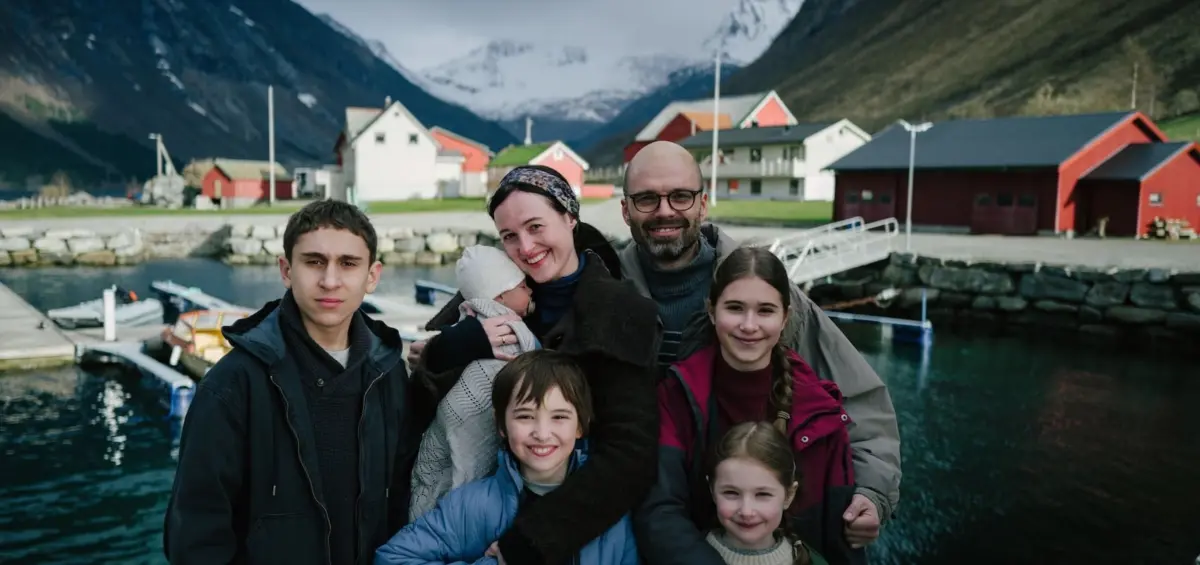
In Fjord, the Palme d’Or-winning masterwork by acclaimed Romanian director Cristian Mungiu, the Scandinavian welfare state is cast not as a benevolent guardian of society, but as a leviathan of therapeutic conformity. Based on true events, the film chronicles the harrowing trials of Mihai and Lisbet Gheorghiu, a Romanian-Norwegian evangelical Christian couple living in a remote rural community on the western coast of Norway. When local child-protection authorities—operating under the omnipresent apparatus known as the Barnevernet—intervene to seize their five children, the family is thrust into a kafkaesque legal battle that exposes the fault lines of modern Europe: the friction between a homogeneous, secularized Scandinavian majority and traditional religious minorities.
The film operates on multiple levels, functioning simultaneously as a tense courtroom drama, a critique of administrative overreach, and a deeply human tragedy about the flaws inherent in cross-cultural family dynamics. Sebastian Stan delivers a powerhouse, nuanced performance as Mihai, a father fiercely devoted to his children yet undermined by a volatile temper and a refusal to navigate bureaucratic waters with discretion. Renate Reinsve plays Lisbet, whose quiet endurance is gradually eroded by the relentless pressures of state interrogation.
Cinematographer Tudor Vladimir Panduru frames this ideological battle against a backdrop of breathtaking yet unforgiving geography—glaciers, fjords, and lonesome clapboard houses beneath endless ice-blue skies. Yet, beneath the pristine exterior lies an unyielding cultural machinery. Fjord is an uncompromising cinematic achievement that forces audiences to confront the price of state-mandated secular progress and the fragility of religious freedom in the twenty-first century.
Read Also
Detailed Chronology: Anatomy of a State Intervention
The Escalation and the Seizure
The narrative catalyst of Fjord unfolds with chilling administrative efficiency. Frida (Lisa Loven Kongsli), a local schoolteacher, and Gunda (Ellen Dorrit Petersen), a bureaucrat representing the Barnevernet, arrive unannounced at the Gheorghiu home. They inform Lisbet (Renate Reinsve) that emergency measures are being enacted to place all five of the family’s children—ranging from young adolescents down to a six-month-old infant—into state-run foster care.
The rationale provided by the state apparatus is ostensibly rooted in child welfare, but the ideological underpinnings quickly surface. Frida reveals that she had flagged the family to the authorities long before any allegations of physical abuse emerged. The precipitating trigger? The Gheorghius’ seven-year-old daughter was overheard by a classmate stating that homosexuality violated biblical law. In Norway, Frida explains with bureaucratic detachment, children possess an absolute "right to their gender identity"—a principle underscored by Norwegian legislation allowing children as young as six to alter their legal sex markers with simple parental consent.
When Lisbet protests, pleading that she and her husband cherish their children and would never inflict intentional harm, Gunda’s reply lays bare the cynical calculus of the system: "All parents say that."
The Interrogation and Confession
Simultaneously, Mihai Gheorghiu (Sebastian Stan) finds himself targeted by local law enforcement. The catalyst is a rumor involving the couple’s teenage daughter, Elia (Vanessa Ceban), who was overheard on a school bus discussing a "punishment" administered by her parents while displaying bruises allegedly sustained from a fall down a flight of stairs.
Operating in an environment where procedural protections differ starkly from American standards—there is no equivalent to a Miranda warning—Mihai’s imperfect grasp of the Norwegian language becomes his undoing. Under aggressive questioning, he admits to occasionally administering a mild "slap" to the rear when his children become unmanageable. He signs a statement admitting to "hitting" them.
The trap snaps shut when Lisbet, subjected to similar interrogation by Gunda, makes a parallel admission while being recorded. She confesses to pushing Elia during a chaotic kitchen altercation involving spilled boiling water that nearly scalded the infant. These admissions are fatal in a nation that enacted landmark anti-corporal punishment legislation in 1987 and tightened it in 2010 to criminalize even the mildest spankings.
The Courtroom Battle and Temporary Reprieve
Mihai and Lisbet find an unlikely ally in Mia (Lisa Carlehed), a secular liberal attorney and the wife of Mats (Markus Tønseth), the local school headmaster who initially judged the family. Mia is fond of Lisbet, who has been assisting with Mats’s ailing, depressed father. Offended by the heavy-handed tactics deployed against the Gheorghius, Mia steps into the courtroom and successfully argues for temporary custody to be returned to the parents—albeit under strict judicial conditions requiring Lisbet to complete a parenting class and Mihai to undergo mandatory anger-management counseling.
Despite this legal victory, the triumph is short-lived. Mihai’s inability to curb his explosive temper, combined with his strategic missteps—such as appealing to the Romanian embassy and mobilizing local evangelicals for protests outside the courthouse—alienates the secular majority and provides the Barnevernet with renewed ammunition for permanent separation proceedings.
Supporting Context & Metrics: Cultural Clashes in Scandinavia
To fully grasp the resonance of Fjord, one must examine the legal and sociological landscape of modern Norway regarding child welfare and religious expression. The Barnevernet has long been a subject of intense domestic and international scrutiny, with critics arguing that its vast discretionary powers frequently result in systemic overreach, particularly when dealing with immigrant families or non-traditional religious communities.
Legal Frameworks and Child Welfare Metrics
- The Corporal Punishment Ban: Norway was a global pioneer in outlawing corporal punishment, passing its initial prohibition in 1987. A subsequent 2010 amendment closed all remaining legal loopholes, rendering even the most minor disciplinary taps illegal. In the context of Fjord, this absolute standard leaves no room for cultural nuances or traditional disciplinary practices imported from Eastern Europe.
- Gender Identity Legislation: Enacted in 2016, Norwegian law permits children aged six and older to change their legally registered gender on official documents with parental permission. This rapid evolution of progressive social policy creates an acute ideological friction point when intersecting with conservative evangelical communities whose theological frameworks define gender and sexuality through a strictly creationist lens.
- International Scrutiny: Over the past decade, the Barnevernet has faced high-profile challenges at the European Court of Human Rights (ECHR). Multiple rulings have found that Norwegian authorities violated Article 8 of the European Convention on Human Rights (the right to respect for private and family life) by acting too swiftly to sever parental ties rather than prioritizing family reunification.
The Secular Consensus vs. Religious Expression
In Fjord, Mungiu highlights the asymmetry of cultural tolerance within contemporary Scandinavian society. While school officials express deep aversion to the faint strains of "Amazing Grace" played on a classroom keyboard—viewing it as an inappropriate breach of secular neutrality—indigenous Sami cultural and animistic symbols are celebrated without hesitation as markers of rich diversity.
This selective tolerance illustrates the central thesis of the film: Norwegian society prides itself on a universalist posture of openness, but that openness is contingent upon conformity to a rigid, secularist consensus. Expressions of orthodox Christian faith, patriarchal household structures, or traditional child-rearing philosophies are not accommodated; instead, they are diagnosed as pathologies requiring institutional correction.
Official Statements and Institutional Responses
While Fjord is a work of fiction inspired by real events, its release has reignited fierce public debates across Europe regarding the mandate of child protection agencies and the rights of religious minorities.
Spokespersons for child welfare advocacy groups in Scandinavia have defended the foundational principles of the Barnevernet, emphasizing that child safety must invariably supersede parental autonomy. In an official briefing following early screenings of the film at European festivals, a representative for a Nordic child rights coalition stated:
"The paramount objective of our child welfare system is the protection of the minor. Laws prohibiting corporal punishment and safeguarding children’s autonomy are non-negotiable pillars of a safe society. Cultural or religious beliefs cannot serve as a blanket exemption from standards designed to protect human dignity and physical safety from the earliest ages."
Conversely, civil liberties organizations and migrant advocacy networks have seized upon the narrative themes of Fjord to highlight systemic vulnerabilities faced by cross-border families. A prominent legal scholar specializing in European human rights law noted:
"When state apparatuses are empowered to interpret standard domestic frictions—such as sibling roughhousing or domestic stress—through the lens of institutional pathology, pluralism is placed in mortal peril. The tragedy depicted in Mungiu’s work is not merely personal; it is institutional. It asks a foundational question: Can a liberal democracy truly accommodate citizens who reject its secularized moral consensus?"
Future Outlook: The Legacy of Fjord and Cultural Polarization
As Fjord concludes with the Gheorghiu family’s poignant, melancholic decision to abandon their adopted home in Norway and return to Romania, the film leaves viewers with a profound sense of unresolved trauma. The personal toll is vast: the children, particularly Elia, have formed deep bonds with their Norwegian peers and foster environments, planting the seeds for permanent generational estrangement from their parents. Meanwhile, Mia, having fulfilled her humanitarian duty, steps back from taking on the more complex criminal proceedings, leaving the family to navigate their descent alone.
Looking ahead, the cultural dialogues sparked by Mungiu’s film are unlikely to subside. As European societies grapple with increased demographic mobility, the friction between secular administrative states and traditionalist religious minorities will continue to test the limits of legal pluralism.
Fjord serves as both a mirror and a warning. It demonstrates that when the machinery of the state becomes convinced of its own moral infallibility, it ceases to be a facilitator of community peace and instead becomes an engine of uniformity. For audiences worldwide, the film stands as a lasting monument to the human cost of ideological rigidity—proving that the coldest environments are sometimes forged not by nature, but by the unyielding laws of man.





Comments
Facebook App ID not configured. Please add it in the Customizer.