
Executive Overview
The landscape of independent queer cinema is undergoing a decisive shift. For decades, narratives surrounding nightlife subcultures were framed primarily through themes of tragic excess or detached hedonism. However, artist and filmmaker Jordan Firstman’s directorial debut, Club Kid, presents a sharp departure from these tropes. Centered on Peter—a strung-out, thirty-something gay party promoter in New York City whose chaos-ridden lifestyle is upended by the sudden arrival of a nine-year-old son he never knew existed—the film merges underground club culture with a raw, unexpected exploration of parenthood and found family.
Having secured a premiere at the Cannes Film Festival within the prestigious Un Certain Regard selection, Club Kid has rapidly transitioned from an indie project born in the trenches of New York’s nightlife into an acclaimed cinematic work. Much of this success stems from Firstman’s non-traditional casting strategy: rather than relying on conventional Hollywood talent, Firstman populated his universe with actual icons of the New York and Los Angeles underground scenes.
Featuring key performances by writer and model Alaska Riley, actress Benny Jean Pierce, and DJ/performer Saturn Risin9, the film leverages authentic interpersonal dynamics to interrogate what it means to grow up, take responsibility, and construct family units beyond traditional nuclear models. This report analyzes the trajectory of Club Kid, examining its production background, cultural reception, casting philosophy, and wider implications for queer representation in contemporary cinema.
Read Also
Detailed Chronology: From Queens Underground to Cannes Recognition
[Initial Concept & Script Development]
       │
       ▼
[Field Casting in Underground Venues] ──► (Firstman tests credibility at Basement, Queens)
       │
       ▼
[Principal Photography in NYC]
       │
       ▼
[Cannes Film Festival Premiere] ──► Nominated for Un Certain Regard
       │
       ▼
[New York Film Festival Circuit] ──► Celebratory press tour & Indochine events
Scripting and Street Credibility (Pre-Production)
The conceptual origin of Club Kid lies in Firstman’s observation of his own artistic and social circles in New York City. The narrative centers on Peter (played by Firstman himself), whose life begins to implode just as his unremembered past catches up to him: the best friend of a woman he briefly encountered years prior arrives unannounced, seeking to drop off his secret nine-year-old son.
To flesh out Peter’s inner circle, Firstman avoided mainstream casting agencies in favor of authentic casting within the city’s night-life ecosystem. When twenty-seven-year-old model and writer Alaska Riley first received the script, she expressed initial hesitation, describing the material as "a little too Method" given how closely it mirrored her actual social reality.
To prove his commitment to the culture he was depicting, Firstman met Riley at Basement—a notorious techno venue beneath the Knockdown Center in Maspeth, Queens. After partying alongside her for more than eighteen consecutive hours, Firstman demonstrated the cultural immersion required to earn the cast’s trust. Similar real-world relationships secured the involvement of thirty-seven-year-old DJ Saturn Risin9—a longtime friend of Firstman—and twenty-seven-year-old trans actress Benny Jean Pierce.
Festival Premiere and Critical Milestone
- May 2024: Club Kid makes its international debut at the 77th Cannes Film Festival, earning an official nomination in the Un Certain Regard category. Critics praised the film’s stark, unvarnished depiction of modern queer identity and its subversion of traditional parenting narratives.
- Autumn 2024: Following its European bow, the film entered the North American festival circuit, culminating in high-profile screenings at the New York Film Festival (NYFF).
The Post-Screening Circuit: Seward Park Debrief
The real-world blur between performance and reality was on full display during the North American press push. Following a week of marathon celebrations—including an NYFF after-party at Manhattan’s iconic Indochine and subsequent late-night gatherings spanning Gramercy and Saturday Night Live after-parties—the cast convened on a Thursday morning in Seward Park on the Lower East Side.
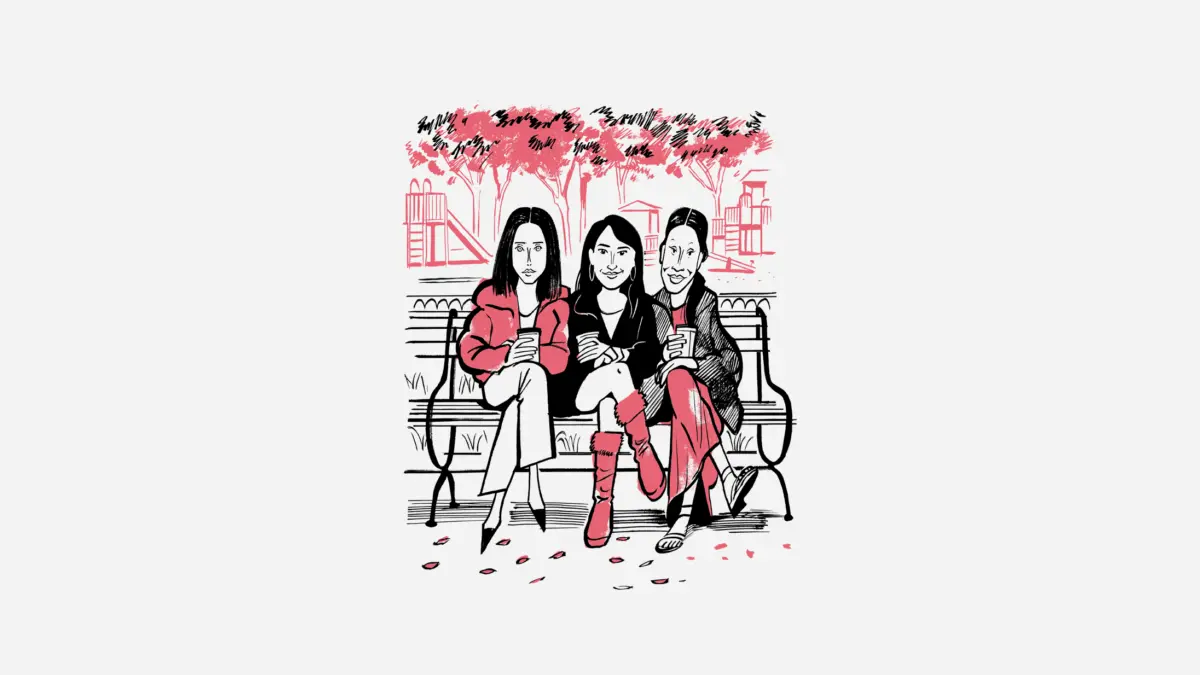
Sipping caffeinated drinks beside a bustling playground, Riley (27, in a gray hoodie and kitten heels), Pierce (27, wearing fur-lined boots and a slouchy leather jacket), and Saturn Risin9 (37, unslept after flying in from Los Angeles and heading straight to the Swan Room for oysters and caviar fries) reflected on the journey. The contrast between their high-octane nocturnal lives and the domesticity of the playground around them reflected the very tension at the heart of Club Kid.
Supporting Context & Metrics: Cultural Subversion & Media Representation
The thematic weight of Club Kid relies on its intersectional examination of parenting within marginalized communities, specifically trans motherhood and gay fatherhood.
Cinema Representation & Subcultural Realism
Historically, onscreen depictions of trans individuals and nightlife figures have suffered from two primary flaws: tragic exploitation or superficial glamorization. Club Kid counters this by embedding genuine subcultural figures directly into the narrative framework.
Representation Gaps Addressed by 'Club Kid':

Traditional Tropes                    'Club Kid' Methodology
┌───────────────────────────────┐     ┌───────────────────────────────┐
│ • Tragic queer caricatures    │  Vs │ • Authentic lived-experience  │
│ • Nightlife as pure excess    │     │ • Nightlife as found family   │
│ • Absence of trans mothers    │     │ • Trans parenthood normalized │
└───────────────────────────────┘     └───────────────────────────────┘
The necessity for this authentic approach is further illustrated by cast demographics and background metrics:
| Cast Member | Age | Primary Professional Background | Key Theme Explored in Club Kid |
|---|---|---|---|
| Alaska Riley | 27 | Model, Writer | Gay fatherhood, sobriety, personal accountability |
| Benny Jean Pierce | 27 | Actress | Trans motherhood, subversion of nuclear family standards |
| Saturn Risin9 | 37 | DJ, Musical Artist | Foundational mentorship, trans parenting, authentic portrayal |
The Demantics of Trans Motherhood
For trans women, the path to motherhood has historically lacked visible representation in mainstream media. The inclusion of Pierce and Saturn in roles that directly or indirectly interrogate maternal instincts provides a rare template for audiences and cast members alike.
Pierce noted that prior to working on Club Kid, her personal discourse around family planning felt unanchored due to a systemic absence of trans maternal role models. By normalizing the desire of trans women and gay men to nurture the next generation without abandoning their identities, the film fills a distinct void in contemporary independent cinema.
Official Statements & Cast Reflections
The authenticity of Club Kid is rooted in the thin boundary between the actors’ real lives and their onscreen personas. During their Lower East Side gathering, the lead cast members offered insightful commentary regarding their artistic process, identity, and personal revelations stemming from the film.
On Method Acting and Emotional Authenticity
Reflecting on the thin line between Firstman’s real-life persona and his performance as Peter, Saturn Risin9 underscored the emotional realism captured on camera:
"Seeing Jordan’s performance, the veil was thin. It was like, ‘Oh, wow, we’re telling the truth.’ I have always known that I would be a mom… As a trans woman, I look forward to having kids who won’t face the pressures I’ve had to fight against. But I’m probably just going to raise a football-playing straight son—he’ll have to live in fear of coming out to me."
— Saturn Risin9, Actor and DJ
On Trans Motherhood and Queer Family Planning
Benny Jean Pierce shared how the film acted as a catalyst for her own perspectives on adulthood, identity, and motherhood:
"It was so kismet that I got to do this movie, because the entire year prior to filming, all I was talking about was family planning. But finding examples of trans mothers as role models was so difficult. When I saw Jordan’s depiction of queer parenthood—which is such a rarity in film—I couldn’t stop crying."
— Benny Jean Pierce, Actress
On Re-evaluating Lifestyles and Sobriety
Alaska Riley pointed to the film’s sobering narrative arc as a turning point for her own life choices outside of the club scene:
"When I saw the film the first time, I ran up to Jordan and said, ‘I need to get sober, and I need to be a gay dad.’… The script initially felt a little too Method, but seeing it complete changed everything."
— Alaska Riley, Model and Writer
On Interpersonal Dynamics and Modern Sexuality
The chemistry among the cast also extends into candid, unvarnished conversations regarding fluid identity, modern dating, and subcultural social hierarchies. Recounting the post-premiere revelry at Indochine, the cast reflected on the chaotic nature of modern romance and social circles:
- Pierce on Bisexuality & Dating: "As a bisexual, I understand the tumultuous nature of bisexuality. I always say: Are you a questioning bisexual, or are you a bisexual being questioned? Something about that Martini at Indochine… I’m at the point in my life where I have one shot and I’m like, ‘Should I get on the fucking table?’"
- Riley on Social Dynamics: "I’m pretty sure I’m bisexual, but like, I don’t do anything about it… [At the party] I just went home."
- Saturn on Navigating the Party Circuit: "It does really suck when you realize you picked the wrong party. My brain just forgot the invitation [to the SNL party]—I went with some gay boys to a place I could have just gone anytime."
Future Outlook: Legacy and Cultural Impact
The trajectory of Club Kid signals a broader transformation in how independent film studios and international festivals approach stories originating from counter-cultural movements.
Key Takeaways for the Film Industry:
-
The Commercial & Critical Viability of Authentic Casting:
- Club Kid demonstrates that casting directly from subcultures—rather than imposing mainstream actors onto niche subcultures—yields superior critical reception and deep audience engagement. Expect festival programmers and indie financiers to increasingly greenlight projects utilizing field-sourced talent.
-
Expanding the Queer Cinematic Canon:
- By shifting the dialogue away from coming-out narratives or pure tragedy, Firstman’s work establishes a precedent for queer cinema focused on post-coming-out domesticity, parenthood, and adult responsibility.
-
Emerging Talent Trajectories:
- Jordan Firstman: Established as a distinctive voice capable of translating hyper-specific subcultural nuance into internationally recognized narrative art.
- Pierce, Riley, and Saturn: Positioned to transition from nightlife icons to sought-after talent across indie film, modeling, and artistic direction, bringing lived queer and trans perspectives into mainstream cultural projects.
Ultimately, Club Kid stands as a benchmark for contemporary queer storytelling. By holding up a mirror to the chaotic beauty of New York nightlife while demanding a mature conversation on parenthood and accountability, the film proves that the bonds of found family can withstand both the harsh light of the morning after and the spotlight of international cinema.





Comments
Facebook App ID not configured. Please add it in the Customizer.