
Executive Overview
New Delhi is experiencing an unprecedented surge in civil unrest as a coalition of student activists, legal advocates, and young voters challenges the ruling Bharatiya Janata Party (BJP). What began in the summer as a localized protest against national examination leaks and government corruption has transformed into a nationwide movement demanding structural democratic reform. The movement’s momentum stems from two major catalysts: widespread systemic failures in state-run entrance exams that led to severe public outcry, and the controversial deletion of over 130 million names from India’s official electoral rolls.
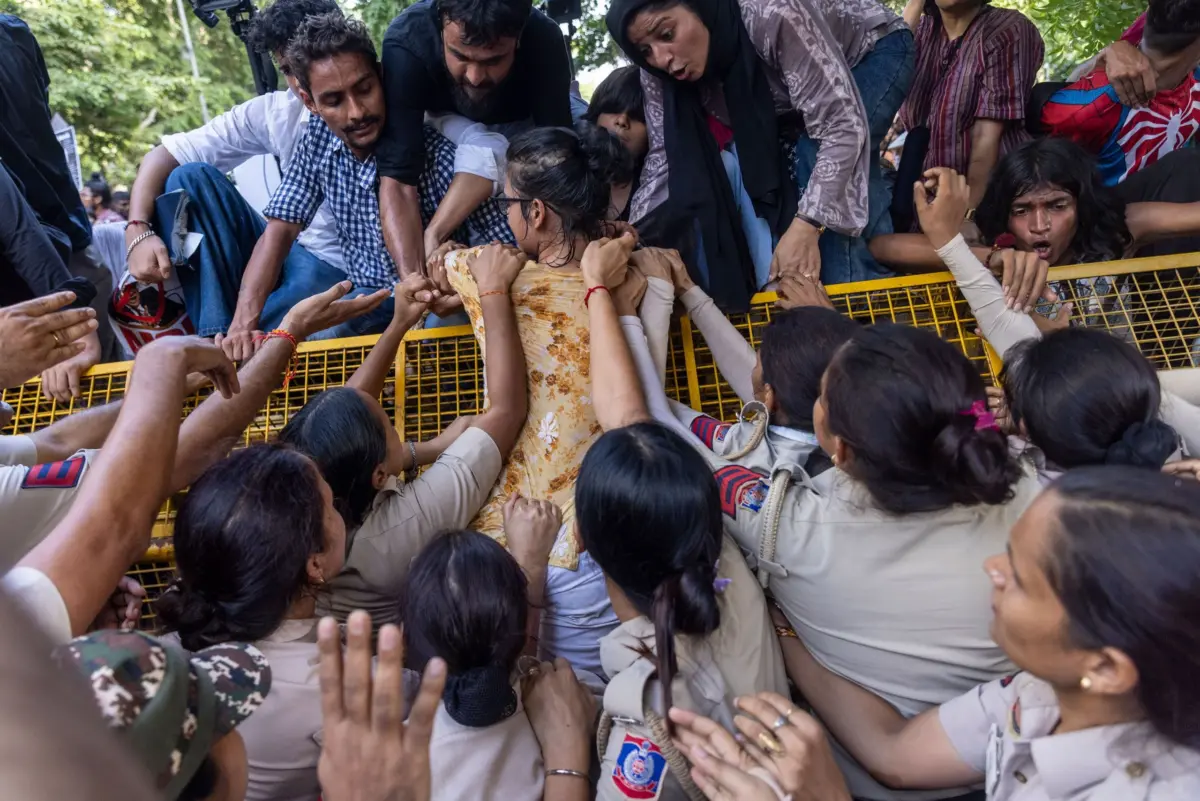
In response, the Indian state has deployed extensive security measures. Key public spaces in the capital—most notably Connaught Place and the historic protest site at Jantar Mantar—have been heavily militarized. Armed units of the Central Reserve Police Force (CRPF) and Delhi Police have enforced strict anti-assembly mandates, effectively criminalizing gatherings of four or more people. In mid-October, authorities officially "de-notified" Jantar Mantar as an approved demonstration ground, attempting to strip the opposition of its central symbolic stage.
Despite mass detentions, police violence, and forced "peace bonds," the youth movement—loosely organized under grassroots groups and the satirical yet fast-growing "Cockroach Janta Party" (CJP)—continues to challenge the central government. By linking student economic precarity with broader allegations of systemic voter disenfranchisement, India’s youth demographic is mounting one of the most formidable ideological challenges to Prime Minister Narendra Modi’s administration in recent history.
Read Also
       [National Testing Agency Crisis]
         • Exam paper leaks & cancellations
         • Tragic loss of 21 student lives
                        │
                        ▼
       [Initial Jantar Mantar Protests]
         • Led by AISA & student groups
         • Resignation of Ed. Minister Pradhan
                        │
                        ▼
       [The "Cockroach" Spark & CJP Birth]
         • Provoked by Judicial remark
         • Viral digital-to-street mobilization
                        │
                        ▼
  [Electoral Roll Controversy (130M+ Excluded)]
         • Disproportionate impact on minorities
         • Demands for CEC Gyanesh Kumar's exit
                        │
                        ▼
     [State Crackdown & Militarization]
         • De-notification of Jantar Mantar
         • Section 144, CRPF deployment & detentions
Detailed Chronology
Phase I: The Medical Entrance Exam Scandal and Initial Outcry
The roots of the current crisis trace back to May, when the National Testing Agency (NTA) investigated reports that national entrance examination papers for top Indian medical schools had been leaked and black-marketed. The subsequent decision to scrap the national exam—affecting hundreds of thousands of candidates nationwide—inflicted massive financial and psychological distress on families. The human cost of the administrative failure became tragically apparent as at least 21 students died by suicide.
Student organizations, including the All India Students’ Association (AISA), launched immediate demonstrations at Jantar Mantar—an 18th-century astronomical observatory that has historically served as Delhi’s primary venue for democratic protest. Prolonged hunger strikes and continuous street mobilization eventually forced the resignation of Dharmendra Pradhan, the Cabinet Education Minister in Prime Minister Narendra Modi’s administration.
Phase II: The Judicial Remark and the Rise of the "Cockroach Janta Party"
Following the education protests, a remark by the Chief Justice of India—who publicly referred to unemployed, protesting youth as "cockroaches"—sparked widespread outrage. In response, Boston University graduate Abhijeet Dipke posted a viral query on social media: "What if all cockroaches come together?"
This post catalyzed the creation of the Cockroach Janta Party (CJP). Conceived partly as political satire, the CJP rapidly expanded into a digital and street-level political vehicle claiming millions of young supporters. The movement transformed the derogatory label into a symbol of collective resistance, unifying disaffected youth across regional and class boundaries.
+-------------------------------------------------------------------------+
|                  CHRONOLOGY OF MAJOR EVENTS                             |
+-------------------------------------------------------------------------+
| May              | Medical entrance exam leak; NTA scraps nationwide    |
|                  | test; student suicides trigger initial backlash.     |
+------------------+------------------------------------------------------+
| June – July      | Mass hunger strikes at Jantar Mantar lead to the    |
|                  | resignation of Education Minister Dharmendra Pradhan.|
+------------------+------------------------------------------------------+
| Late Summer      | Chief Justice's comment sparks the formation of the  |
|                  | Cockroach Janta Party (CJP); viral youth growth.     |
+------------------+------------------------------------------------------+
| September        | Investigative reports reveal 130M+ voter deletions;  |
|                  | protest focus shifts to Election Commission.        |
+------------------+------------------------------------------------------+
| Early October    | Opposition march on the Supreme Court; CJP leaders   |
|                  | arrested; Jantar Mantar officially "de-notified."    |
+------------------+------------------------------------------------------+
| Mid-to-Late Oct  | Heavy militarization of Connaught Place; state burns |
|                  | 30-foot cockroach effigy during Dussehra.            |
+-------------------------------------------------------------------------+
Phase III: The Electoral Roll Purge and Political Coalition
By early autumn, investigative reporting revealed that a nationwide revision of voting registries—ostensibly designed to purge duplicate, deceased, or non-resident records—had resulted in the deletion of more than 130 million voters. Evidence suggested that these deletions disproportionately affected religious minorities, lower-income citizens, and marginalized communities.
In response, the protest movement expanded its demands from educational governance to constitutional rights. Activists demanded the immediate resignation of Chief Election Commissioner Gyanesh Kumar. In early October, student groups combined forces with a coalition of national political opposition parties led by the Indian National Congress, organizing a march of tens of thousands toward the Supreme Court of India.
Phase IV: State Response and Civil Lockdown
Faced with escalating opposition in the capital, municipal and security authorities moved to suppress the physical infrastructure of the protests:
- De-notification of Protest Grounds: Jantar Mantar was formally stripped of its status as an authorized assembly site.
- Militarization of Public Space: Heavy metal barricades, armed CRPF units, Delhi Police constabulary, and Anti-Terrorist Squad (ATS) mobile units were posted across key transit hubs surrounding Connaught Place and Barakhamba Road.
- Automated Surveillance and Warnings: Loudspeakers mounted on spiked utility poles broadcast continuous loops warning that gatherings of four or more people were illegal under Section 144 of the Code of Criminal Procedure, urging the public to disperse immediately.
Supporting Context & Metrics
Demographic Pressure Points
India’s demographic profile is central to the political tension. The nation is home to approximately 370 million people between the ages of 15 and 29, forming one of the largest youth cohorts in global history.
  [ India's Demographic Pressure & Disenfranchisement Spectrum ]

  Youth Population (Ages 15–29)
  [████████████████████████████████████████████] 370 Million

  Purged Voters (Electoral Revision)
  [████████████░░░░░░░░░░░░░░░░░░░░░░░░░░░░░░░░] 130+ Million
High youth unemployment, combined with structural vulnerabilities in the education system, has created a volatile political environment. The cancellation of competitive service and medical exams directly threatens the primary path to economic mobility for middle- and lower-income families.
Electoral Revision Anomalies
The purge of 130 million voters from state registers has raised serious questions among civil society groups and legal observers regarding procedural integrity:
- West Bengal State Assembly Case: During recent state elections, electoral roll revisions resulted in the removal of nearly 3 million voters across 294 constituencies. The ruling BJP subsequently secured its first historical victory in the state assembly, prompting opposition accusations that targeted voter roll purges influenced the outcome.
- Systemic Disparities: Field reports from neighboring regions like Uttar Pradesh indicate a clear structural disparity in identity verification notices:
- Minority voters reported receiving strict legal notices requiring exhaustive documentary proof of citizenship and residency.
- Non-minority registers frequently retained duplicate or unverified entries without challenge.
State Enforcement Infrastructure
To suppress the growing unrest, law enforcement agencies implemented aggressive detainment strategies:

+--------------------------------------------------------------------------+
|                     STATE SECURITY DEPLOYMENT METRICS                    |
+--------------------------------------------------------------------------+
| Security Agencies   | Delhi Police, Central Reserve Police Force (CRPF), |
| Active              | Anti-Terrorist Squad (ATS).                        |
+---------------------+----------------------------------------------------+
| Restrictive Directives| Prohibition of assemblies >4 persons (Sec 144).   |
+---------------------+----------------------------------------------------+
| Detention Tactics   | • Transit buses used as mobile holding units.      |
|                     | • Transport to remote facilities without phones.   |
|                     | • Issuance of mandatory "peace bonds."             |
+---------------------+----------------------------------------------------+
| Legal Sanctions     | Mandatory sign-offs under threat of long-term      |
|                     | judicial custody for key organizers.               |
+--------------------------------------------------------------------------+
Reports from legal observers, including lawyer Arjun Unnikrishnan and journalist M. Rajshekhar, indicate that detained citizens were often held in transit buses for eight to nine hours without access to food, water, or legal counsel before being dropped off late at night at distant detention facilities with their mobile devices confiscated.
Official Statements and Ideological Polarization
State & Ruling Party Framing
The response from the ruling Bharatiya Janata Party (BJP) has framed the youth coalition not as a legitimate democratic movement, but as an anti-national security threat.
During the annual Dussehra celebrations at Netaji Subhash Place in Pitampura—an event centered on the traditional burning of effigies representing the demon king Ravana—the state government introduced a new symbolic effigy: a 30-foot-tall cockroach.
"The cockroach represents an alliance of filth, Naxalites, jihadis, and the corrupt."
— Kapil Mishra, Cabinet Minister, Delhi Government (BJP)
Addressing an audience gathered before the ceremonial burning, Delhi Cabinet Minister Kapil Mishra explicitly tied the student organization to subversive forces, casting the movement as a security threat to the nation.
                                  ___
                                 /
                                 | | |
                                 ___/
                                   |
                                 __|_
                                /
                               |  CO  |  <- 30-Foot "Cockroach" Effigy
                               |  CK  |     Lit by Delhi BJP Leadership
                               |  RO  |     to symbolize student activists,
                               |  ACH |     Naxalites, and opposition.
                               ______/
                                  ||
                                 /__
  ========================================================================
     DUSSEHRA FESTIVAL: TRADITIONAL VS. POLITICIZED SYMBOLISM
  ========================================================================
   Traditional Target:               Modern Additions:
   - Ravana (10-headed demon)        - 30-Foot Cockroach Effigy
   - Kumbhakarna & Meghnada          - Political rhetoric targeting
   - Symbolic victory over evil        unemployed youth & protesters
  ========================================================================
The incorporation of political messaging into religious festivals highlights the party’s strategy of using traditional symbols to reinforce its vision of a unified Hindu nation (Hindutva). Slogans like "Jai Shri Ram" ("Glory to Lord Rama") have increasingly been deployed not only as religious devotions, but as political markers to distinguish loyal citizens from dissidents.
Dissident & Activist Perspectives
Activists and opposition leaders present a fundamentally different view of the state’s actions, characterizing them as systemic violence designed to enforce submission through intimidation.
"If the state does not want there to be violence, the state should not do violence—it is as simple as that... When you mix water, tea leaves, and milk, you will get tea. You will not get Coca-Cola. Similarly, if you vote for the BJP, you will only get violence and riots and corruption. You will not get anything else."
— Neha Bora, President, All India Students’ Association (AISA)
Neha Bora, the 29-year-old non-binary president of AISA who led a 23-day hunger strike during the summer, has repeatedly defied police restrictions. Detained more than ten times in early October alone, Bora has consistently refused to sign "peace bonds"—legal agreements that mandate good behavior in exchange for avoiding formal charges—arguing that doing so would compromise the constitutional right to peaceful assembly.
Protesters have also detailed systemic physical abuse by security forces during custodial detentions. Activists report that away from media cameras, officers routinely subjected detainees to physical violence, including slaps, kicks, and personal humiliation, regardless of whether individuals complied with police directives.
+--------------------------------------------------------------------------+
|                  PERSPECTIVES ON THE CONFLICT                            |
+--------------------------------------------------------------------------+
| Party / Faction      | Core Claim / Position                             |
+----------------------+---------------------------------------------------+
| Ruling BJP           | Frames protests as an alliance of "filth,         |
| Governance           | Naxalites, and jihadis" threatening order.        |
+----------------------+---------------------------------------------------+
| AISA & Student       | Views state actions as systemic violence aimed at |
| Leaders              | suppressing youth economic grievances.            |
+----------------------+---------------------------------------------------+
| Cockroach Janta      | Demands accountability from the Election         |
| Party (CJP)          | Commission and the restoration of voting rolls.   |
+----------------------+---------------------------------------------------+
| Legal & Media        | Document illegal detentions, phone confiscations, |
| Observers            | and physical abuse by security personnel.         |
+--------------------------------------------------------------------------+
Future Outlook
The confrontation between India’s central government and the youth-led opposition marks a critical juncture for the country’s political landscape. As public space in the capital remains heavily restricted, the movement’s long-term sustainability depends on several key factors:
1. Legal and Constitutional Challenges
The primary focus of opposition political strategy has shifted to the judicial system. Lawyers and civil liberties groups are preparing petitions to challenge the deletion of 130 million voters before the Supreme Court. Activists hope to demonstrate that the Election Commission’s centralized database updates operated as an unconstitutional form of voter suppression. If the judiciary intervenes, it could force a re-examination of electoral rolls nationwide.
2. Strategic Vulnerabilities in Electoral Politics
Opposition strategists draw an analogy between the current administration and traditional folk narratives in which a ruler’s power relies on a single vulnerable element. Activists argue that the Election Commission represents the ruling party’s key point of political leverage.
By demanding the resignation of Chief Election Commissioner Gyanesh Kumar, the movement seeks to dismantle the central administrative apparatus that oversees national elections. If the opposition successfully forces reforms in electoral roll maintenance, the BJP could face a far more competitive landscape in upcoming state and national contests.
       ┌────────────────────────────────────────────────────────┐
       │                FUTURE TRAJECTORY SCENARIOS             │
       └────────────────────────────────────────────────────────┘
                                   │
         ┌─────────────────────────┴─────────────────────────┐
         ▼                                                   ▼
┌─────────────────────────────────┐                 ┌─────────────────────────────────┐
│ SCENARIO A: ESCALATING REPRESSION│                 │ SCENARIO B: ELECTORAL REFORM    │
├─────────────────────────────────┤                 ├─────────────────────────────────┤
│ • Total ban on public assembly. │                 │ • Supreme Court orders roll     │
│ • Permanent closure of protest  │                 │   audits and reinstatements.    │
│   venues like Jantar Mantar.    │                 │ • Resignation of CEC Gyanesh    │
│ • Institutionalization of       │                 │   Kumar under public pressure.  │
│   peace bonds & surveillance.   │                 │ • Youth voters form a unified   │
└─────────────────────────────────┘                 │   voting bloc in state races.   │
                                                    └─────────────────────────────────┘
3. Resilience of Grassroots Coalitions
Despite the state’s security measures, the movement has demonstrated remarkable adaptability. The emergence of the Cockroach Janta Party shows how digital organizing can quickly convert widespread frustration into street-level mobilization. While top leaders face ongoing legal pressure, peace bonds, and detentions, the decentralized structure of these student coalitions allows new leaders to step forward.
As international focus turns to India’s internal stability, the key question is whether the state’s security apparatus can contain a movement driven by millions of young voters facing economic uncertainty. The systemic issues that sparked the protests—exam leaks, job scarcity, and voter roll exclusions—remain unresolved. Whether through street demonstrations or at the ballot box, India’s demographic majority is asserting its intent to shape the nation’s political trajectory.





Comments
Facebook App ID not configured. Please add it in the Customizer.