The literary landscape of October 2026 offers an extraordinary cross-section of global storytelling, poetic revival, historical reckoning, and speculative vision. Curated across continents and translated from Braj Bhasha, Bulgarian, Chinese, Spanish, Romanian, and Portuguese, this month’s most vital new releases underscore translation’s indispensable role in bridging cultural divides and confronting urgent geopolitical realities.
From New Directions to Charco Press, independent and major international publishing houses are bringing forward works that test the boundaries of genre and form. Readers are invited into the ecstatic, devotional poetry of early-modern India via Mirabai; the playful yet profound micro-fictions of Bulgaria’s International Booker Prize winner Georgi Gospodinov; and speculative futures from China that grapple with the long shadow of global health crises. Furthermore, the nonfiction and poetry selections this month—ranging from María Fernanda Ampuero’s scorching essays on systemic misogyny in Latin America to Radu Vancu’s haunting Romanian elegies for Miklós Radnóti, and Marcelo Rubens Paiva’s powerful family memoir regarding the Brazilian dictatorship—remind us that literature remains a primary defense against historical erasure and authoritarianism.
Below is a comprehensive, deep-dive analysis of the six standout international titles shaping the global literary conversation in October 2026.
Translated from the Braj Bhasha by: Chloe Martinez
Publisher: New Directions
Format: Poetry | 96 pages
ISBN: 9780811240437 | Price: US$16.95
The Artistic Vision
Mirabai, the celebrated 16th-century mystic poet, remains one of the most enduring voices of the Bhakti movement. In Blue Like My Beloved, poet-translator and scholar Chloe Martinez distills decades of academic immersion and creative devotion into a landmark English-language volume. Rather than presenting a uniform selection, Martinez has curated a dynamic cross-section of Mirabai’s oeuvre, blending her most widely recited devotional anthems with lesser-known verses that showcase the full emotional and stylistic range of the author.
Critical Reception & Analysis
Publishing house New Directions aptly compares the collection’s brilliance to that of Rumi or Sor Juana Inés de la Cruz, noting its "vibrant poetry of intimacy and visionary perception." However, capturing Mirabai’s voice in English is a formidable linguistic tightrope walk. As Martinez noted in a recent Harvard Center for the Study of World Religions interview:
"When I sat down to translate Mira myself, I saw the true complexity of her work. Mira’s language can read as plainspoken, even folksy at times. But the poems are dense with polyvalent words, sonic and metrical effects far beyond a rhyme scheme, and mythic references coded for Krishna devotees."
Reviewers have highlighted how Martinez manages to bridge classical spiritual verse with an immediacy that feels startlingly contemporary. Lines such as "Mira’s sold into the Mountain Lifter’s hands. / People say she’s ruined" (from "Mira’s Hooked") pulsate with unyielding defiance and stylistic swagger. The poems capture the dizzying highs and dangerous social costs of total devotion, positioning the divine beloved not as a distant abstraction, but as a visceral, life-altering presence.
2. The Man with Many Names by Georgi Gospodinov
Translated from the Bulgarian by: Angela Rodel
Publisher: Liveright
Format: Fiction | 240 pages
ISBN: 9781324097310 | Price: US$27.99
The Artistic Vision
Following his historic International Booker Prize win for Time Shelter, Bulgarian literary titan Georgi Gospodinov returns with The Man with Many Names, a masterclass in short-form fiction. Translated by Angela Rodel, this 240-page volume gathers forty distinct tales composed over three decades, offering a panoramic view of Gospodinov’s stylistic evolution.
Critical Reception & Analysis
Publishers Weekly praised the collection as a "stunning collection of forty distinctive and charming stories, mostly set in his native Bulgaria," where mundane settings like train stations and public restrooms become stages for existential inquiry.
While some long-time readers may recognize selected pieces from previous translations by Alexis Levitin and Magdalena Levy, Rodel’s cohesive curation unifies these narratives into a singular artistic statement. Gospodinov effortlessly pivots between noir-influenced punchiness and lyrical explorations of mortality and identity. As the narrator of "A Miracle Story" observes: "A miracle is a very personal thing," a line that serves as a thematic compass for the entire collection. Gospodinov’s signature blend of melancholy, deadpan humor, and deep affection for his compatriots solidifies his status as one of Europe’s most essential contemporary voices.
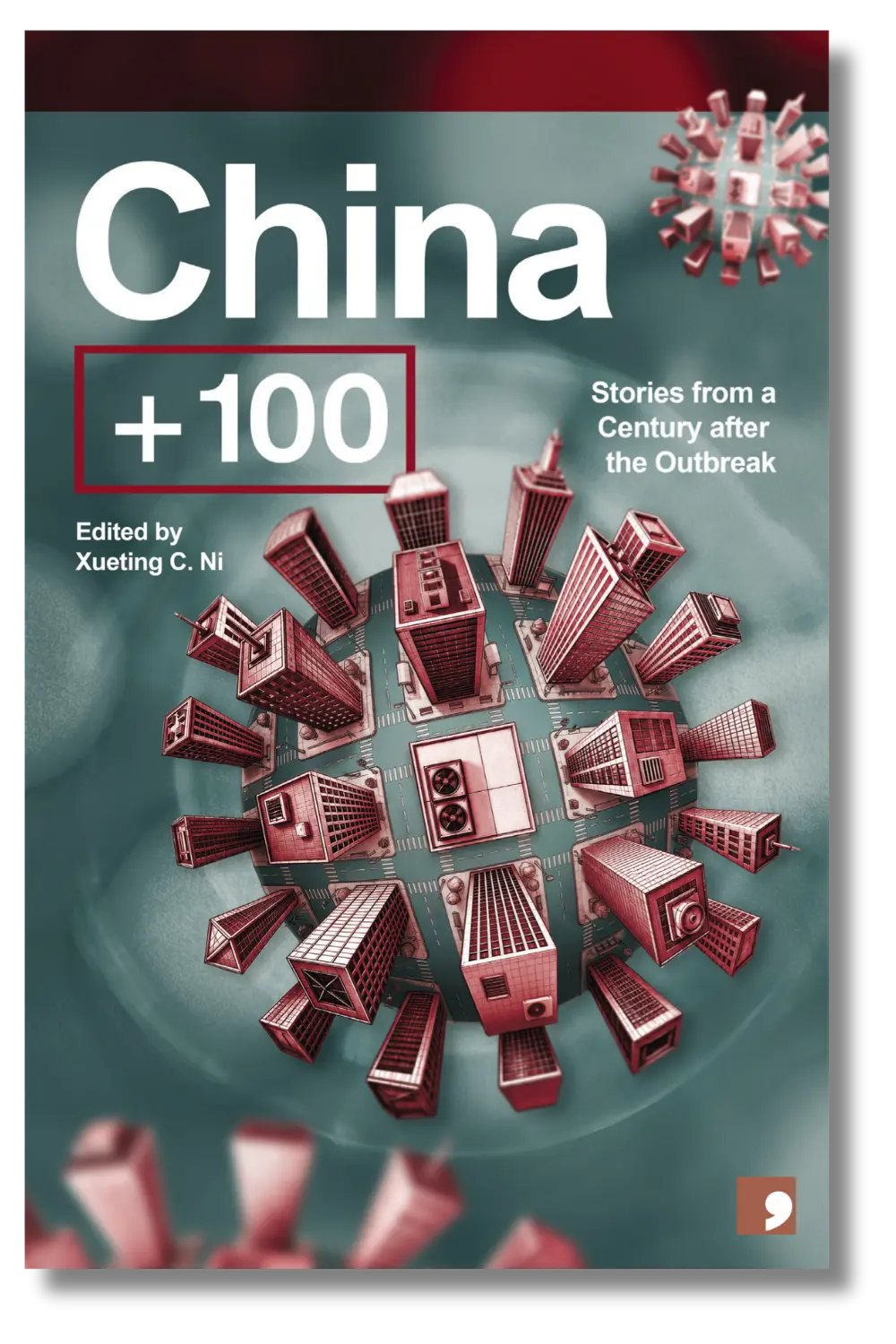
3. China +100 Edited by Xueting C. Ni
Translated from the Chinese by: Xueting C. Ni, Jack Hargreaves, Yahia Ma, Gigi Chang, Christopher MacDonald, Judith Huang, Andrew Rule, and Mel Etvolare Lee
Publisher: Comma Press
Format: Fiction | 192 pages
ISBN: 9781917093217 | Price: US$20.95
The Artistic Vision
As part of Comma Press’s acclaimed +100 speculative fiction series, China +100 looks ahead to envision futures shaped by rapid technological, ecological, and societal shifts. Edited and co-translated by Xueting C. Ni, the anthology features a diverse roster of Sinophone writers and translators exploring everything from transhumanist performance art and deep-space outbreaks to lawless ecological dystopias.
Critical Reception & Analysis
The collection uses speculative fiction as a diagnostic tool for the present, heavily engaging with the intergenerational psychological and societal ripples of the 2019 global health crisis. Publishers and critics have pointed to the collection’s visceral imagery—such as concrete-devouring superfungi, slum clearances disguised as public safety measures, and viral misinformation spreading faster than pathogens.
Standout contributions include Dan Shi’s "Fire" (translated by Yahia Zhengtang Ma), which introduces haunting fields of artificial flowers, and Anna Wu’s "Archaic Dust" (translated by Christopher MacDonald), where microscopic viruses are made chillingly visible to the naked eye. Together, these stories interrogate the boundaries of posthumanism, evolving gender dynamics, and human resilience in an increasingly fragile world.
4. Visceral by María Fernanda Ampuero
Translated from the Spanish by: Frances Riddle
Publisher: Feminist Press
Format: Nonfiction | 184 pages
ISBN: 9781558613737 | Price: US$17.95
The Artistic Vision
Ecuadorian writer María Fernanda Ampuero has cemented her reputation as a leading light of the new wave of Latin American gothic and horror fiction. In Visceral, translated by Frances Riddle, Ampuero turns her piercing gaze toward personal essay and cultural critique, delivering a work that functions simultaneously as a political analysis, a personal confessional, and a horror manifesto.
Critical Reception & Analysis
Publishers Weekly spotlighted Ampuero’s mission statement from the collection’s opening essay:
“As always, when I can’t understand, when my insides twist with rage over injustice to the point I feel I might faint, I turn to literature.”
Drawing inspiration from gothic literary forebears like Mary Shelley and contemporary peers like Mariana Enríquez, Ampuero examines the daily perils of navigating a misogynistic world in a female body. In essays such as "Asphyxiation," she pulls no punches regarding the global rise of far-right politics: "Every time I hear about the triumph of the far-right parties, I think of how the race to the top of the pyramid of democracy is, in fact, a boot stomping on our wombs, our loins, our minds." Blending systemic critiques of patriarchy and colonialism with explorations of internalized body shame, Visceral is an unsparing, urgent salvo against complacency.
5. Kaddish by Radu Vancu
Translated from the Romanian by: Sean Cotter
Publisher: Zephyr Press
Format: Poetry | 176 pages
ISBN: 9781938890406 | Price: US$19.00
The Artistic Vision
Romanian poet Radu Vancu delivers a devastating act of historical and poetic ventriloquism in Kaddish. Translated by Sean Cotter, the collection is written from the perspective of Miklós Radnóti, the Hungarian Jewish poet who was murdered by Nazi forces during a forced march in May 1944 and tossed into a mass grave—only for his final notebook of poetry to be recovered when his body was exhumed in 1946.
Critical Reception & Analysis
A haunting, paradoxical refrain echoes throughout the volume: (Just because I write these poems / doesn’t mean I am alive). Vancu uses this framework to grapple with the intersections of art, war, mass murder, and historical memory. Translator Sean Cotter notes that the collection "demands that all culture respond to the facts of fascism, of murder, and inhumanity." In an era where authoritarian rhetoric and xenophobia are resurgent globally, Kaddish serves as both an elegy for the lost and an urgent warning for the living.
6. I’m Still Here by Marcelo Rubens Paiva
Translated from the Portuguese by: Alison Entrekin and Daniel Hahn
Publisher: Charco Press
Format: Nonfiction | 272 pages
ISBN: 9781917260305 | Price: US$17.95
The Artistic Vision
Originally published in Portuguese in 2015 as Ainda Estou Aqui, Marcelo Rubens Paiva’s acclaimed memoir arrives in a stellar English translation by Alison Entrekin and Daniel Hahn via Charco Press. The book chronicles the harrowing disappearance and torture-murder of Paiva’s father by the Brazilian military dictatorship, and the subsequent decades-long battle waged by his mother, Eunice Paiva, to secure legal accountability and recognition for victims of the regime.
Critical Reception & Analysis
Writing for Time, Alexander Durie detailed how Paiva initially began writing the memoir to preserve his family’s history as Eunice—an influential human rights lawyer and activist—succumbed to Alzheimer’s disease in her eighties, slowly losing memories of her heroic political resistance.
The memoir is rich in dark, unsettling paradoxes. At one point, Paiva writes: "I must express my gratitude to the Brazilian military: thank you for not having killed my mother." Such jarring statements force the reader to reckon with the psychological fallout of state terror. By interweaving individual neurological decline (dementia) with national political amnesia, I’m Still Here expands into a profound meditation on the fragility of memory and democracy.
Supporting Context & Metrics
The international publishing ecosystem in late 2026 exhibits several encouraging trends, alongside persistent structural challenges:
Rise of Collaborative Translation: Multi-translator anthologies—such as China +100 (featuring eight distinct translators) and shared translation credits like Alison Entrekin and Daniel Hahn on I’m Still Here—demonstrate a growing industry commitment to linguistic nuance and community-driven curation.
Genre Hybridization: Nonfiction imprints are increasingly publishing works that blur the lines between memoir, poetry, and political horror (e.g., Ampuero’s Visceral), reflecting a readership hungry for emotionally raw, genre-defying prose.
Geographic Diversity: Independent presses (New Directions, Zephyr Press, Charco Press, Feminist Press, Liveright, and Comma Press) continue to drive the translation market, ensuring that underrepresented literary traditions from Braj Bhasha to Bulgarian and Romanian maintain a vital foothold in the Anglophone market.
Book Title
Author
Translator(s)
Original Language
Genre
Page Count
Publisher
Blue Like My Beloved
Mirabai
Chloe Martinez
Braj Bhasha
Poetry
96
New Directions
The Man with Many Names
Georgi Gospodinov
Angela Rodel
Bulgarian
Fiction
240
Liveright
China +100
Various (Ed. Xueting C. Ni)
Ni, Hargreaves, Ma, et al.
Chinese
Fiction
192
Comma Press
Visceral
María Fernanda Ampuero
Frances Riddle
Spanish
Nonfiction
184
Feminist Press
Kaddish
Radu Vancu
Sean Cotter
Romanian
Poetry
176
Zephyr Press
I’m Still Here
Marcelo Rubens Paiva
Alison Entrekin & Daniel Hahn
Portuguese
Nonfiction
272
Charco Press
Official Statements & Industry Perspectives
Publishers and translators alike have emphasized the socio-political urgency driving this autumn’s catalog. As independent literature faces increasing economic pressures globally, translation editors note a distinct shift toward works that directly challenge historical revisionism.
Chloe Martinez on Mirabai: Emphasizing the linguistic layers of pre-modern devotional texts, Martinez highlights that translating early mystic poetry requires honoring both its vernacular simplicity and its sophisticated theological scaffolding.
Sean Cotter on Radu Vancu’s Kaddish: Noting the timeless relevance of anti-fascist literature, Cotter underscores that Vancu’s dialogue with Miklós Radnóti acts as a moral imperative for contemporary artists navigating political crisis.
Charco Press on I’m Still Here: Highlighting the universal stakes of Paiva’s memoir, editorial statements emphasize the book’s dual exploration of personal grief and collective state accountability.
Future Outlook
As we look toward the close of 2026 and into the publishing schedules of 2027, the success of October’s translation slate signals robust reader appetite for literature that defies easy categorization.
Key indicators to watch in the coming months include:
Increased Institutional Support: Grant-awarding bodies and cultural institutes are expanding funding for translators tackling marginalized or endangered languages.
Digital Cross-Pollination: Literary journals and digital platforms (such as Words Without Borders) are playing an increasingly vital role in previewing translated excerpts, lowering barriers between international writers and English-speaking audiences.
Thematic Urgency: Publishers are expected to continue prioritizing works that interrogate authoritarianism, ecological collapse, and bodily autonomy, proving that international literature is not an esoteric luxury, but an essential map for navigating our shared global future.







Comments
Facebook App ID not configured. Please add it in the Customizer.