
Executive Overview
The journey of a literary work across linguistic boundaries is rarely a simple act of substitution; rather, it is a recreation, a high-stakes balancing act between two distinct literary ecosystems. But when the text in question is Centroeuropa—Spanish novelist Vicente Luis Mora’s formally radical, structurally oppressive, and chronologically rigid tour de force—the act of translation ceases to be merely difficult. It becomes an architectural labyrinth.
Published originally in Spanish in late 2020, Centroeuropa tells a haunting, multi-layered story anchored by a chilling central image: ancient soldiers frozen like scarecrows, rooted vertically to the Prussian earth. Yet, the true marvel of the novel lies not solely in its imagery, but in its mathematical mechanics. Mora imposed an uncompromising set of constraints upon himself during composition: strict word counts that double precisely with every chapter, alongside an absolute linguistic rule forbidding the use of any word or lexical phrase that did not exist roughly two centuries ago, matching the period in which the book is set.
When award-winning translator Rahul Bery encountered the novel, he was simultaneously spellbound and unsettled. Recognizing the extraordinary audacity of Mora’s self-imposed structural "inferno," Bery chose to accept the challenge, navigating the lexical limitations of nineteenth-century English while matching the exact, unforgiving word counts of the original Spanish. Published first in the UK by Peninsula Press and subsequently in the United States by Bellevue Literary Press, the English edition of Centroeuropa has introduced North American readers to a bold new horizon of contemporary European fiction.
Read Also
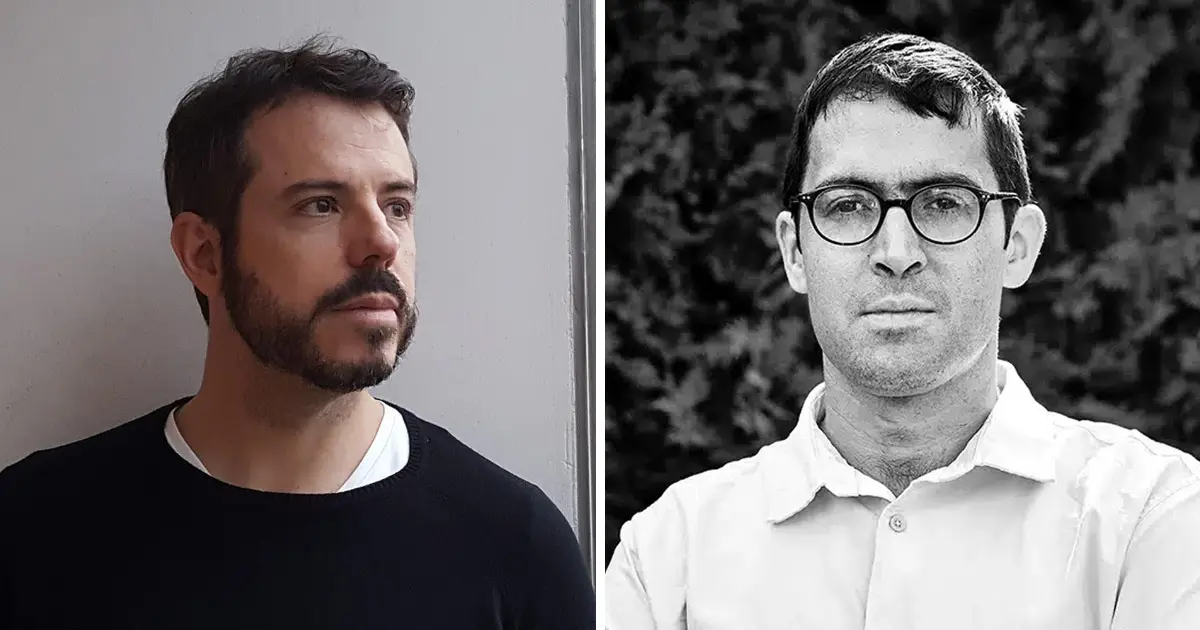
In this in-depth interview, Mora and Bery discuss the germination of the original text, the agonizing mathematical and linguistic constraints of translating a structural monolith, the vital role of editorial collaboration, and the profound alchemy that turns an impossible foreign novel into a vibrant, living English-language text.
Detailed Chronology: From Prussiana to the Page and Beyond
To fully grasp the magnitude of Centroeuropa, one must trace its path from an unexpected historical epiphany in the mind of its author to its meticulous reconstruction by its translator. The lifecycle of the book maps out a compelling narrative of creative obsession, international collaboration, and editorial precision.
The Spark: Historical Epiphany and the Birth of Redo
The genesis of Centroeuropa began quietly, far removed from the machinery of contemporary publishing. Vicente Luis Mora was reading a standard historical text concerning the history of Prussia when an unprompted vision violently disrupted his reading.
"A few years ago, I was reading a text about the history of Prussia and suddenly, out of nowhere, I clearly saw in my imagination a bunch of frozen corpses of ancient soldiers rooted to the ground, standing upright like scarecrows," Mora recalls. "It was a sort of epiphany."
For Mora, the vision carried an immediate, binding imperative. The image was not merely decorative; it was demanding. "As soon as the image came, I understood that I was now obliged to write a story about these men," he explains. Over the ensuing weeks, additional visions crowded into his consciousness until he finally encountered the novel’s central protagonist, Redo, waiting in what he describes as "a luminous corner of my mind."
When Mora posed a simple question to this internal creation—"Do you want to write a novel?"—Redo accepted, and the long, rigorous process of writing Centroeuropa officially commenced.
Discovery and the Anglophone Pitch
Across the linguistic divide, Rahul Bery read the novel shortly after its late-2020 Spanish publication. He found it so overwhelmingly brilliant and deeply unsettling that it occupied his thoughts long after he turned the final page. Driven by curiosity, Bery sought out a blog post written by Mora, wherein the author meticulously detailed the hidden and overt structural restrictions he had weaponized against himself during the writing process.
Upon reading the blog post, Bery returned to the novel for a second time, finding it "immeasurably rich." Despite Mora’s candid admissions regarding the "infernal" nature of writing under such strict constraints—such as chapter-by-chapter word counts that double precisely—Bery felt an irresistible pull. He recognized the text not as an untranslatable puzzle, but as a defining challenge he was compelled to undertake.
Following months of dedicated labor spent crafting a compelling pitch, Bery secured publication with Peninsula Press in the United Kingdom. Shortly thereafter, Erika Goldman at Bellevue Literary Press in the United States encountered the finished version. Recognizing the rare power of the text, Bellevue acquired the US rights, setting the stage for the book’s explosive second life across the Atlantic.
Supporting Context & Metrics: The Mechanics of Constraint
What separates Centroeuropa from standard contemporary fiction is its heavy reliance on algorithmic and historical constraints. Translating such a work requires an extraordinary set of metrics, patience, and linguistic archaeology.
The Tyranny of the Word Count
Spanish and English share Latin roots, yet they maintain drastically different rhetorical rhythms. Spanish is frequently more concise, while English routinely expands during translation. For Bery, this linguistic reality posed an existential threat to the integrity of the project. Because Mora’s chapters rely on exact, exponentially doubling word counts, any expansion in English would immediately violate the structural DNA of the novel.
"Trying to make my translation more succinct than the original was very hard," Bery notes. Yet, this daunting restriction ultimately yielded a positive byproduct: "I turned it into a virtue by being very merciless with revising in a way that I usually struggle with."
The mathematical peril did not end with the initial translation. The editing process introduced further complications. While a copyeditor’s suggestion to alter a phrase might seem minor in a standard novel, in Centroeuropa, a single altered word could completely throw off a strict mathematical count.
"Easy enough when that number is 750, pretty difficult when it’s 24,000," Bery explains. Following publication, Bery utilized the window before the US edition to conduct yet another rigorous post-publication edit, ensuring that every chapter’s word count hit its precise numerical target without exception.
Historical Lexicography and the "Paceified" Neologism
Beyond mathematics, Bery had to adhere to a strict historical boundary: avoiding any word or phrase that did not exist approximately two hundred years ago, aligning with the period of the novel’s setting.
Surprisingly, this lexical restriction proved less cumbersome than the word counts, though it did demand intense vigilance. Bery credits Will Rees, his editor at Peninsula Press, for catching a subtle anachronism that had slipped past both the author in the original Spanish and the translator in English: the word "narcissist," which was not coined until the twentieth century.
On a sentence level, the prose was generally accessible, but Mora occasionally injected idiosyncratic coinages. A prime example is the Spanish portmanteau enrutecido, synthesized from embrutecido (stupefied) and ruta (route or track), deployed to describe a character who attempts to quiet obsessive thoughts by walking vast distances.
Bery’s English solution—"paceified"—is a brilliant linguistic equivalent, though its boldness momentarily confused even seasoned professionals. "I like my solution… though at least one editor assumed it was a typo!" Bery laughs.
Official Statements: Dialogues Between Author and Translator
The collaborative dynamic between Vicente Luis Mora and Rahul Bery exemplifies the ideal synergy of modern literary translation, blurring the line between original creation and cross-cultural recreation.
+-------------------------------------------------------------------+
|                        THE COLLABORATIVE WEB                      |
|                                                                   |
|   [Vicente Luis Mora] ---------- Blog Posts & Metacritical Notes  |
|          |                                                        |
|          +--- Direct Zoom Consultations (2023–2024)               |
|          |                                                        |
|          v                                                        |
|   [Rahul Bery]     ------------ Rigorous English Re-creation      |
|          |                                                        |
|          +--- Mathematical Word-Count Enforcement                 |
|          |                                                        |
|          v                                                        |
|   [Global Success] ------------ US & UK Critical Acclaim          |
+-------------------------------------------------------------------+
Preemptive Assistance and Continuous Dialogue
Rather than operating in isolation, Bery benefited immensely from Mora’s own transparency. "Vicente already helped hugely, before we had even spoken, by dissecting the novel so thoroughly on his blog," Bery remarks.
This initial documentation was supplemented by a foundational Zoom conference at the outset of the project, followed by a relentless exchange of emails across 2023 and 2024. This constant communication transformed what could have been a solitary ordeal into a shared enterprise.
"Nowadays it’s almost a cliché or truism to talk of translations as entirely new texts," Bery reflects, "thanks to Vicente, I feel this to be true on both a literal and deeper level."
The Author’s Perspective
Mora, for his part, maintained an open-door policy while harboring profound respect for his translator’s independent intellect and linguistic sensitivity.
"Throughout the translation process, I was available for Rahul and I did my best to clarify for him the obscure references or the tricky words with double meanings," Mora states. Yet, he quickly pivots to high praise for his collaborator: "But he is a great translator and understood the novel better than me. Now, reading the text in English is for me like going through it in Spanish."
Future Outlook: Metaphors of Endurance and Legacy
As Centroeuropa continues to find receptive audiences across North America and Europe, both author and translator reflect on the overarching identity of the book through striking metaphors that encapsulate its haunting atmosphere.
Asked to distill the essence of the novel into a single image or metaphor, Bery returns to the central visual motif of the text: "For me, no image can beat the central one in the novel: the frozen soldiers from the distant past and future, standing in a field, impervious to damage and silently witnessing life around them."
Invoking the literary criticism of Samuel Beckett regarding James Joyce’s Finnegans Wake, Bery suggests that Mora’s work transcends mere representation: "I truly believe Vicente is getting at something Samuel Beckett noted… it ‘is not about something; it is that something itself.’"
Mora offers an equally evocative psychological metaphor for the reader’s journey through the labyrinthine text: "Well, it’s like experiencing a nightmare backwards: At the end, you’ll wake up comfortably numb."
Biographical Profiles
Vicente Luis Mora is a distinguished Spanish novelist, poet, essayist, and literary critic. Formerly the director of the Instituto Cervantes in Albuquerque, New Mexico, he currently teaches Spanish and Latin American literature at the University of Málaga in Spain. Centroeuropa marks his landmark debut novel published in North America.
Rahul Bery is an award-winning literary translator working from Portuguese and Spanish. His extensive translation credits include celebrated novels by authors such as Fernando J. Muñez, Michel Nieva, and David Trueba. A two-time recipient of PEN Translates Awards, Bery’s translation of Centroeuropa was longlisted for the Queen Sofía Spanish Institute Translation Prize. His work has appeared in prestigious publications including the Times Literary Supplement, White Review, Granta, Words Without Borders, and the Yale Review. He resides in Cardiff, Wales.


Comments
Facebook App ID not configured. Please add it in the Customizer.