
Executive Overview
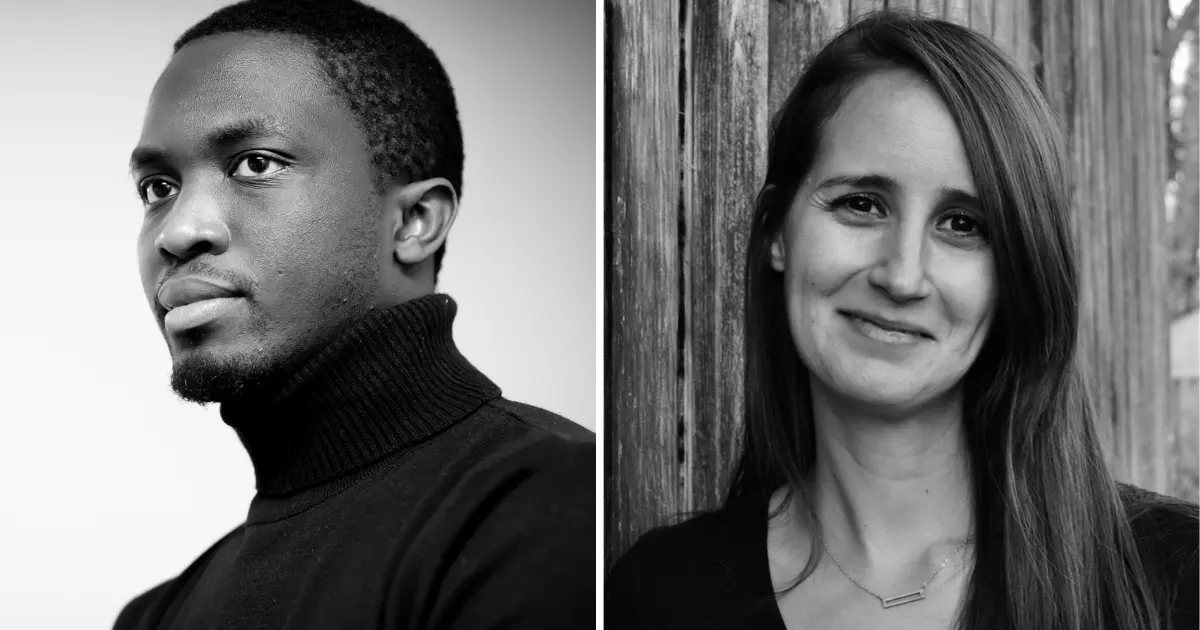
In the literary landscape of contemporary fiction, few creative relationships yield translations as deeply attuned to their source material as the ongoing collaboration between French-Senegalese author Mohamed Mbougar Sarr and literary translator Lara Vergnaud. Following their celebrated work on Sarr’s Goncourt-winning masterpiece, The Most Secret Memory of Men, the duo has returned with the English-language publication of Pure Men. Originally written in France prior to his breakthrough success, Pure Men represents a vital, harrowing, and foundational pillar of Sarr’s burgeoning literary legacy.
The novel, now accessible to English-speaking readers through Other Press, was born from a visceral trauma that haunted Sarr for a decade: a 2008 viral video documenting a raging mob in Senegal exhuming the corpse of a suspected homosexual man. This horrific act of post-mortem violence serves as the catalytic heartbeat of a novel that challenges societal bigotry, investigates collective complicity, and confronts the perilous intersections of identity, morality, and systemic prejudice.
Bringing such a structurally complex and emotionally volatile text across the linguistic divide required an extraordinary balancing act. Vergnaud’s translation navigates a multifaceted web of cultural specificity, historical context, and stylistic shifts—from lyrical prose to sharp, biting irony. In this comprehensive joint interview and retrospective analysis, Sarr and Vergnaud illuminate the arduous creative journey behind Pure Men. They discuss the ten-year gestation of the narrative, the nuanced linguistic dilemmas of rendering West African socio-cultural realities into English, the delicate mechanics of author-translator collaboration, and the profound metaphorical resonance of a novel that acts as both a mirror to societal cruelty and a time machine into the formative consciousness of one of contemporary literature’s most vital voices.
Read Also
Detailed Chronology: From a Senegalese Smartphone Video to International Publication
The genesis of Pure Men is inextricably linked to a dark digital artifact that circulated across mobile phones in Senegal in 2008. At the time, Mohamed Mbougar Sarr was an 18-year-old student residing at a military high school in Senegal. The footage he witnessed—depicting a frenzy of citizens unearthing the body of a man accused of homosexuality during his lifetime—etched itself permanently into his psyche.
[2008: Traumatic Video Emerges]
        │
        ▼
[10-Year Psychological Gestation]
        │
        ▼
[Composition of 'Pure Men'] (Published in France prior to Goncourt win)
        │
        ▼
[Success of 'The Most Secret Memory of Men'] (Translated by Lara Vergnaud)
        │
        ▼
[English Translation & Publication of 'Pure Men'] (Other Press)
For nearly a decade, the images lingered, refusing to dissipate. They ultimately crystallized into the opening scene of Sarr’s third novel. Although Pure Men was written and initially published in France before The Most Secret Memory of Men, its English publication follows Vergnaud’s translation of the Goncourt-winning novel. This inverted chronological trajectory in the Anglosphere provided a fascinating meta-narrative for both author and translator. Having already established a seamless creative synergy on The Most Secret Memory of Men, Vergnaud approached Pure Men with a heightened sensitivity to Sarr’s stylistic fingerprint, while Sarr watched with curious anticipation to see how his earlier, more hesitant literary impulses would manifest in English.
For Vergnaud, the project demanded an immediate confrontation with the gruesome and taboo realities of the source material. The exhumation scene, rooted in a verifiable, tragic incident of homophobic violence in Senegal, set a somber and urgent tone for the entire manuscript. As Sarr’s body of work garners explosive, much-deserved international attention, the publication of Pure Men serves as a crucial historical and artistic anchor, shedding light on the thematic roots that preceded his global acclaim.
Supporting Context & Metrics: The Mechanics of Literary Translation
Translating a writer of Sarr’s caliber is an exercise in stylistic endurance and cultural negotiation. Sarr’s prose is characterized by linguistic multiplicity, rhythmic cadences, tonal shifts, and an unsparing gaze toward human cruelty balanced by profound empathy. When bringing Pure Men into English, Vergnaud faced the formidable task of preserving these competing registers without flattening the text into an accessible, yet sterile, monocultural English.
Navigating Cultural and Linguistic Specificities
One of the primary challenges for Vergnaud was the meticulous handling of localized terminology, time periods, and geographical markers. Translators working across postcolonial frameworks frequently grapple with the tension between domesticating a text for an English-reading audience and foreignizing it to preserve its authentic cultural texture.
A prime example of this delicate deliberation occurred with the translation of the French term "travesti." After thorough consideration, Vergnaud opted for the historically charged and deliberately outdated English equivalent, "transvestite." This choice was not made lightly; it was designed to capture the specific sociological and temporal framing of the narrative. The validity of this rigorous approach was subsequently validated by critical reception, including a perceptive review in Words Without Borders that singled out the translation choices for their historical and cultural resonance.
Furthermore, Vergnaud had to render complex cultural scenes into English without losing their rhythmic momentum. Sarr explicitly noted his eagerness to see how Vergnaud would tackle dense, culturally specific set-pieces, such as the sabar scene or the passages involving the jotalikat (intermediaries or heralds in Wolof culture).
The Ultimate Test: The Final Sentence
In any novel, the closing line carries an immense structural and emotional weight. In Pure Men, the final sentence is deceptively simple yet critically important to the book’s overarching thematic resolution. Translating simplicity in literature is often far more difficult than translating ornate prose, as every minor lexical shift threatens to alter the cadence or emotional register.
Vergnaud admitted that the final line was perhaps the trickiest challenge of the entire project. Her anxiety was only placated when Sarr reached out following the completion of the translation to offer his unqualified praise, assuring her that she had captured the exact emotional and sonic pitch of the original French text.
Official Statements and Perspectives
The working relationship between Mohamed Mbougar Sarr and Lara Vergnaud exemplifies an ideal model of transnational literary collaboration—one defined by mutual respect, professional autonomy, and open communication channels.
Mohamed Mbougar Sarr on Craft and Collaboration
Reflecting on his role during the translation process, Sarr characterized his involvement with characteristic humility and philosophical distance:
"I try to act like a shadow, always present but silent. However, I am curious about the work-in-progress, and I try to be available if needed, to specify, clarify, give some helpful elements (for historical or social context, for example). Lara and I usually organize a call or—even better—meet in a café, to talk very freely about the book."
Sarr expressed deep satisfaction with how Vergnaud handled the most demanding elements of the novel. Rather than feeling alienated by the transformation of his work into another language, Sarr experienced "the sweet feeling of rediscovering my own book"—the ultimate validation for any author navigating the translation of deeply personal and politically charged material.
Lara Vergnaud on the Author as a "Distant Benevolent Presence"
Echoing Sarr’s sentiments, Vergnaud praised the author’s hands-off yet deeply supportive approach:
"Sarr is an ideal writer to translate—a distant benevolent presence whom I know is there to help if needed, but also slightly indifferent, in the sense that he respects the translation as its own creation, which doesn’t necessarily require his intervention."
Despite Sarr’s editorial independence, Vergnaud emphasized the indispensable value of direct dialogue when creative impasses arose. Rather than relying solely on asynchronous email exchanges, their scheduled phone calls and in-person meetings served as the keys to unlocking difficult passages. Hearing Sarr read or talk through a scene provided the intuitive clarity needed to transpose complex Wolof-infused or culturally dense French phrasing into evocative, precise English.
Future Outlook: Legacy, Memoir, and Ongoing Translation
The publication of Pure Men by Other Press marks a significant milestone in the global dissemination of African literature in translation. As Mohamed Mbougar Sarr continues to build an internationally celebrated body of work—bolstered by his status as a Chevalier of the National Order of Merit in Senegal and his landmark literary prizes—the availability of his earlier, foundational texts allows critics and readers to trace the evolutionary arc of his philosophical and stylistic development.
For Lara Vergnaud, the critical acclaim surrounding Pure Men further cements her reputation as one of the preeminent literary translators working from the French language today. With two PEN/Heim Translation Fund grants, a French Voices Grand Prize, and a National Book Award shortlist already to her name, Vergnaud’s upcoming literary footprint is expanding into original creative non-fiction. Her highly anticipated memoir, Untranslatable, is slated for publication in early 2027, promising an intimate, intellectually rigorous exploration of language, displacement, and the complex art of carrying meaning across cultural divides.
Ultimately, both Sarr and Vergnaud conceptualize Pure Men through powerful metaphors that extend far beyond the printed page. When asked to distill the novel into a musical or conceptual image, Sarr pointed to Wasis Diop’s song "Xoolal bu baax"—a poignant meditation on the moral imperative of seeking the truth before passing judgment.
Vergnaud, meanwhile, viewed the translation process itself through the lens of temporal exploration:
"A time machine? Translating this book felt like traveling back in time to meet a different, younger version of Sarr. His style is there, but perhaps a bit more hesitant; his humor, too, and his authorial quirks. I loved finding these, and then trying to make that same subtle timeline present in my translation as well."
Through this meticulous act of linguistic time travel, Sarr and Vergnaud have ensured that the ghosts of Pure Men will continue to haunt, challenge, and enlighten English-speaking readers for generations to come.





Comments
Facebook App ID not configured. Please add it in the Customizer.