
Executive Overview
The journey of a professional author is rarely a straight line; rather, it is a deliberate, often grueling ascent up a literary mountain. For acclaimed children’s and young adult author Dusti Bowling—best known for her celebrated works including the Aven Green chapter books, the Cactus series, and her latest venture into young adult fiction with The Drowning Game—stepping into the world of publishing began with a healthy dose of pragmatism. Confronted with the daunting prospect of drafting a 300-page novel without prior long-form writing experience, Bowling realized she needed to condition her creative stamina just as an athlete prepares for a triathlon.
This strategic decision to start small, however, birthed a common and persistent misconception in the literary community: the pervasive myth that writing for younger demographics is inherently easier than writing for adults. In this comprehensive examination of Bowling’s career trajectory, we explore the mechanical realities of genre-hopping, the vital importance of "field research" and deep reading, the psychological mechanics of capturing authentic youth voices across different developmental stages, and the natural progression that ultimately led her back to her lifelong literary obsession—the murder mystery.
Detailed Chronology: From Pragmatic Beginnings to YA Thrillers
The Marathon Mindset: Building Writing Stamina
When Bowling first decided to pursue her dream of becoming a published author, she understood the mechanics of storytelling at a reader’s level, but her "writing muscles" were completely untested. Jumping straight into an epic novel would have led to quick burnout.
Read Also
[Reading & Mental Prep]
       │
       ▼
[Chapter Books / Early Readers] ──► (Aven Green series: Immersive Voice Study)
       │
       ▼
[Middle Grade Fiction] ──────────► (Cactus series: Expanding Narrative Depth)
       │
       ▼
[Young Adult Thrillers] ─────────► (The Drowning Game: High Stakes & Mature Themes)
To combat this, she treated her writing career like athletic training. She started with shorter, younger books—a pragmatic choice designed to build confidence, establish daily writing habits, and learn the structural constraints of pacing and plot on a smaller scale. Her early experimentation involved writing a series of short chapter books that, while never destined for publication, served as her foundational training ground. During this period, she immersed herself in titles like Junie B. Jones and The Magic Treehouse series, absorbing their distinctive comedic timing, innocent perspectives, and child-centric worldviews.
Stepping Up to Middle Grade
Once she had mastered the cadence of early chapter books, Bowling challenged herself to tackle longer middle-grade novels. This transition required a shift not only in word count but in emotional resonance and thematic complexity. To prepare, she devoured contemporary classics such as Louis Sachar’s Holes and Wendy Mass’s When You Reach Me.
Yet, translating adult thoughts into the mind of a pre-teen or early teenager is a masterclass in empathy and observation. Bowling’s deep background working in elementary schools and child-centered charities, combined with raising three children of her own, provided an invaluable reservoir of real-world observations. Characters like Aven Green in Insignificant Events in the Life of a Cactus and the young protagonists of 24 Hours in Nowhere were born from this immersive understanding of how children actually think, speak, and process trauma or adventure.
The Leap to Young Adult and the Allure of Murder
Throughout her career in children’s literature, Bowling carried a secret ambition: to write a full-fledged murder mystery. Her fascination with high-stakes crime narratives began in childhood with Nancy Drew mysteries—particularly those involving ominous plots like The Mystery of the Ivory Charm and The Sign of the Twisted Candles—and evolved through the darker, more intense thrillers of Christopher Pike.
This lifelong obsession naturally bled into her children’s fiction. Aven Green immediately suspects a murderer at Stagecoach Pass, and the core conflict of 24 Hours in Nowhere hinges on a decades-old crime. However, writing middle-grade fiction imposed strict boundaries. As Bowling wryly notes, elementary school librarians tend to frown upon plots saturated with greed, deception, and brutal homicide.
Inspired by the master of suspense himself, Alfred Hitchcock—drawing from the psychological depths of Psycho, the twisted choreography of Rope, and the voyeuristic tension of Rear Window (with Vertigo reigning supreme as her all-time favorite)—Bowling finally made the long-awaited leap into Young Adult fiction with her novel The Drowning Game. Transitioning to YA allowed her to finally incorporate the mature themes, complex language, and dark psychological stakes that had fascinated her since childhood.
Supporting Context & Metrics: The Myth of the "Easy" Children’s Book
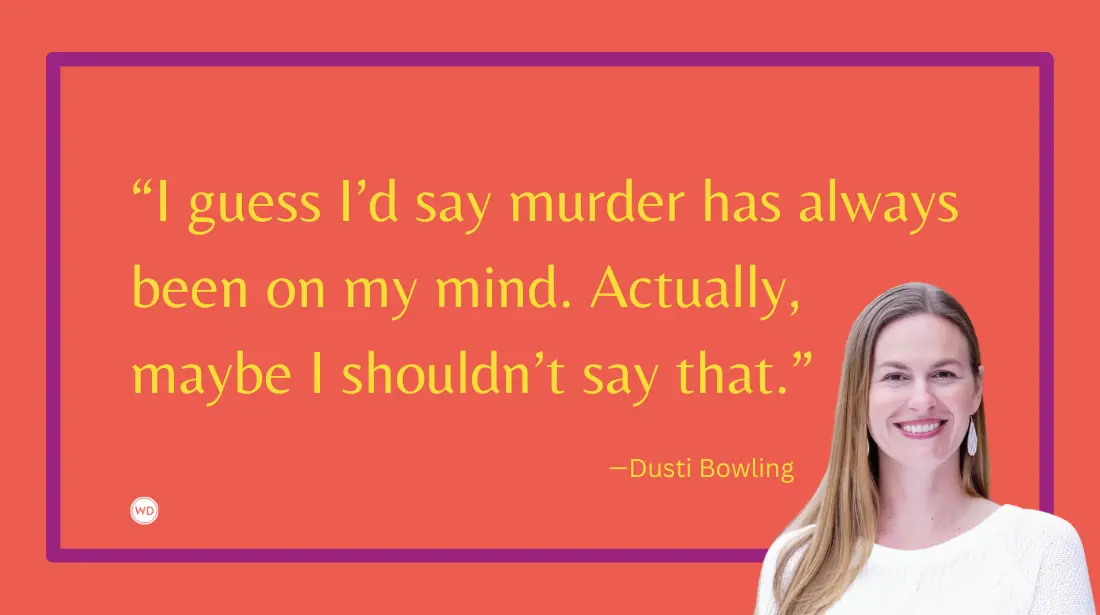
The literary world is rife with casual condescension, often directed at authors who write for children and young adults. Shortly after publishing her first book in 2017, Bowling found herself seated at a panel event alongside several other authors. One peer turned to her and casually asked, "Oh, you write children’s books? Isn’t that, like, a lot easier than writing for adults?"
It is a question that has lingered in Bowling’s mind for nearly a decade—a testament to how widely misunderstood the genre is. Ironically, she later discovered that the author who posed the question wrote cookbooks, highlighting a profound lack of insight into narrative fiction writing.
The Structural Challenges of Writing for Youth
| Target Demographic | Primary Challenge | Key Risk | Required Reading Immersion |
|---|---|---|---|
| Chapter Books (Ages 6-9) | Capturing hyper-innocent, comedic, and naive perspectives authentically. | Writing down to children or sounding overly didactic. | Junie B. Jones, The Magic Treehouse |
| Middle Grade (Ages 8-12) | Balancing emotional depth with restricted thematic boundaries (no graphic violence/sex). | Introducing mature concepts too bluntly for school markets. | Holes, When You Reach Me |
| Young Adult (Ages 13-18) | Navigating complex moral gray areas, high-stakes suspense, and authentic teenage angst. | Inauthentic dialogue and tone-deaf adult projections. | Thrillers, Liane Moriarty, Karen McManus |
As the metrics and creative hurdles indicate, writing shorter or younger books does not equate to a simplified creative process. In many ways, the constraints are tighter. An author must convey profound emotional truths, complex plots, and character growth using a drastically reduced vocabulary and constrained thematic palette.
Official Statements & Author Insights
Reflecting on her career trajectory, Bowling emphasizes that reading and writing are inextricably linked. Her core philosophy for aspiring writers remains steadfast:
"The best thing you can do to be the best writer you can be is to read a lot of books and to read widely."
Bowling argues that it is fundamentally impossible to write authentically for an audience without immersing oneself in that audience’s literature.
- "I don’t believe that a person can write books if they don’t read them," she states. "I don’t think you can authentically capture the voice of an eight-year-old, a thirteen-year-old, or an eighteen-year-old if you haven’t read a lot of books from those perspectives. Not only that, but you might make the mistake of putting a brutal murder in a chapter book, and that would be a terrible move for your writing career."
Addressing the transition to Young Adult fiction, Bowling notes a surprising sense of liberation:
- "Was it hard to transition from writing chapter books and middle grade to young adult? Honestly, not really. I suddenly found ourselves able to include themes and language and topics that are a lot closer to my own thought processes, life experiences, and feelings."
And to the anonymous cookbook author who questioned the difficulty of children’s literature, Bowling delivers a definitive, hard-earned verdict:
- "Granted, I’m no teenager, but it’s a whole lot closer to my own maturity level than what I’d been writing. And I imagine writing from a full-blown adult’s perspective might be even easier because I am, in fact, a full-blown adult. So, to answer that condescending cookbook author’s question: ‘Isn’t writing children’s books, like, a lot easier than writing for adults?’ No. No, it definitely is not."
Future Outlook: The Intersection of Suspense and Youth Literature
As Dusti Bowling continues to expand her literary footprint with high-profile releases like The Drowning Game, the boundaries separating children’s literature, young adult fiction, and adult thrillers are becoming increasingly fluid. Modern readers—both young and old—crave sophisticated plots, morally complex protagonists, and high-stakes mysteries that do not talk down to them.
Bowling’s career serves as a masterclass for aspiring writers across all genres. By respecting the nuances of each age group, doing the necessary "field research" through relentless reading and life experience, and refusing to take shortcuts, she has built a dynamic, highly respected body of work. Whether she is crafting the innocent optimism of a chapter-book protagonist or the dark, twisty suspense of a young adult thriller, Bowling proves that great storytelling knows no age limits—even if the work required to bring those stories to life is heavier than most people realize.



Comments
Facebook App ID not configured. Please add it in the Customizer.