
Executive Overview
In the realm of contemporary fiction, genre boundaries are frequently treated as impermeable walls. Authors writing horror, suspense, and dark supernatural thrillers are traditionally expected to maintain a steady, unyielding atmospheric pressure—a relentless march through grief, terror, and existential dread. Comedy, by this conventional logic, is the ultimate immersion-breaker: a sudden, jarring splash of cold water that reminds readers they are merely consuming a construct, stripping away carefully accumulated emotional tension.
Yet, a growing body of work challenges this dichotomy. When celebrated author David Moody labels a supernatural thriller "wickedly funny," and Matthew Specktor, editor of the Los Angeles Review, calls it "a total joy," it highlights an advanced narrative craft: the seamless integration of humor into dark, harrowing fiction.
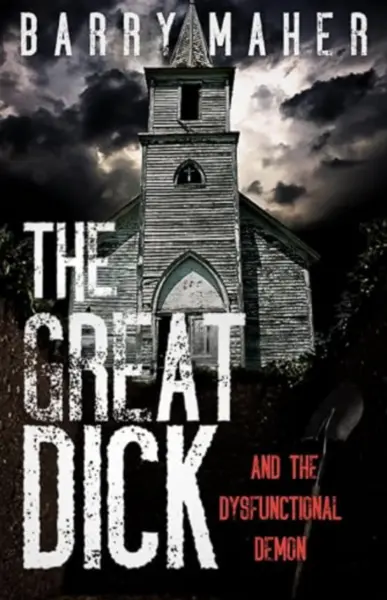
At the center of this conversation is author Barry Maher and his novel, The Great Dick: And the Dysfunctional Demon. Blending the literary weight of classic Americana (parodying both The Great Gatsby and Moby-Dick) with the visceral terror of open crypts, bizarre rituals, and sudden death, Maher’s work achieves a delicate alchemy. Far from undercutting the narrative’s suspense, the humor within Maher’s universe acts as a psychological pressure valve. It mirrors human resilience in the face of the macabre.
Read Also
This article explores the mechanics of blending comedy with darkness, drawing on Maher’s unique personal journey—including a life-altering medical emergency—to illuminate how organic humor elevates character depth, deepens emotional resonance, and makes terrifying narratives feel profoundly human.
Detailed Chronology: From a Basketball-Sized Tumor to a Supernatural Thriller
To understand the tonal balancing act of The Great Dick: And the Dysfunctional Demon, one must examine its genesis, which reads as a surreal narrative in its own right.
The Medical Crisis
Prior to writing his supernatural thriller, Maher enjoyed a successful career as a professional public speaker. While delivering a presentation aboard an Asian cruise, Maher experienced a startling cognitive shift: he suddenly lost the ability to tell time.
The underlying cause was staggering. Medical evaluations revealed a brain tumor described as roughly the size of a basketball (though Maher wryly notes his neurosurgeon may have said "baseball," adding that his cognitive tracking at the time was less than optimal).
The Surgical Awakening
Hospitalized shortly thereafter, medical teams performed craniotomy surgery, utilizing specialized power tools to open his skull and excise the massive tumor. It was in the immediate aftermath of this profound neurological trauma that the genesis of his novel occurred.
Upon waking from anesthesia, Maher did not experience a hazy fog of recovery. Instead, he found a vivid, fully formed, and terrifying narrative waiting in his mind—complete and cinematic, resembling the memory of a dark film he had just watched.
The Evolution of the Manuscript
The initial vision was unremittingly grim—a pure exercise in horror, pressure, fear, and confusion. However, recognizing that sustained, relentless dread can exhaust both a narrative and its readership, Maher faced a crucial structural challenge. He needed to vary the emotional intensity.
Rather than pasting superficial gags into dark scenes, Maher allowed the humor to emerge organically through his protagonist, Steve—a former hero turned fugitive. Placed in increasingly absurd and horrific situations, such as being trapped in a tomb with a decomposing corpse or confronting a demon he cannot bring himself to believe in, Steve’s internal psychological defenses kick in. His wit, denial, and skepticism become his survival mechanisms. Through extensive rewriting and narrative refinement, the book transformed from a grim nightmare into a multi-layered, critically acclaimed supernatural thriller that balances terror with dark comedic relief.
Supporting Context & Metrics: The Anatomy of Organic Humor in Fiction
The challenge of balancing disparate emotional tones is a central debate in creative writing pedagogy. Writers frequently wrestle with the risk of humor undermining high-stakes scenes.
The Mechanics of the "Pressure Valve"
In structural writing analysis, humor functions similarly to dramatic irony or pacing shifts. Just as a eulogy for a beloved figure often features moments of levity that ultimately induce tears, narrative fiction requires emotional fluctuations to sustain reader engagement.
[High Tension / Fear] ---> [Psychological Defense / Humor] ---> [Renewed Emotional Investment]When humor is forced—such as a tacked-on one-liner or a pop-culture reference that shatters historical or genre immersion—it fails. However, when humor rises from pressure (fear, grief, embarrassment, denial, anger, panic, or guilt), it acts as a character-reveal.
The Rules of Organic Integration
Maher’s methodology, drawn from both his fiction writing and his syndicated weekly humor column, Slightly Off-Kilter, relies on several core principles:
- Start with the Story, Not the Joke: Writers should never construct a serious scene and subsequently decorate it with punchlines. Instead, comedy must emerge from character motivations, fears, and internal conflicts.
- Character-Driven Wit: Not every character needs to be a comedian. Contrast is vital: a grimly practical character placed next to an anxious, wisecracking narrator creates dynamic tension without requiring universal levity.
- The Revision Crucible: Maher emphasizes that humor is frequently uncovered during the rewriting process. A line that is witty in isolation must be rigorously tested: Does it reveal character? Does it advance the plot? Does it make the pressure feel more real? If a line merely announces, "Look how clever I am," it must be excised, regardless of how funny it is.
Official Statements and Critical Reception
The integration of dark themes and sharp wit in Maher’s work has garnered notable praise from authors and literary editors alike, validating the approach of blending horror with humor.
- David Moody, Acclaimed Author: Described The Great Dick: And the Dysfunctional Demon as "wickedly funny," highlighting how the novel subverts traditional expectations of supernatural horror.
- Matthew Specktor, Editor of the Los Angeles Review: Praised the book as "a total joy," pointing to the narrative buoyancy that prevents the dark subject matter from becoming oppressive.
Maher himself reflects on the surprising reader response to the book’s comedic elements:
"When people first started commenting on how funny the book was, I was surprised. The book isn’t packed with comic lines. But the right comment at the right moment can give a little humor tremendous power."
Addressing the danger of artificial humor, Maher notes the importance of character authenticity over isolated gags:
"If a comic line doesn’t mesh with that tone, it’s going to be jarring. And it has to go. No matter how funny it might be."
Future Outlook: The Evolution of Hybrid Genres in Literature
As literary markets continue to evolve, readers increasingly gravitate toward hybrid genres that defy neat categorization. The rigid separation of "literary fiction" and "genre fiction"—as well as "comedy" and "tragedy"—is steadily dissolving in favor of stories that capture the messy, contradictory reality of human experience.
The Humanization of Darkness
In real life, people facing existential crises, grief, or terrifying circumstances frequently resort to gallows humor, irony, and absurdity as coping mechanisms. By incorporating these elements into supernatural thrillers and dark fiction, authors achieve a higher degree of psychological realism.
As Maher notes, humor does not detract from serious fiction; rather, it enhances it:
"Humor can actually make serious fiction more serious, because it makes the characters more recognizable, more human, and therefore more real. And the more real the characters, the more completely readers believe in whatever darkness they’re facing."
Implications for Aspiring Authors
For emerging writers navigating dark themes, the lesson of The Great Dick: And the Dysfunctional Demon is clear. The goal should not be to manufacture jokes to relieve reader fatigue artificially, but to interrogate characters under extreme pressure. By examining where fear, denial, and desperation intersect, writers can unearth the natural comedy inherent in human folly.
Ultimately, whether dealing with a brain tumor, a supernatural haunting, or the existential trials of literary protagonists, the most enduring stories remind us that even in the deepest crypts, the human spirit retains its capacity to find—and share—a darkly brilliant light.

Comments
Facebook App ID not configured. Please add it in the Customizer.