
Executive Overview
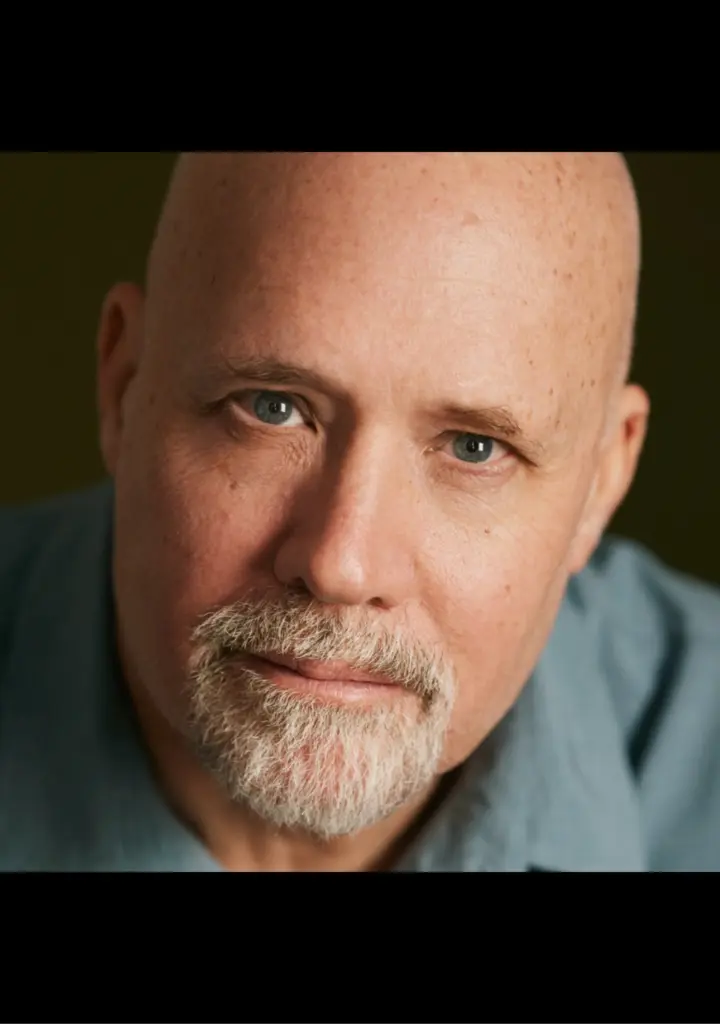
Nearly a decade after its initial publication as an award-winning short story in the summer 2015 edition of The Missouri Review, Mitch Wieland’s evocative narrative "Snow Angels" has blossomed into a sweeping, deeply resonant novel. Titled The Ghosts of Okuma, Wieland’s third novel has already earned a coveted starred review from Kirkus Reviews and secured a spot as a Best Indie Book for March. Set against the haunting backdrop of post-Fukushima Japan, the novel arrives on bookshelves on November 3—a milestone that coincides precisely with the thirtieth anniversary of the release of Wieland’s debut book, Willy Slater’s Lane.
In a comprehensive and revealing interview with Scout Hudson, Wieland details the arduous, decades-spanning evolution of The Ghosts of Okuma. The project required writing upwards of 2,000 pages to distill a tight, 275-page masterpiece centered on grief, national trauma, sensory immersion, and human resilience. Beyond discussing his creative process, Wieland reflects on his enduring connection to literary journals, his foundational years living and teaching in Japan during its late-1980s economic boom and subsequent stagnation, and his remarkable legacy as a mentor, co-founder of the Boise State University MFA program, and former editor of The Idaho Review.
Detailed Chronology: The Evolution of a Modern Masterpiece
The Genesis: From Rural Mailboxes to The Missouri Review
Wieland’s relationship with The Missouri Review spans decades, taking root during his formative years living in Japan from 1986 to 1991. Immersed in the collections of Raymond Carver and Joy Williams at local bookstores, he frequently encountered references to The Missouri Review embedded in the front matter of premier literary journals. Upon returning to the United States in 1991, it became his very first literary magazine subscription.
Read Also
The author’s path to publication within its pages was forged through perseverance. While living on a farm near the Oregon border with his wife, Cindy, a fierce windstorm ripped open their roadside mailbox, scattering correspondence into the surrounding fields. Amid a scorching summer day of flood-irrigating in rubber boots and triple-digit heat, Wieland waded through the mud to discover a letter from The Missouri Review editor Speer Morgan.
Morgan’s handwritten note explained that while a previous submission had fallen just short of a majority vote after an hour-long editorial debate, the journal wanted to see more of Wieland’s work. That encouragement directly birthed "Snow Angels," a narrative that would ultimately serve as the narrative anchor for his forthcoming novel.
The Catalyst: Witnessing History on NHK News
The pivot from short fiction to a full-scale novel was catalyzed by a singular, earth-shattering geopolitical event. Several years prior to writing "Snow Angels," Wieland was working on an expansive 500-page manuscript about Japan under the guidance of legendary agent Wendy Weil (who notably represented Alice Walker).
Then came March 2011. Watching NHK news—Japan’s public broadcaster—Wieland viewed incomprehensible footage of a tsunami surging ashore. Switching to CNN for international coverage, he realized the profound gravity of the Tōhoku earthquake and tsunami. Instantly, Wieland knew his literary engagement with Japan had fundamentally shifted.
"I just realized instinctively at that moment that I couldn’t write about Japan without this," Wieland noted. He courageously set aside the entire 500-page manuscript, retaining only a peripheral street character named Yoshimi.
Research, Grants, and Structural Apprenticeship
Bolstered by a National Endowment for the Arts (NEA) grant and a one-year fellowship from Boise State’s Arts and Humanities Institute, Wieland secured the funding and time needed to return to Japan for eight intensive weeks of research. He sought out every geographical setting featured in the book—from the bustling neighborhoods of Shinjuku and Shibuya to the tranquil, cavernous paths of Yanaka Cemetery, deliberately avoiding only the nuclear exclusion zone.
To refine his command of plot and structure, Wieland traveled to Los Angeles in 2012 to study under narrative theorists Robert McKee and Christopher Vogler, building upon earlier mentorships with George Garrett and Ted Solotaroff.
By 2013–2014, "Snow Angels" was finished and submitted to The Missouri Review. However, the journey to publication remained long. The onset of the COVID-19 pandemic in 2020 presented an exceptionally difficult landscape for acquiring new representation. Persistence paid off when literary agent Julie Stevenson of Massie & McQuilken took Wieland on in 2021. Following rigorous collaborative edits—including the decisive removal of an initial 70 pages set in San Diego—the book was successfully sold in 2024, culminating a ten-year adaptation journey.
Supporting Context & Metrics: Craft, Culture, and Collective Trauma
Sensory Realism and the Neuroscience of Narrative
A central hallmark of The Ghosts of Okuma is its rich, immersive texture, a philosophy instilled in Wieland by his late mentor, George Garrett. Garrett preached the creation of a "sensuously effective texture" designed to transport readers into the literal heartbeat and real-time environment of a scene.
Wieland connects this timeless writing advice directly to modern neuroscience. Teaching narrative fundamentals to university students, he frequently references functional MRI studies that monitor brain activity during reading. These scans prove that when a subject encounters sensory language—such as a character smelling of clove cigarettes and lavender—the brain’s olfactory processing center lights up identically to how it would in physical reality.
This sensory overload is naturally native to Tokyo, a city Wieland describes as "off the charts" in its capacity to bombard the senses with humanity, transit, and motion.
Experiencing Two Eras of Japan
Wieland’s perspective on Japan is uniquely shaped by experiencing two vastly different socio-economic eras. During his initial five-year residence in the late 1980s, Japan’s economy was superheating in an unprecedented boom. Monday mornings—locally known as "Big Trash Day"—routinely featured streets lined with discarded, perfectly functional appliances as citizens discarded items the moment newer models hit the market.
Upon returning in 2012, post-recession realities had fundamentally altered Japanese consumer habits. Secondhand stores had multiplied, and public frugality had replaced casual excess. Yet, beneath economic shifts lay a deep, collective psychological wound.
The Existential Weight of Fukushima
Comparing the collective grief of the 2011 Fukushima nuclear disaster to American post-9/11 cultural psychology, Wieland points out a profound ontological difference. While terrorism stems from human malice and political conflict, natural and technological disasters involving nuclear power plant failures strike at the existential core of an island nation just 150 miles wide.
Wieland observed a profound wave of despair among younger generations in Tokyo following the disaster. Many young adults questioned the point of marrying, buying homes, or raising children in a landscape suddenly revealed to be so precarious. Public anger was justifiably directed toward TEPCO (Tokyo Electric Power Company) for corporate hubris, flawed safety projections regarding seawall heights, and delayed emergency evacuations in towns like Okuma.
Crucially, Wieland’s character Yoshimi channels the fierce, righteous indignation of real-life Japanese artist troupes like Chim↑Pom. Just one month after the disaster, members of Chim↑Pom wore sneakers beneath hazmat suits to march to an Okuma town lookout point, unfurling a hand-painted flag that morphed the national rising sun into the international symbol for radiation—a powerful visual protest that directly inspired the emotional core of Wieland’s protagonist.
Official Statements & Key Perspectives
- On the Core Relationship of the Novel:
"Writing ‘Snow Angels’ and having Yoshimi and Wyatt meet in the park, I realized those were the two characters I wanted to keep and tell the story with. That was the secret." — Mitch Wieland - On Translating Grief into Fiction:
"On the personal side… my father had actually passed away when I was still working on the novel. We’ve all experienced grief, and that’s something we can try to understand and tap into. On the national level, the thing that I tried to use as a guiding light is the fact that Wyatt is an outsider… He has an inner need to find a place for her [his mother’s ashes]." — Mitch Wieland - On Teaching and Literary Legacy:
"On the first day of workshops, I taught that lesson that George Garrett taught me about seeing in sensory detail… To see his teaching passed on to me, and then to watch the students take it and run: it’s kind of cool." — Mitch Wieland
Future Outlook: Legacy, Release, and Academic Stewardship
As The Ghosts of Okuma prepares to hit shelves on November 3, 2025, Wieland is simultaneously approaching retirement after three decades of transformative service at Boise State University.
Having co-founded the university’s prestigious MFA Program in Creative Writing and launched The Idaho Review in 1998—guiding it through twenty landmark issues that secured multiple selections in Best American Short Stories and Pushcart Prize anthologies—Wieland’s institutional legacy is secure. Leadership of The Idaho Review has successfully passed to faculty editor Anna Caritj, ensuring the journal’s continued vitality.
Furthermore, the Boise State MFA program continues to produce an extraordinary roster of nationally acclaimed literary talent. Recent graduates have achieved major book deals and prestigious accolades, including:
- Mary Pauline Lowry, author of The Roxy Letters (Simon & Schuster).
- Ariel Delgado Dixon, author of Sourland and Don’t Say We Didn’t Warn You (Penguin Random House).
- Jackie Polzin, whose debut novel Brood won the Los Angeles Times Book Prize and the Sue Kaufman Prize for First Fiction.
- Ayotola Tehingbola, a Nigerian attorney-turned-author whose critically acclaimed short story collection Lagos Will Be Hard For You originated directly from Wieland’s sensory workshop methodology.
With The Ghosts of Okuma, Mitch Wieland bridges decades of personal writing experience, cross-cultural empathy, and pedagogical mentorship. As readers dive into the streets of Tokyo and the exclusion zones of Okuma this November, they will encounter not merely a story about a missing sister and a grieving son, but a masterclass in literary architecture built upon sensory truth and emotional endurance.




Comments
Facebook App ID not configured. Please add it in the Customizer.